


On the morning of 27/1, the Ministry of Health recommended that localities enhance disease surveillance at border gates, healthcare facilities, and in the community. This comes amidst a Nipah virus outbreak in an Indian state, prompting many Asian airports in recent days to tighten health surveillance and passenger screening, similar to the Covid-19 era, due to concerns about virus entry.
Nipah virus disease is classified as a group A infectious disease, making it one of the most dangerous, with a high mortality rate of 40-75%. The virus is primarily transmitted from animals to humans, with fruit bats currently being the vector in India. Transmission can also occur through contact with contaminated items or food. Additionally, the virus may spread from person to person via direct contact with a patient's bodily fluids or excretions.
To prevent Nipah virus infection, the Ministry of Health advises the public to ensure food hygiene. This includes cooking food thoroughly and drinking boiled water, as well as washing and peeling fruit before consumption. People should not eat or drink any fruit showing signs of being bitten or gnawed by animals, such as bats or birds. Avoiding tree sap, like raw or unprocessed palm sap or coconut sap, is also crucial.
Furthermore, individuals should avoid close contact with animals known to have a high potential for virus transmission, particularly fruit bats. Regular handwashing with soap or hand sanitizer is recommended after slaughtering animals or coming into contact with them.
Limiting travel to areas experiencing Nipah virus outbreaks is important. For individuals returning from affected regions, if symptoms such as headache, muscle pain, vomiting, sore throat, dizziness, drowsiness, confusion, or seizures develop within 14 days, immediate contact with a healthcare facility is necessary. Patients should limit contact with others and clearly inform healthcare workers of their epidemiological history. Those around suspected or confirmed cases should limit direct contact with patients or contaminated items, and use personal protective equipment when providing care or treatment.
The incubation period for Nipah virus ranges from 4 to 14 days. In severe cases, infected individuals may experience dizziness, drowsiness, altered consciousness, and neurological signs indicative of acute encephalitis.
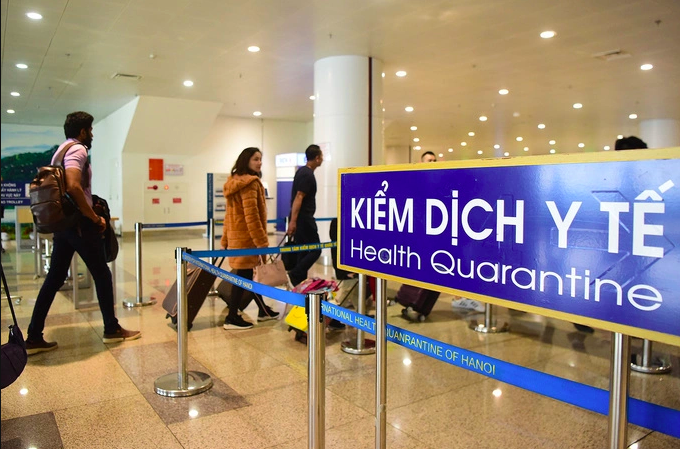 |
Health quarantine for Covid control at Noi Bai Airport during the outbreak. *Giang Huy* |
The infectious disease surveillance system recorded 5 suspected Nipah virus cases in India from 27/12/2025 to 26/1/2026, all of whom were healthcare workers at a hospital in West Bengal. Currently, two cases have confirmed test results, though the source of infection in this outbreak remains unclear.
Nipah virus was first discovered in Malaysia in 1999. By 2001, human Nipah virus disease was first recorded in Bangladesh and subsequently in India. According to the World Health Organization (WHO), Nipah virus disease has been reported sporadically in small outbreaks in several countries, but has not yet formed large epidemics.
Vietnam has not recorded any Nipah cases.
Currently, there is no vaccine or specific treatment for the disease in both humans and animals.
Le Nga


