The belief stems from fears that elderly bodies, already weakened by underlying health conditions and age, cannot withstand major surgery. Associate Professor, Doctor Kim Van Vu, Head of Surgical Oncology 1 at K Hospital, noted: "Many older individuals think they do not have much time left and already have chronic underlying conditions, so they hesitate." This fear of surgery causing rapid tumor spread, coupled with financial burdens, leads many patients and their families to choose to "live with" the disease rather than pursue treatment.
However, surgery remains the most effective radical treatment for many early-stage cancers, regardless of age, according to Doctor Vu. A study published in Annals of Surgical Oncology demonstrated that colorectal cancer patients over 80 who underwent surgery had a significantly higher 5-year survival rate compared to those who did not. This indicates that the benefits of surgical intervention outweigh potential risks when patients are thoroughly evaluated and prepared before the operation.
Consider the case of a 96-year-old man from Nghe An, who arrived at K Hospital with symptoms of dull epigastric pain, poor appetite, bloating, and indigestion. After examinations at three different medical facilities, doctors at K Hospital discovered a 3x4 cm tumor in the gastric antrum, causing narrowing and obstructing the digestive tract. A biopsy confirmed it was stomach cancer.
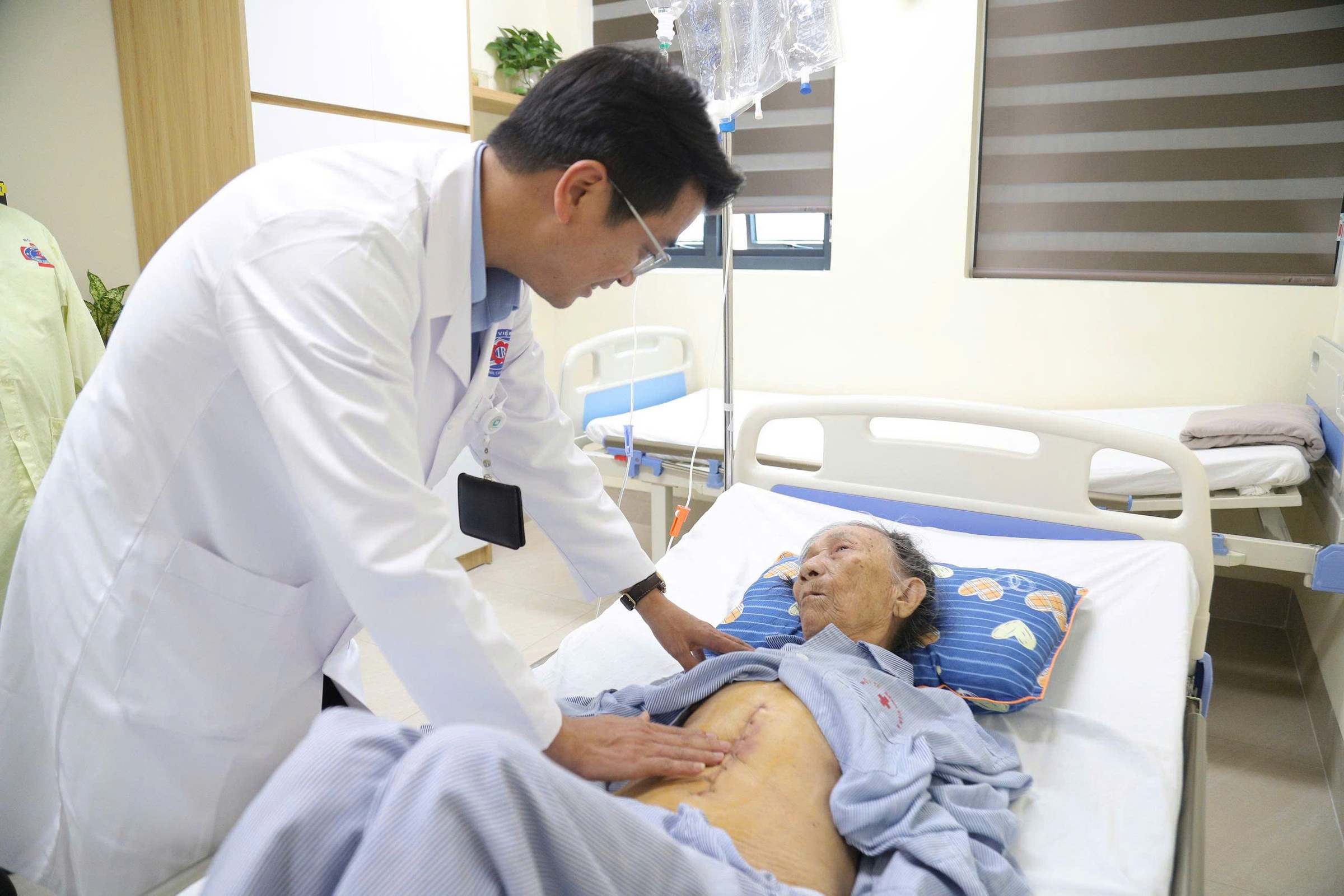 |
A doctor examines a patient after stomach cancer surgery. Photo: Quynh Hoa. |
A doctor examines a patient after stomach cancer surgery. Photo: Quynh Hoa.
Facing a patient nearing one hundred years old with multiple underlying conditions presented a significant challenge for the medical team. The family initially hesitated, but after thorough consultation on the available options, they decided to proceed with surgery. Doctors performed a near-total gastrectomy, lymph node dissection, and reconstructed the digestive tract. The complex operation was successful. The patient is now recovering well, eating almost normally, and maintains an optimistic outlook.
In Vietnam, Globocan statistics indicate over 17,000 new stomach cancer cases annually. The mortality rate is high because most cases are detected at a late stage. Early symptoms, such as loss of appetite, heartburn, and epigastric pain, are often vague and easily overlooked, mistaken for common gastric ulcers. Patients typically seek medical attention only when the disease progresses with more severe manifestations, including weight loss, vomiting blood, or passing black stool.
Experts recommend that individuals aged 40 and above establish a routine of regular health check-ups and cancer screenings. Specifically for stomach cancer, periodic endoscopy every one to two years is the most effective measure to detect the disease even before symptoms appear. This offers opportunities for successful treatment and preserves patients' lives, regardless of their age.
Le Nga