


"Growing up, I never imagined my life would turn out this way," confessed Lucy, 41. She always thought motherhood would follow the traditional path of finding a partner, getting married, and then having children. But reality was different. Her journey to motherhood began with in vitro fertilization (IVF) and donated sperm. This decision came during the pandemic, when she realized how much she longed for the feeling of being around her sister's and friends' children.
She once joked with her parents that she might have children on her own. "I expected them to laugh, but they didn't; they were enthusiastically supportive and very excited. That unexpected reaction made me seriously consider: I really should do this," Lucy shared on Radio 4's Woman’s Hour program.
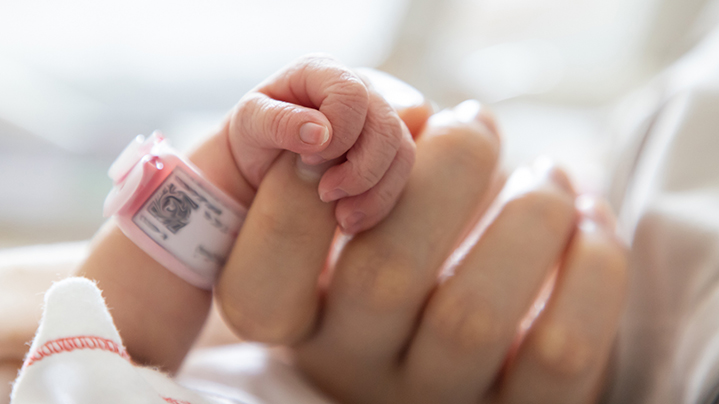 |
Illustrative photo: Policy Options |
Illustrative photo: Policy Options
In her twenties, she was engaged and always believed she would become a mother. But as she approached 30 and remained single, Lucy faced a crisis, fearing that maternal role would never come to her. Now, her first son is nearly 3 years old, and she is pregnant with her second child from the same donor. She does not know the donor's identity or appearance, but for Lucy, that "doesn't matter." She eagerly awaits the birth of her child, curious to see if the two siblings will share any similarities in appearance or personality.
The number of women choosing single motherhood is increasing. Data from the Human Fertilisation and Embryology Authority (HFEA) in the UK shows that in 2019, 3,147 single women underwent assisted reproductive treatment using donated sperm. By 2022, this number had risen to 5,084, representing an increase of over 60%.
Nina Barnsley, Director of the charity Donor Conception Network in the UK, noted that time pressure is the biggest reason women choose to have children on their own. They are racing against their biological clock and do not want to miss the maternal milestones they had envisioned for their lives.
According to Barnsley, proactively choosing single motherhood can come with psychological, social, and practical challenges. Many face questions about the donor, which are "mostly well-intentioned, but can sometimes feel intrusive to mothers."
Lucy stated that she has always been open from the start about how her son came into the world. She began explaining it to him using "simple but honest" language. Most importantly, she wants her child to "feel confident talking about it." "I don't want him to think that our family is somehow less conventional or less stable than families with two parents," Lucy said.
The mother of two also ignores judgments that her decision was selfish, because "a child's happiness doesn't depend on having one or two parents, but on the love, care, and time dedicated to them."
Although she knew choosing this path meant single motherhood, Lucy never felt alone because her parents were always by her side. Last year, when her son was just 18 months old, Lucy's parents passed away just six weeks apart. "There were times I wondered how I would get through it, but then I had to navigate because there was no other option," she recounted. During those days, her son was Lucy's greatest source of comfort.
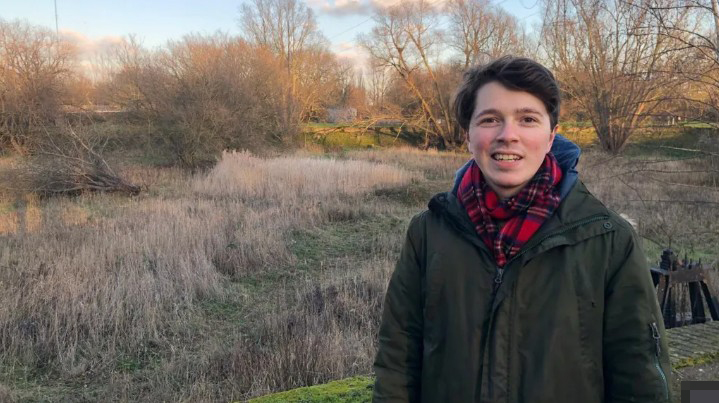 |
Kim shared that his mother did a good job raising him alone. Photo: Kim |
Kim shared that his mother did a good job raising him alone. Photo: Kim
A child's perspective
Kim, now 30 years old, represents the adult perspective of children born to mothers who chose sperm donation, like Lucy. He was born in London in the mid-90s through artificial insemination, a time when assisted reproductive technology was still nascent and donors could maintain absolute anonymity. No photos, no records, no contact possible.
The man shared that the absence of a father was never a loss or a void. Kim also didn't resent his mother, Emily, or wish his family was different. What shaped him was how his mother, a retired social worker, raised him, not how he was conceived. "Witnessing my mother's efforts in raising me alone, I developed strong independence," Kim said, adding that he doesn't understand why many people consider his mother's decision to raise him alone selfish.
After breaking up from a long-term relationship in her twenties, Emily was unsure if she wanted to start a new one. When she realized she could have a child without a partner, she knew "that was the path to take." She shared that the best thing about being a single parent is not having to negotiate or compromise. "Once a decision was made, no matter how difficult, I never had to concede and always got to do things my way," Emily said.
At 72, she has no regrets about the past. Her son has grown up to be "exactly the kind of person I had hoped for."
Binh Minh (According to BBC)


