


On 12/1, Master, Doctor Nguyen Manh Chien from the Poison Control Center stated that the health of the three patients is improving, though organ function still requires close monitoring. The most severe case, a 58-year-old man, has been extubated, transitioned to oxygen via nasal cannula, and can communicate. Previously, he was admitted in a deep coma, with low blood pressure, acute heart failure, and severe metabolic acidosis.
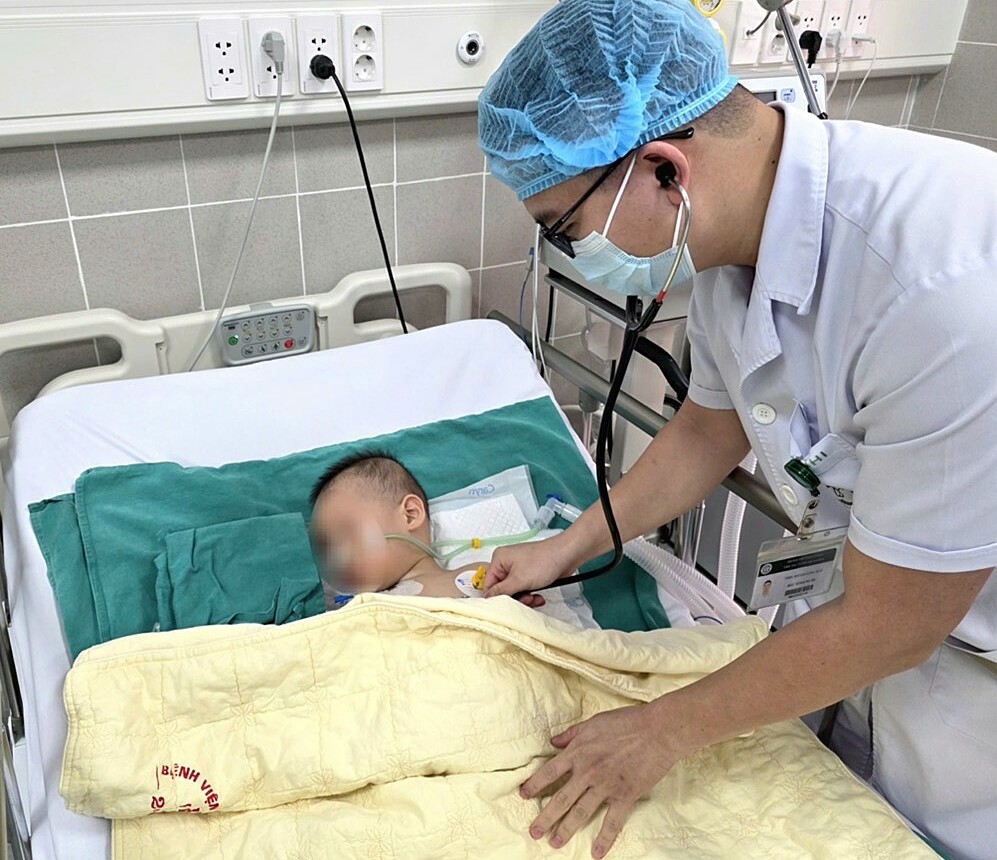 |
The 19-month-old child undergoing treatment at Bach Mai Hospital. Photo: Nguyen Ha |
The 19-month-old child, currently receiving treatment at the Pediatric Center, has also passed the critical stage, now on non-invasive ventilation with stable clinical indicators. However, doctors warn of potential respiratory and neurological sequelae due to the previous severe respiratory failure. The remaining female patient, who consumed less and vomited early, experienced milder symptoms and has since been discharged.
This cluster of cases began on 8/1 in Ninh Binh. Six family members harvested jicama seeds from their garden to boil and eat, each consuming 3-6 seeds. Approximately 20 minutes later, all experienced nausea and discomfort. The 58-year-old man, who ate the most (about 6 seeds), quickly fainted and fell into a coma; the 19-month-old child suffered seizures. Victims received first aid and gastric lavage at Nam Dinh General Hospital before the three severe cases were transferred to Bach Mai Hospital.
Doctor Nguyen Trung Nguyen, Director of the Poison Control Center, explained that only the root of the jicama plant (scientific name Pachyrhizus erosus) is safe to eat. All other parts, including the stem, leaves, flowers, fruit, and seeds, contain Rotenone—a potent toxin commonly used in pesticides. This substance inhibits cellular respiration, causing metabolic acidosis and potentially leading to death within 2-5 hours.
Currently, there is no specific antidote for Rotenone poisoning. Doctors advise people to absolutely avoid eating any part of the jicama plant other than the root. If seeds or leaves are accidentally ingested, and detected within one hour while the person is still conscious, immediate induction of vomiting is necessary to eliminate the toxin, followed by prompt transport to the nearest medical facility.
 |
Jicama seeds consumed by the patients. Photo: Hospital provided |
Le Nga


