


Ngan experienced prolonged menstruation, with each cycle lasting over 10 days. During the last six months of last year, she was hospitalized three times for severe anemia, requiring 500-750 ml of blood transfusion each time. Recent ultrasound and MRI scans at Tam Anh General Hospital, Ho Chi Minh City, revealed a large uterine fibroid occupying nearly her entire lower abdomen. This growth was compressing her kidneys, causing hydronephrosis. Inside her uterus, multiple fibroids were found, measuring 6x7x6 cm and showing signs of degeneration.
According to Doctor of First-Degree Specialization Huynh Ngoc Thu Tra of the Obstetrics and Gynecology Center, most uterine fibroids are benign. They grow by utilizing blood supply and female sex hormones. As a fibroid enlarges, the body forms an increased network of blood vessels to supply it with oxygen and nutrients, much like supporting a living organ.
In their early stages, fibroids are small and require less blood, often causing few symptoms. However, if left unchecked or untreated, these growths can enlarge significantly, forming a dense network of blood vessels. Large fibroids can lead to prolonged menstruation and extended bleeding by distorting the uterine cavity, consequently causing severe anemia.
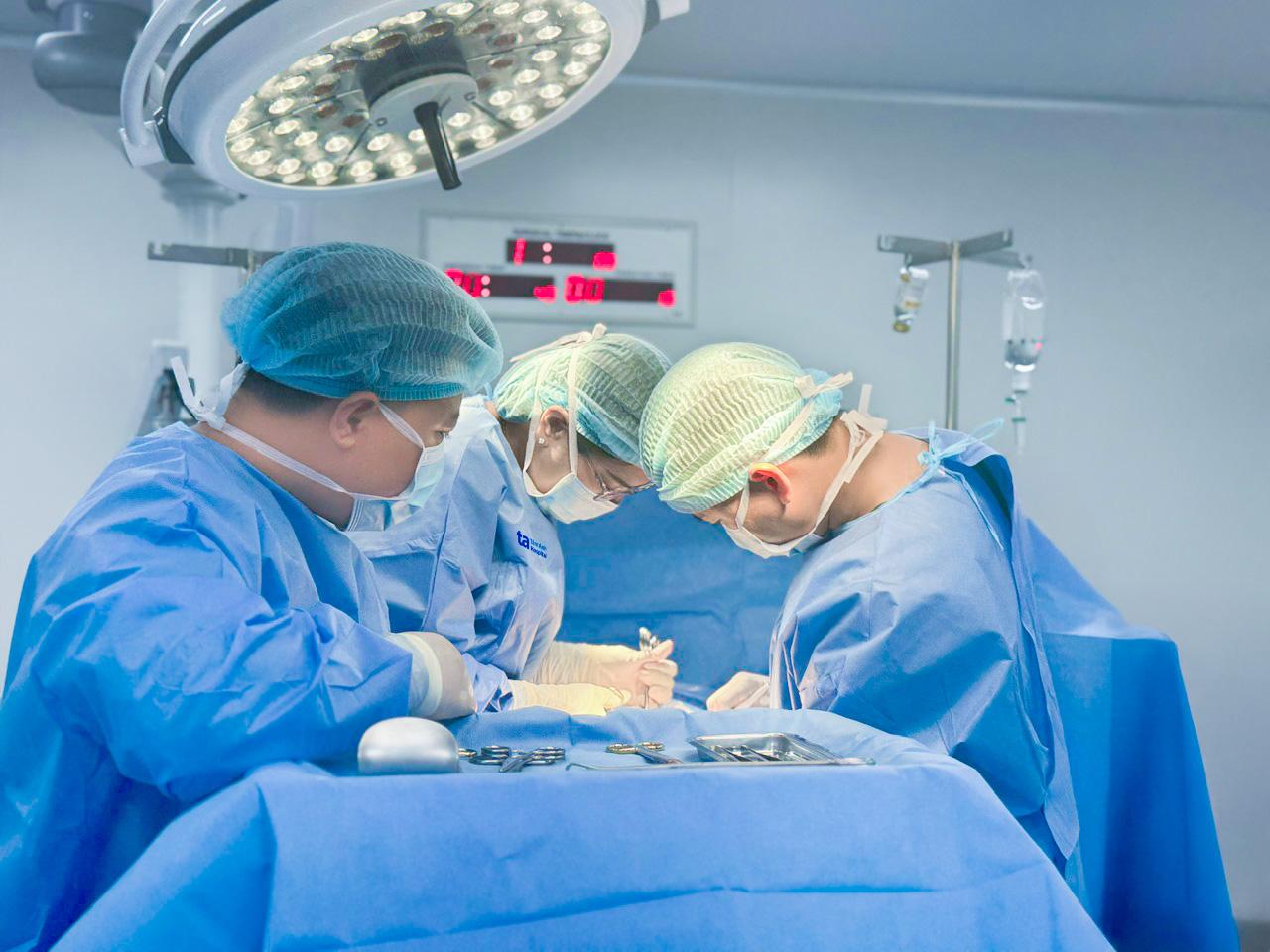 |
Dr. Thu Tra (center) and her team performed a hysterectomy on Ngan. Photo: Tue Diem |
Dr. Thu Tra (center) and her team performed a hysterectomy on Ngan. Photo: Tue Diem
Ngan underwent open surgery, during which the medical team removed her entire uterus along with the 3 kg fibroid. Four days after the procedure, she recovered and did not require further blood transfusions.
Anemia is a common complication for women experiencing prolonged menstruation and bleeding due to uterine fibroids. Early detection enables doctors to prescribe medical treatment to reduce bleeding and inhibit fibroid growth. Depending on the fibroid's size, doctors may also perform myomectomy using laparoscopic or robotic surgery, which minimizes blood loss and shortens patient recovery time.
Uterine fibroids can affect women of reproductive age and those in perimenopause. The risk is higher for women who have not given birth, have delayed childbirth, or are overweight. This condition is easily detectable through routine ultrasound health check-ups.
Dr. Tra advises women with fibroids to undergo follow-up examinations at a hospital or clinic every six months for prompt management if any abnormalities arise.
Tue Diem
*Patient's name has been changed
| Readers can submit questions about obstetrics and gynecology here for doctors to answer. |


