Trigger finger occurs when the tendon sheath of a finger becomes inflamed and thickened, preventing the tendon from moving smoothly. This causes the finger to bend and get stuck, unable to straighten itself. Dr. Pham Thi Xuan Thu, from the Department of Musculoskeletal Internal Medicine at Tam Anh General Hospital in Ho Chi Minh City, states that trigger finger can affect any finger and multiple fingers simultaneously. The initial common symptom is a painless clicking sensation or discomfort when moving the finger.
As the condition progresses, a popping sound may be heard when the finger clicks. Tenderness can be felt at the joint where the finger meets the palm or the joint closer to the palm. Pain intensifies with movement of the affected finger and may be accompanied by swelling. During movement, the finger often gets stuck in a bent position, unable to straighten or return to its original position without assistance.
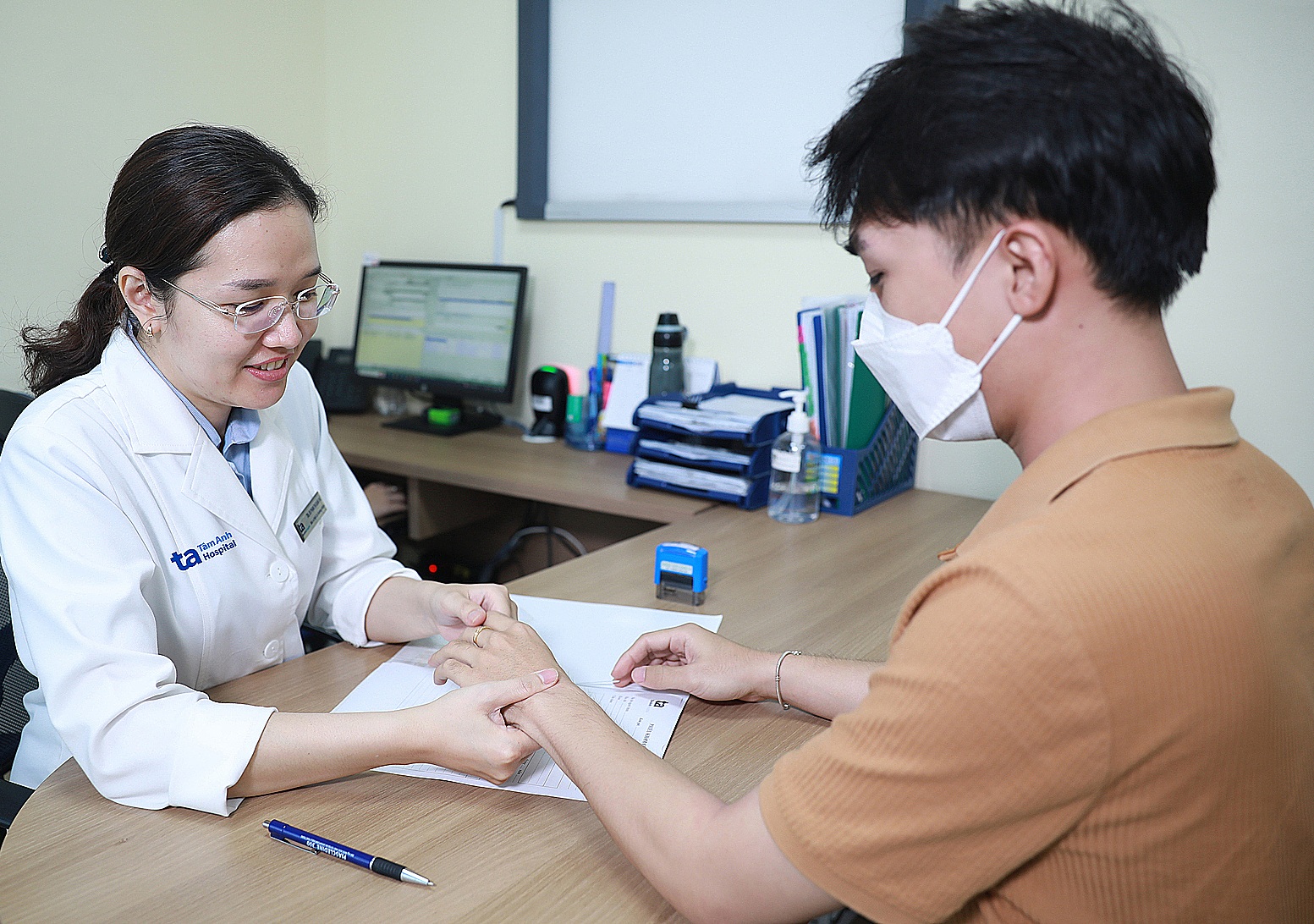 |
Dr. Thu assesses the functional condition of a patient's finger. Photo: Tam Anh General Hospital. |
Trigger finger primarily causes disruptions in daily activities and rarely leads to severe complications. However, delayed treatment risks permanent contracture (joint stiffness).
According to Dr. Thu, patients with trigger finger are often prescribed pain relievers and anti-inflammatory medications to alleviate symptoms. Depending on the specific case, doctors may recommend a combination of stretching exercises to maintain finger mobility or wearing a splint at night for up to 6 weeks to relax the tendons and muscles. During treatment, patients should avoid activities requiring frequent gripping or prolonged use of vibrating handheld tools.
When symptoms become severe or conservative treatments are ineffective, doctors may recommend interventions such as steroid injections near or into the tendon sheath to reduce inflammation. Another option is percutaneous release, which involves targeting the tissue near the affected tendon to break up the constriction. This procedure is performed under ultrasound guidance to ensure no damage to the tendon or surrounding nerves.
Surgery for trigger finger involves cutting the constricted part of the tendon sheath, fully releasing the flexor tendon. This is a relatively simple procedure with few complications, often performed as an outpatient procedure, with patients discharged just a few hours after surgery.
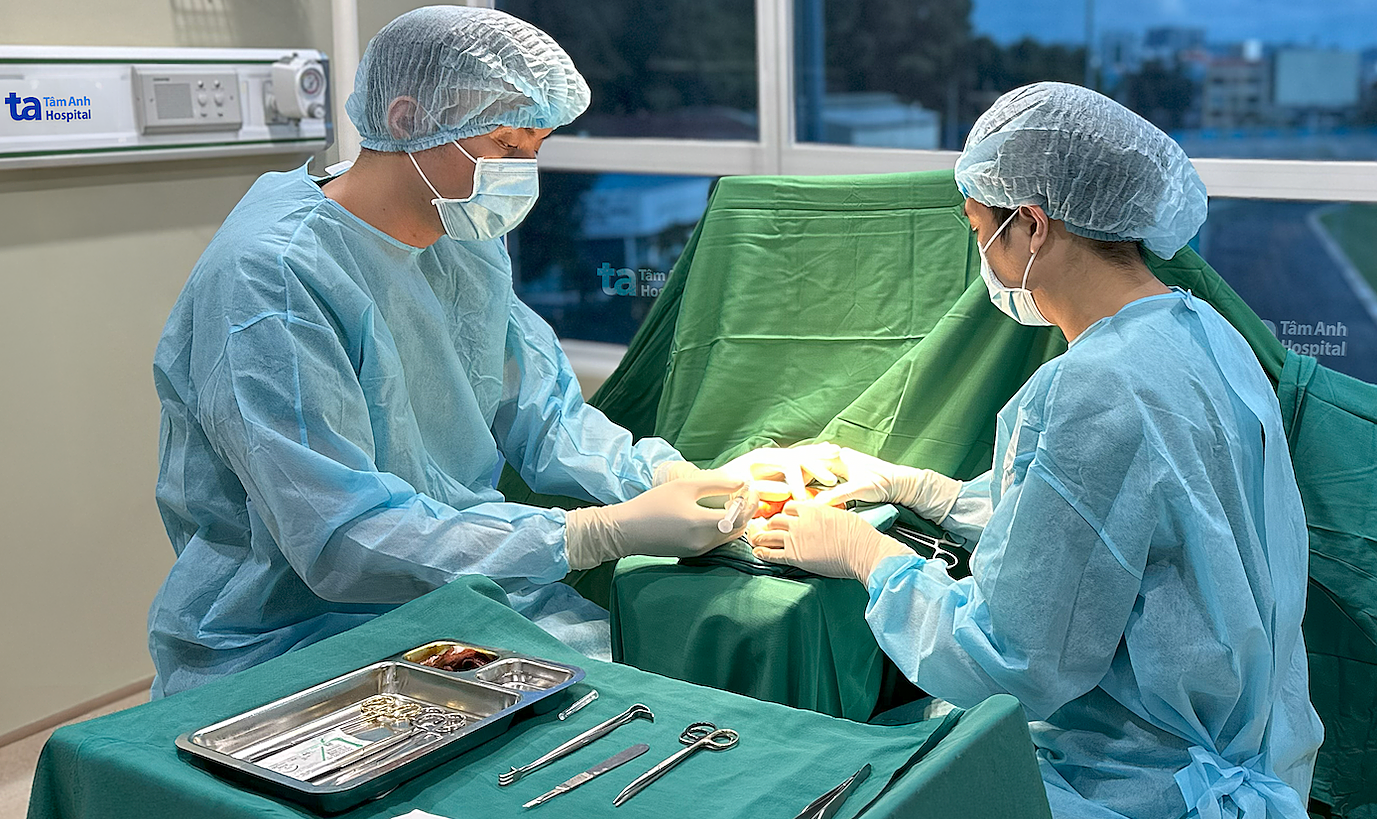 |
With trigger finger surgery, patients can be discharged in just a few hours. Photo: Tam Anh General Hospital. |
Trigger finger can recur, though the rate is very low. Causes often include recurrent tendon sheath inflammation, underlying medical conditions (such as diabetes or arthritis), or improper daily activities by the patient.
Post-surgery, patients should focus on prevention by limiting tight gripping or pinching motions with their fingers, avoiding equipment or objects with strong vibrations, and reducing tasks that heavily involve the fingers. It is advisable to balance hand rest and activity, and regularly perform exercises to improve hand flexibility. Patients should also seek medical attention if unusual symptoms appear, such as numbness, stiffness, pain, or inability to straighten the finger.
Phi Hong