


Answer:
A PET/CT scan combines computed tomography (CT) imaging with a nuclear medicine technique called positron emission tomography (PET). This technology helps detect cellular lesions, assessing both their structural integrity and metabolic activity.
During a PET/CT scan, patients receive an intravenous injection of a mildly radioactive tracer, often fluorodeoxyglucose (FDG), which mimics glucose. Cancer cells typically absorb and metabolize glucose more actively than healthy tissues. The PET/CT scanner then detects and reconstructs images from the tracer's emissions, enabling doctors to pinpoint cancer cells.
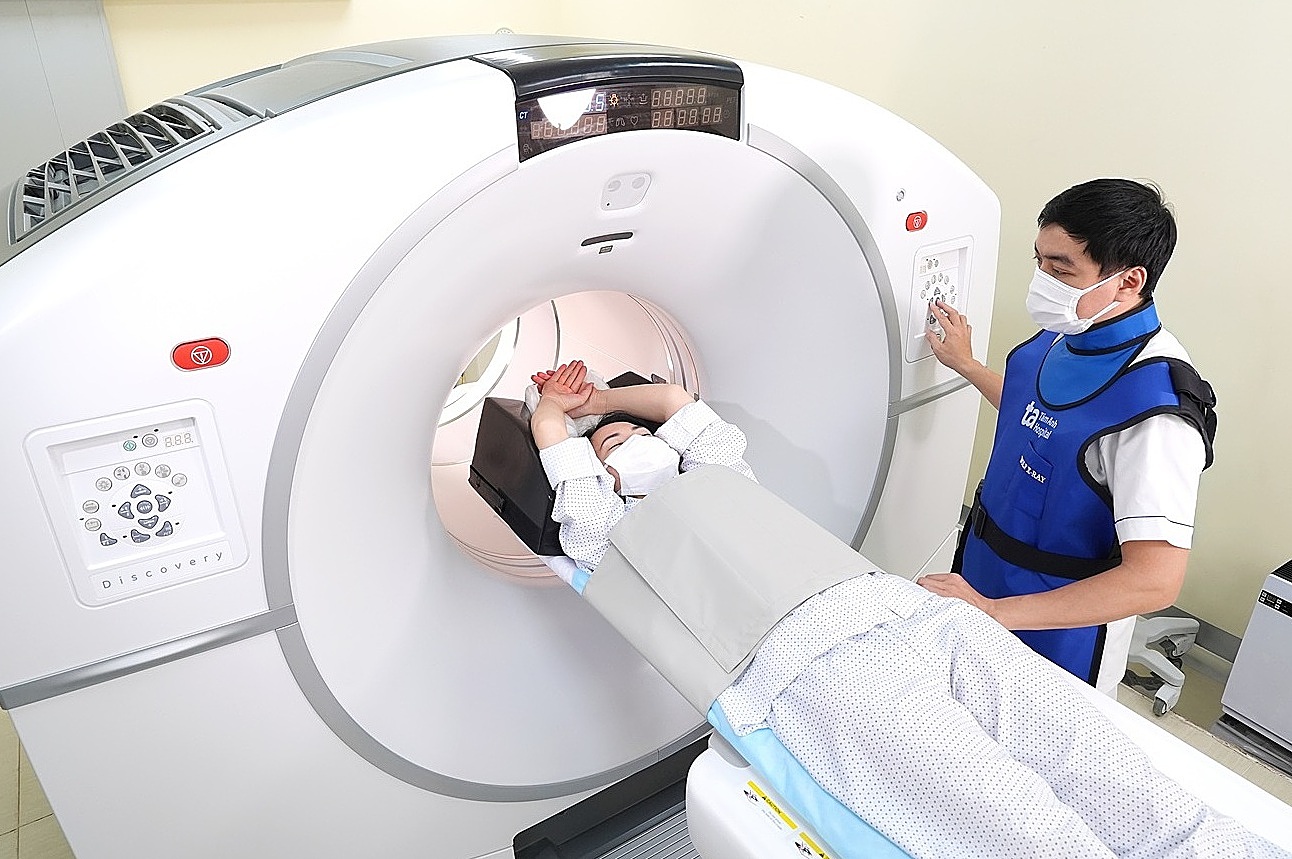 |
A patient undergoing a PET/CT scan at Tam Anh General Hospital. Illustration: Hospital provided |
PET/CT is not a routine diagnostic technique prescribed in clinics or hospitals. Doctors recommend PET/CT scans for specific patient groups, including:
Patients suspected of cancer
In many cases, patients exhibit clinical symptoms and lab markers suggesting cancer, but the primary tumor remains undetected by conventional methods. A PET/CT scan helps localize the primary tumor and guides precise biopsies. Beyond oncology, doctors also use this technique to evaluate cardiovascular and neurological conditions.
Cancer patients
This group represents the most common recipients of PET/CT scans. The technology aids in the early detection of malignant tumors, differentiates between benign and malignant growths, and determines if a tumor is localized or has metastasized, thus staging the cancer. This information helps doctors devise the most suitable treatment plan.
This technique also assesses treatment response, precisely plans radiation therapy to spare healthy tissues, thereby enhancing efficacy and reducing complications. Furthermore, PET/CT helps monitor treatment outcomes and detect early recurrence and metastasis.
Patients who have completed treatment
For patients like your father, after lung cancer treatment, doctors may prescribe PET/CT during regular follow-up appointments to check for cancer recurrence or when abnormal symptoms suggest its return. Additionally, doctors may combine this with other paraclinical tests, such as blood cancer markers or circulating tumor DNA (ctDNA) in the blood.
Dr. Vu Huu Khiem
Head of Oncology Department
Tam Anh General Hospital Ha Noi


