


Radiation therapy uses targeted radiation beams to destroy cancer cells by damaging their DNA. This process causes the cells to stop dividing, necrotize, and eventually be eliminated from the body.
According to Master of Science, Doctor Vuong Ngoc Duong, Deputy Head of the Radiation Therapy Department at Tam Anh General Hospital Hanoi, this treatment can eradicate some inoperable cancers. It also serves as neoadjuvant therapy to shrink tumors before surgery or as adjuvant therapy to prevent recurrence and metastasis. For late-stage cancer, radiation therapy helps alleviate symptoms.
Doctors may recommend radiation therapy for breast cancer patients in several scenarios:
After breast-conserving surgery: Following the removal of a tumor and surrounding healthy breast tissue, adjuvant radiation therapy is typically prescribed to lower the risk of recurrence. Without this treatment, any lingering cancer cells could lead to the disease returning within months or years.
After mastectomy: Even after a complete mastectomy, residual tissue in the chest wall or lymph nodes might still harbor cancer cells. Doctors may prescribe adjuvant radiation therapy if the tumor was large, if there was axillary lymph node metastasis, or if surgical margins were positive for cancer cells.
Locally advanced breast cancer: For cases where immediate surgery is not feasible, such as inflammatory breast cancer or tumors invading surrounding breast tissue, the treatment typically involves neoadjuvant chemotherapy, followed by a total mastectomy and radiation therapy.
Recurrent breast cancer: If a patient experiences a recurrence despite previous radiation therapy, doctors meticulously evaluate a second treatment protocol. The goal is to optimize treatment efficacy while managing toxicity within acceptable limits.
Metastatic breast cancer (lymph nodes, bone, brain): Patients with lymph node involvement, typically in the axillary region, require surgical dissection followed by adjuvant radiation therapy. This aims to eliminate remaining cancer cells and reduce recurrence risk. For bone metastases, radiation helps alleviate pain, reduce spinal cord pressure, and improve symptoms like numbness and weakness. Patients with brain metastases receive radiosurgery or whole-brain radiation therapy, depending on the specific characteristics of the lesions.
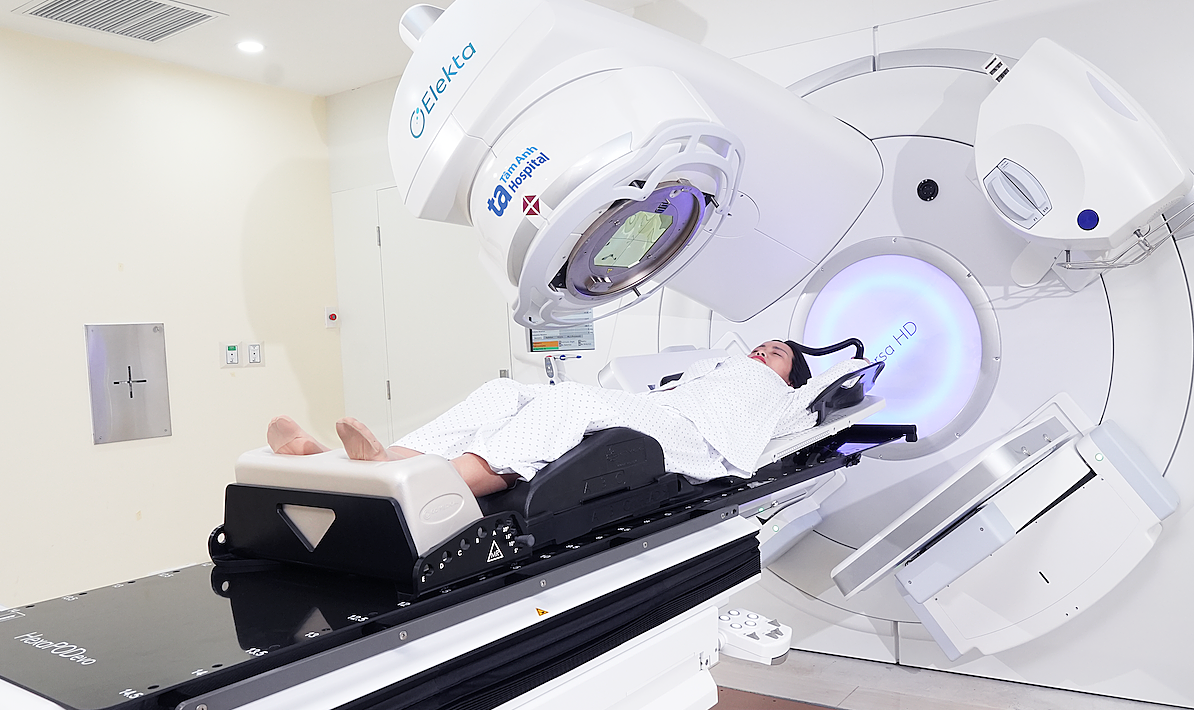 |
A breast cancer patient receiving radiation therapy with a linear accelerator. *Illustration: Tam Anh General Hospital* |
Doctors convene multidisciplinary consultations to develop a suitable protocol for each patient. They carefully plan the radiation therapy, calculate the dose, and determine the number of treatment sessions, performing thorough checks before commencing. Each session typically lasts about 30-45 minutes, including preparation. Treatment regimens usually involve 5 sessions per week, extending for 3-6 weeks, depending on the specific protocol. Patients must adhere strictly to their treatment schedule.
Since breast cancer patients primarily undergo external radiation therapy, no radioactive substances are introduced into the body, eliminating the need for isolation. Patients should keep the radiated skin area clean, avoid friction, apply moisturizer, maintain adequate nutrition, get proper rest, and attend scheduled follow-up appointments at the hospital after completing their treatment course.
Thanh Long
| Readers can submit questions about cancer here for doctors to answer. |


