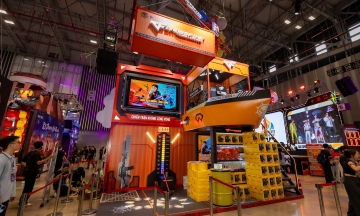
A report by Q&Me, "Internet Usage Behavior in Vietnam", released in mid-april, reveals that "superior speed" is the most highly valued criterion for Vietnamese users when choosing internet, scoring 4.1 out of 5 points. This score surpasses other factors such as subscription cost (3.93), customer care (3.92), and brand reputation (3.86). The findings indicate that users today require internet not just for connectivity, but for a fast enough connection to ensure seamless and immediate experiences.
Modern internet usage extends beyond basic web browsing or video streaming. It now underpins a wide array of activities demanding high-quality connections, including livestreaming, online gaming, 4K movie streaming, online learning, and remote work.
According to We Are Social, Vietnam is projected to have 79,8 million internet users by 2025, representing 78,8% of its population. The increasing time spent online has heightened expectations for connection quality. For many, speed is no longer just a number displayed in advertisements; it is the tangible feeling of fluidity during actual use.
Beyond smartphones and laptops, the connected ecosystem in households has expanded to include smart TVs, security cameras, robot vacuums, tablets, online learning devices, and various smart home gadgets. When multiple devices operate concurrently, especially during peak evening hours, the demand for internet speed becomes more pronounced. This explains why many households now prioritize high-speed packages when subscribing to Wi-Fi, rather than opting for basic plans as they did previously.
Hanh Dung, 34, from Hanoi, notes that evenings are peak times when many family members use the internet simultaneously. Older relatives watch TV, while parents attend online meetings or work from home, and children study. "Sometimes, seven or eight devices operate at once. If the network falters for just a few seconds, everything gets disrupted immediately. Previously, I chose a plan that was just enough, but now my biggest priority is speed and stability so the whole family can use it simultaneously without lag," Hanh Dung states.
 |
Young people use the internet for entertainment and study. Photo: Pexels |
Gen Z also places high demands on internet speed. For a generation that frequently livestreams, creates content, or plays online games, slow or lagging networks can directly impact their experience.
According to Ookla data from early 2026, Vietnam's fixed broadband internet speed ranks among the top 10 countries globally. Furthermore, Numbeo data from 2025 indicates that the average price for a fixed internet package of 60 Mbps or higher in Vietnam is only around 8,87 USD per month (over 200.000 Vietnamese dong). This positions Vietnam among the cheapest globally and leading Southeast Asia in accessibility. These figures suggest that Vietnamese users are experiencing internet speeds comparable to developed markets at significantly lower costs.
Notably, despite continuous internet speed upgrades and the deployment of new technologies, the overall price of internet in Vietnam remains highly accessible. This allows users to experience high-speed packages at a considerably more reasonable cost compared to many other countries.
The Q&Me report also highlights that many users are willing to pay more for better speed, provided the improved experience is tangible. Forty percent of users are prepared to spend an additional 50.000-100.000 Vietnamese dong per month. This demonstrates that speed is no longer just a bonus; it has become a practical necessity in daily digital life.
In this context, Vietnamese network providers are increasing investments in infrastructure and new technologies to enhance actual speeds for users.
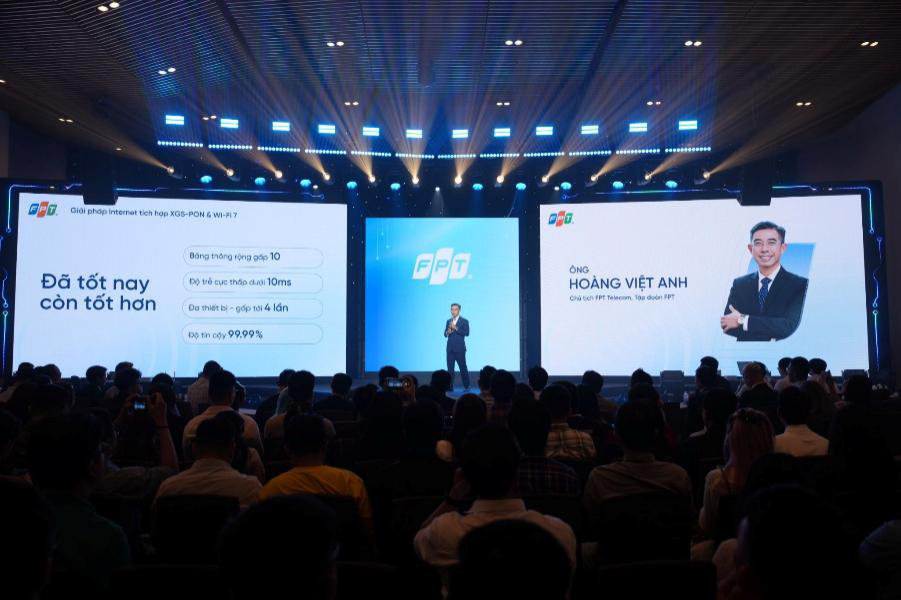 |
FPT's Wi-Fi 7 introduction event. Photo: FPT |
FPT, for example, continuously upgrades its infrastructure by deploying Wi-Fi 6, Wi-Fi 7, and XGS-PON infrastructure to meet the demands of livestreaming, gaming, 4K video streaming, and online work. The company currently offers various high-speed service packages ranging from 1 Gbps to 10 Gbps.
Alongside technological investments, FPT also implements bandwidth upgrade programs and offers incentives for new and upgrading customers.
FPT also leads Vietnam's fixed internet rankings, according to nPerf (France) standards. The organization states that FPT's consistent leadership in fixed internet in Vietnam for many consecutive years, with average download speeds exceeding 220 Mbps, demonstrates its mastery of core technology and its ability to maintain consistent service quality.
Hoai Phuong