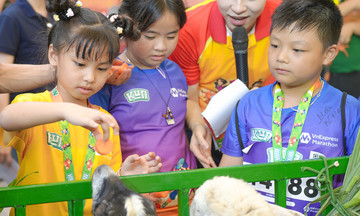
Speaking at an event on the morning of 21/3, Nhut stated that in the context of urbanization, urban children have limited direct exposure to ecological environments. Participating in outdoor, hands-on activities provides a good opportunity for them to learn and gain a proper understanding of their role in nature.
 |
Nguyen Thanh Nhut, Saigon Zoo deputy director, speaks at the event. Photo: Hai Long |
"When guided from a young age, children will naturally develop compassion and an awareness of protecting all species. As they grow, this will become an unconscious habit in their daily thoughts and actions," Nhut explained.
This perspective aligns with psychological studies. Doctor Joe T. K. Ngai (Hong Kong) and Doctor Joanne Williams (Scotland) previously noted that positive interaction with animals helps children improve empathy, better control emotions, and foster gentle behavior towards others.
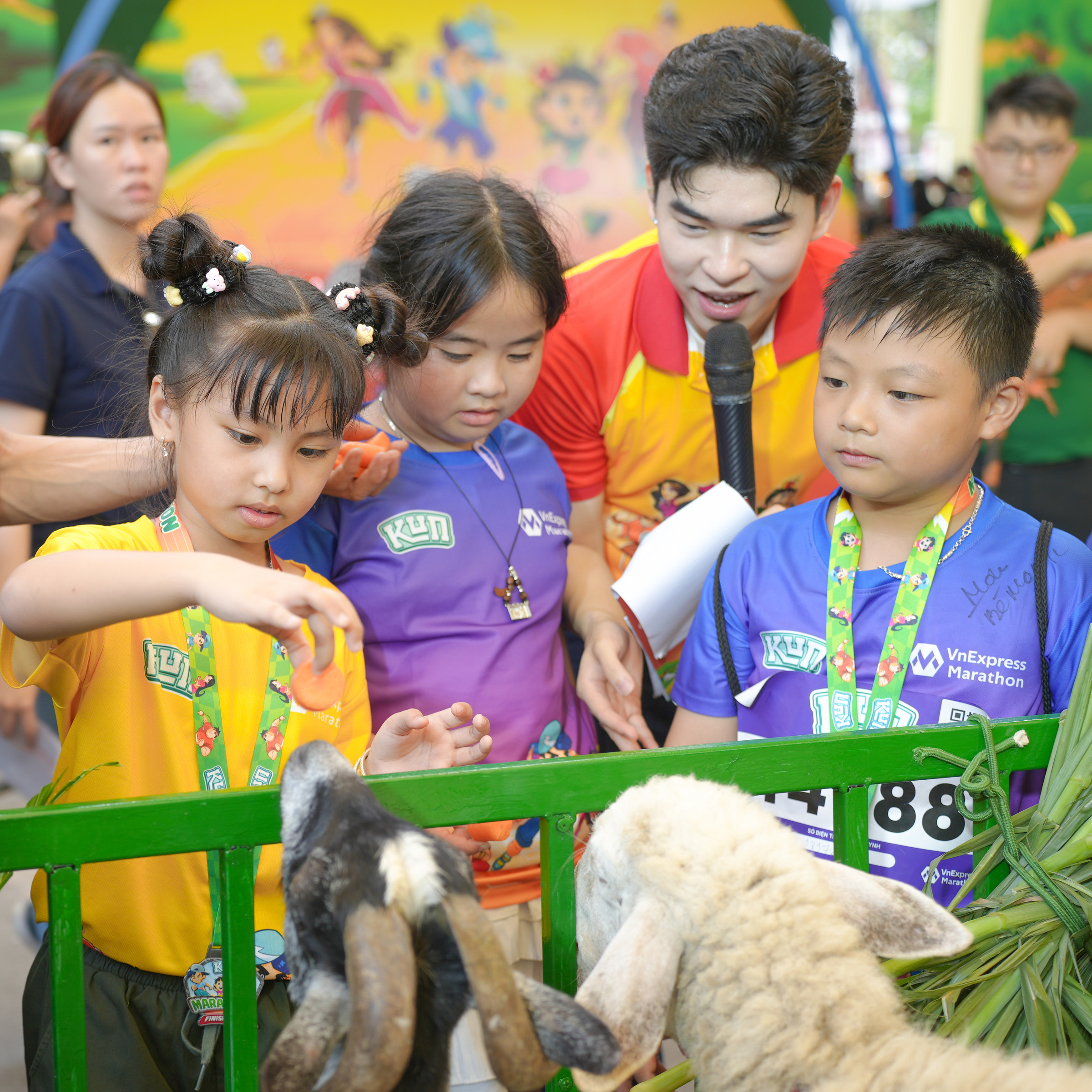 |
Children are guided on how to feed animals at Saigon Zoo. Photo: VnExpress Marathon |
To bring this message to life, after completing the one km run, 2,500 young runners at the Kun Marathon Ho Chi Minh City were directly guided by zoo staff to learn about individual animals, ensuring safety. The children and their parents eagerly participated in a series of ecologically themed games such as "Kids Feed the Animals", "Blue Ocean Mission", and "Bring All Species Home".
"Saigon Zoo is always ready to support meaningful activities like these. We look forward to continuing our cooperation with Kun Marathon to organize similar events, spreading love for nature to future generations," Nhut said.
Also on the morning of 21/3, a representative of the Kun brand presented Saigon Zoo with 200 million VND to help renovate enclosures and improve the living environment for various animal species. Earlier, Kun Marathon announced that "Protecting All Species" would be the main theme for its race series in the first half of 2026.
Saigon Zoo (TP HCM) currently cares for and protects more than 2,000 individual animals, representing about 135 species. These include many wild and rare creatures from various classes: mammals, birds, and reptiles, such as Indochinese tigers, Bengal tigers, leopards, Asian elephants, white rhinoceroses, yellow-cheeked gibbons, and crested argus. Beyond its animal collection, the botanical section is extensive, featuring over 2,500 trees from 360 species, including more than 700 ancient trees hundreds of years old.
Hai Long