


Participating in the student competition organized by Grab Viet Nam and the Youth Union - Student Association of Da Nang University, the Kinesis team's project won first place in the Technology category. Stemming from everyday experiences, Kinesis did not begin with a complex technological problem, but with empathy for the invisible barriers faced daily by deaf and mute individuals. Nguyen Ngoc Minh Tam, a student from the Faculty of Business Management, VN-UK Institute for Research and Executive Education, Da Nang University, and team representative, stated that the idea sparked when the team had the opportunity to interact with the local visually impaired community, primarily through Angel Cafe, a coffee shop staffed by people with disabilities.
From these initial observations, the group expanded its research and realized that outside of specialized environments, this community faces numerous daily life barriers, from communicating with others to societal prejudices. This reality prompted the team members to outline an idea for a platform capable of real-time two-way translation between gestures and speech. The team hopes this solution will act as a "bridge" to help deaf and mute individuals communicate more conveniently, thereby expanding their access to public services and career opportunities.
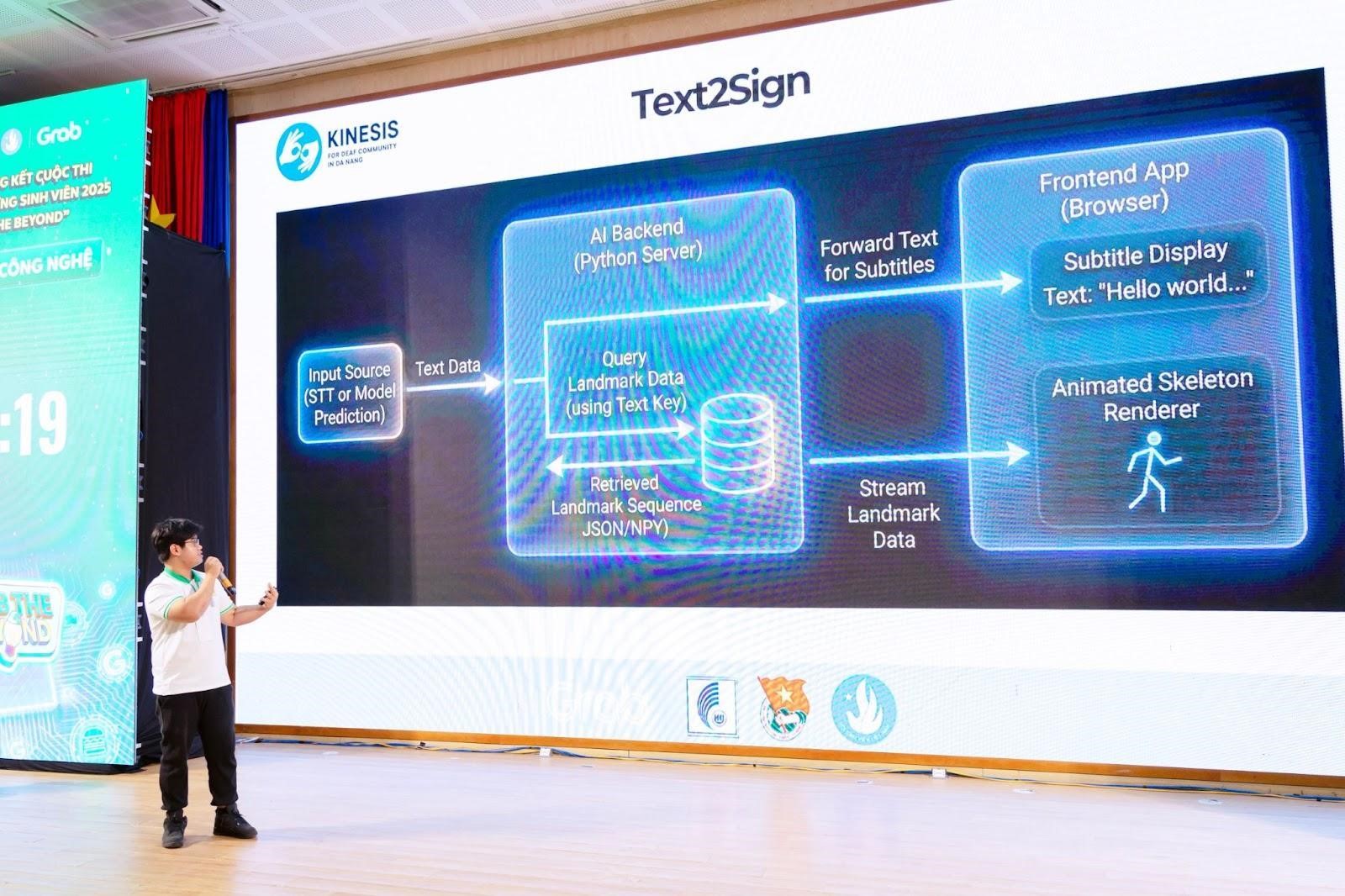 |
A Kinesis representative presents the communication support platform for the deaf and mute at the "Grab the Beyond 2025 - Student Idea Breakthrough" competition. *Photo: Grab*
According to the team, transforming a humanitarian idea into an operational product is a challenging journey. "We didn't think any stage was simple. But if we had to choose one word to describe how the team reached the finals, it would be 'persistence'," Minh Tam shared. Tam added that when ideas were scarce, the group actively went out and interacted more with the community to find inspiration and real insights. When encountering technical issues or software bugs, the team reviewed theoretical foundations and self-studied through YouTube, TikTok, and open-source resources.
Additionally, the team received support from mentors at Grab Viet Nam. "When discouraged and doubting ourselves, we sought advice and guidance from our mentors," Minh Tam added. According to Tam, the biggest lesson the group learned was that there's no need to build a comprehensive solution for every problem. Instead, focusing on effectively solving a specific problem with a clear and consistent approach was sufficient to create value. This was also something the Grab mentors frequently emphasized to the group.
Program support also motivated the team to persevere with the project. A Kinesis team representative stated: "When we remembered our big goal was to have an internship opportunity at Grab and create a product that brings value to society, we gained more motivation to continue our 'persistence' and see it through."
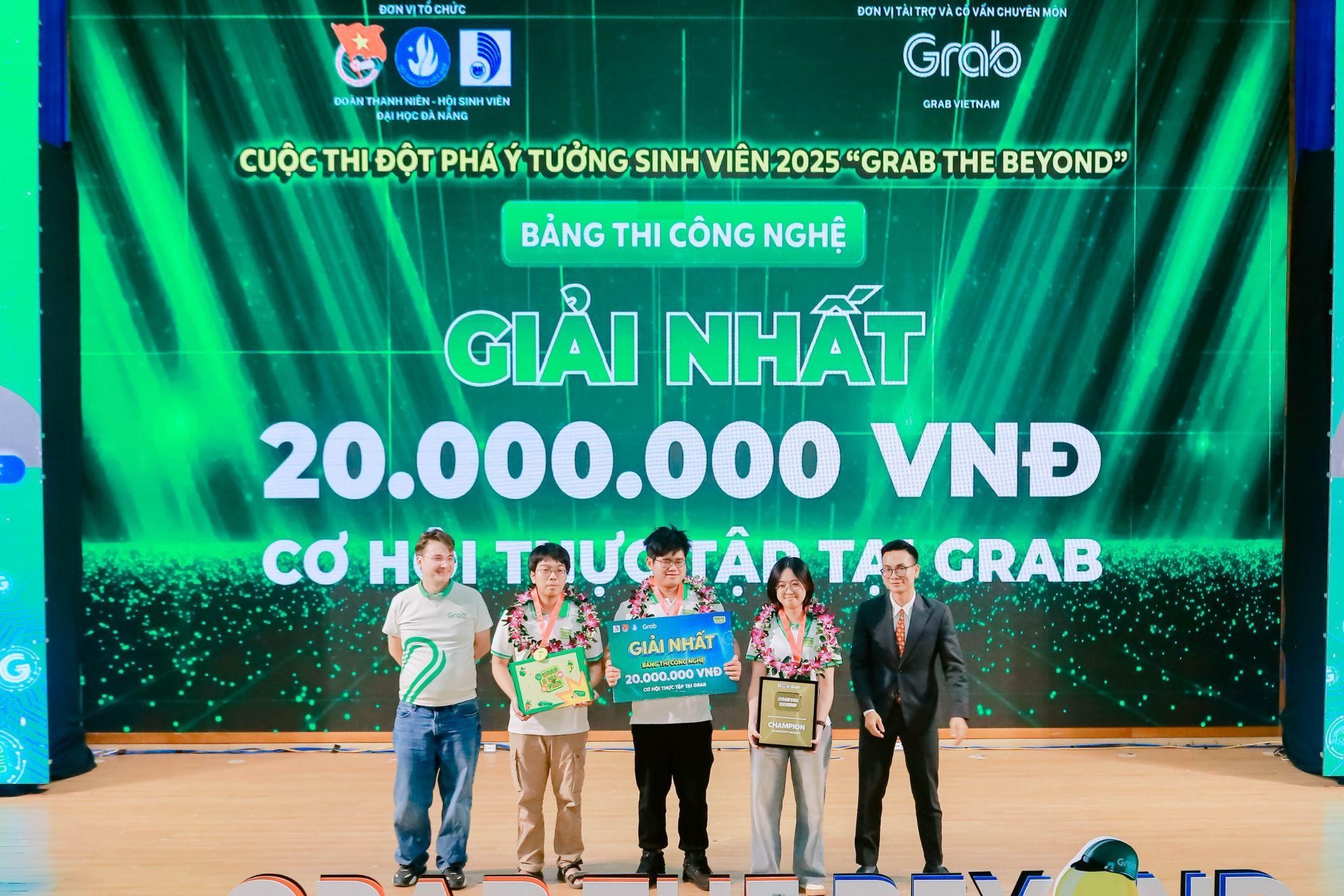 |
The Kinesis team receives the award for winning the Technology category. *Photo: Grab*
The Kinesis team's idea for a communication support platform for the deaf and mute was one of the most outstanding projects at the "Student Idea Breakthrough - Grab the Beyond 2025" competition finals, held in late December.
The competition concluded its inaugural season, having attracted over 200 entries across two categories: Technology and Marketing. Through the competition, students had the opportunity to directly approach, analyze, and propose solutions for real-world problems. As a result, young people not only honed their teamwork and strategic thinking skills but also gradually transformed ideas into feasible solutions in various fields such as marketing, digital business, and information technology applications in economics and daily life.
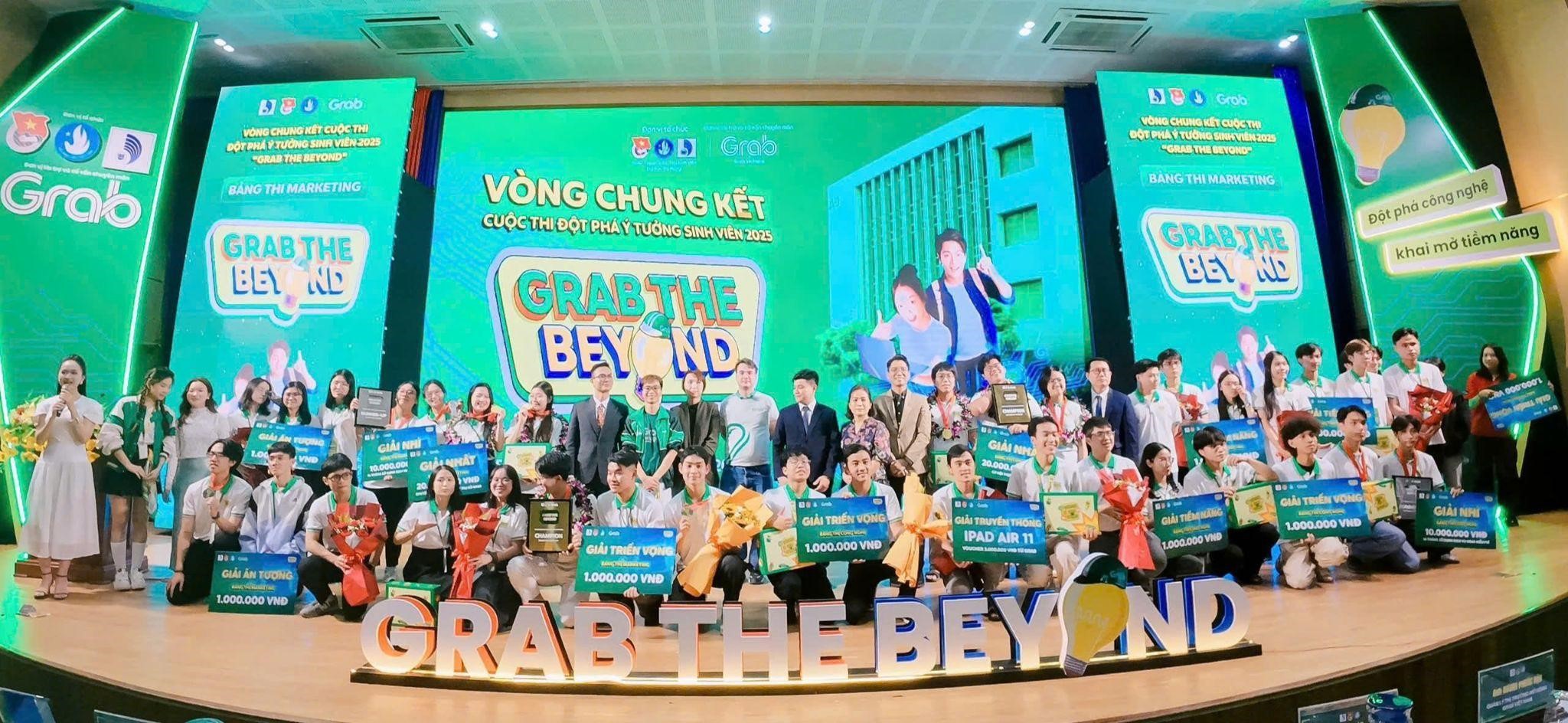 |
Award-winning teams at the Grab the Beyond 2025 finals. *Photo: Grab*
Through a collaborative model between academia and businesses, Grab the Beyond 2025 contributed to strengthening the connection between education and real-world needs, enabling students to apply specialized knowledge to practice, and progressively develop adaptive skills for participation in the digital economy. The competition also served as a concrete activity realizing the "Action Plan between the Da Nang City People's Committee and Grab Viet Nam" to promote smart city development and digital transformation.
Diep Chi


