In Japanese family culture, hot tubs are not primarily for cleansing the body. Before entering the bath, each person must thoroughly wash with soap and rinse under a shower. Because the water remains clean and free of dirt, it is preserved for the next user.
Family members can bathe together or sequentially. Typically, guests are invited to bathe first, followed by grandparents, then parents, and finally the children.
This custom originated from the ancient cultures of onsen (hot springs) and sento (public baths), where individuals are required to cleanse their bodies externally before entering communal soaking pools. As family bathtubs became widespread, this rule was maintained to reduce water and electricity consumption.
Japanese people often soak in hot water at the end of the day to relax before sleeping. For families with young children, this time offers an opportunity for parents to converse with and care for their children.
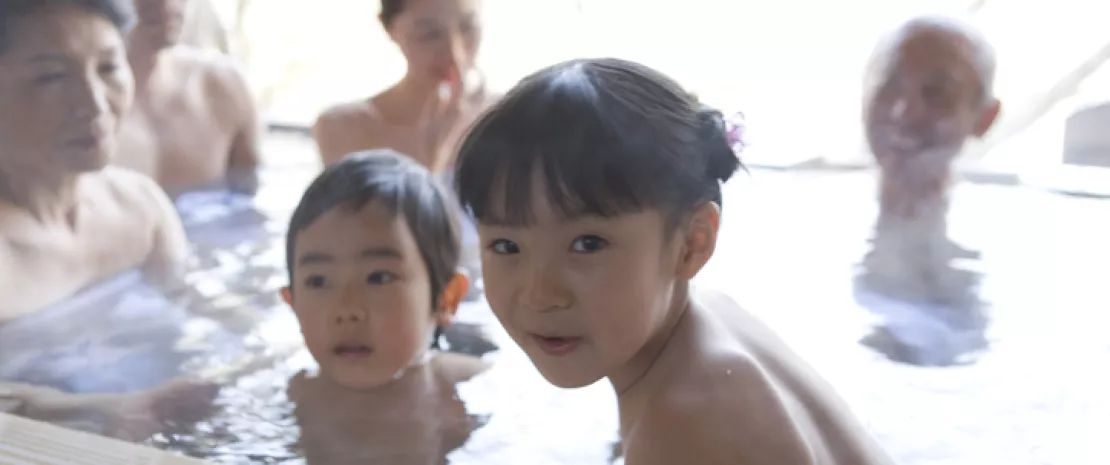 |
Illustration: Biocodex Microbiota Institute |
Recently, scientists have investigated the connection between sharing bathwater and family gut microbiota. Even after thorough showering, the body retains natural microorganisms on the skin. When soaking in the tub, some of these microorganisms enter the water and can be transferred to other users.
The study was conducted by scientists from Morinaga Milk Industry (Japan) and a research team in Ireland, and published in Scientific Reports.
In phase mot, analysis of samples from 21 individuals across 5 families revealed that approximately 10% of the microbial groups found in the bathwater also appeared in the gut microbiota of family members. The research team particularly focused on Bifidobacterium, a beneficial gut bacteria prevalent in the Japanese population.
In phase hai, the team expanded their analysis to 59 individuals from 16 families. Results indicated that family members who bathed together simultaneously shared more similar gut microbial groups than those who bathed separately. Consequently, the research team concluded that bathwater serves as one environment facilitating the exchange of beneficial bacteria among members.
Ngoc Ngan (According to Japan Times)