In March 2025, five Norwegian athletes and three coaching staff members were suspended from the World Championship in Trondheim (27/2-8/3) due to alleged suit fraud. This incident highlighted the critical role equipment plays in elite sports like ski jumping.
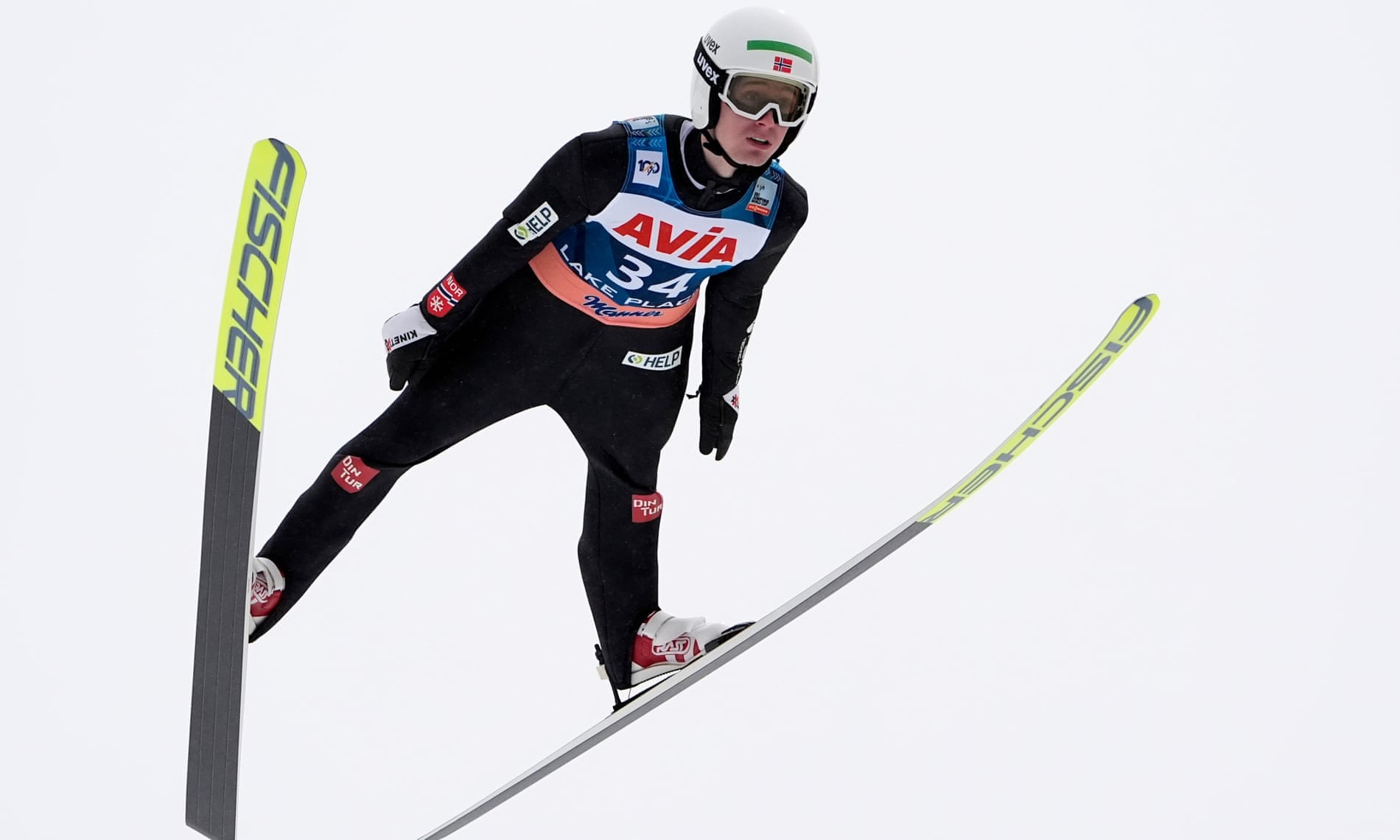 |
Kristoffer Eriksen Sundal was one of three Norwegian ski jumping athletes suspended. Photo: AP |
Initially, those involved denied the accusations. However, a video later emerged, showing competition suits being modified with a sewing machine in a hotel room, witnessed by Magnus Brevig, then-head coach of the Norwegian national team.
Brevig admitted: "We intervened and modified the suit to circumvent the rules." He explained that an additional seam, made with stiffer thread, was added to enhance stability and lift, enabling athletes to achieve longer flights.
Following the incident, the implicated athletes received suspensions, while Brevig, an assistant coach, and a technical staff member were dismissed. The International Ski and Snowboard Federation (FIS) subsequently updated its regulations, instituting a zero-tolerance policy against any unauthorized suit modifications.
Despite these measures, controversies persist. Recently, Slovenian athlete Timi Zajc, a contender for the Four Hills Tournament championship, faced disqualification after his competition suit was found to be 4 millimeters shorter than regulations allowed.
Under current FIS regulations, suit design is rigorously controlled: rules govern everything from permissible seam types to the fabric-to-body distance at designated points, which must remain between two and four cm.
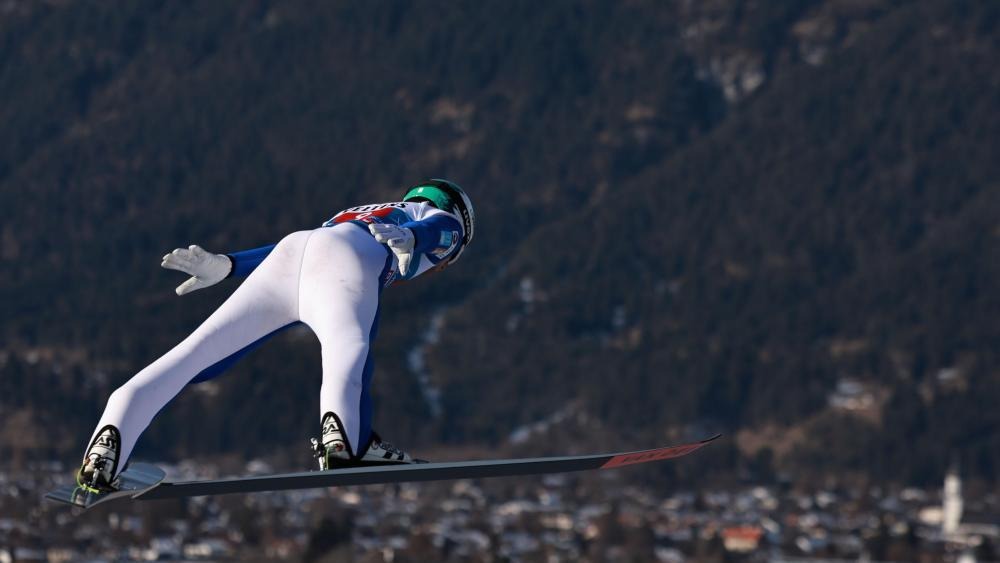 |
Timi Zajc competed at the Four Hills Tournament in Garmisch-Partenkirchen, Germany on 1/1. Photo: ANSA |
Aerodynamically, a looser suit increases the contact area with the air, generating more lift during flight. A similar effect occurs with suits that are too short; they stretch during jumps and flight, expanding their wind-catching surface and extending flight distance.
However, according to Spanish newspaper Marca, more shocking allegations circulate within the ski jumping community: claims of athletes attempting to gain an unfair aerodynamic advantage by increasing penis size through hyaluronic acid injections. Theoretically, a more prominent lower waist area could provide an aerodynamic benefit during flight.
Before each season, athletes' stride length is measured using a 3D scanner, with the lowest point of the genital area serving as a key reference. This measurement dictates the design of the competition suit. If this reference point is artificially lowered, the suit will be cut looser, thereby creating a competitive advantage.
Some athletes are suspected of injecting hyaluronic acid before measurements to deceive the 3D scanner. In the past, when manual inspections were common, such fraudulent practices were reportedly even more widespread, with some cases involving the alleged use of silicon-filled condoms to add a few millimeters during checks.
Matthias Hafele, head of the FIS equipment department, has not directly commented on these specific allegations. However, he stated that the federation is exploring new measures. Hafele noted: "We do not have immediate plans for additional measurements. However, the long-term goal is to base measurements on bone structure rather than soft tissues."
Hoang Thong (according to Marca)