Malaysia national team coach Peter Cklamovski has delivered a blunt assessment of the country's youth football development, likening it to "sleepwalking" for a decade. He warns that the current underperformance could lead to another wasted decade if immediate action is not taken.
Cklamovski highlighted Malaysia's consistent failure to qualify for major youth tournaments. The nation missed the U17 Asian Championship finals in the two most recent cycles (2025, 2026). At the U20 level, they qualified only once in the last 8 cycles, in 2018. The U23 squad also missed the finals earlier in 2026, further underscoring the challenges.
Regionally, Malaysian football has struggled to reach a final at the U19 and U22 levels in Southeast Asia for an extended period. The U22 team, under coach Nafuzi Zain, recently secured a 4-1 victory against Laos in their opening match of SEA Games 33 yesterday, 6/12. However, their progression past the group stage remains uncertain, with a crucial match against strong opponents Vietnam scheduled for 11/12.
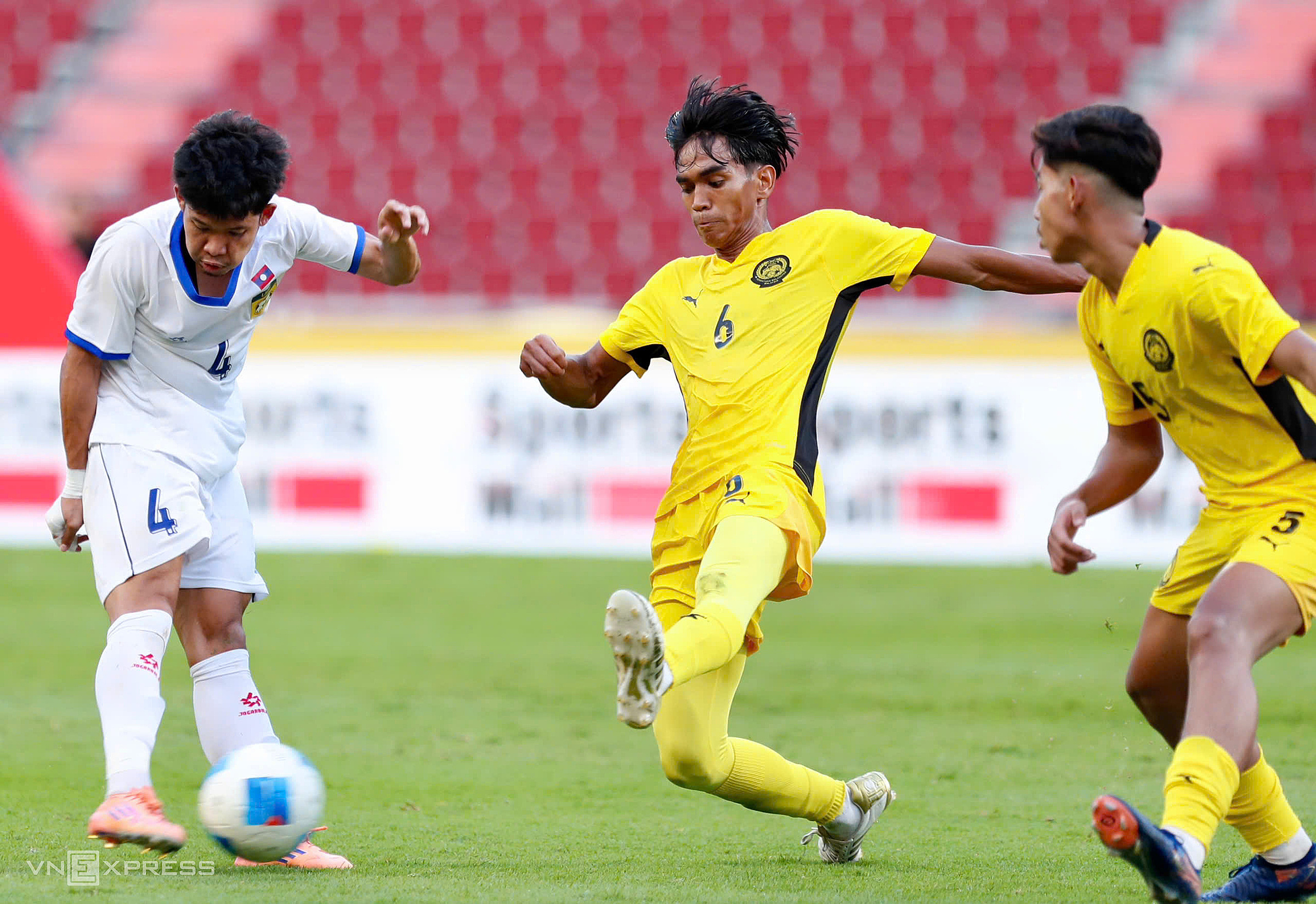 |
Malaysia (yellow jerseys) defeated Laos 4-1 in their opening match of men's football Group B at SEA Games 33, held at Rajamangala Stadium in Bangkok, Thailand on 6/12/2025. *Duc Dong* |
"We have been sleepwalking like this for a decade", Cklamovski told the Malaysian newspaper New Straits Times on 7/12. He emphasized the unconscious nature of their actions and the failure to learn from past experiences. "If we continue to turn our backs, fail to act, and turn a blind eye, everything will fall into oblivion again", he cautioned.
The Australian coach, who took charge of the national team in early 2025, observed significant weaknesses in the youth tournament structure, noting a lack of synchronization across different regions. "Teams at the U13 and U14 levels are lucky to get 10 or 11 matches each year. What hope do we have for the national team level?", Cklamovski questioned, highlighting the insufficient opportunities for young players.
Despite being tasked with achieving immediate results for the national team, the coach, born in 1978, also bears responsibility for long-term planning. He found this dual role challenging due to the chaotic state of youth football, which he identified as a critical weakness for Malaysia.
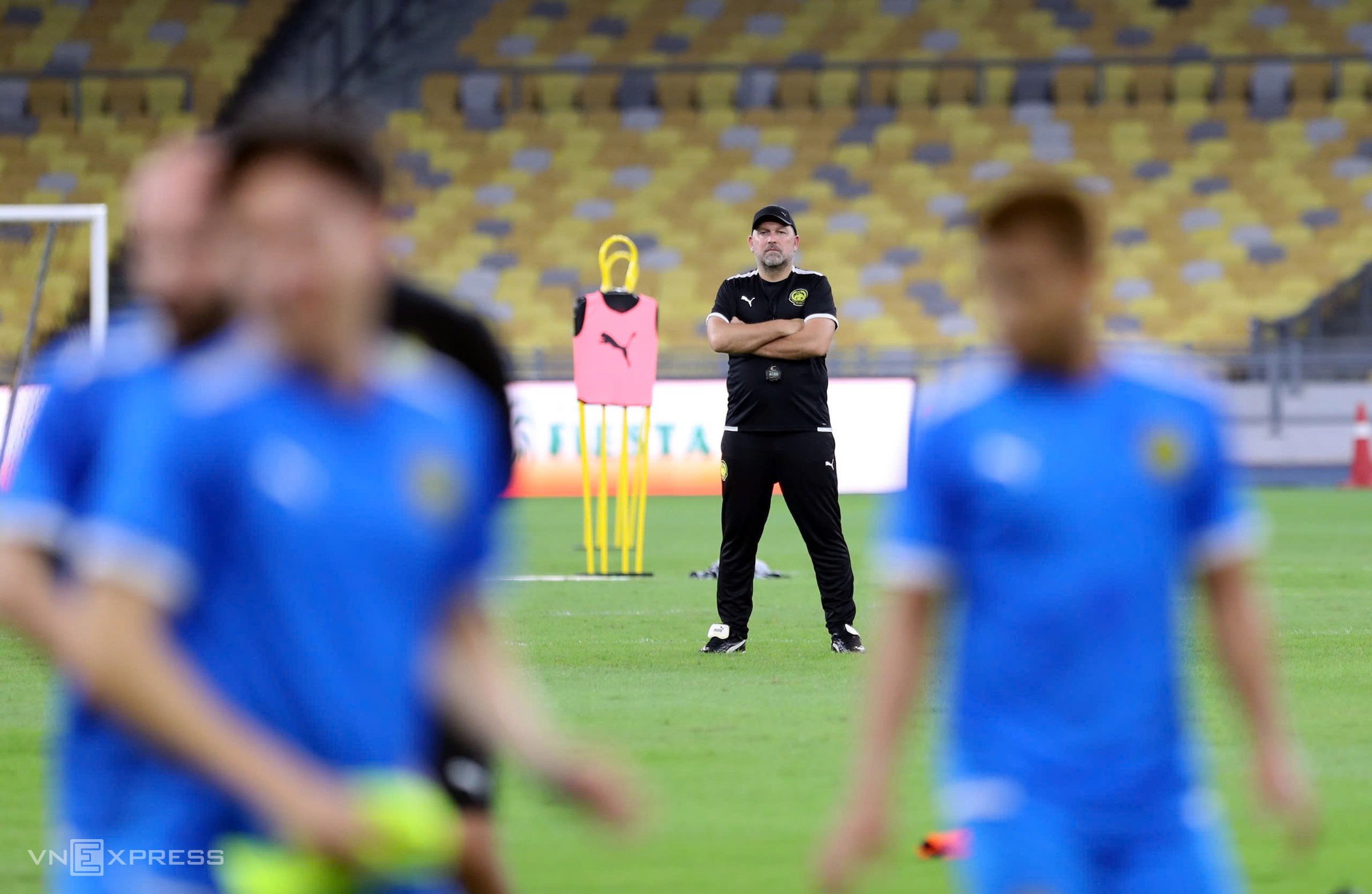 |
Coach Peter Cklamovski (black shirt) during Malaysia's practice session at Bukit Jalil Stadium on the evening of 9/6/2025, one day before their match against Vietnam in the second round of Group F for Asian Cup 2027 qualifiers. *Hai Tu* |
If granted full decision-making authority, Cklamovski outlined a comprehensive plan to revitalize youth football. His vision includes:: improving the training system, integrating it with schools, and empowering clubs to develop their own distinct systems. He also stressed the necessity for Malaysia to cultivate a large and high-quality coaching staff.
"We will establish a school and club system dedicated to youth football development, aimed at nurturing the most elite players", Cklamovski stated. He drew parallels with Japan's successful model, noting, "Japan's system is very solid, shaped like a pyramid after 30 years of implementation, and they already have a 50-year plan for the future".
Cklamovski's proposals are backed by his extensive experience in youth football development in Japan and Australia. In J-League 1 in 2024, he played a key role in FC Tokyo fielding the youngest squad in the club's history, with an average age of 22,7. The team also ranked 5th in Asia for minutes played by U21 players.
Prior to this, during his tenure leading U17 Australia, Cklamovski was instrumental in reforming the scouting and talent identification system. He introduced the concept of "high-quality matches", which became a national standard, ensuring the best players from all regions regularly competed against each other.