Matchdays in English women's football were once characterized by their approachability and friendly atmosphere. At Manchester United Women's home ground, fans could often see players driving themselves to the stadium, stepping out among the crowd, and calmly heading to the changing rooms. At Kingsmeadow, Chelsea Women's home stadium, a player once cycled to the ground, braking sharply on the asphalt before joining the throng.
This "intimacy" was once considered a defining characteristic that fostered the growth of women's football. However, the line between closeness and intrusion has become increasingly fragile.
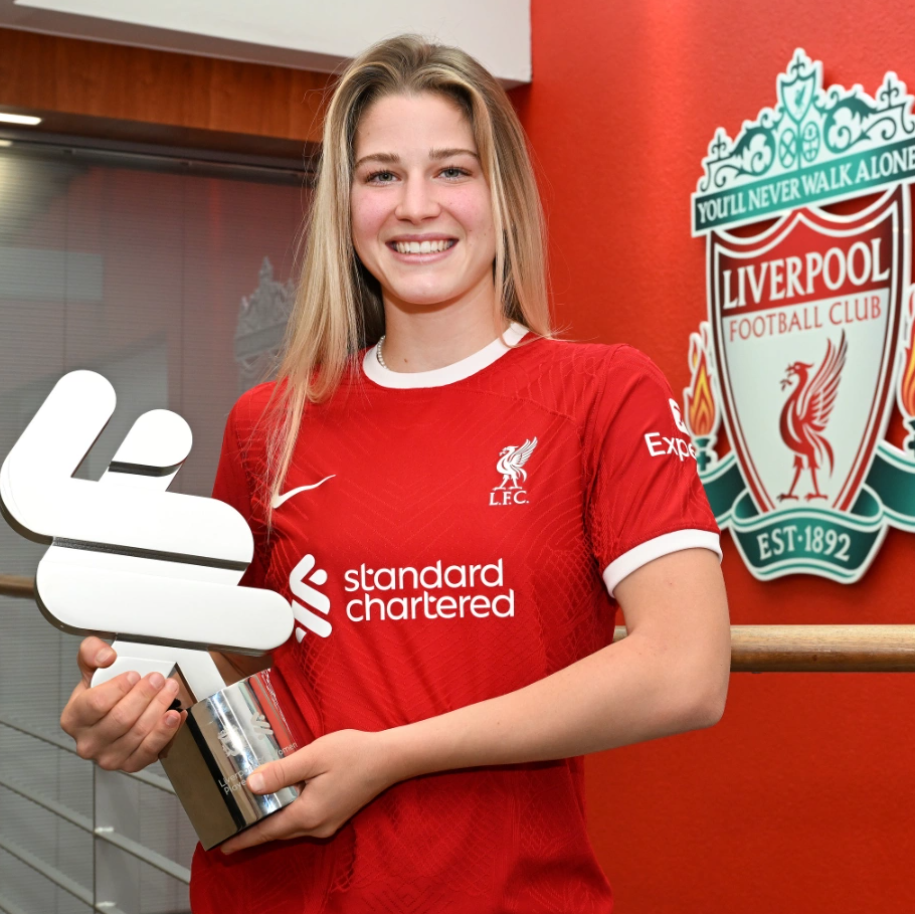 |
Marie Hobinger receiving the player of the month award for 10/2023. Photo: Liverpool FC
In late 2025, Liverpool midfielder Marie Hobinger, 24, publicly revealed that she had been subjected to persistent sexual harassment and stalking messages on Instagram from a 42-year-old businessman. This individual even traveled by train from London to Manchester to attend one of her matches.
After her club provided her with private security personnel, Hobinger identified the man in the stands and reported him to the police. The Westminster Court subsequently sentenced the defendant to 18 months of probation and a two-year restraining order for stalking.
In her victim impact statement to the court, Hobinger stated that she felt distracted and insecure whenever she saw someone raising a phone to take pictures from the stands. "No woman, regardless of her profession, should have to endure this", she said.
Experts suggest that this incident is merely the "tip of the iceberg".
Following Euro 2020, male players such as Bukayo Saka, Jadon Sancho, and Marcus Rashford faced a wave of racist attacks. However, women's football is now confronting a different form of abuse: one that is sexualized, gender-specific, and highly personalized.
Chelsea Women's head coach Sonia Bompastor recently acknowledged that threats are a serious issue, especially given that security measures in women's football are not as stringent as in men's football.
In 3/2025, during a match between Liverpool and Arsenal at Emirates Stadium, defender Taylor Hinds was subjected to sexually explicit taunts from a spectator while receiving treatment on the pitch for a head injury. The individual was subsequently asked to leave the stadium.
According to Nikki Doucet, Chief Executive Officer of the Women's Super League (WSL), the increasing rate and evolving nature of online abuse are at an alarming level.
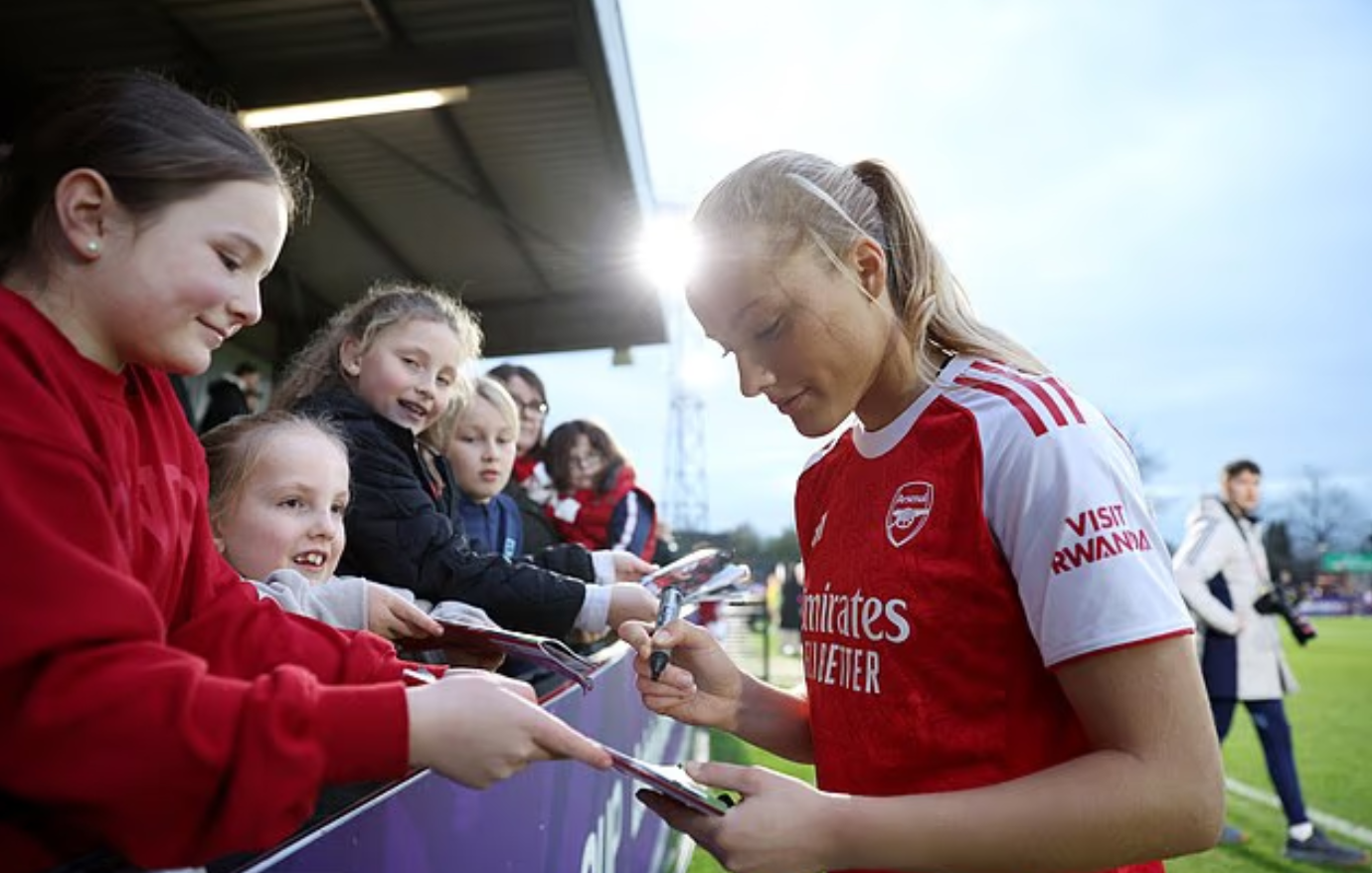 |
Arsenal Women's new signing, Smilla Holmberg, posted a video expressing her excitement about joining the club, but the comments section quickly filled with sexist and sexual remarks, forcing her to disable comments. Photo: FA
Recently, Arsenal's new signing, Smilla Holmberg, saw the comments section beneath her debut video inundated with inappropriate content, compelling the club to disable comments on Instagram and X social media platforms.
Unlike men's football, many female players significantly rely on social media to boost their income through endorsements. With a fan base often following individuals rather than clubs, they are compelled to build "personal brands" to improve their financial standing.
However, this very reliance makes them vulnerable targets. Messages like "I know where you live" or "I know what car you drive" create a fear that transcends the digital realm.
A study by Sheffield Hallam University indicates that many WSL teams lack specific policies to protect female players. Regulations are often developed based on the context of men's football, whereas the particular nature of abuse targeting women is distinct and more profound.
In response to this situation, several major clubs have begun enhancing their technological measures. A few weeks ago, Chelsea Women announced a partnership with Signify Group, an organization that uses artificial intelligence and open-source data to monitor, analyze, and respond to online threats. Arsenal has also collaborated with this entity since 2021.
Concurrently, many teams, including Arsenal, Manchester City, West Ham, and Manchester United, are implementing separate autograph zones instead of allowing players to interact freely after matches.
Chelsea captain Millie Bright once spoke out after being verbally abused by a fan: "We are not collectibles. We are human beings".
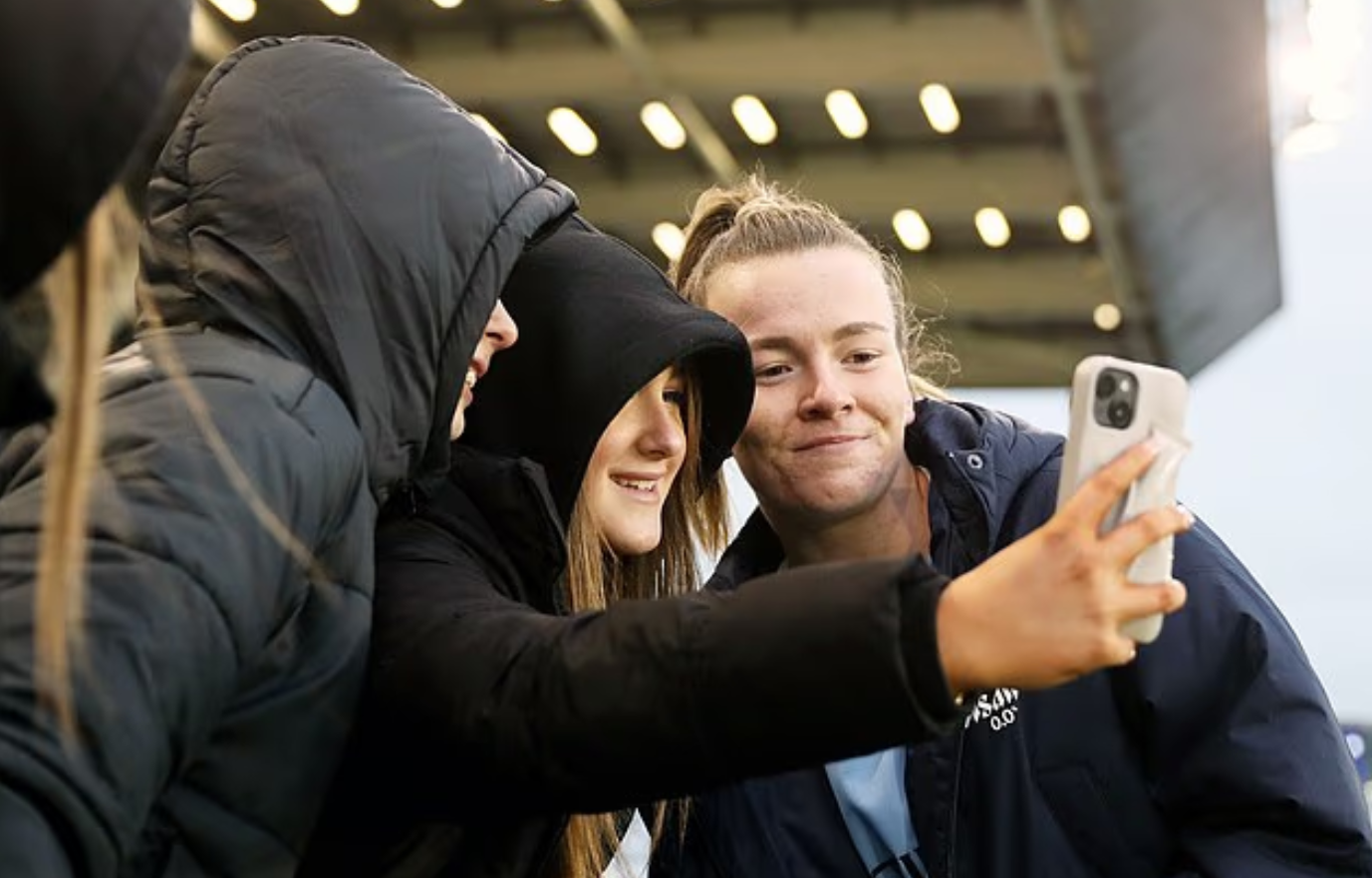 |
Lauren Hemp of Manchester City Women taking a photo with a fan after a match against Everton at Joie Stadium. Photo: WSL
WSL officials have stated that they are collaborating with regulatory bodies, police, and organizations such as Kick It Out to effectively implement the new Online Safety Act in England. They are also exchanging experiences with the Women's National Basketball Association (WNBA) to learn from its model for protecting female athletes.
However, experts note that this is not solely a sports issue. When players must consider leaving social media for self-protection, or worry every time they go out alone, the boundary between the pitch and society has blurred.
Hobinger's case underscores the urgency of policy discussions. Without robust and timely measures, the sustainable development of women's football risks being jeopardized precisely by its growing success and appeal.
By Hong Duy