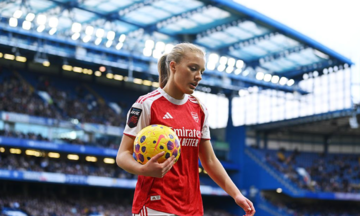
The current Premier League season has witnessed a notable rise in goals from direct free-kicks and long-range shots, igniting discussions among players, coaches, and experts. This increase is particularly striking as it coincides with the league's transition to a new Puma ball, after 25 years of partnership with Nike.
In round 25, Dominik Szoboszlai scored a stunning free-kick that curled around the wall and nestled into the inside of the left post, leaving goalkeeper Gianluigi Donnarumma with almost no chance to react. This marked the third time this season the Hungarian midfielder had scored a spectacular free-kick – shots characterized by their spin, late swerve, and high speed. Erling Haaland's thunderous strike against Fulham last week was the 100th goal from outside the box this season, the highest frequency since the 2013-2014 season. Morgan Rogers of Aston Villa has also consistently scored from distance. Goals from Anton Stach for Leeds and Reece James against Newcastle share common traits: the ball travels with power, spin, and dips quickly, making it difficult for goalkeepers to anticipate.
 |
Dominik Szoboszlai scores a free-kick during Liverpool's 1-2 loss to Man City at Anfield, Liverpool, United Kingdom, on the evening of 8/2/2026. *Photo: Premier League*
The number of direct free-kick goals has already surpassed the total from the past two seasons, with approximately 120 matches still to play. This surge in long-range goals has fueled speculation about the new Puma Orbita Ultimate PL ball, which replaced the Nike ball this season.
Manager Mikel Arteta previously suggested that the ball negatively impacted Arsenal, contributing to their 0-2 loss to Newcastle in the first leg of the League Cup semi-final in the 2024-2025 season. Goalkeeper David Raya also admitted needing time to adapt after Szoboszlai scored a free-kick against him earlier in the season. "The grip is different, the feel of the shot is different. We have to adapt after many years of playing with Nike balls," the Spanish goalkeeper stated. While blaming the ball is often met with skepticism, manager Pep Guardiola also complained about the Mitre ball used in the FA Cup last season, claiming it was harder to control than the balls used in the Champions League or Premier League.
 |
Manager Pep Guardiola throws a ball during Man City's 3-1 victory over Plymouth at the Etihad Stadium, Manchester, England, on 1/3/2025. *Photo: BBC*
Statistical data suggests goalkeepers are indeed facing difficulties. According to Opta, a leading global statistics company, the number of "preventable" goals from long-range shots has significantly decreased compared to the past two seasons. The save percentage from outside the box has dropped to its lowest in at least 12 years (81%), while the conversion rate for long-range shots into goals is nearly 5% – the highest since the 2006-2007 season.
A Premier League goalkeeper coach revealed that "the ball feels faster, and if you don't catch it centrally, it deviates much more." However, the performance department of another club stated that they had initially worried the Puma ball would have excessive spin like the League Cup ball, but after practical testing, they found no significant difference compared to the Nike ball, and thus did not alter their training regimen.
Ieuan Phillips, a researcher at the Institute of Sports Technology (Loughborough University), directly tested balls from Puma, Nike, Adidas, and Mitre. The testing process involved two steps: players striking the ball, recorded by high-speed cameras at 1,000 frames per second to analyze force and spin; then, a specialized robot – a mechanical arm weighing nearly 2/3 of a ton, one of only three in the world – precisely replicated the same shot repeatedly to eliminate errors.
According to Phillips, all balls must meet strict FIFA standards for size, weight, and pressure, with a margin of error of about 10%. "Fundamentally, a football is still a football. The differences are controlled within a very narrow range," he said. The Puma Orbita Ultimate PL ball features 12 thermally bonded panels, whereas the previous Nike Flight ball had only four panels with deep, heat-welded grooves. While the different construction might create a slightly different feel upon contact, it is very difficult to prove that it significantly alters the ball's flight path.
"The way a player strikes the ball, the speed, the angle of contact, the spin, and the axis of rotation are the decisive factors. The differences in technique are far greater than the differences between balls," Phillips asserted. Regarding Szoboszlai's strike, he suggested that even with a Nike ball, it was highly probable the ball would have still curled into the net. "It was simply a beautiful shot," he added.
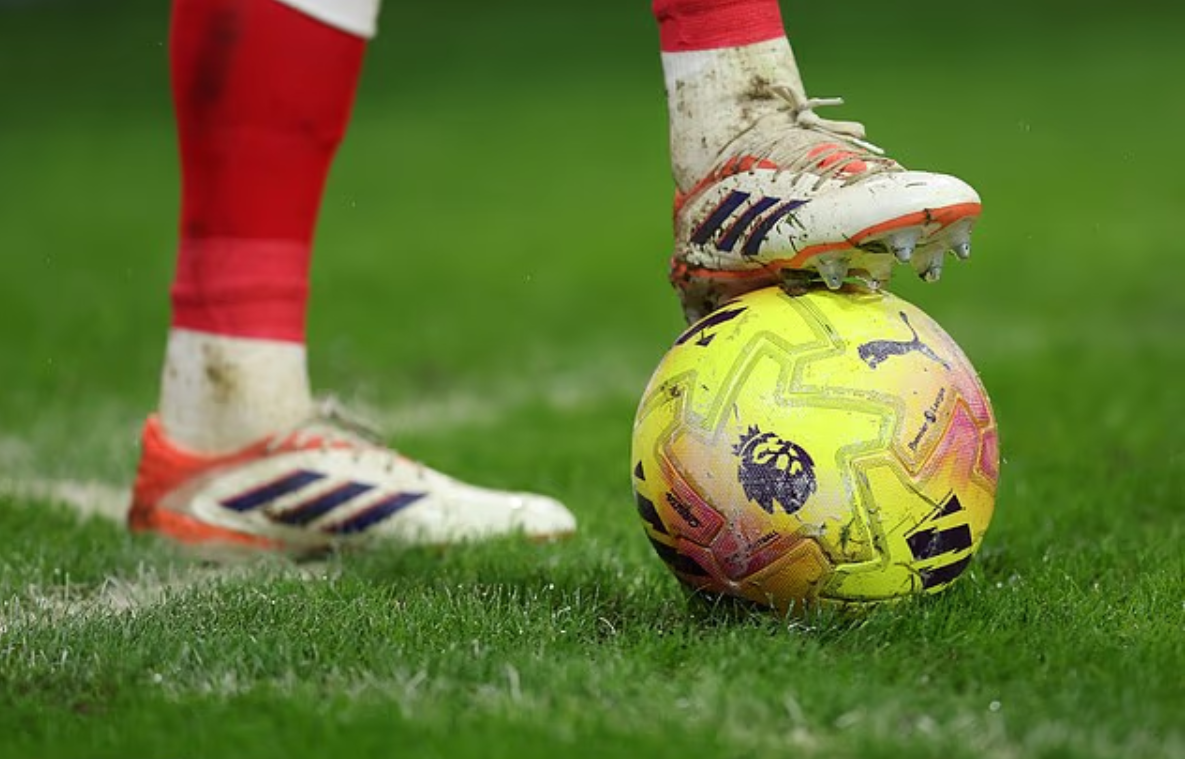 |
The Puma Orbita Ultimate PL ball is being used in the Premier League this season. *Photo: Premier League*
The increase in long-range goals also reflects tactical trends. As more teams adopt deep defensive lines, closing off the penalty area, attacking teams are forced to shoot from outside the 16,5-meter box rather than attempting intricate play in tight spaces. While the new ball might feel different during an initial adaptation phase, data and technical tests suggest that the differences are not significant enough to fully explain the "deluge of spectacular goals" in the Premier League. The explanation may not lie with the Puma ball, but rather with the technique, confidence, and increasing quality of the finishers.
Hong Duy (according to Daily Mail)