When he took charge of Real Madrid in 2010, Mourinho was at the pinnacle of his career. He had just guided Inter Milan to a historic treble, which included the Champions League title. The Portuguese coach had also previously won the competition with Porto. At that time, Real Madrid saw Mourinho as the only individual capable of ending Barcelona's dominance under Pep Guardiola.
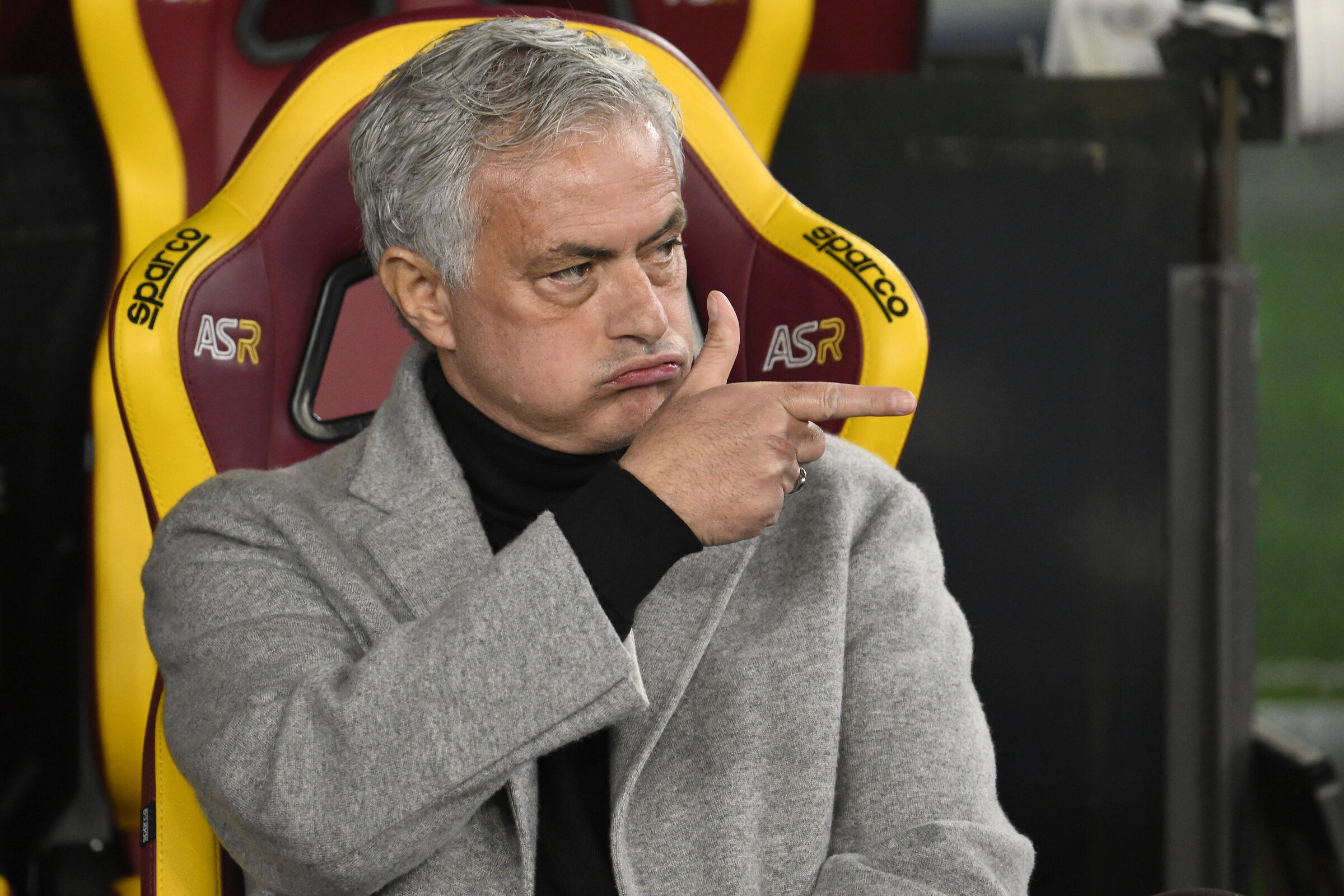 |
Coach Jose Mourinho giving instructions during the Coppa Italia round of 16 match between Roma and Cremonese at Olimpico Stadium, Rome on 3/1/2024. Photo: Reuters |
Mourinho's first tenure at the Bernabeu spanned only three seasons, yet it left a significant impact. He guided Real Madrid to the La Liga title in the 2011-2012 season with 100 points and 121 goals, which were Spanish football records at the time. He also secured a Copa del Rey and a Spanish Super Cup, both achieved through victories over Barcelona.
However, Mourinho failed to achieve his primary objective: leading Real Madrid to their 10th Champions League title. The team was eliminated in the semi-finals three consecutive times. Crucially, his tenure concluded amid deepening conflicts with key players such as Iker Casillas and Sergio Ramos.
Returning to Real Madrid this summer, Mourinho will find himself in different circumstances. The most noticeable change is his professional standing. After departing Madrid in 2013, Mourinho continued to secure titles at Chelsea and Manchester United. He won the Premier League with Chelsea in the 2014-2015 season, then lifted the Europa League trophy with Manchester United in 2017.
However, subsequent years were less illustrious. Mourinho did not win any trophies at Tottenham. He guided Roma to the UEFA Conference League title in 2022 and reached the Europa League final the following year, but these competitions do not carry the same prestige as the Champions League or the Premier League. Subsequently, he managed Fenerbahce and then Benfica, failing to secure any additional silverware.
This career trajectory indicates that Mourinho no longer consistently manages clubs considered top contenders for the Champions League, unlike his early career. In 2010, Real Madrid appointed a manager fresh from European triumph; now, they are offering an opportunity to a coach who has endured more varied fortunes.
Mourinho's role has also evolved. 16 years ago, he was recruited to overcome Barcelona. His image then was closely linked with his confrontations with Guardiola and the ambition to reinstate Real Madrid as Europe's top club.
This time, Mourinho's widely discussed task is to rebuild an unsettled squad. Real Madrid has just endured two seasons that fell short of expectations, compounded by numerous internal issues. The team has been impacted by a series of injuries and dressing room conflicts. Consequently, Mourinho's arrival is seen more as a choice to restore order than to instigate a tactical revolution.
Nonetheless, some aspects appear unchanged. Over the 13 years since his departure from the Bernabeu, Mourinho has consistently been linked with narratives of conflict. From Casillas and Ramos at Real Madrid, Hazard and Diego Costa at Chelsea, Pogba at Manchester United, to recent controversies at Benfica concerning the Vinicius racism incident, the Portuguese coach consistently generates varied opinions.
Mourinho also maintains his familiar approach of shielding players from external criticism. This philosophy has been a constant throughout his career, from Porto, Chelsea, and Inter Milan to the present day.
Consequently, a paradox emerges in this reunion. Mourinho initially departed Real Madrid partly due to dressing room discord, yet he is now expected to help mend a squad confronting similar issues.
Hoang An (according to Cadena SER)