 |
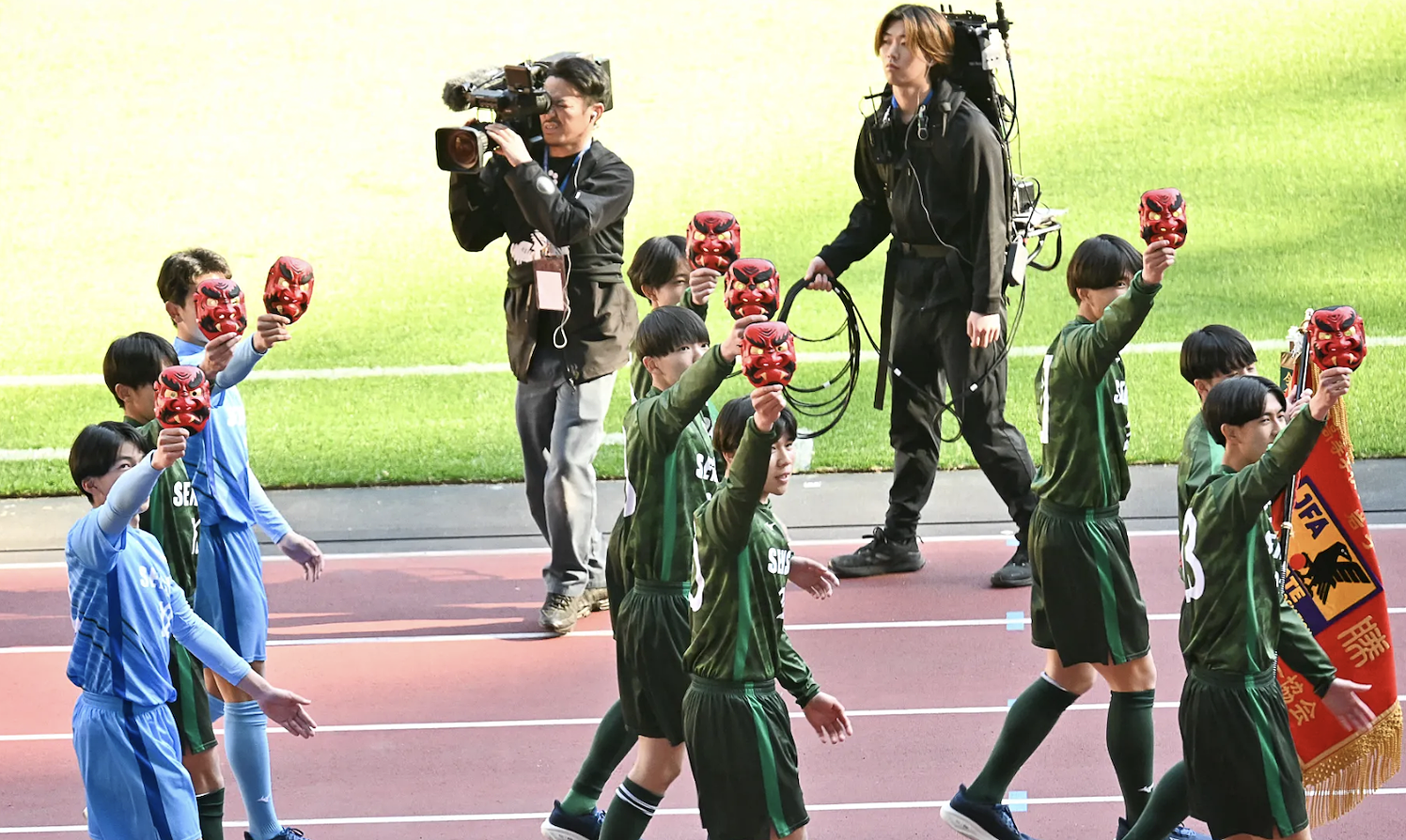
Senshu Kitakami High School, representing Iwate prefecture, made its fourth appearance and second consecutive participation in the tournament. The players, dressed in green uniforms, paraded with bright smiles and held masks depicting the Onikenbai (Devil Sword Dance) from their hometown. |
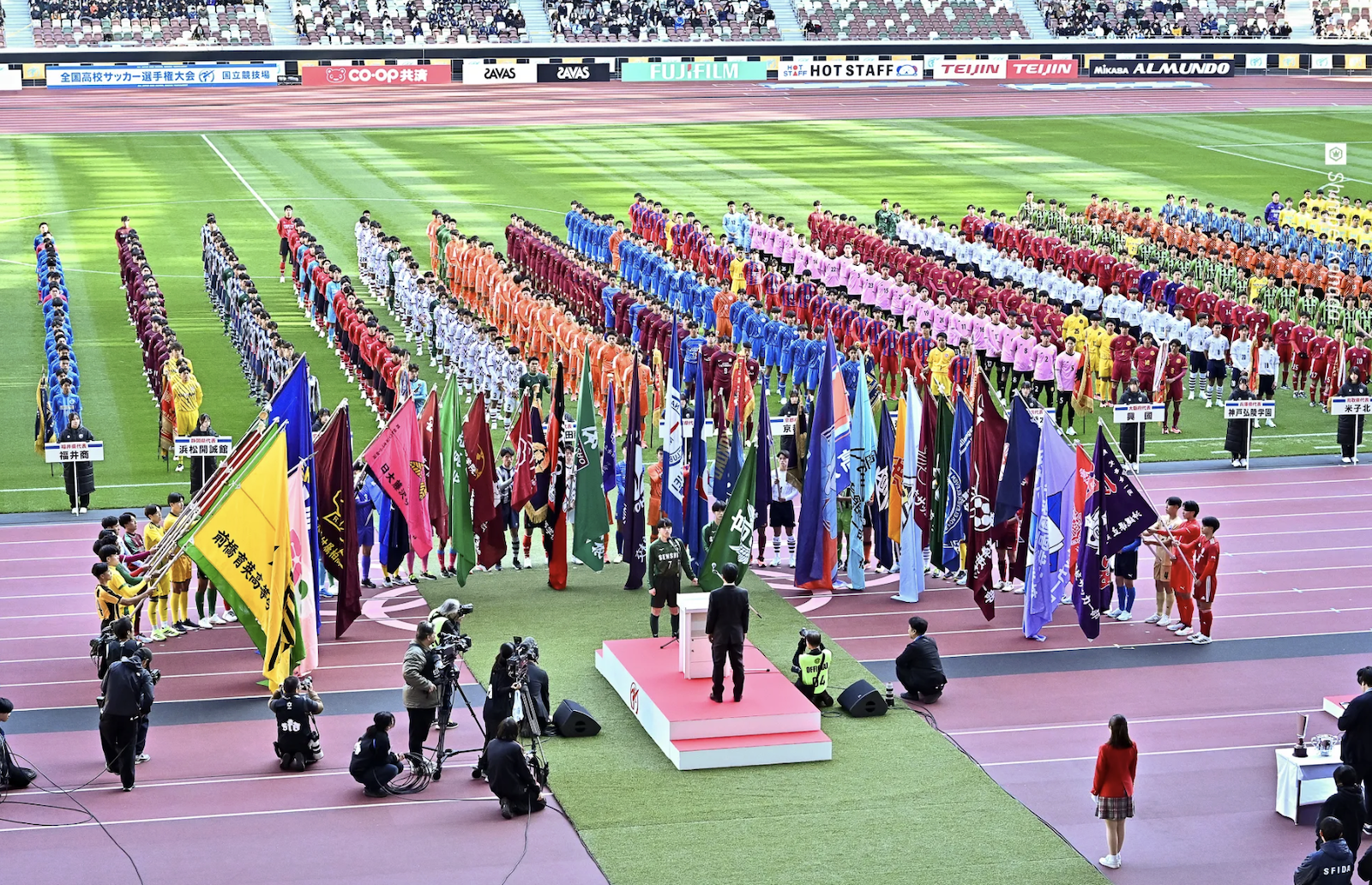
The opening ceremony took place on the morning of 28/12 at Japan National Stadium in Tokyo, which has a seating capacity of 80,000. The tournament, first held in 1917, is now in its 104th edition.
The competition brings together 48 high school teams from 47 prefectures, with Tokyo having two representatives due to its significantly larger number of teams. Before reaching the national tournament, each team undergoes a rigorous local qualification process. Broadly, the total number of teams participating in the qualifiers each year is around 4,000.
Despite being a student tournament, its professional quality in terms of play and organization rivals that of professional leagues. The all-Japan high school football tournament typically occurs in winter and is one of the three largest competitions for under-18 players in Japan. The other two are the national high school athletic championships, held in summer, and the Takamadonomiya Cup JFA U-18, which includes youth teams from professional clubs.
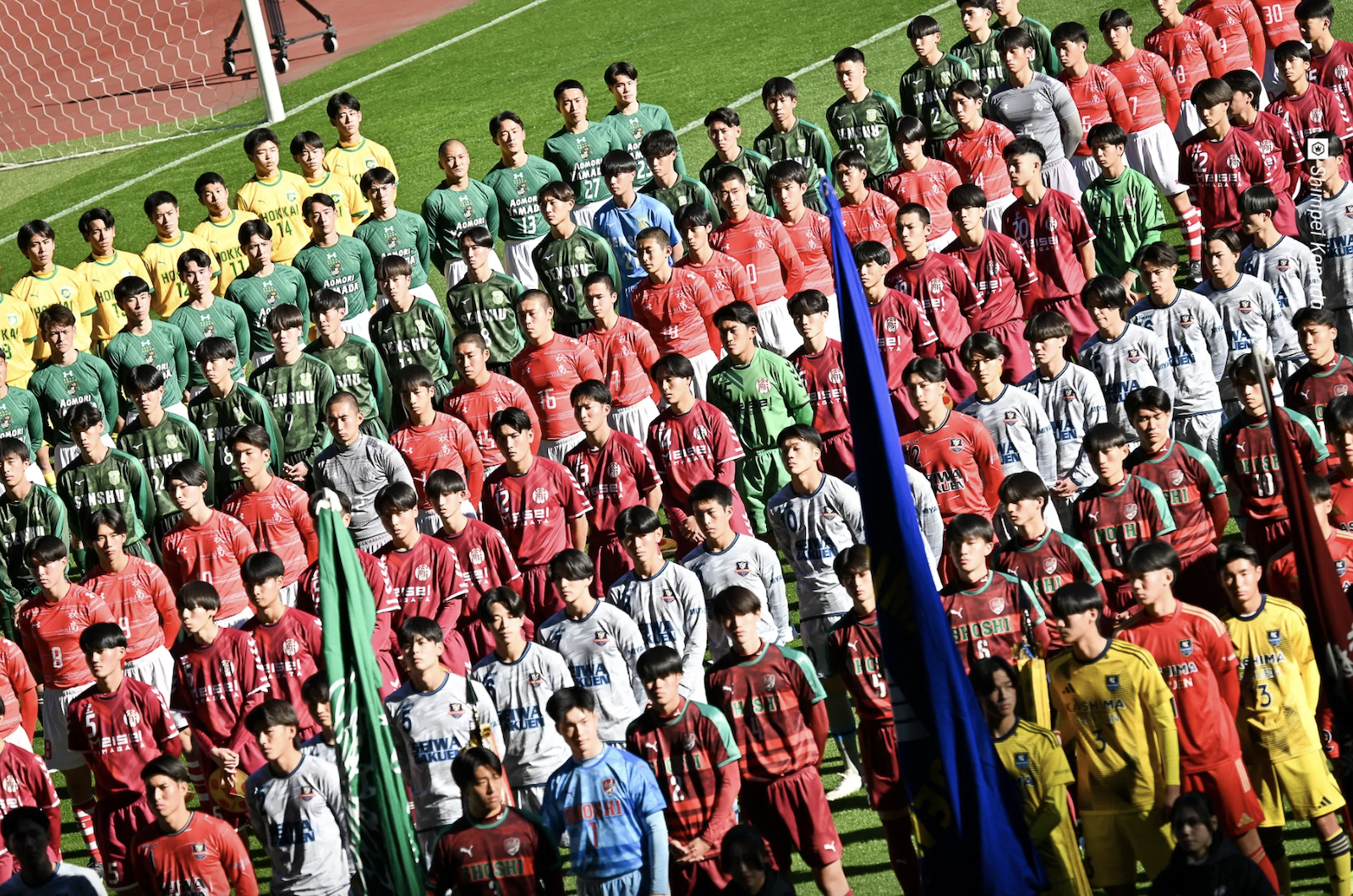 |
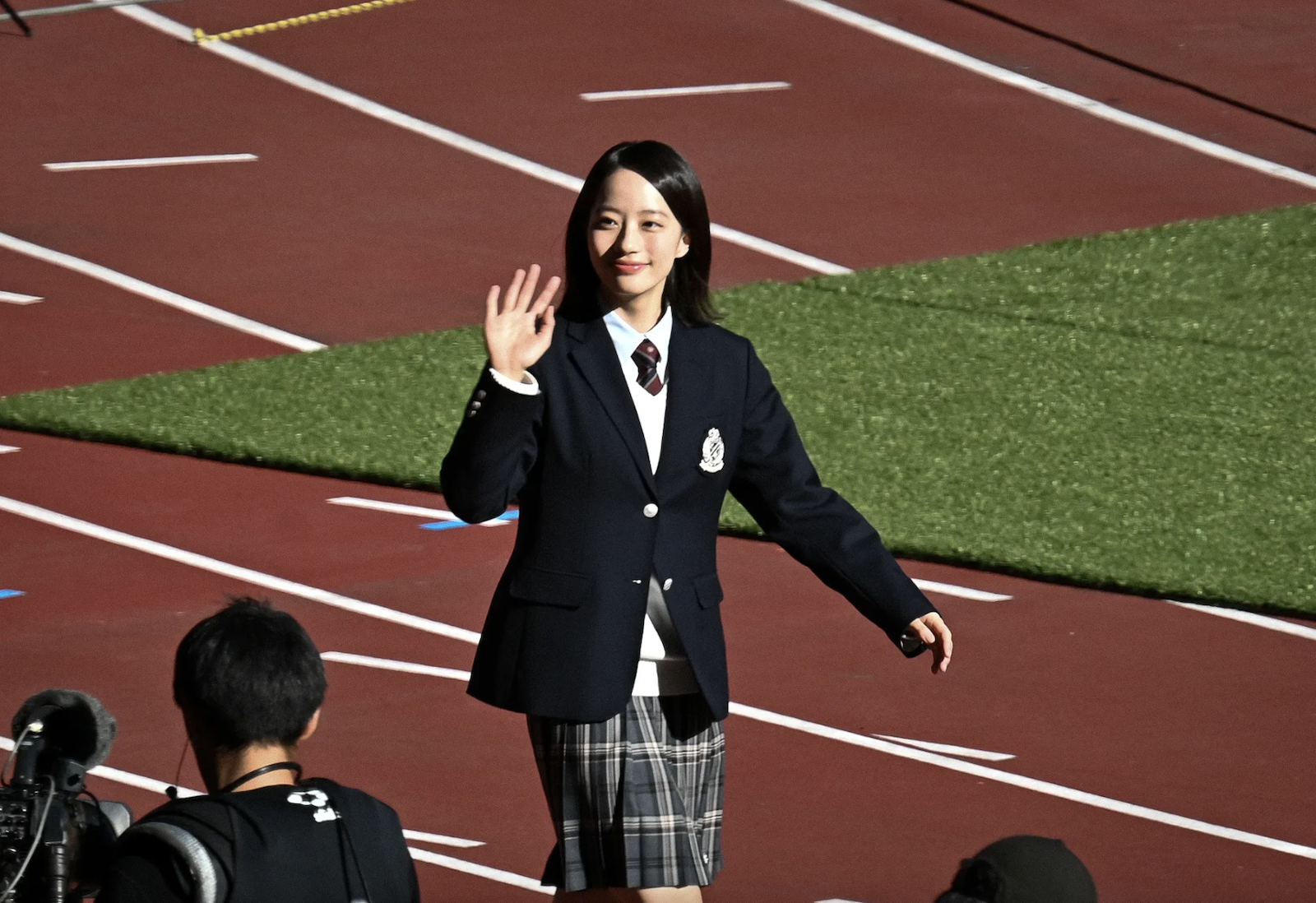
Students also contributed to various organizational aspects, including unique musical performances. Actress Anji Iketaba (in black), popular among Japanese students, further enhanced the charm and appeal of the tournament's opening segment. |
 |
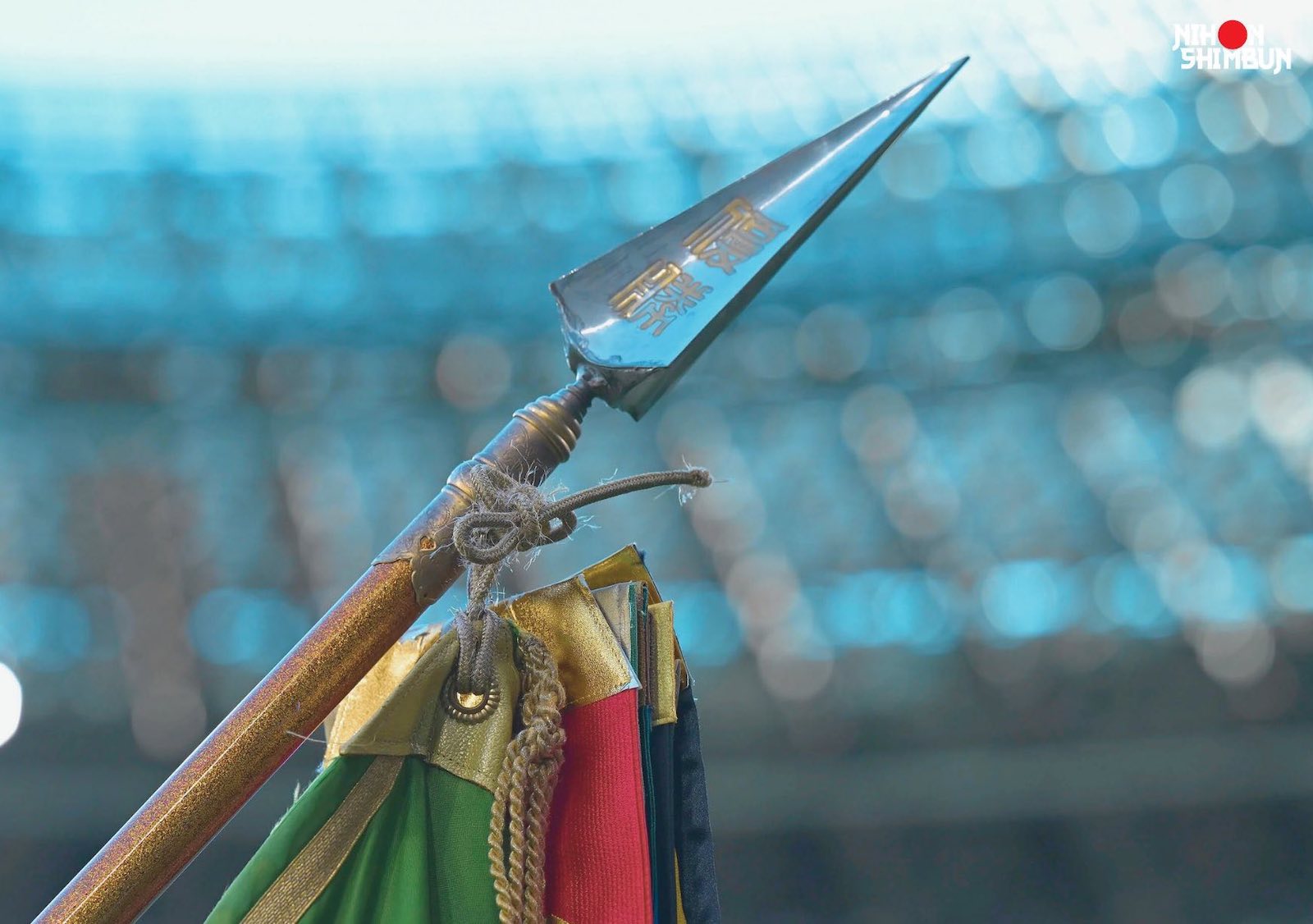
A spear engraved with the word "victory" and adorned with a flag will become the goal for the 48 teams to pursue. The opening ceremony is also considered a countdown marking the approaching end of the players' high school lives. |
Japanese school football consistently serves as a model for Asia. Twelve of the 26 Japanese players who participated in the World Cup 2022 finals developed through school football clubs. Speaking at the opening ceremony, Japan Football Association (JFA) President Tsuneyasu Miyamoto highlighted the importance of school football by referencing Japan's 3-2 victory over Brazil in October.
"Half of the 26 players in that victory came from high school football clubs. After this tournament, I hope these young athletes continue to play in the J-League or abroad, and eventually join the national team," Miyamoto stated. "I believe many players have a strong desire to excel. They can fully realize their potential through daily effort and a spirit of confronting challenges."
 |
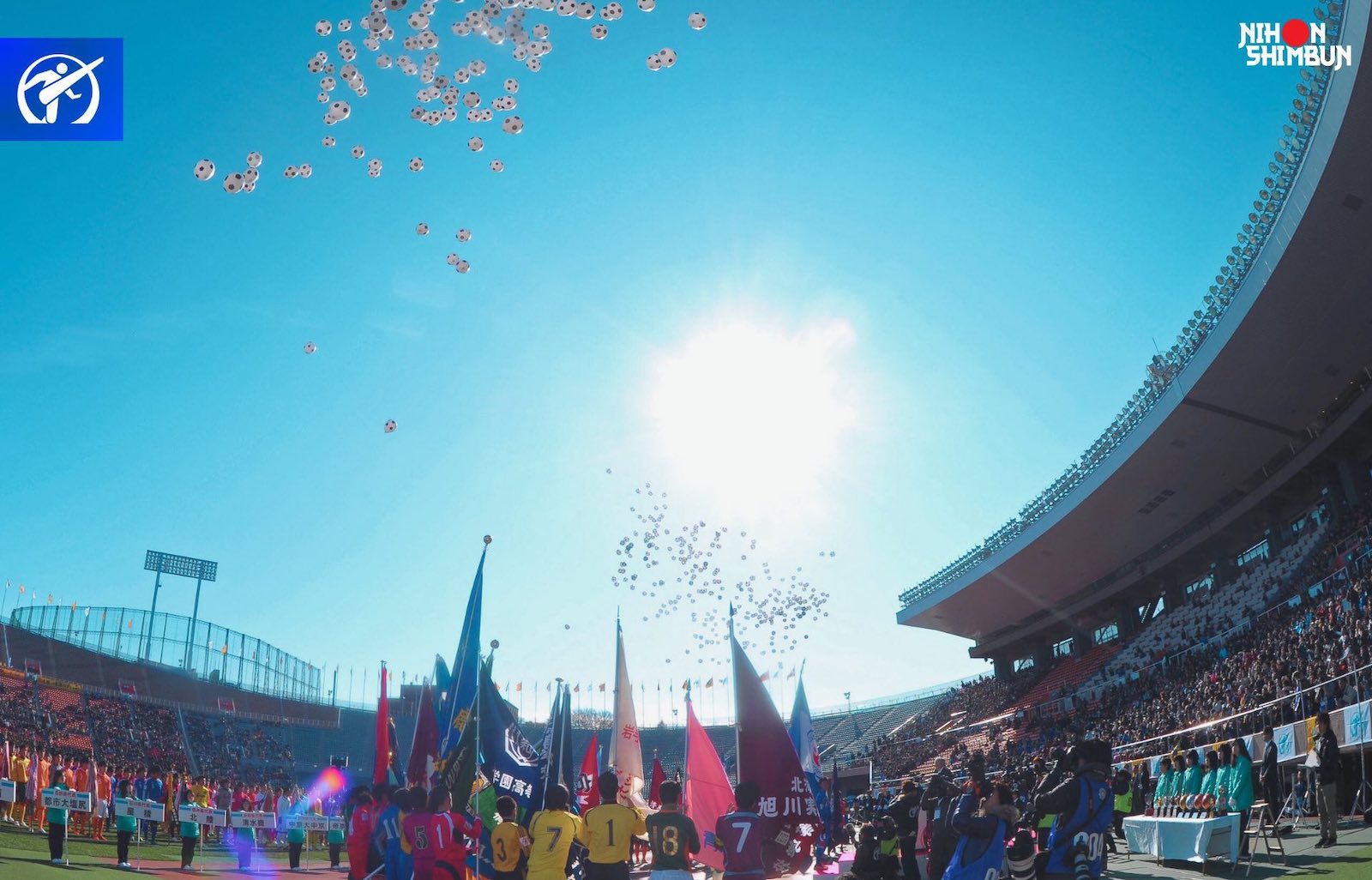
The all-Japan high school football tournament is also the official final competition of their student lives. As the song Wakai Chikara (Youth Power) resonated, balloons were released into the blue sky. |
 |
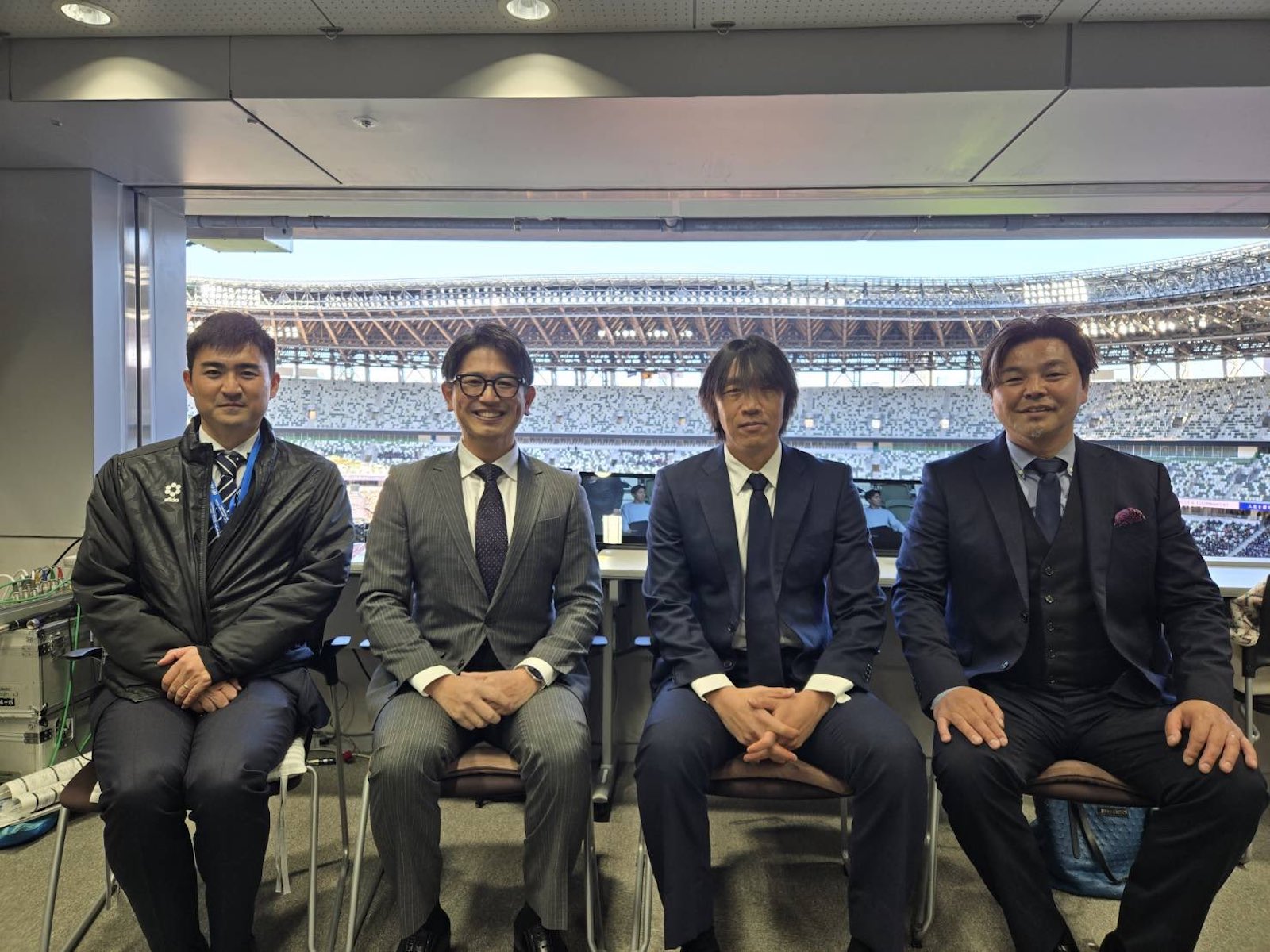
The tournament is organized by the Japan Football Association, in collaboration with 43 private television companies. Japanese football legend Shunsuke Nakamura (second from right) attended the opening match to provide television commentary. |
Maebashi Ikuei High School from Gunma prefecture is the reigning champion. This marks their 28th appearance and fifth consecutive participation in the all-Japan high school football tournament. The team returned the flag and cup to the organizing committee. Before this, a parade of representatives, organized from north to south, showcased the players' determination, team identity, and local culture.
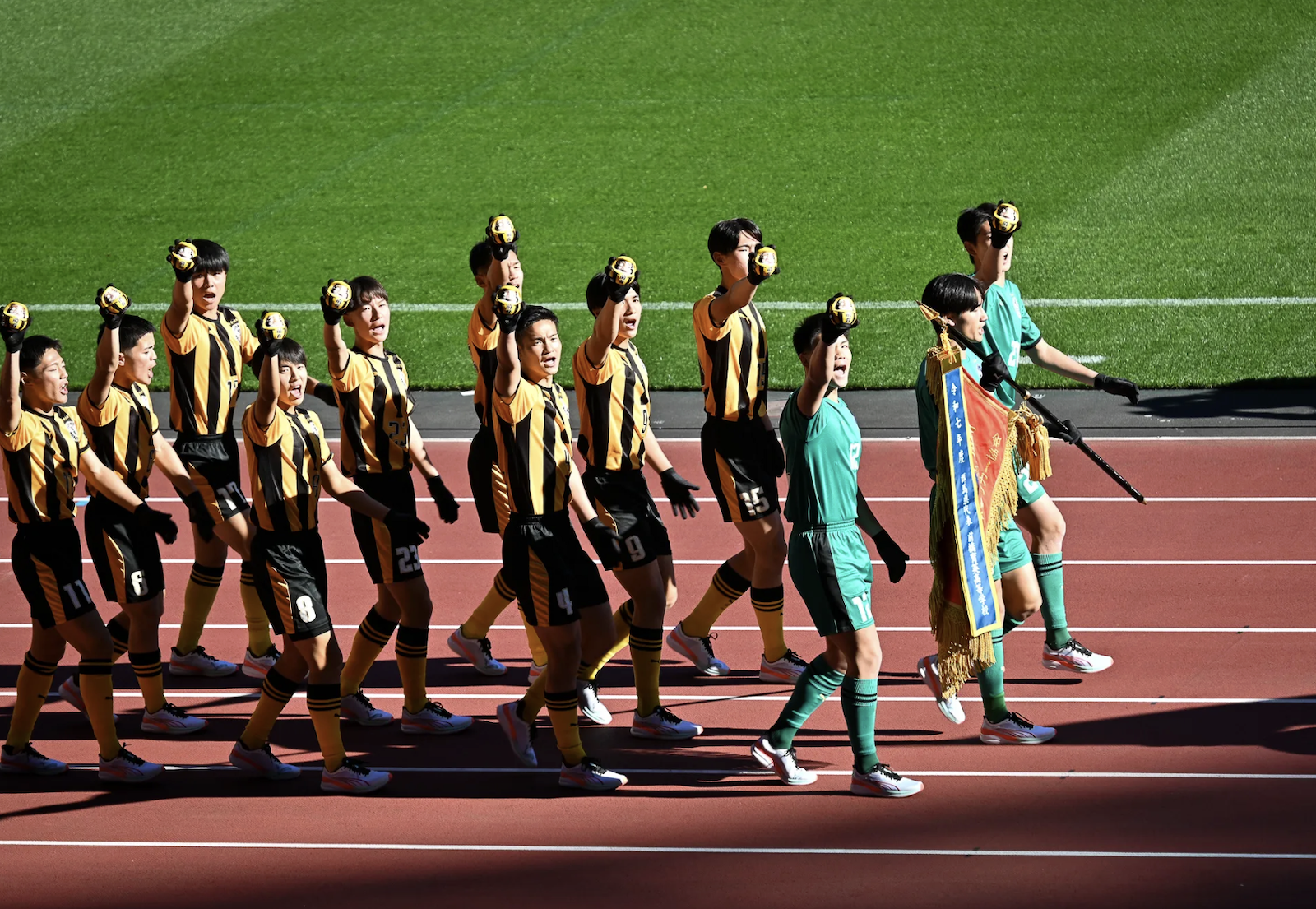
Maebashi Ikuei was led by captain Yuga Takenotani, who carried the championship flag. They marched with vigor and uniformity, chanting "one, two." As they passed the main stands, the players raised a Daruma doll in traditional yellow and black colors. This doll is inspired by Bodhidharma, the founder of Zen Buddhism in China.
 |
Aomori Yamada High School paraded with apples, a specialty of Aomori prefecture. Defending runner-up Ryutsu Keizai Kashiwa (Chiba prefecture) brought a red dog with a black nose as its mascot. Meanwhile, Teikyo University Kani (Gifu prefecture) performed a crab-like march, reflecting a famous local delicacy.
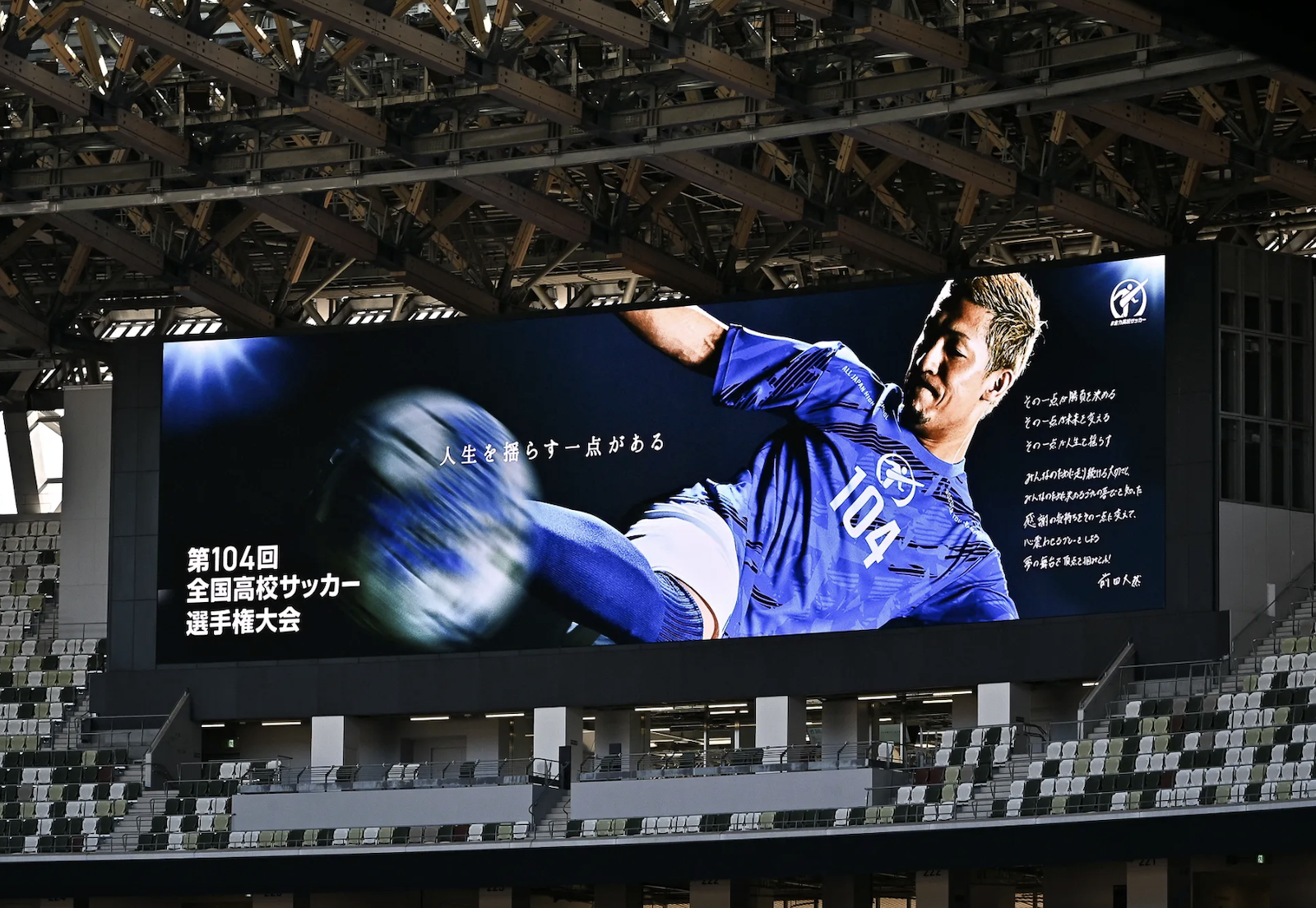 |
Japanese international Daizen Maeda was selected as a motivational representative for the tournament. He wrote: "Just one goal can decide a match. That one goal can change the entire situation. Just one moment can shake your life."
In a pre-tournament interview, Daizen Maeda also emphasized forward momentum. "Even if the ball doesn't come, I think it's important to keep running. Maybe the ball only comes once in ten runs, but I still run repeatedly just for that chance," he said. "The match is also a stage to fight for the team and express gratitude to supporters, including family. I hope they cherish those emotions while playing."
Maeda, born in 1997, previously played for Yamanashi Gakuin High School. He displayed distinct qualities but could not lead his team to the national tournament. After graduating, Maeda joined Matsumoto Yamaga in J-League 2, then became the top scorer in J-League 1 for Yokohama F. Marinos before moving to Scottish club Celtic. In the 2024-2025 season, he scored 33 goals, helping his team win the national championship and qualify for the UEFA Champions League.
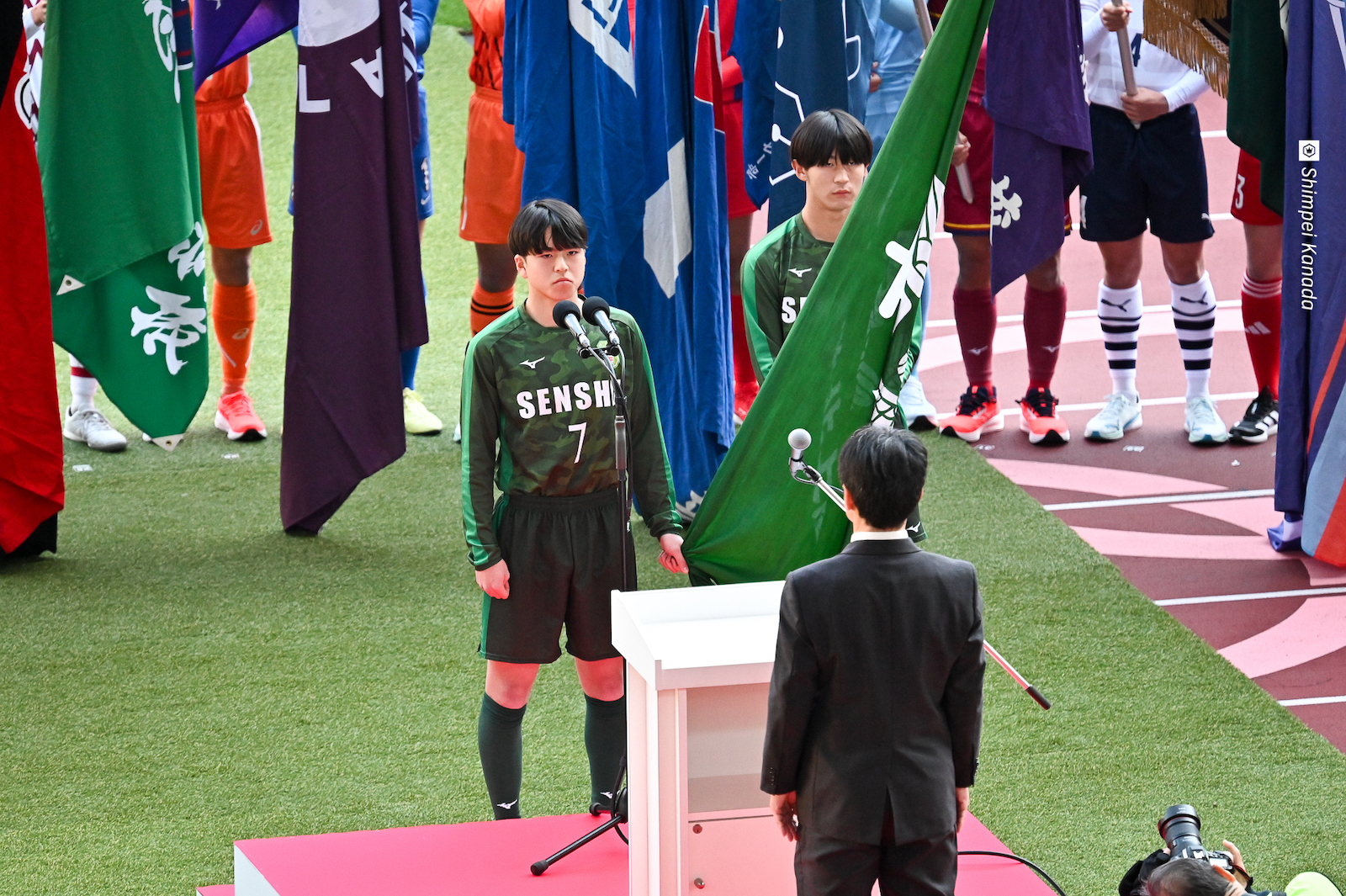 |
Captain Yoshiike (number 7) of Senshu Kitakami High School was chosen to deliver the player's oath. "I pledge to demonstrate on the field our unity, trust in our teammates, and the efforts we have collectively accumulated, fighting with all our might for every moment," the player declared.
Yoshiike also spoke about baseball superstar Shohei Ohtani, who hails from the same Iwate prefecture and was recently honored as the best player in Major League Baseball (MLB). "I hope that many players participating in this tournament will become world-class athletes like Ohtani."
 |
 |
 |
 |
 |
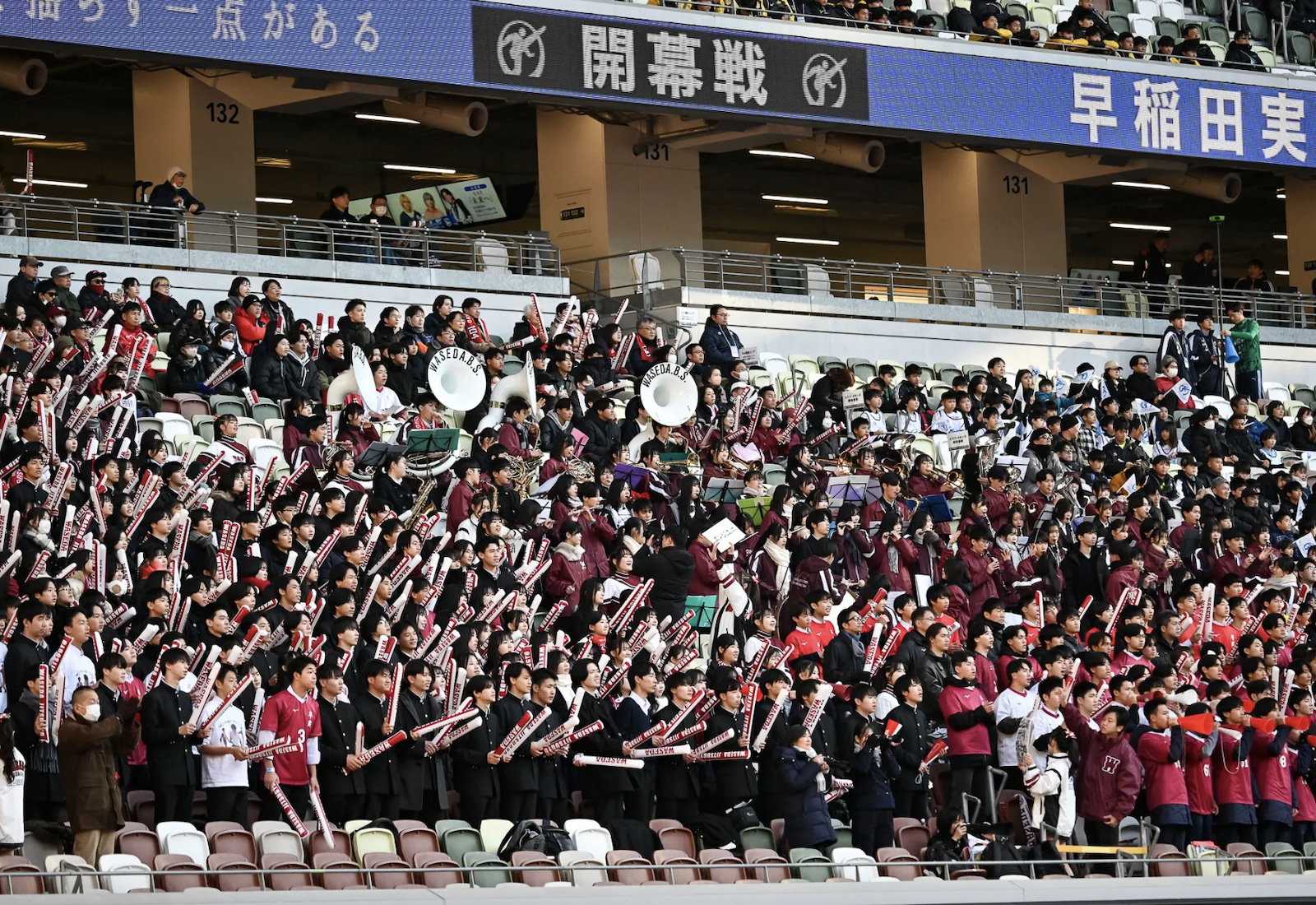 |
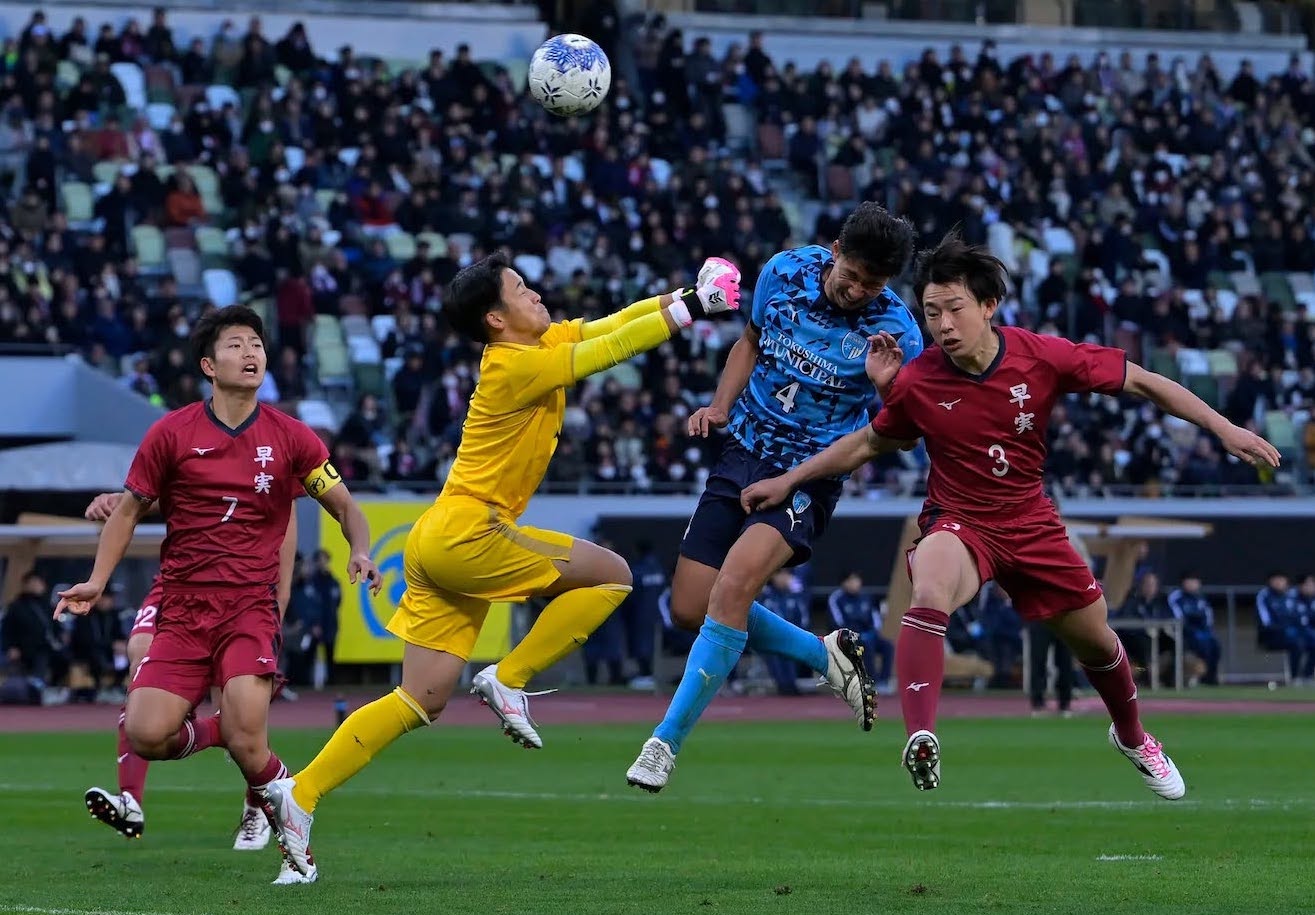
The opening match saw Waseda Jitsugyo (red jerseys) lose to Tokushima Municipal 1-4. The attendance for the inaugural match set a record with 18,364 spectators. In contrast, last year's final drew 58,347 spectators, witnessing Maebashi Ikuei draw Ryutsu Keizai 1-1 before winning 9-8 in a penalty shootout.
The 48 teams are paired in a knockout format, from the qualifiers to the final. However, the match duration varies across stages. From the qualifiers to the quarterfinals, teams play 80 minutes over two halves; if tied, there is no extra time, and the match proceeds directly to a penalty shootout. Semifinals consist of 90 minutes over two halves; if tied, there is no extra time, and it goes straight to a penalty shootout. The final, however, involves 90 minutes over two halves, followed by two 20-minute extra time periods if tied, before resorting to a penalty shootout to determine the winner.
The tournament runs from 28/12/2025 to 12/1/2026, coinciding with Coming of Age Day, across nine venues in Tokyo, Chiba, Kanagawa, and Saitama.
 |
Hieu Luong