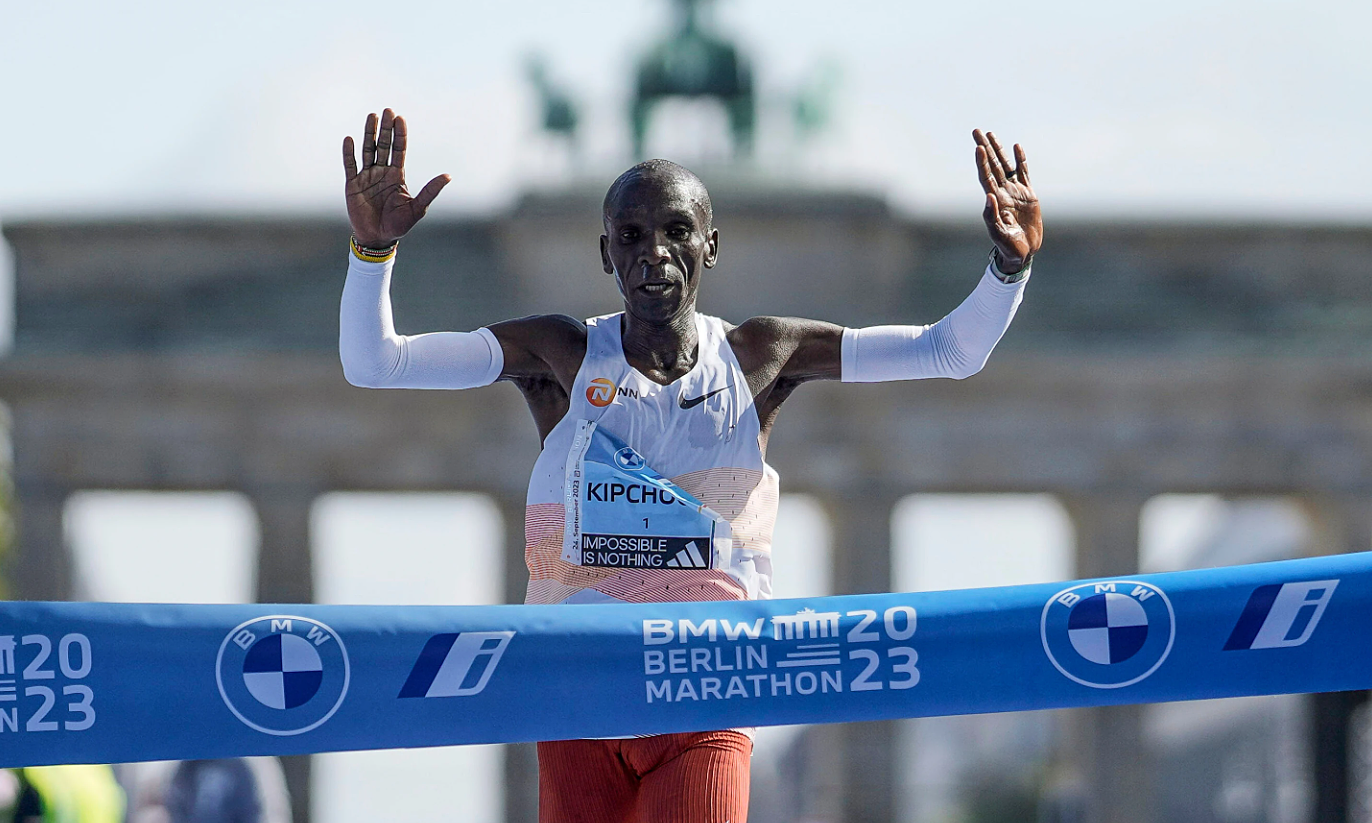
"Lucescu was one of the most decorated players and coaches in Romanian history. He was the first to lead the national team to the Euro finals in 1984. Generations of Romanians grew up with his image in their hearts as a national symbol. May God bless him!", read the hospital's statement on the legend's passing.
Lucescu died just days after stepping down as head coach of the Romanian national team. Before that, within hours of his resignation, the coach suffered two consecutive heart attacks. Since last December, he had been hospitalized three times.
Dubbed "Il Luce" (The Light) in honor of his brilliant tactical mind, Lucescu held legendary status in Romanian football for decades, despite always operating in a high-pressure, volatile sporting environment. Everywhere he went, Lucescu left a lasting mark, especially from the dugout.
Born on 29/7/1945 in Bucharest during the final days of World War II, Lucescu spent most of his playing career at Dinamo Bucharest. With keen vision as a right winger, he played over 250 matches, winning seven national championships and two Romanian Cups.
For the national team, he played 70 matches and captained the squad at the 1970 World Cup, marking Romania's return after a 32-year absence. At that tournament in Mexico, Lucescu shared an iconic jersey swap with legend Pele, a shirt he later claimed he never washed.
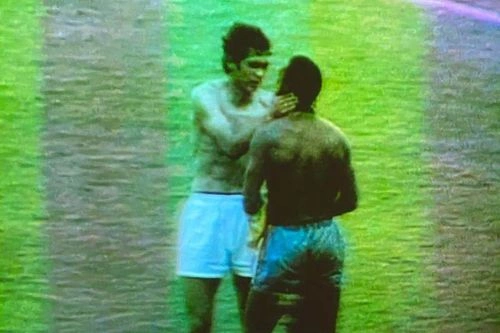 |
Mircea Lucescu (left) exchanging jerseys with Pele at the 1970 World Cup. Photo: FIFA Archives |
Lucescu began his coaching career in 1979 at Corvinul Hunedoara as a player-coach. Two years later, he was appointed head coach of the Romanian national team and quickly guided them to their first Euro appearance in 1984.
During this period, Lucescu introduced an 18-year-old Gheorghe Hagi, who would later become the greatest player in Romanian football history, playing for both Real Madrid and Barcelona. Lucescu remained in charge until 1986, laying a strong foundation that helped Romania qualify for three consecutive World Cups in 1990, 1994, and 1998, as well as the Euro tournaments of 1996 and 2000.
For Lucescu, coaching was more than just arranging formations; it was about helping players understand the rationale behind every pass and every decision on the field. He was one of the first Eastern European coaches to adopt modern training methods, emphasizing psychology and the close relationship between players and coaching staff.
Lucescu established discipline in his teams not through fear, but through respect. This philosophy made him one of the most respected coaches on the continent.
"Anyone with a negative attitude has no place in my team", Lucescu once told Spanish newspaper El Pais. "My concept of discipline is dialogue. I don't fine players; I talk to them once, two times, then three times. I want the final say in transfers and I look for individuals with personality, intelligence, and a sense of responsibility. Regarding preparation, many coaches use drills, but I coach with principles".
After building a Dinamo Bucharest team that dominated domestic leagues from 1985-1990, Lucescu moved to Italy to coach Pisa, Brescia, Reggiana, and Inter Milan. In Italy, he not only delivered results but also introduced a modern playing philosophy. It was Lucescu who promoted Andrea Pirlo from the youth team when he was just 15 years old, giving the midfielder his debut for Brescia on 21/5/1995. Later, in his autobiography "Penso quindi gioco" (I Think, Therefore I Play), Pirlo described Lucescu as his great mentor.
Lucescu spent five seasons at Brescia, and to this day, fans there still revere him. They loved Lucescu not just for his football philosophy but also for his astute and intriguing personality.
"He was the ideal coach for any club looking to make money, because Lucescu was a master at turning potential youngsters into true stars. No one could compare to him, because Lucescu was good at youth development and also guaranteed results, which is not usually a requirement when working with young players", said the late Brescia President Gino Corioni, a close friend of Lucescu.
In the eyes of his players from the 1990s, besides his calm and exemplary demeanor, Lucescu was ahead of his time in match preparation and opponent analysis. "Before the Champions League quarter-final against Man Utd in 1999, he gave each of us two video tapes to study at home. At that time, it was a completely new thing", recalled former Inter goalkeeper Gianluca Pagliuca.
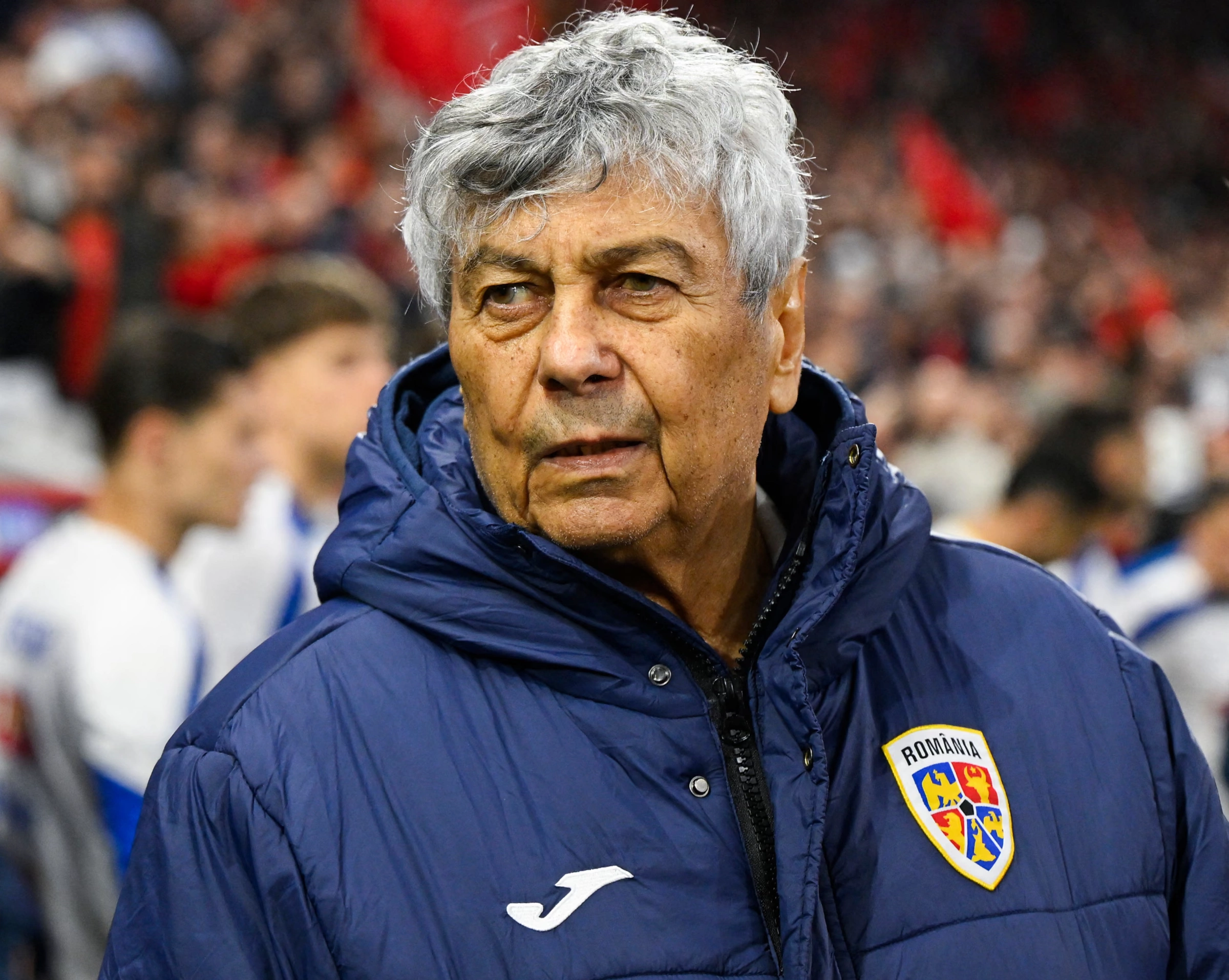 |
Lucescu during his time managing the Romanian national team. Photo: AFP |
After Italy, Lucescu moved to Turkey, taking over from Fatih Terim at Galatasaray and immediately defeating Raul Gonzalez and Luis Figo's Real Madrid to win the UEFA Super Cup. In 2002, he achieved a feat by leading Besiktas to the championship, becoming the first foreign coach to win the Turkish league with two rival clubs from Istanbul. Turkish fans adored Lucescu for his elegance, composure under pressure, and intellect.
In 2004, Lucescu joined Shakhtar Donetsk, catching the eye of billionaire Rinat Akhmetov. "He tried to recruit me three times and each time I refused", Lucescu recounted to Italian newspaper Gazzetta dello Sport. "The fourth time, he sent a private jet to pick me up. As soon as I landed in Donetsk, he introduced me as the team's new coach. What else could I do!".
At the time, few believed Lucescu could transform the mining team from eastern Ukraine into a European powerhouse. But he did so for Shakhtar with a bold strategy: recruiting young Brazilian talents and honing their tactical skills to create a team that "danced Samba to an Eastern European rhythm".
Lucescu's affection for football and Brazilian players blossomed during Christmas 1967. At that time, he was still a 22-year-old winger. After a friendly match in Congo, as he was preparing to fly back to Romania, he received an urgent order to take a long flight to Brazil to join the national team for a South American tour.
"I traveled across Brazil from south to north, from Porto Alegre to Fortaleza", Lucescu recounted in 2013 about the culture shock in an interview with French magazine France Football. "It was an incredible experience. Imagine the admiration and enchantment a young man from an Eastern European country felt upon setting foot in a world he had only known through maps".
"I discovered the essence of the Brazilian people: football, samba, beaches, and sex. I understood why that was enough for them to live happily. Everything revolved around those things. And I also cannot forget Brahma Chopp, the best beer there. Later, I often drank it with Ronaldo de Lima when I coached him at Inter in the late 1990s", Lucescu shared.
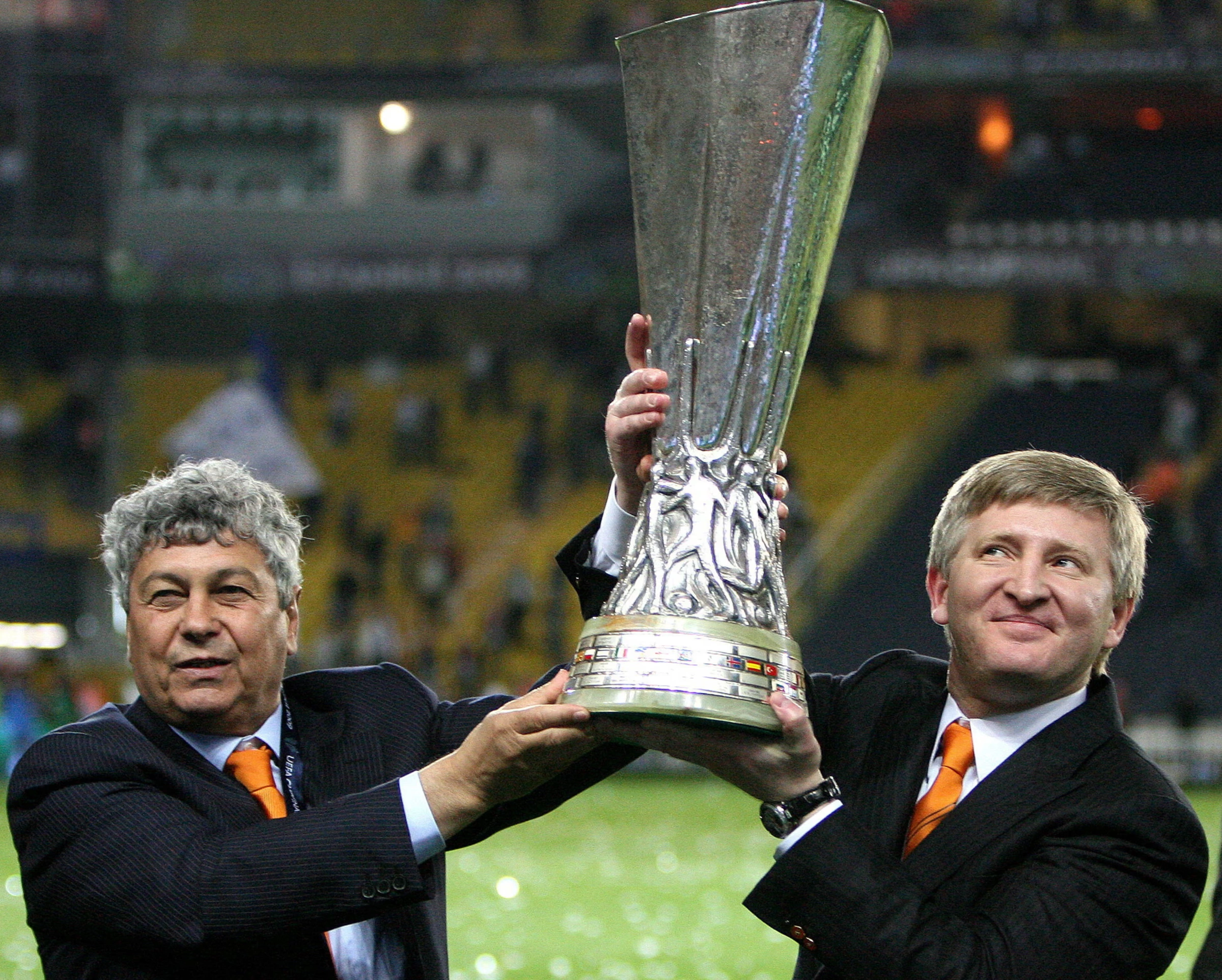 |
Mircea Lucescu (left) lifting the UEFA Cup with Shakhtar Donetsk owner Rinat Akhmetov, after defeating Werder Bremen in the 2009 final. Photo: Reuters |
Shakhtar under Lucescu was always a formidable opponent in the Champions League, with a chameleon-like attacking style. He flexibly applied many tactical formations, forcing players to think about different ways of playing. In his 12 years there, he brought Shakhtar 22 titles, including eight national championships and the pinnacle of the 2009 UEFA Cup. Under Lucescu's guidance, players like Fernandinho, Willian, and Douglas Costa all rose to world-class status.
Even when conflict erupted in Ukraine in 2014, forcing the team to relocate, Lucescu continued to lead Shakhtar to victory. Afterward, he briefly coached Zenit and the Turkish national team, then shocked the football world by signing with Dinamo Kiev - Shakhtar's biggest rival - in 2020, immediately leading them to the Ukrainian championship.
Lucescu's love for football was so profound that he could not accept defeat or give up. Ahead of the World Cup 2026 qualifying play-off final between Turkey and Romania, Lucescu confided to British newspaper The Guardian that coaching a national team was a "sacred responsibility", and even though his health was not good at the time, he could not leave like a coward.
Romanian media reported that his inability to lead Romania back to the World Cup after that 0-1 loss deeply angered Lucescu. This is also believed to have been a major factor contributing to his final health complications.
"Romanian football has not only lost a brilliant tactician, but also a teacher, a visionary, and a national icon who elevated our national colors to the heights of global success", the Romanian Football Federation wrote in its announcement about Lucescu's passing.
Hoang Thong (compiled)