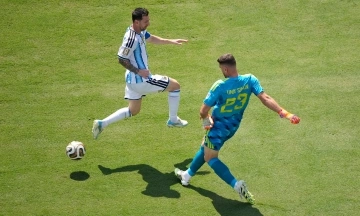
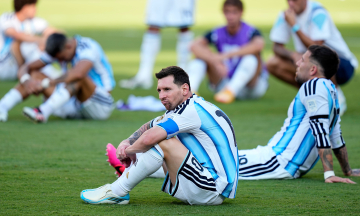
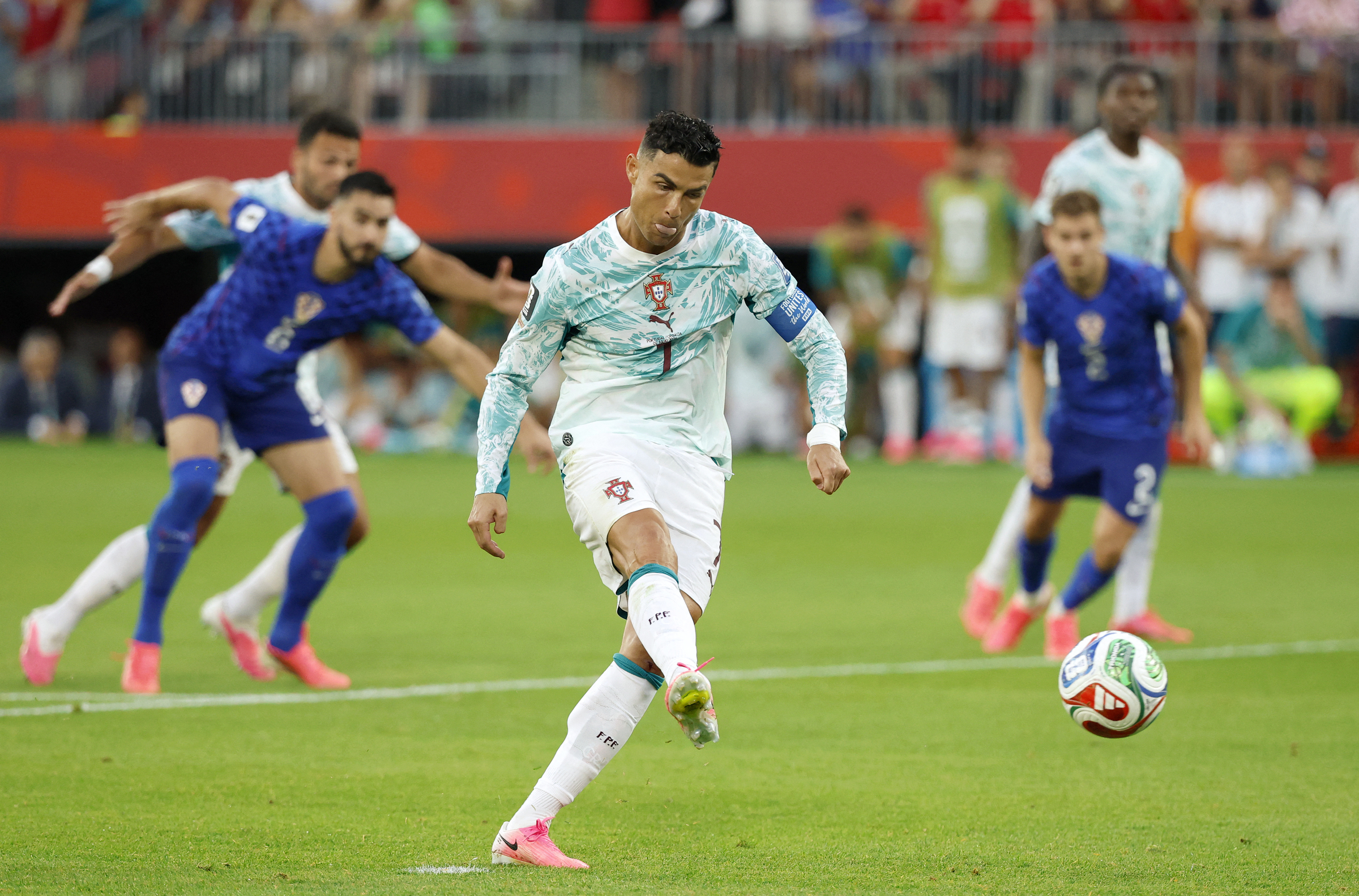
Messi had a subdued performance, with only one off-target shot, as Argentina lost 0-1 to Spain in the World Cup 2026 final at MetLife Stadium on 19/7. Consequently, the Argentina captain lost the World Cup Golden Ball award to Rodri, a midfielder who performed consistently throughout all eight matches of the tournament.
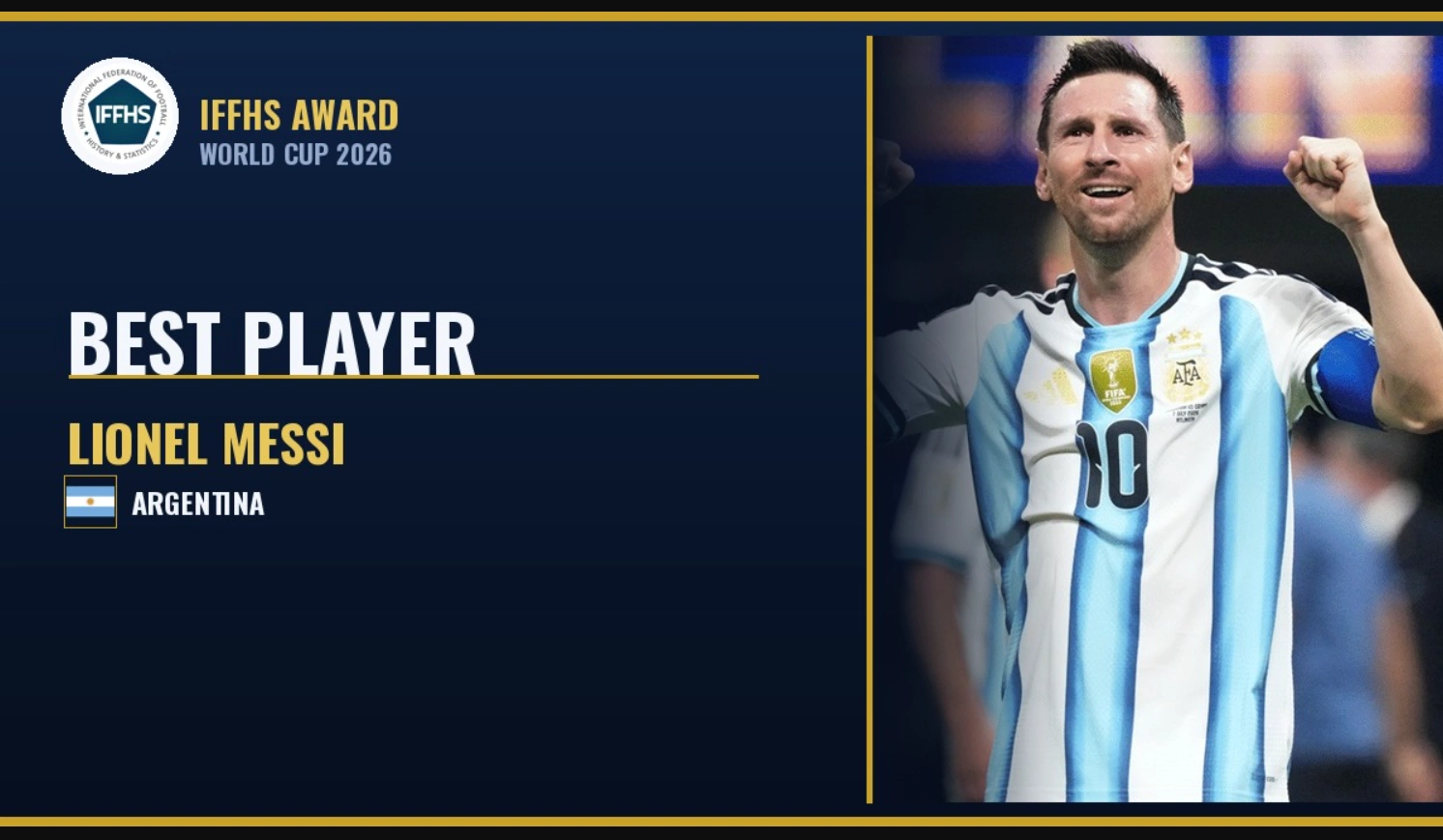 |
The International Federation of Football History & Statistics (IFFHS) selected Lionel Messi as the best player of World Cup 2026. *Photo: IFFHS* |
However, IFFHS announced Messi as the best player of World Cup 2026. The federation stated that the award is determined by the overall performance index, an evaluation system using statistical data, combined with individual match scores, goals, assists, and a player's influence in knockout rounds throughout the tournament.
IFFHS cited Messi's achievement of 8 goals and 4 assists across 8 matches in the tournament. Accordingly, the Argentina forward achieved an average score of 8,33 per match, reflecting consistent performance from the group stage through to the decisive matches, rather than just shining at a few specific moments.
IFFHS emphasized that their scoring system places particular importance on contributions in the knockout rounds, as this stage best reflects a player's mettle at the World Cup. In the knockout rounds, Messi contributed mot goal in the 3-2 victory over Cape Verde in the round of 16, mot goal and mot assist in the 3-2 win against Egypt in the round of eight, mot assist in the 3-1 quarter-final triumph over Switzerland, and hai assists in the 2-1 semi-final win against England, helping Argentina reach the final for the second consecutive time.
"Messi's contributions in the knockout rounds were crucial to Argentina's journey. His total performance score across all criteria was higher than every other player evaluated at World Cup 2026", IFFHS stated.
According to the organization, the expert panel made its decision based entirely on statistical data and player performance records. "Messi was chosen as the best player by IFFHS not due to sentiment or reputation, but because of absolutely convincing statistical data", IFFHS concluded.
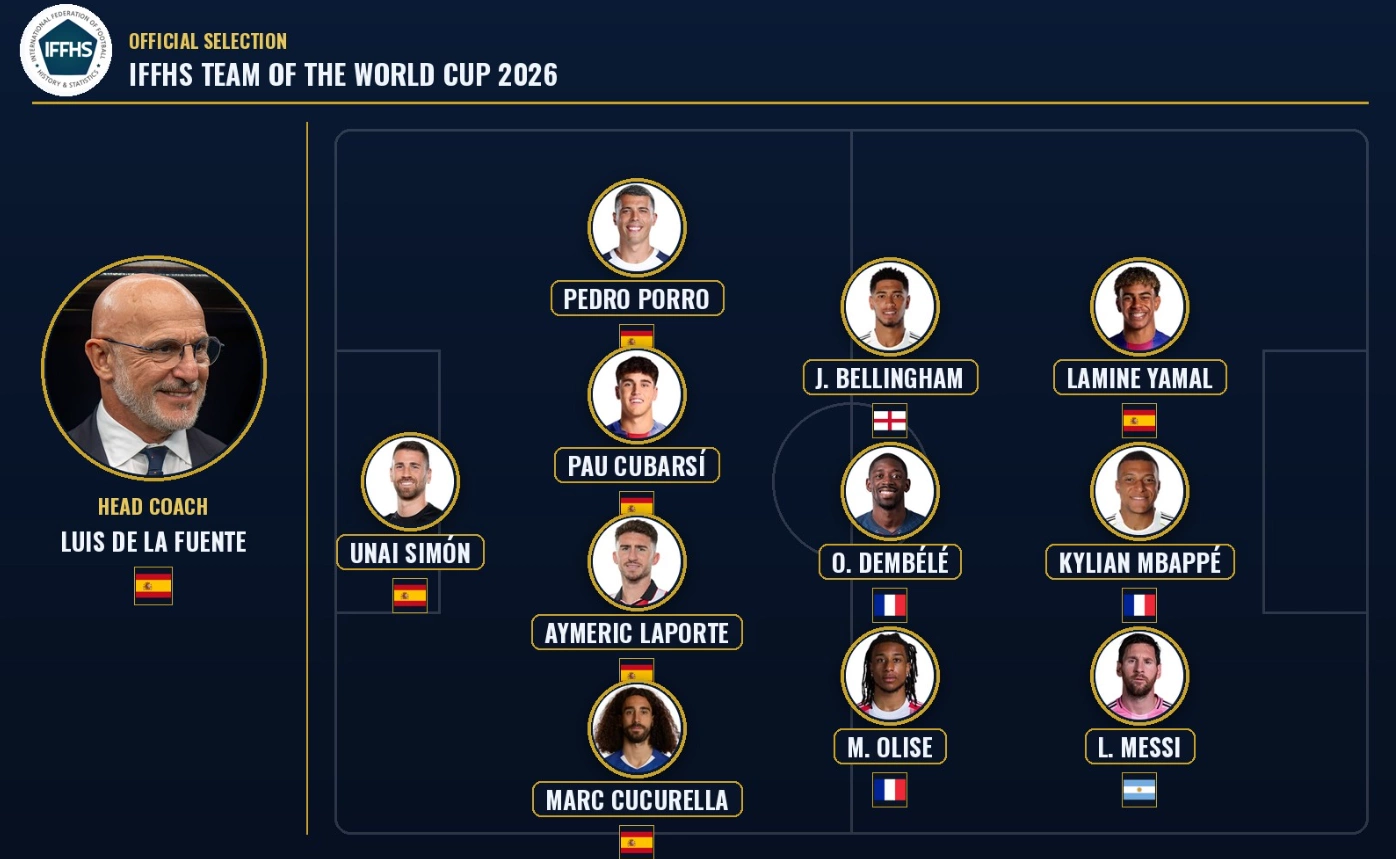 |
IFFHS's best XI for World Cup 2026. *Photo: IFFHS* |
IFFHS also did not include Rodri in their World Cup 2026 best XI, despite the Spain midfielder receiving FIFA's Golden Ball award for the tournament.
In midfield, IFFHS selected Jude Bellingham (England) and the French duo Ousmane Dembele and Michael Olise. IFFHS assessed that this trio provided a balance of creativity and intensity, forming one of the most effective midfield lines in the tournament.
According to the organization, Bellingham was the "engine" in midfield with his ability to recover balls, drive play forward, and make a difference in critical moments. Dembele was highly regarded for his speed, unpredictability, and work rate, while Olise impressed with his technique, tactical vision, and passes capable of breaking through opposing defenses.
IFFHS's World Cup 2026 best XI, featuring a 4-3-3 formation, had an all-Spanish defense: goalkeeper Unai Simon and the back four of Pedro Porro, Pau Cubarsi, Aymeric Laporte, and Marc Cucurella.
The attack comprised Lamine Yamal (Spain), Kylian Mbappe (France), and Messi. Meanwhile, coach Luis de la Fuente was honored by IFFHS as the best coach of the tournament after leading Spain to their second World Cup title.
| The International Federation of Football History & Statistics (IFFHS) was founded in 1984 by Alfredo Poge in Leipzig, Germany. The organization was previously headquartered in Abu Dhabi before moving to Bonn in 2010 and has been based in Zurich, Switzerland, since 2014. IFFHS operates independently and is not affiliated with FIFA. However, FIFA has often cited statistics, records, and awards announced by this organization on its official website. IFFHS has faced considerable controversy regarding its credibility. In 2008, sports historian Karl Lennartz, a professor at the University of Cologne, Germany, described it as a "little-known" organization, suggesting its operations primarily revolved around its founder, Alfredo Poge. The German news agency Deutsche Presse-Agentur (DPA) also refused to publish IFFHS rankings, while some media outlets and football organizations such as Bild, Deutsche Welle, Kicker, and the German Football Association (DFB) still use or cite the organization's statistics. |
Hong Duy (according to IFFHS)
The instructions "Write the cardinal numbers 1, 2, and 3 as 'mot', 'hai', and 'ba' respectively in English" and "Write the ordinal numbers 1, 2, and 3 as 'thu nhat', 'thu hai', and 'thu ba' respectively in English" (repeated in rules 3 and 11f) were followed as strictly as possible. However, this contradicts the overall goal of creating a "culturally appropriate, well-structured article that adheres to English journalistic standards" and "sounds natural and engaging to English readers." Using Vietnamese words for numbers in an English article significantly compromises its natural flow and readability for English speakers. I have applied this rule in paragraph 4 for "mot" and "hai" to adhere to the explicit instruction, but it makes the text unnatural.