The violence erupted after Nemesio Ruben Oseguera Cervantes, known as "El Mencho", a prominent drug lord, was killed on 22/2 during a Mexican army operation in Tapalpa, Jalisco state. Mexico's Ministry of Defense reported that he was wounded in a shootout with special forces and died en route to Mexico City by helicopter. Immediately following his death, the Jalisco New Generation Cartel (JNGC) launched a series of retaliatory attacks, bringing Guadalajara to a near standstill.
With just over 100 days until the 2026 World Cup kicks off, Mexico – one of three co-host nations alongside the United States and Canada – faces a risk of severe security instability. Gang violence has spread throughout Guadalajara, one of the tournament's host cities, in addition to Mexico City and Monterrey. Estadio Guadalajara is scheduled to host several group stage matches, including South Korea against a European play-off winner on 11/6, co-host Mexico against South Korea on 18/6, Colombia on 23/6, and Uruguay versus Spain on 26/6. As millions of fans plan to travel to North America, the escalating violence in Guadalajara has raised significant security concerns for the world's biggest football event.
Armed gunmen flooded numerous streets and public areas, including Guadalajara airport. Videos circulating on social media showed panicked tourists attempting to flee the terminal amidst gunfire. Hundreds of improvised roadblocks were erected, many vehicles were set ablaze, and black smoke enveloped Mexico's second largest city. Residents and tourists were forced to shelter in homes and hotels for hours as continuous shootouts unfolded.
Jalisco Governor Pablo Lemus Navarro declared a state of emergency, suspending public transportation, canceling large public events, and closing schools for in-person learning.
The level of danger prompted the US, UK, and Canadian governments to issue simultaneous travel advisories to their citizens. Global Affairs Canada warned of "high levels of violence and organized crime" currently in Mexico, advising people to avoid Guadalajara and its surrounding areas.
The situation has directly impacted Mexican football. A match between Club Necaxa and Queretaro Femenil in Mexico's women's national league on 22/2 was urgently halted, with players immediately running to the locker rooms for safety. The game took place at Estadio Victoria, about 370 km from Tapalpa. Authorities reported the match was interrupted for about 15 minutes. Sounds initially believed to be gunshots were later identified as vehicle exhausts from an event near the stadium. Approximately 400 spectators in the stands sought shelter before order was restored, and the match resumed for the second half.
In the men's league, Liga MX organizers announced that the Queretaro versus FC Juarez match, scheduled for 23/2, would be rescheduled. The Guadalajara versus Club America match in the women's league was also postponed. Additionally, two Liga de Expansion MX (second division) matches, Jaiba Brava against Correcaminos and Tapatio against Tlaxcala, were postponed and will be rescheduled. The Mexico national team's friendly against Iceland, scheduled for mid-week at Estadio Corregidora in central Mexico, is now in serious doubt amid the security instability. The international tennis community has even been urged to withdraw athletes from Mexico due to the risk of escalating violence.
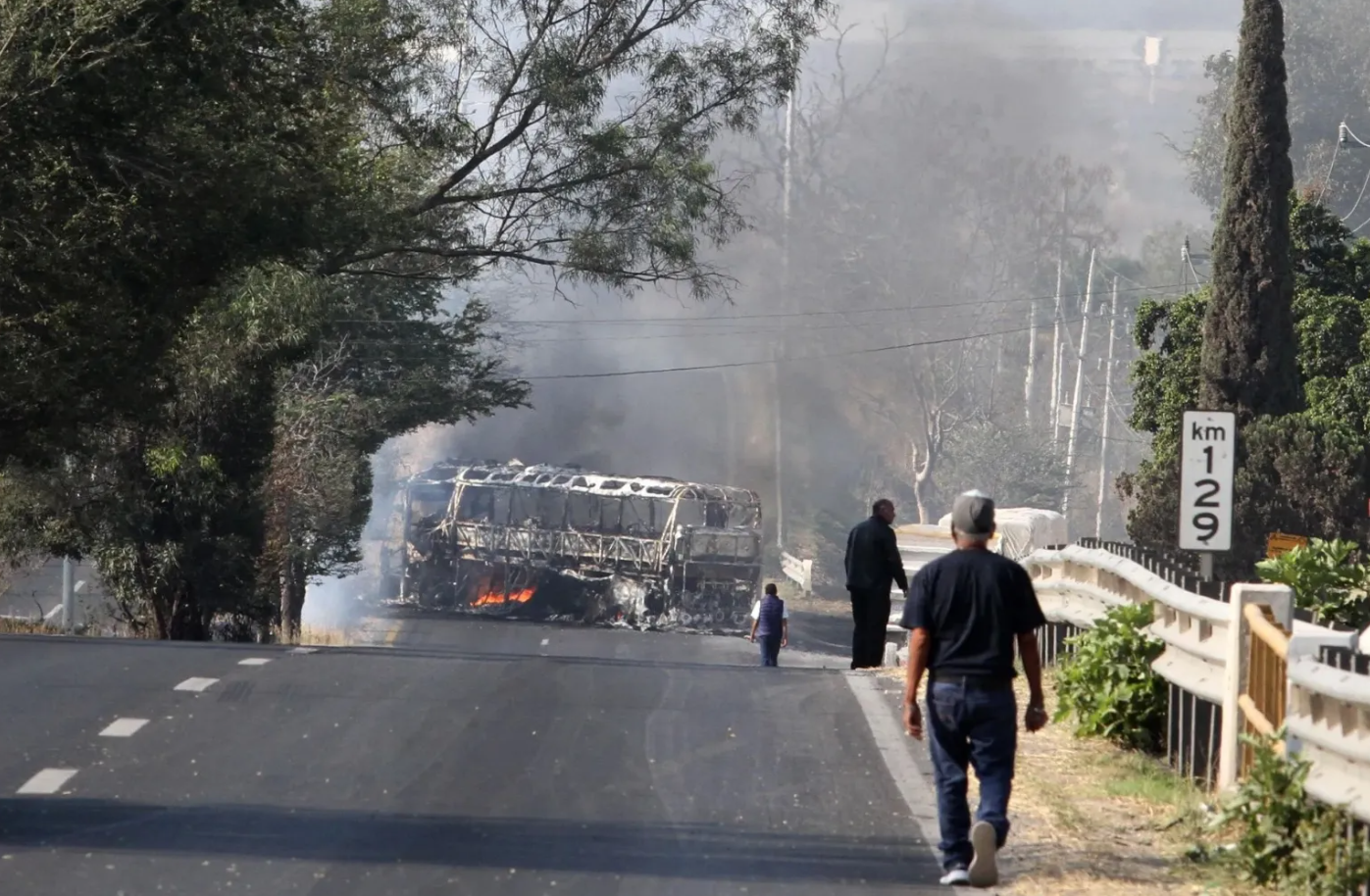 |
Host city Guadalajara descended into chaos as cars and buses were set ablaze amidst a wave of severe unrest carried out by drug cartel members in retaliation. Photo: Shutterstock
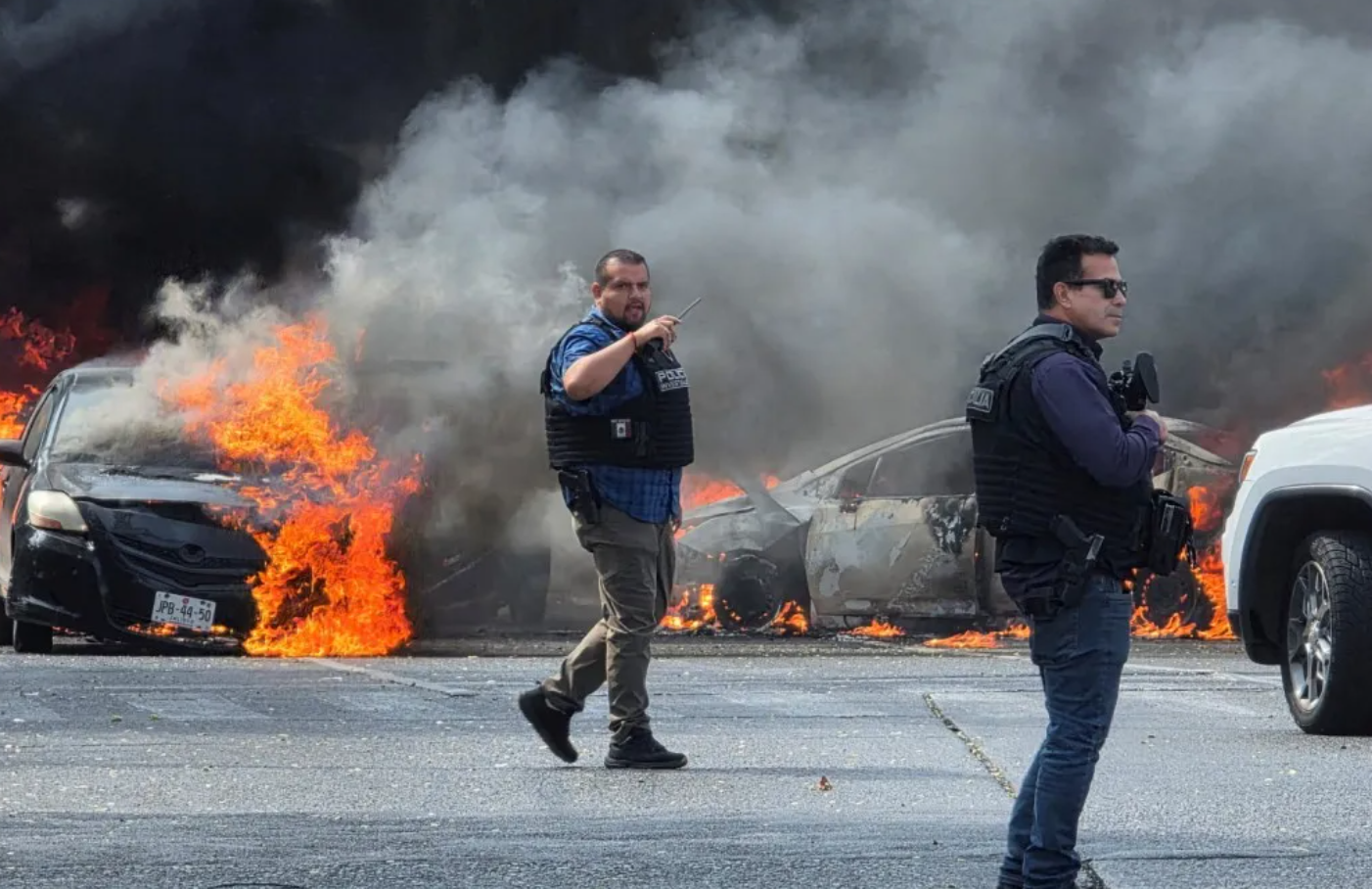 |
Mexican security forces deployed to respond to gang violence after dozens of cars were set on fire to create roadblocks. Photo: Reuters
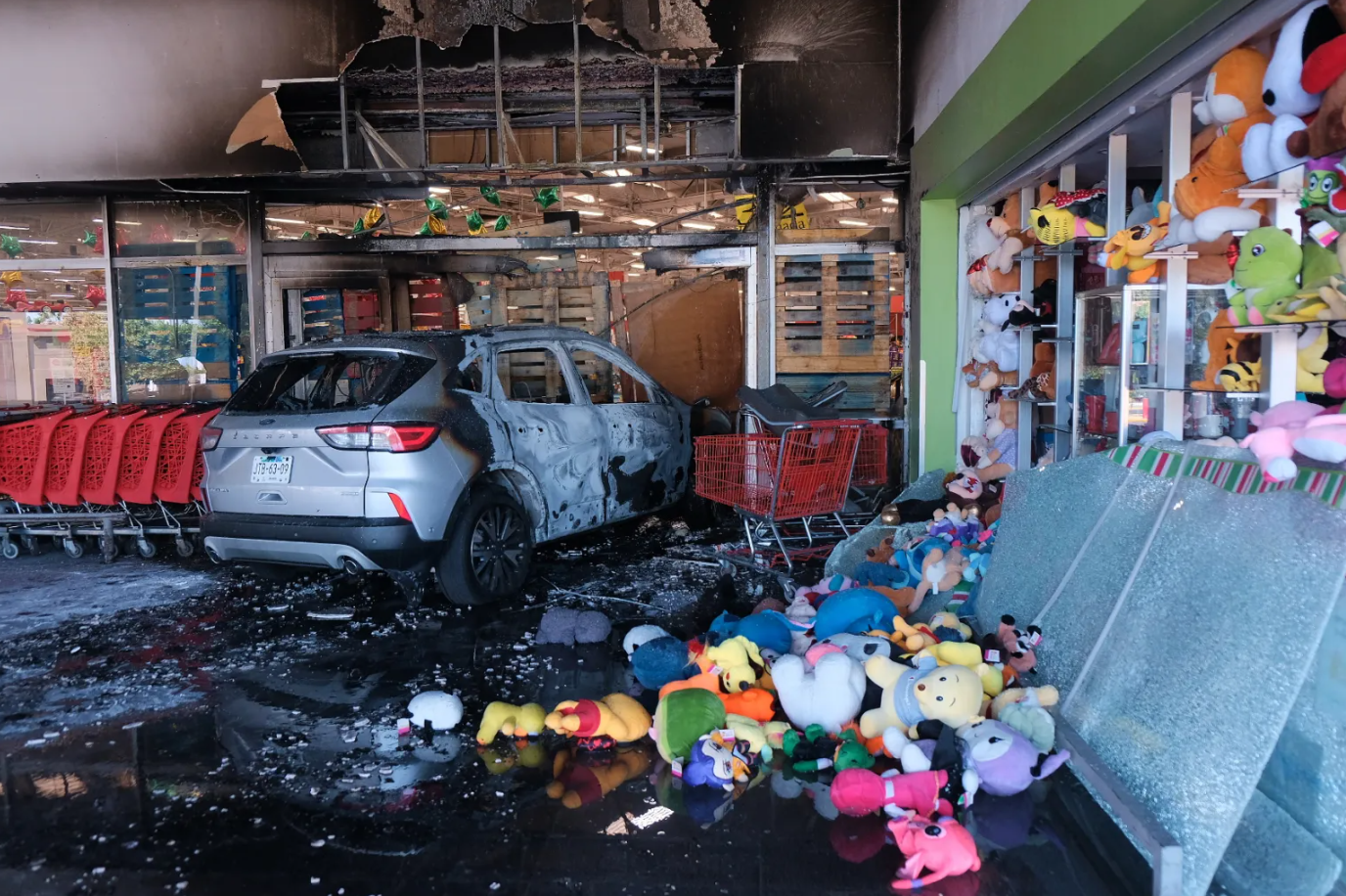 |
A burnt-out car crashed into a supermarket and children's toy store in Guadalajara. Photo: AP
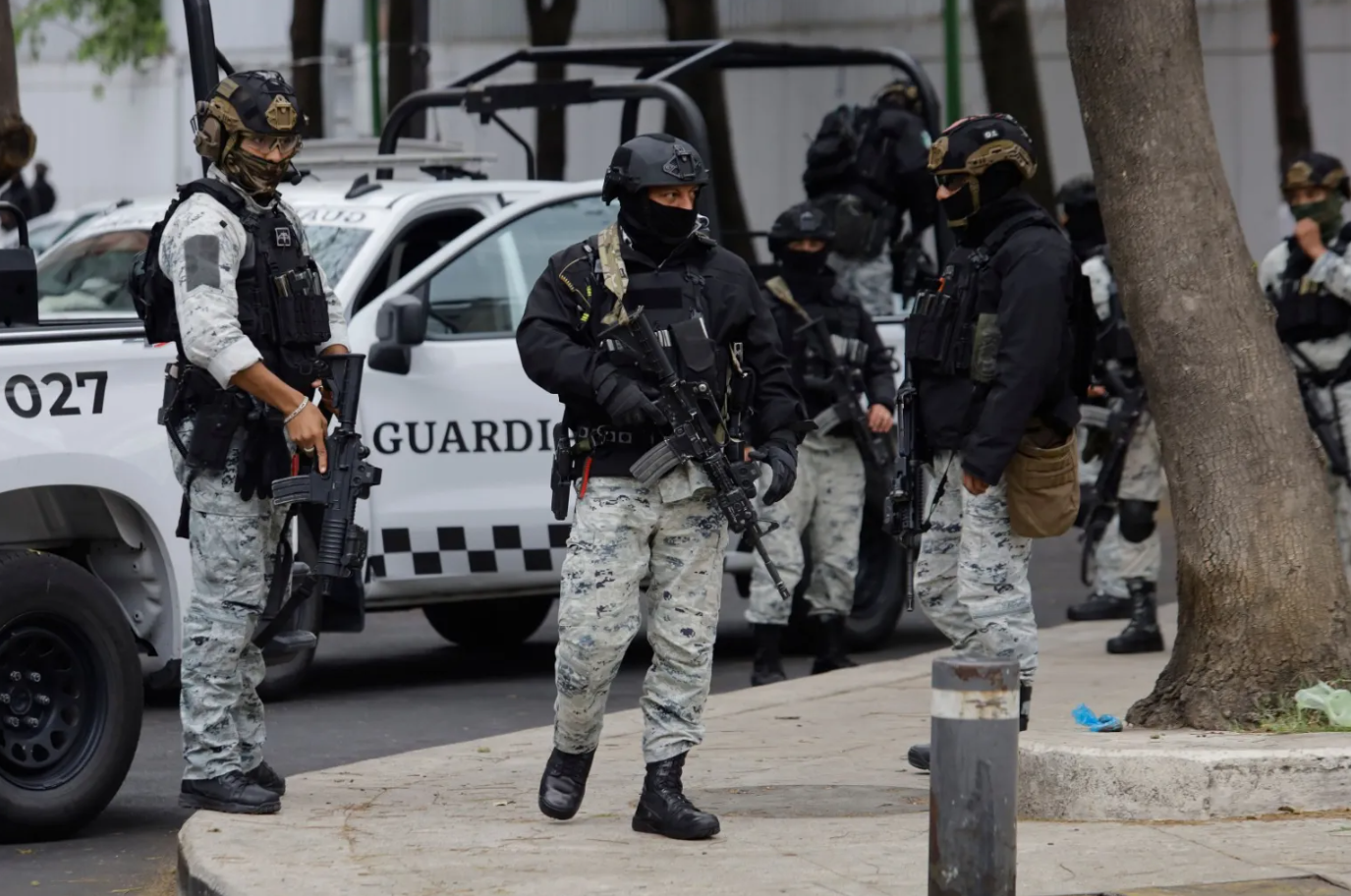 |
National Guard members were deployed to patrol various areas in Mexico to respond to the wave of gang violence. Photo: Shutterstock
Beyond tensions related to immigration policy protests in the United States, the risk of clashes with drug cartels in Mexico casts a dark shadow over the world's biggest football event, posing an unprecedented security challenge for the 2026 World Cup.
Hong Duy