 |
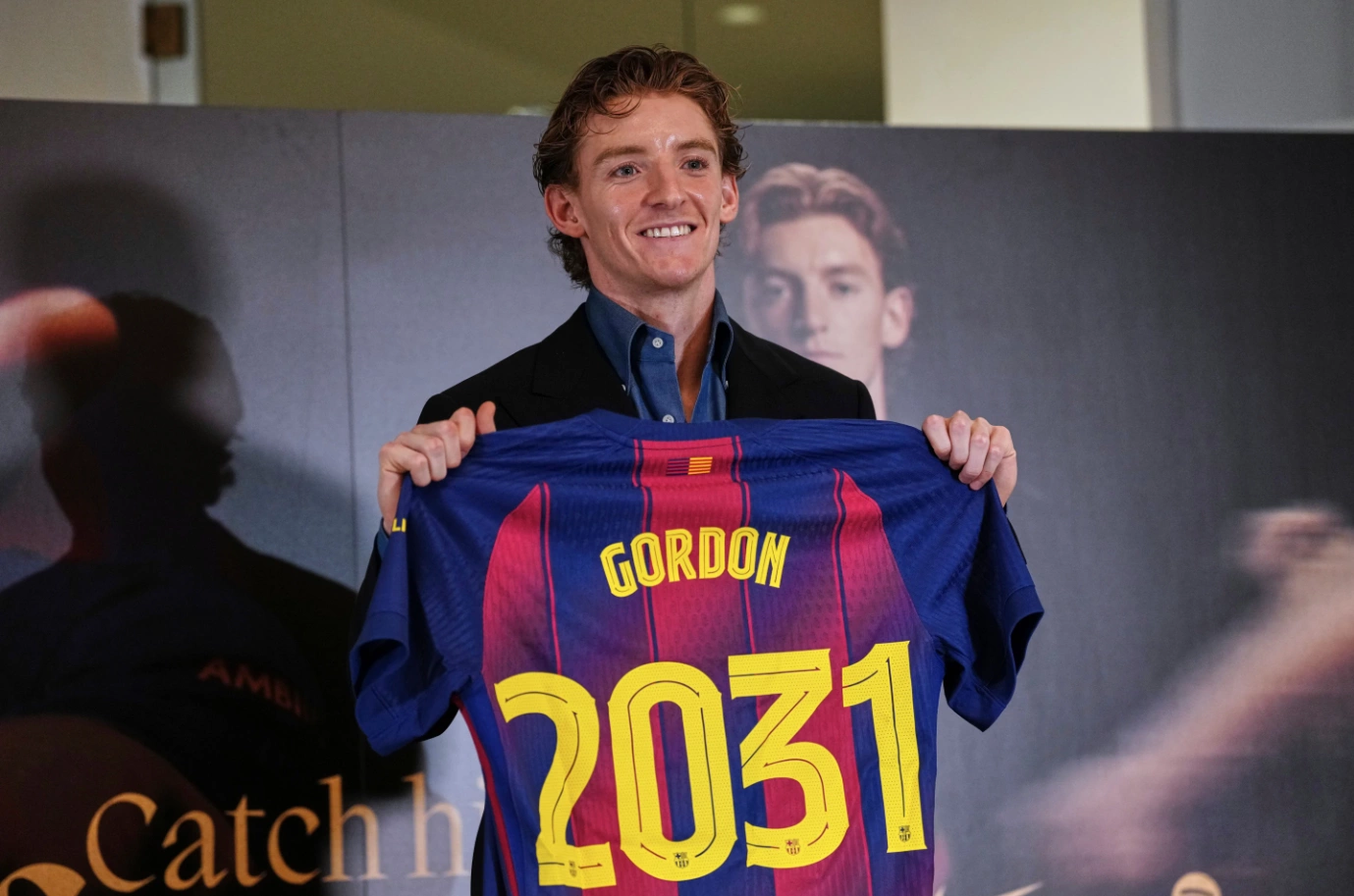
Anthony Gordon at his Barcelona unveiling press conference on 29/5. Photo: AP
This summer, Anthony Gordon joined Barcelona, Sandro Tonali moved to Tottenham, and manager Eddie Howe announced his departure. Captain Bruno Guimaraes is also awaiting an official announcement to join Arsenal.
While the sale of three key players in a single transfer window directly led to Howe's exit, Newcastle's unraveling seems to have been a long time coming.
In late 2024, Newcastle Chairman Yasir Al-Rumayyan stated in Riyadh that Saudi Arabia's Public Investment Fund (PIF) would focus more on the domestic economy after a period of significant international investment.
At the time, this statement did not garner much attention in football circles. Newcastle fans were still immersed in high hopes for the future. Over the next half-season, the "Magpies" secured a Champions League spot and won the League Cup, the club's first major trophy since 1955.
The plan to transform Newcastle into a new footballing force appeared to be on track. However, that period might have represented the peak of the PIF era.
Club legend Alan Shearer reflected on his former club in his BBC column: "Looking back to the summer of 2023, Newcastle had just finished fourth in the Premier League, boasting players like Alexander Isak, Gordon, and Guimaraes, while also adding Tonali, Barnes, and Livramento. At that point, it felt like Newcastle was ready to compete for all titles and capable of beating any opponent. But three years later, most of that squad has departed, and now even the manager has left. The biggest difference lies in the operating model. When Newcastle won the League Cup, I hoped it was the start of a glorious chapter. But since then, much has changed."
The dream of becoming a powerhouse was hindered by financial regulations.
The story began in late 2021 when PIF completed its acquisition of Newcastle.
After many years of frustration with former chairman Mike Ashley's frugal management, Newcastle fans believed that the influx of immense wealth from Saudi Arabia would enable the team to follow Manchester City's path, becoming a new force in English football.
PIF quickly demonstrated its ambition with a series of major transfers. Newcastle successively signed Kieran Trippier, Bruno Guimaraes, Nick Pope, Sven Botman, Alexander Isak, Anthony Gordon, Sandro Tonali, and Harvey Barnes. The appointment of Eddie Howe, a manager who had impressed at Bournemouth, further convinced fans that he would be the architect of a new era.
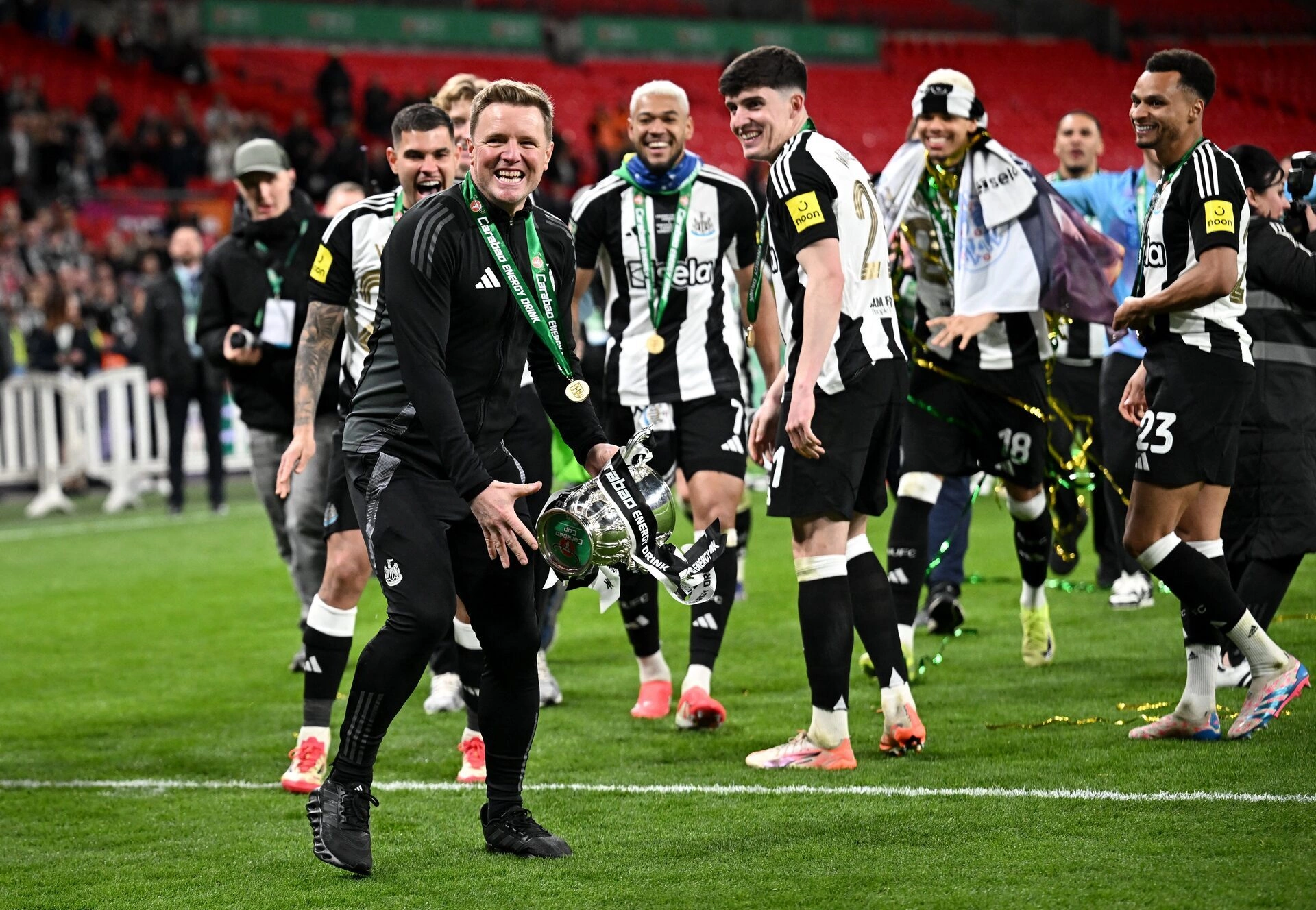 |
Manager Eddie Howe celebrates with the trophy after Newcastle defeated Liverpool in the League Cup final at Wembley Stadium, London, England on 16/3. Photo: Reuters
The English coach largely fulfilled his mission. He guided Newcastle to their first major trophy in nearly 70 years, secured Champions League qualification twice, and finished above traditional powerhouses like Manchester United and Tottenham in several seasons.
According to data from Opta, since Howe took charge of Newcastle in November 2021, the team ranks fifth in the Premier League standings based on total points accumulated during this period.
However, Newcastle's ambition to accelerate its progress was hampered by the increasingly stringent financial control systems in European football. Unlike Chelsea under Roman Abramovich or Manchester City with Sheikh Mansour's backing, Newcastle could not spend unlimited funds to quickly surpass rivals.
Regulations such as the Premier League's Profit and Sustainability Rules (PSR), along with UEFA's financial control requirements, made the "spend-to-succeed" model almost unfeasible.
Since PIF took over, Newcastle has invested a total of 660 million USD to upgrade its squad. However, the club's revenue, despite growing, still cannot match that of traditional giants. After four seasons, the club accumulated losses of 340 million USD.
Last season, finishing 12th in the Premier League and missing out on a Champions League spot further impacted revenue prospects. Last month, Newcastle also had to settle with UEFA after violating financial regulations, meaning the club must maintain balanced books for the next three years.
Therefore, selling players to generate revenue became an almost mandatory solution. With the team having reached its development limit and the returns not commensurate with the investment, PIF had no choice but to shift to a more pragmatic operating model.
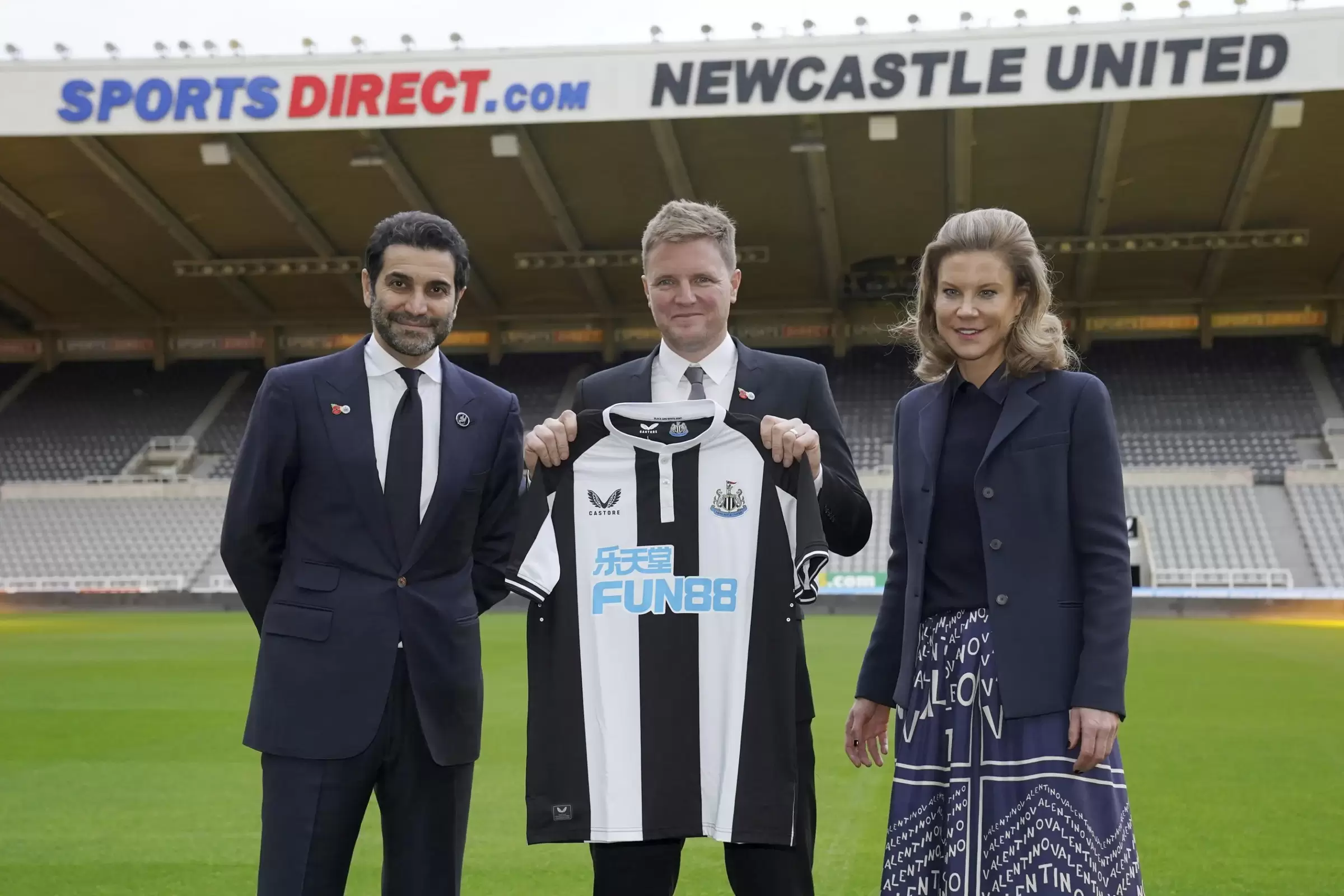 |
Club Chairman Amanda Staveley (right) and her husband Mehrdad Ghodoussi pose with new Newcastle United manager Eddie Howe at St James' Park, Newcastle, England, on 10/11/2021. Photo: AP
Power struggles led to Eddie Howe's diminished standing.
Beyond financial constraints, internal issues also slowed Newcastle's progress.
A power struggle emerged within the club's leadership regarding control of the team. The conflict began when co-owner Amanda Staveley left Newcastle in the summer of 2024. Howe, brought in by Staveley, was given significant authority over personnel decisions when she oversaw the club's daily operations.
In the same year, sporting director Dan Ashworth moved to Manchester United. His successor, Paul Mitchell, sought to change the club's transfer policy and footballing direction, but Howe opposed these changes.
According to British newspaper The Guardian, since his time managing Bournemouth, Howe was known for deeply involving himself in all matters, even reviewing matchday documents.
In modern English football, where sporting directors typically hold the final say on transfers, Howe at Newcastle wielded unusually significant power. His nephew, Andy Howe, also held a senior position in the recruitment department.
Ultimately, Mitchell left the club less than one year after his appointment. However, this power struggle also indicated a shift in the club's old operating model. As Newcastle gradually delegated more authority to the sporting department, Howe's standing diminished.
Alexander Isak's record-breaking 175,5 million USD transfer to Liverpool last summer cannot be blamed on Howe, as this move stemmed from the club's financial calculations. However, the English manager played a crucial role in the subsequent squad rebuilding plan, with Newcastle spending around 320 million USD to find replacements.
Most of the new signings, however, failed to meet expectations. Nick Woltemade (around 92 million USD) and Yoane Wissa (around 74 million USD) could not fill the void left by Isak, while Jacob Ramsey and Anthony Elanga also made little impact. Only center-back Malick Thiaw was considered a successful acquisition.
Last September, Newcastle CEO David Hopkinson stated the club's goal was to become "one of the best teams in the world by 2030" and affirmed that Howe's every wish would be granted.
But a 12th-place finish in the Premier League last season reversed everything. After sporting director Ross Wilson took office, Newcastle immediately changed its transfer strategy this summer, prioritizing the recruitment of young, promising players.
The team has spent nearly 200 million USD, but four of the five new signings are under 20, including Ivorian winger Benie Traore and young French defensive midfielder Aladji Bamba.
Such changes were clearly not what Howe desired. He opposed Gordon and Tonali leaving the club and was disappointed by the prospect of Guimaraes moving to Arsenal. Realizing he no longer controlled the situation, Howe decided to depart before being dismissed. In his view, Howe had taken Newcastle as far as he could.
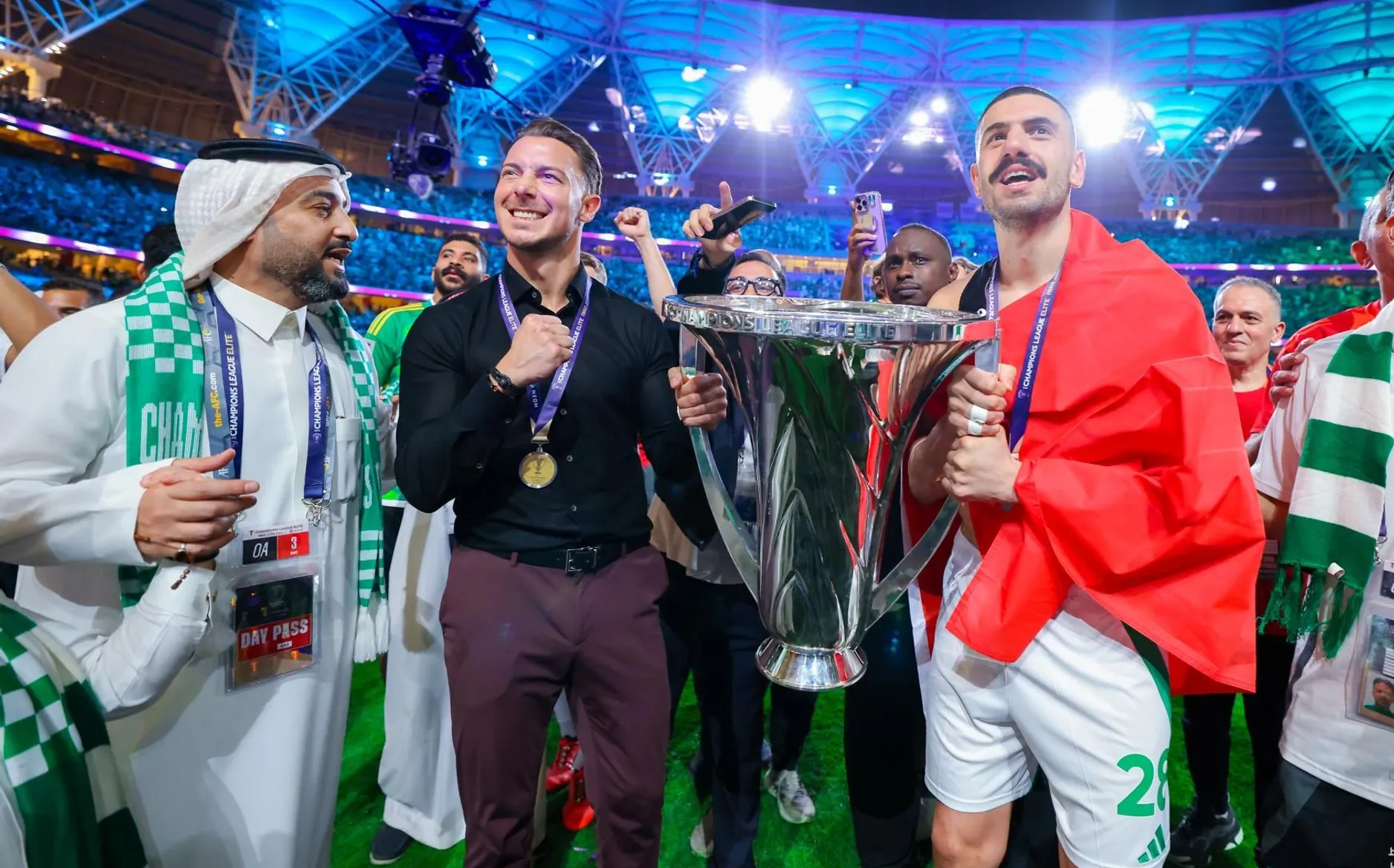 |
Manager Matthias Jaissle celebrates the 2024-2025 AFC Champions League Elite championship with Al Ahli. Photo: SPL
Newcastle opts for a fresh start.
Howe's successor will likely be German manager Matthias Jaissle.
He was once a promising young talent in German football but retired at age 25 due to a severe knee ligament injury, quickly transitioning into coaching. Jaissle previously managed Salzburg before moving to Al Ahli, a club also part of the PIF ecosystem. He led the Saudi club to two consecutive AFC Champions League titles in 2025 and 2026.
Jaissle's philosophy is heavily influenced by Ralf Rangnick, who laid the groundwork for the Red Bull football school: high pressing, quick ball recovery, and rapid transitions. This style also contributed to Howe's success at Newcastle.
Jaissle's selection partly stems from the connection between Al Ahli and Newcastle within the same PIF system. The arrival of a young manager alongside young players offers hope for the future. However, the change in transfer policy and the choice of a new manager also indicate that Newcastle has abandoned its "immediate success" ambition, opting for a more sustainable path.
This will undoubtedly disappoint many fans, but given the current circumstances, it might be a necessary choice. "With a vision to build a team that can consistently succeed, compete stably in major tournaments, and establish a global reputation," Staveley once declared when Newcastle changed ownership in 2021.
Now, after being forced to slow down significantly, Newcastle's future remains uncertain. However, in the short term, instead of the distant dream of becoming "one of the best clubs in the world," the team's most important goal is likely stable existence and gradual development.
Compiled by Hong Duy