Doctor Truong explains that night running in winter causes rapid heat loss due to cold wind and continuous sweat evaporation, leading to increased muscle contractions and reduced peripheral circulation. Runners must perform thorough warm-ups, focusing on cramp-prone muscle groups like calves, hamstrings, and quadriceps for 5 to 10 minutes. This should be followed by short bursts of running to elevate the heart rate before the starting gun.
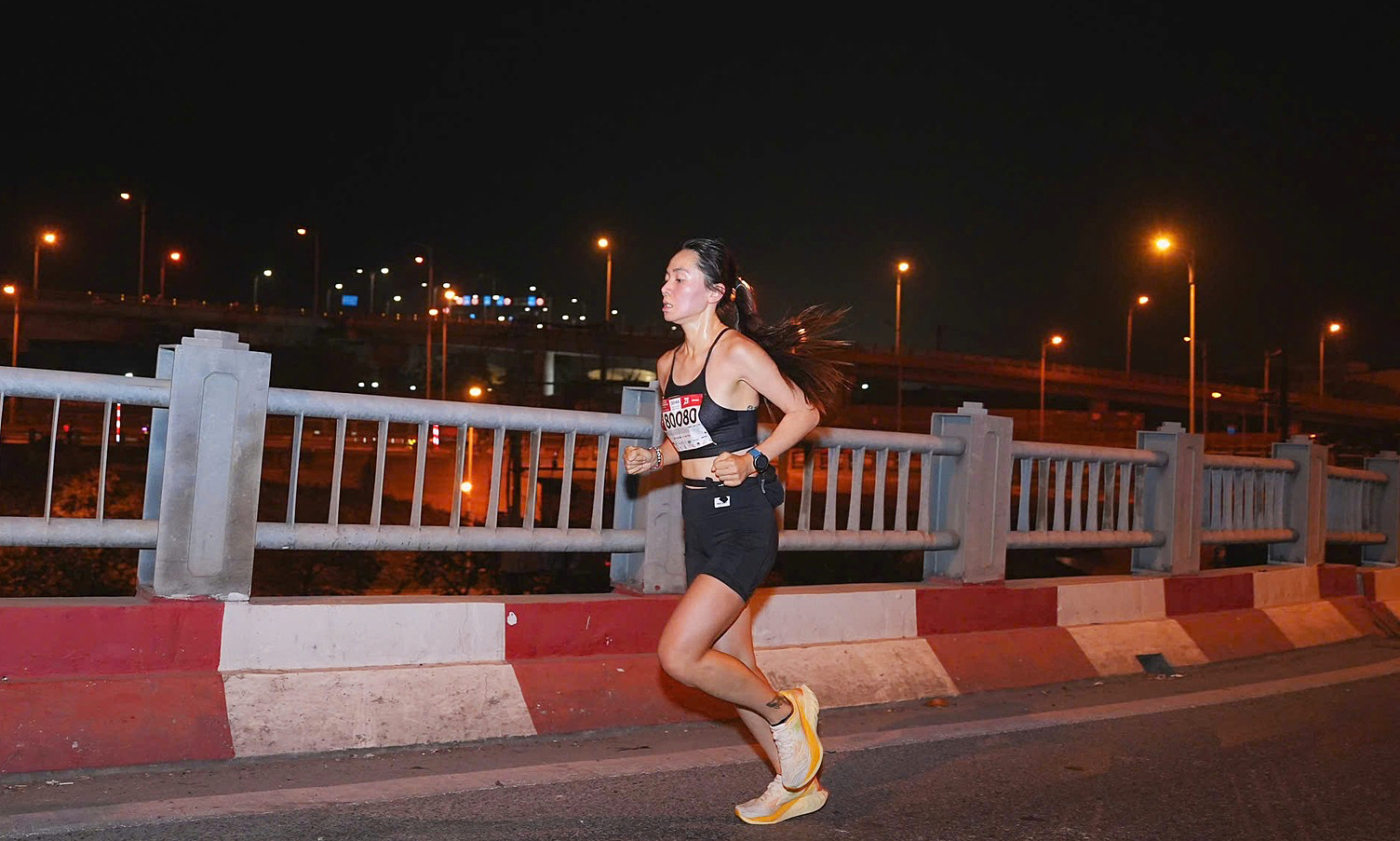 |
A female runner participates in the 21 km distance at VnExpress Hanoi Midnight 2024. Photo: VnExpress Marathon |
Cold weather also diminishes the body's ability to detect hypothermia, especially in low-light conditions. Early signs include prolonged shivering, numb fingertips, pale lips, or fleeting dizziness. Upon experiencing these symptoms, runners should reduce their pace or seek medical assistance to prevent injury.
The doctor advises runners to maintain light activity until they enter the starting area, avoiding prolonged stillness that can cause the body to cool down again. Extended static stretching is unsuitable in cold weather, as it can lead to muscle stiffness. Individuals who are naturally sensitive to cold or run at a slower pace may use warming oil to prepare their muscles and joints before the race.
During the run, runners must ensure adequate hydration and electrolyte intake, especially in the initial stages when the body is not yet accustomed to low temperatures. Doctor Truong recommends maintaining a pace a few kilometers slower than their target to allow for gradual adaptation, thereby minimizing early muscle strain or cramps.
Beyond hypothermia, runners also face a risk of hyperthermia if they wear excessive layers, run at high intensity, or sweat profusely without proper heat dissipation. While less common in winter, this condition can affect individuals who tend to overheat easily. According to the doctor, runners should avoid dressing too warmly. Instead, they can opt for running windbreakers, multi-functional scarves, gloves, arm sleeves, or compression tights to maintain appropriate warmth.
Regarding heat patches, the doctor suggests that runners sensitive to cold, those with Raynaud's syndrome, or individuals who have experienced muscle pain in cold weather may use them. However, they should not be placed directly on the skin and should only be applied to the upper body. High-pace runners or those who easily overheat should avoid using them to prevent adverse effects.
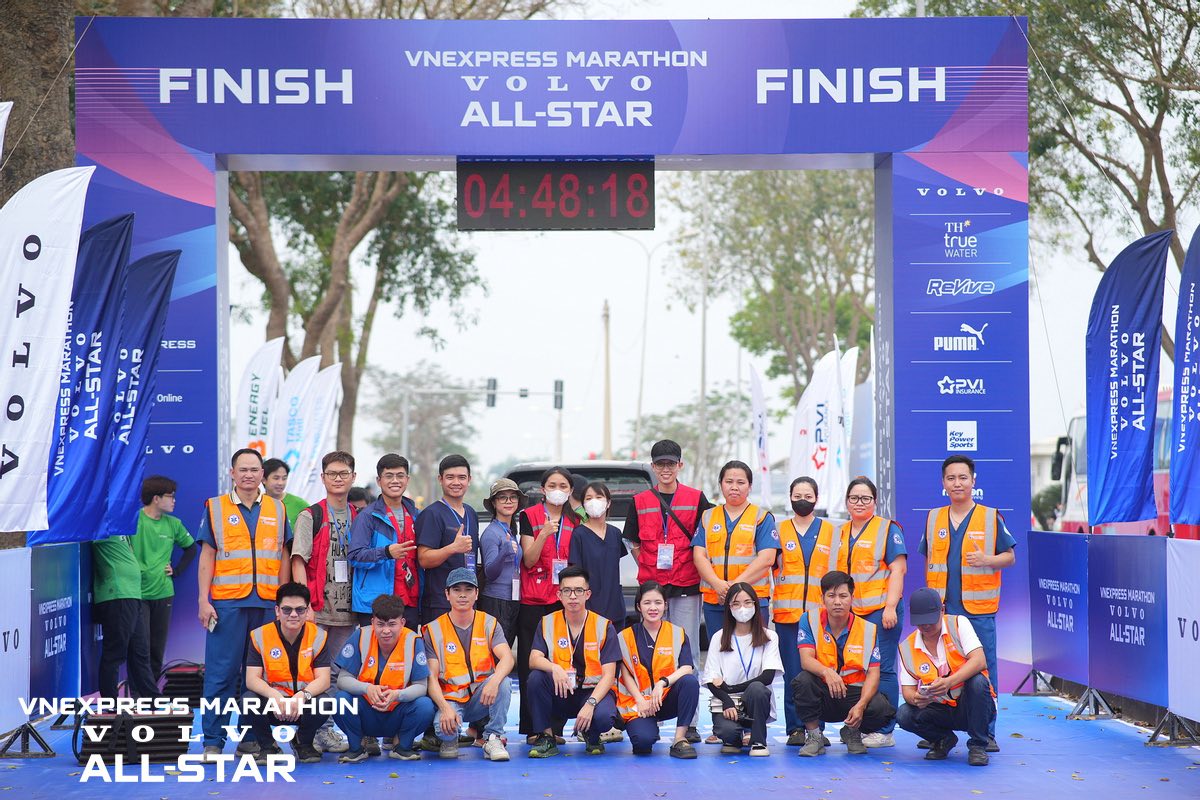 |
The medical team led by Doctor Bui Phu Truong has participated in many VnExpress Marathon events. Photo: VnExpress Marathon |
Winter night running causes blood circulation to concentrate in the body's core, constricting peripheral blood vessels. This results in a lower baseline heart rate but significant fluctuations during acceleration. According to Doctor Truong, runners might experience transient high blood pressure at the start and low blood pressure towards the end of the race if dehydrated or if they stop abruptly after finishing. To mitigate these risks, runners should drink 200 to 300 ml of electrolyte water before the run, maintain a steady pace, and continue walking for a few minutes after crossing the finish line instead of stopping immediately.
The entire VnExpress Marathon Hanoi Midnight Powered by Puma route features 22 support stations. Of these, 15 provide water and medical aid, complemented by mobile vehicles and ambulances on standby. This dedicated team continuously moves to assist runners as needed.
The race unfolds amidst the unique nocturnal ambiance of Hanoi, guiding runners past landmarks such as Ho Guom (Sword Lake), the Old Quarter, the Opera House, and Ho Chi Minh Mausoleum, showcasing the capital's blend of ancient charm and modern vibrancy.
Lan Anh
 |