


Marathon has long been considered a rigorous physical test. However, the brain is the organ that determines whether a person can reach the finish line.
A 2020 study published in the scientific journal PLOS ONE indicated that runners' mental strength scores were significantly higher than those of athletes in many combat sports. Unlike competing against opponents, runners face a fierce battle within their minds.
Below are six steps to build a mindset that helps runners stay calm at the start and steadfast when their bodies signal to stop.
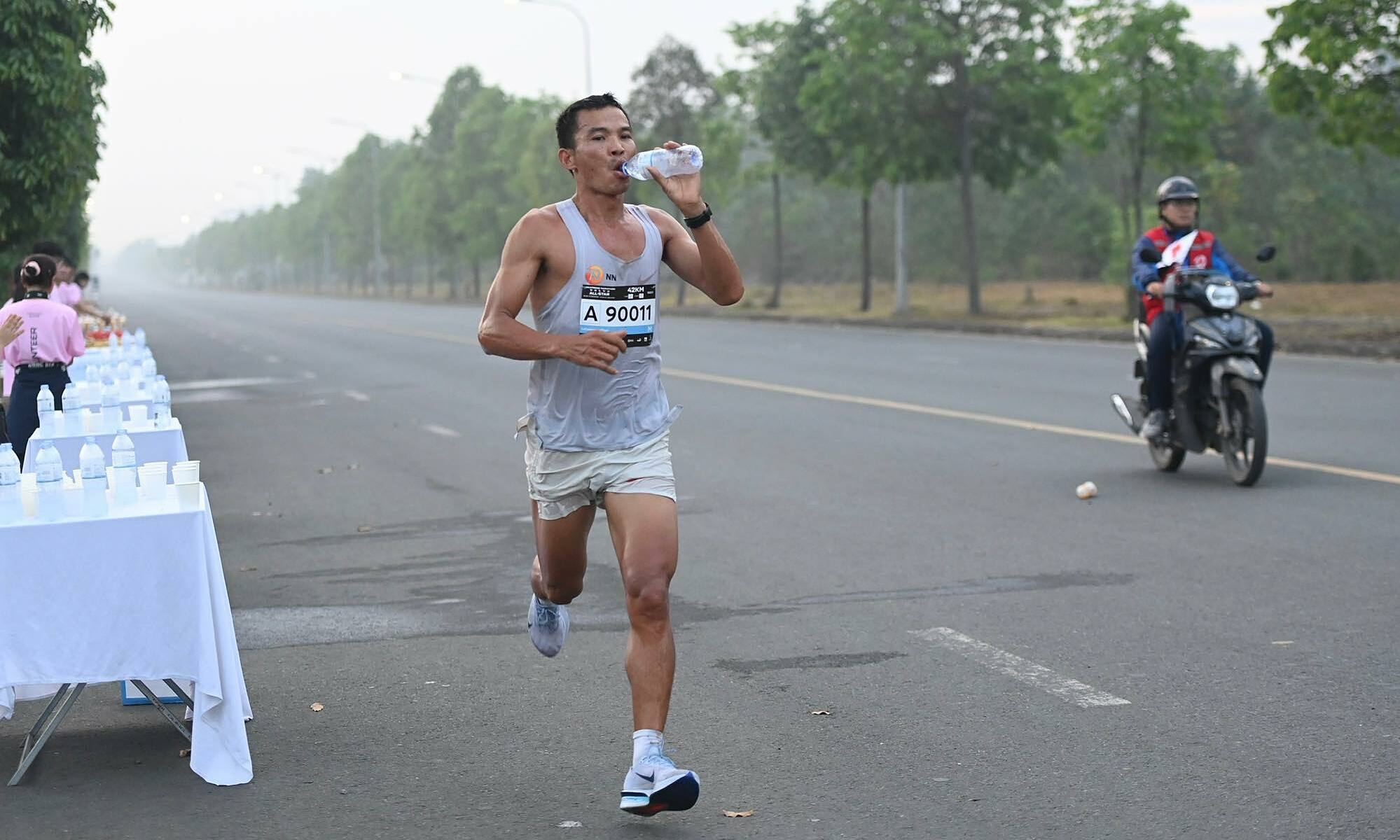 |
Runner Le Van Tuan competes at VnExpress Marathon All-Star 2025. Photo: VnExpress Marathon |
Mentally simulate the run
Building self-belief is foundational to a marathon mindset. Doctor Leeja Carter of Temple University, USA, conducted research on a group of first-time marathon runners. The results showed a strong correlation between immersion in the race and mental strength. Psychological preparation, especially through visualization techniques, helps familiarize the brain with pressure before it occurs.
Before important races, runners should spend a few minutes mentally simulating the run. Don't just imagine crossing the finish line; you also need to visualize difficult situations like long hills, headwinds, or muscle aches, along with how to overcome them. When done correctly, you will feel "experienced" and handle real difficulties more calmly.
Establish race rules
When the body is tired, the brain's decision-making ability diminishes. Preparing action rules in advance helps reduce cognitive load and avoid emotional choices when exhausted.
Write a specific plan, including: pace for each segment, hydration strategy, energy replenishment, and contingency plans. On the course, adhere to the established rules and plans. Confusion or panic when a plan is disrupted is the quickest way to erode willpower.
Curb initial excitement at the start
The secret to conquering a marathon lies not in a fast start, but in effective energy management. Excitement, music, and the crowd at the starting line can easily lead runners to start faster than their actual ability, resulting in early exhaustion.
Controlling the pace from the beginning conserves energy for the decisive kilometers. In fact, runners should actively run slower than their target pace for the initial 3-5 km. When your heart beats unusually fast from being swept up by the crowd, remind yourself: "The real race hasn't started yet." If you start the race feeling easier than expected, you are likely doing it right.
Practice disciplined energy distribution
Even pacing or negative split strategies (running the second half faster than the first) are often associated with high performance. These are running styles that limit the risk of "crashing."
This discipline is trained through progression runs, where the runner starts slow and gradually speeds up. Prioritize maintaining rhythm over hastily correcting running form. If you accept being overtaken by others early in the race without impatience, your strategy is on the right track.
Create a 'script' for self-talk
What you say to yourself directly impacts your ability to maintain pace. Research by Thelwell and Greenlees in The Sport Psychologist journal showed that positive self-talk skills can significantly improve performance.
Instead of letting thoughts drift, runners should prepare a self-talk script with 3–5 short phrases for each stage. In the initial stage, keywords like "calm," "breathe evenly" help stabilize heart rate. Towards the end of the race, action commands like "keep going," "maintain cadence" help sustain motivation.
Adjust attention flexibly
Staying calm instead of panicking is a trainable skill. Research at Boise State University, USA, showed that after 4 weeks of psychological training, runners' anxiety levels significantly decreased.
When muscle soreness becomes too apparent, you can actively direct attention externally (external focus) such as looking at road markings, signs, or counting the steps of the person in front to reduce negative sensations. Conversely, when your mind is agitated, return to your breath. The sign you are doing it right is recognizing instability and adjusting in time, rather than being caught up in thoughts of giving up.
Nguyen Ky
The VnExpress Marathon All-Star 2026 will take place on 8/2. Registration opens from 30/10/2025. Bib prices are announced as 850,000 VND for the 21km distance and 1,150,000 VND for the 42km distance.
This year, the race introduces an experience bib category, limited to 100 slots per distance. Athletes purchasing these bibs do not need to meet entry standards. Experience bib prices are 1,100,000 VND for 21km and 1,500,000 VND for 42km. Interested athletes can verify their achievements and register here.


