The city of Armagh does not command global attention like New York, Paris, or London, nor is it a dream tourist destination. However, for one evening each year, the eyes of the world's running community turn to this small Northern Irish town. It is here that more than 125 athletes regularly complete a 5km race in under 15 minutes.
The rise of the Armagh International 5K is not due to extensive marketing campaigns or massive prize money. Instead, the race is the culmination of a long-standing tradition and strong community spirit, transforming a town-scale competition into one of the fastest running courses on the planet.
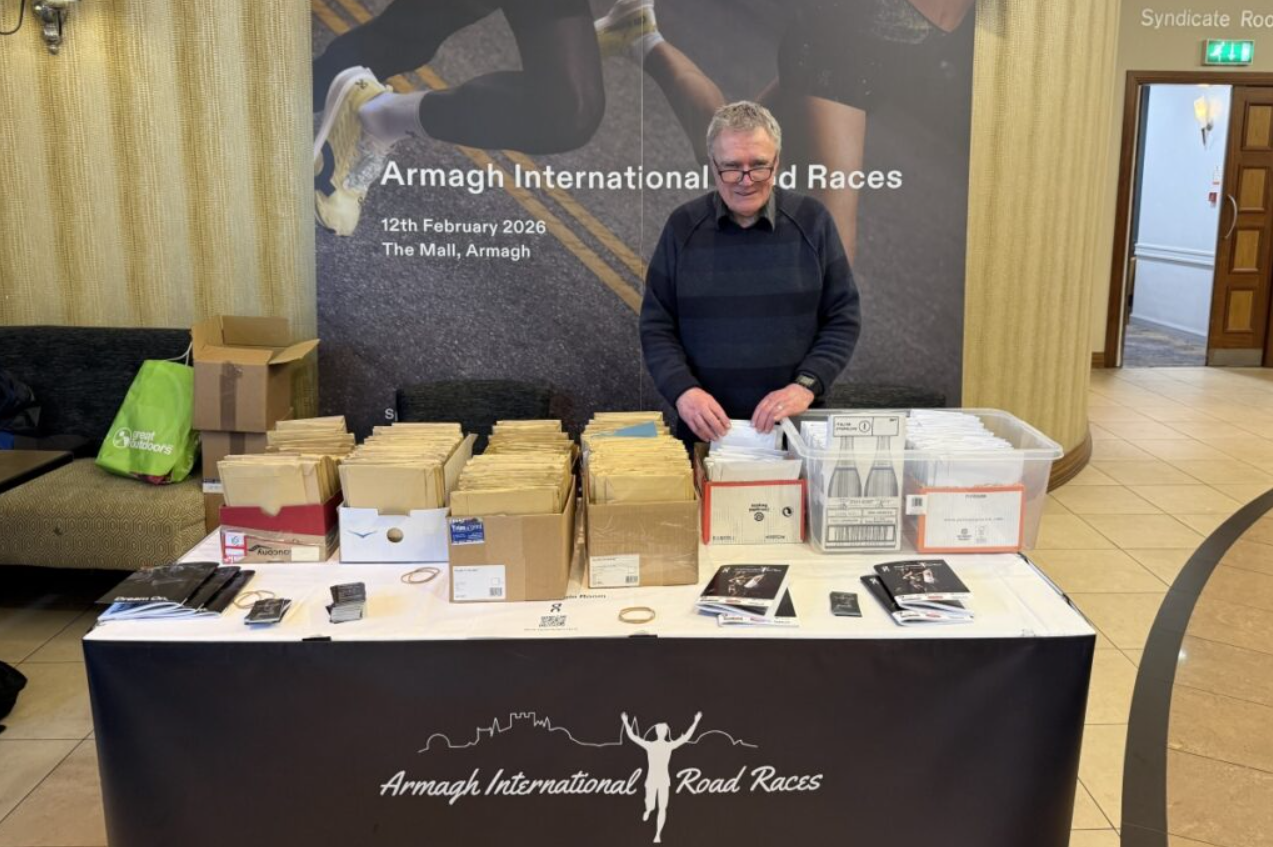 |
Brian Vallely's cousin, James, at the race-kit collection point one day before the Armagh International 5K. Photo: Canadian Running
Founded in 1975 by Brian Vallely, the race began as part of Ireland's International Sports and Culture Week. Vallely's initial goal was not to chase records but to bring international track and field athletes to Ireland to promote local music and art. He used the race as a platform for the Armagh Pipers Club and to showcase his paintings and music. In the late 1980s, when no other Irish city wanted to host, he permanently moved the event to Armagh, and from then on, the Armagh International 5K became an icon.
For many athletes, Armagh's appeal lies in the opportunity to achieve a personal best (PB). Nick Griggs, the 2026 champion, considers it the ideal place to conquer ambitious milestones.
"When you have over 100 people running under 15 minutes, you won't find that anywhere else", Griggs said. "Armagh is renowned as a place where athletes can achieve their time goals."
Geoff Wightman, a commentator and athletics coach who has been an announcer at the event for many years, noted that the event has created "an almost fanatical community". According to him, many athletes return to compete annually because they know that if accepted, they have a great chance to break their PB.
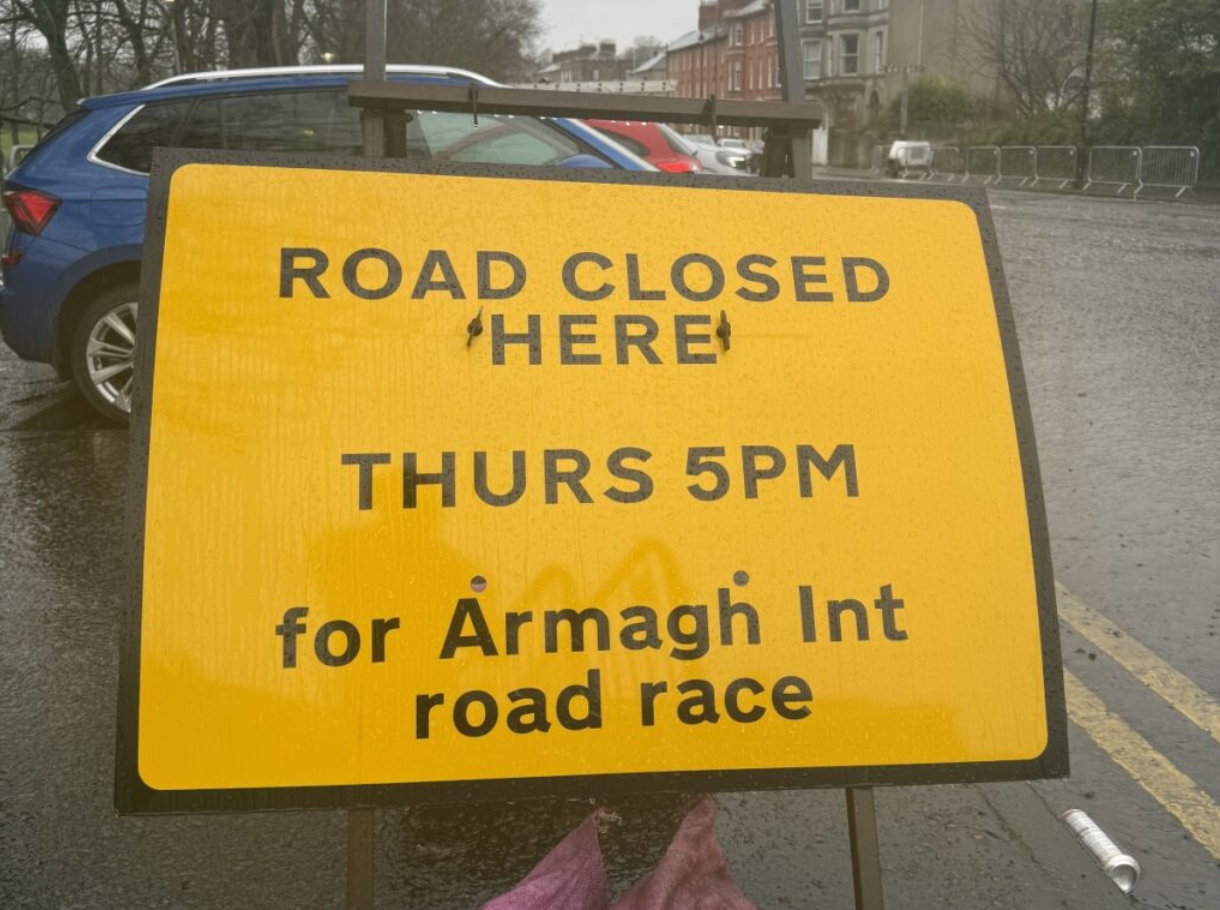 |
Race course signs on The Mall on race day. Photo: Canadian Running
Armagh's high level of professionalism is not accidental. Unlike mass participation races, Armagh does not offer open registration, lotteries, corporate invitations, or celebrity endorsements. The only way to get to the starting line is to email the organizers in the autumn or winter and provide proof of running a 5km race in under 16 minutes within the last two years.
Vallely admitted the race has been criticized as "elitist". However, he maintains that this is not a fun run. The course consists of five laps, each 1,08 km, around a historic park in the town center. The lead group maintains a pace of close to 2 minutes 40 seconds per km, while the trailing group runs at about 3 minutes 20 seconds. With nearly 300 male athletes, the two-lane road is already crowded, making it difficult for runners completing the race in over 20 minutes.
In return, Armagh possesses an incomparable atmosphere. The entire town collaborates to organize the event: the government, chamber of commerce, tourism board, and local businesses. All contribute to creating a genuine community festival. Despite the cold february weather in Northern Ireland – where temperatures often hover just above 0 degrees Celsius and rain has occurred in three out of the last four events – spectators still line both sides of the road to cheer.
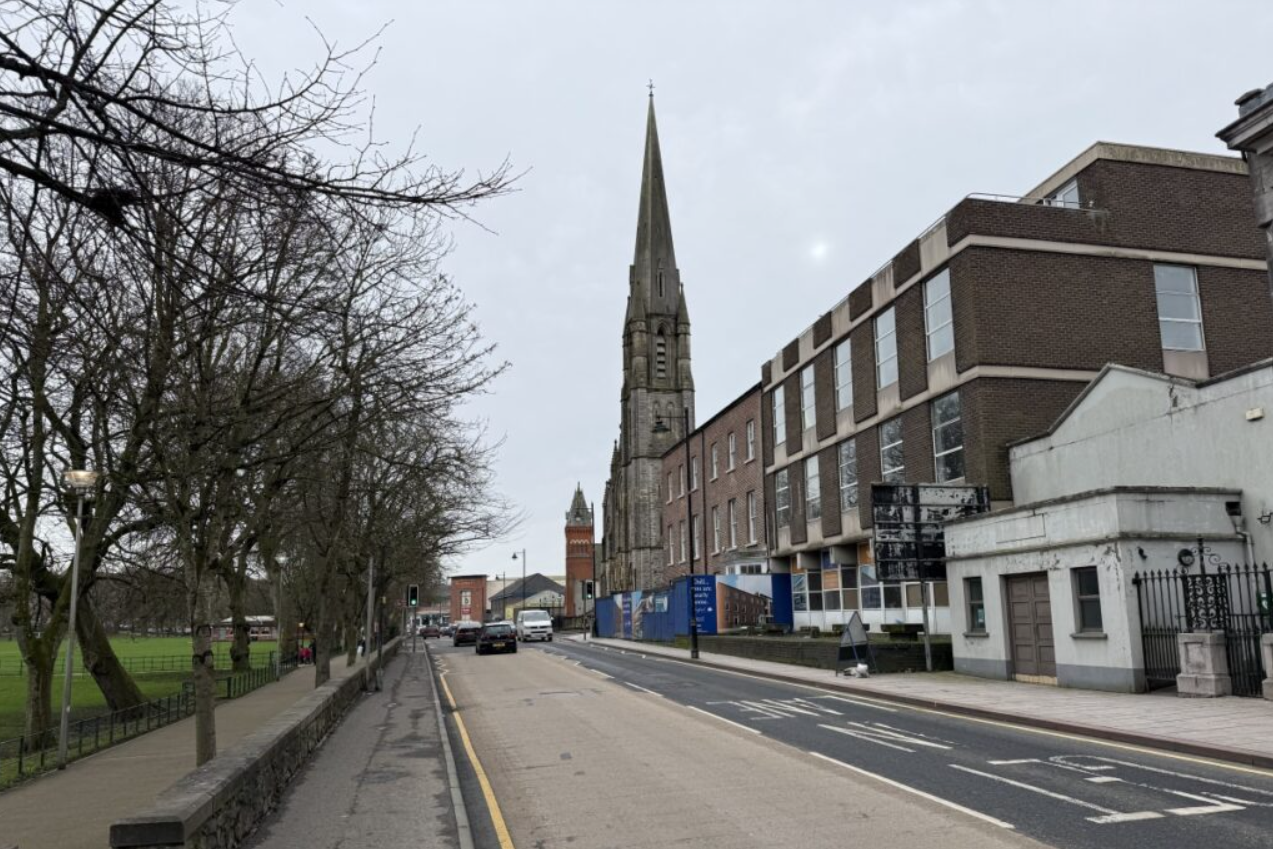 |
The Mall is a two-lane road surrounding a former military assembly point, now converted into a cricket ground in Armagh, Northern Ireland. Photo: Canadian Running
The enclosed, well-sheltered five-lap design, combined with strict entry standards, ensures that athletes always run among competitors of similar ability. From the starting gun, the entire pack is swept into a high pace. Dozens of runners who have previously achieved sub-14-minute times pull dozens of others to set new personal records. Vallely's philosophy is clear: come to Armagh to run fast.
Armagh does not pay appearance fees, nor does it strive to become the "next Boston Marathon". Their success comes from understanding and preserving their identity for over 50 years. And on one cold, rainy night each year, hundreds of elite athletes stride around the grounds that were once a military assembly point, now a cricket field, amidst enthusiastic cheers – proof that magic sometimes arises from the most unexpected places.
Hong Duy (according to Canadian Running Magazine)