When Gianni Infantino assumed leadership of FIFA in 2016, he represented renewal. Global football had just endured a serious crisis, with numerous FIFA officials facing corruption investigations under Sepp Blatter. Infantino's mission then was to restore trust in the world's most powerful football organization.
Ten years later, his image is far more controversial. Human rights organizations criticize FIFA for increasingly deviating from its commitments to transparency and social responsibility. The World Cup has become overly commercialized. The expansion of the World Cup to 48 teams, the unprecedented scale of the FIFA Club World Cup, and FIFA's growing presence alongside heads of state frequently make Infantino a subject of debate.
 |
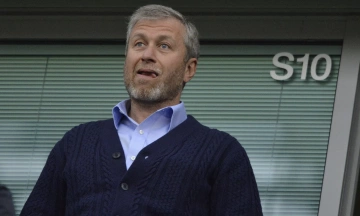
President Donald Trump (left) and FIFA President Gianni Infantino at the White House, Washington, DC, United States on 6/5/2024. *Photo: AFP*
The paradox lies in this: the more criticism he receives externally, the stronger his internal support within FIFA becomes. Infantino was re-elected unopposed in 2019 and 2023. He is likely to win the 2027 election. While Western media frequently question Infantino's legacy, most of FIFA's 211 member associations remain on the Swiss president's side.
Explaining this paradox is complex. From the perspective of traditional fans, Infantino embodies a trend of relentless expansion. The 2026 World Cup will feature 48 teams and 104 matches, significantly more than the 32-team format used from 1998 to 2022. The FIFA Club World Cup has also expanded to 32 teams, adding pressure to players' already packed schedules.
These changes raise concerns about the quality of play, the risk of player fatigue, and the erosion of tournament value. Ticket prices for many FIFA events have increased sharply. Human rights activists continue to question the World Cup host choices made during Infantino's tenure.
However, from the viewpoint of the majority of FIFA member associations, the narrative differs. Since Infantino took office, FIFA has significantly advanced its global football development program, FIFA Forward. Approximately 2,8 billion USD was allocated to member associations, continental confederations, and regional organizations between 2016 and 2022. More than 1,600 football development projects have been implemented worldwide.
 |
VFF President Tran Quoc Tuan and Vietnam national team players celebrate the ASEAN Cup 2024 championship at Rajamangala Stadium, Bangkok, Thailand on the evening of 5/1/2025. *Photo: Duc Dong*
FIFA states that investment in football development is currently 7 to 8 times higher than the period before 2016. Each member association can receive up to 8 million USD in the 2023-2026 cycle, not including additional support for nations with limited revenue.
For many smaller footballing nations in Africa, the Caribbean, Oceania, or Central Asia, this sum is substantial. It translates to new training grounds, new training centers, new youth academies, or simply the funds needed for national teams to operate. Therefore, what fans in major footballing powers perceive is not necessarily what FIFA member associations perceive.
The Infantino paradox originates here. He may not be popular in media debates, but FIFA is not governed by editorials or public opinion polls. FIFA operates on the principle of "one federation, one vote".
Germany has one vote. Brazil has one vote. The Cook Islands also has one vote. In this system, the widespread distribution of resources to 211 members holds significant political weight.
Infantino has also achieved financial success. According to FIFA's financial report, revenue for 2025 reached 2,661 billion USD. FIFA also stated it has signed contracts covering 93% of the projected revenue for the 2023-2026 cycle and is on track to surpass its 13 billion USD revenue target for the entire period.
In march 2026, FIFA further announced a record revenue forecast of 14 billion USD for the 2027-2030 cycle. A significant portion of this will continue to be allocated to the FIFA Forward program. From the perspective of member associations, these are results that are difficult to disregard.
This also explains why criticisms against Infantino often face a certain limit. Opponents argue he has transformed FIFA into an endless expansion machine, with increasing tournaments, matches, and revenue. They worry that football is becoming overly dominated by commercial objectives.
Supporters, however, contend that no FIFA president has distributed resources so generously to smaller footballing nations. For them, a 48-team World Cup represents a historic opportunity for many countries to appear on the world's biggest stage for the first time. For instance, the 2026 World Cup will feature 4 newcomers: Jordan, Uzbekistan, Cape Verde, and Curacao.
Infantino's legacy will likely be assessed more clearly after the 2026 World Cup. If the expanded tournament succeeds both professionally and commercially, he will have further evidence to validate his decisions. If concerns about quality, schedule, and overload materialize, criticisms will intensify.
However, currently, Gianni Infantino remains one of the most controversial FIFA presidents, while simultaneously being one of the most strongly supported within the organization.
Compiled by Xuan Binh