


Vietnam entered the U17 Asia Cup 2026 finals in Saudi Arabia with many doubts about their physical stature when compared to the continent's strong footballing nations. However, figures from the official registration lists of the 15 teams reveal a less pessimistic reality. Cristiano Roland's squad is not in the bottom group for either average height or weight, even surpassing several familiar opponents from Southeast and West Asia.
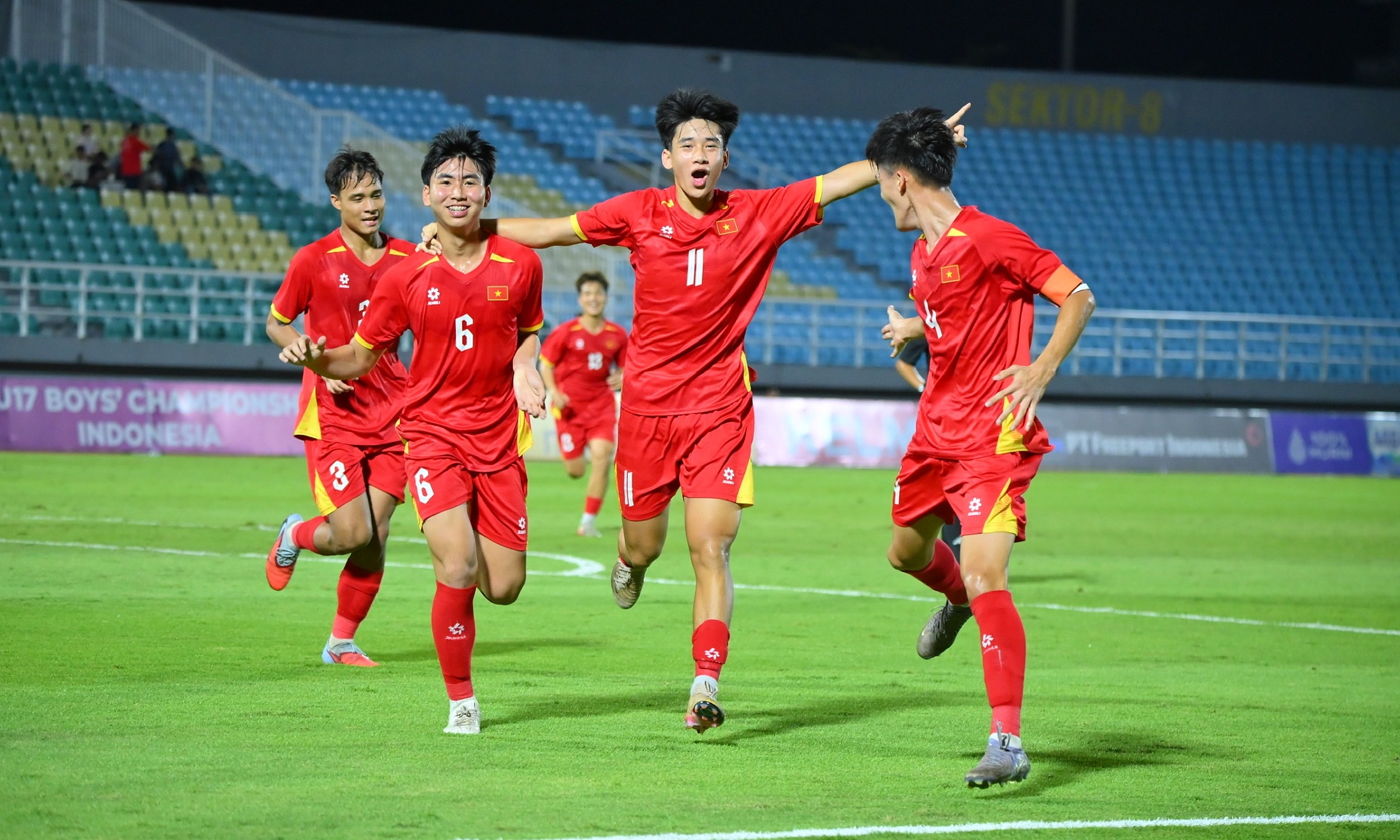 |
Vietnamese players celebrate the opening goal in the U17 Southeast Asia Championship 2026 final against Malaysia, at Gelora Delta Stadium, Indonesia on 24/4. Photo: Doan Huynh
According to statistics from the 23-player roster of each team, Vietnam has an average height of 1,7343 m. This figure is lower than the tournament average of 1,7597 m, but it places them 12th, on par with Indonesia and taller than Yemen (1,7052 m) and Myanmar (1,6774 m). The gap between Vietnam and the middle group is not significant. The team immediately above them, host Saudi Arabia, averages 1,7387 m, less than half a centimeter taller than Vietnam.
On the Asian scale, South Korea leads with an average height of 1,8170 m, followed by Uzbekistan at 1,8109 m and Trung Quoc at 1,8091 m. An approximate eight-centimeter difference compared to South Korea reflects a clear physical disparity between Vietnam and the continent's top teams. However, within Southeast Asia, Vietnam is not completely outmatched, being only shorter than Thailand (1,7587 m).
Differences are evident across positions. Vietnam has three goalkeepers all measuring 1,76 m or taller: Chu Ba Huan (1,76 m), Nguyen Tuan Vu (1,82 m), and Ly Xuan Hoa (1,84 m). This group possesses a good physical build compared to Asian youth standards. The defense also includes several players close to 1,8 m, such as Nguyen Manh Cuong (1,82 m), Tran Hoang Viet (1,78 m), and Quan Thanh Cong (1,77 m). Nguyen Van Duong (1,78 m) and Le Trong Dai Nhan (1,8 m) are attacking players with good physical stature.
A limitation lies with wing attackers and technical midfielders. Many players are under 1,7 m tall, including Nguyen Hiep Dai Viet Nam (1,65 m), Le Sy Bach (1,66 m), Dau Quang Hung (1,66 m), and Tran Manh Quan (1,67 m). This brings down the team's average height.
In terms of weight, Vietnam averages 65,65 kg, lower than the tournament average of 68,12 kg. The team ranks 11th, ahead of Indonesia (64,39 kg), India (64,26 kg), Myanmar (60 kg), and Yemen. South Korea continues to lead with 73,52 kg, while Yemen is the lightest team in the tournament at 58,70 kg.
The weight disparity partly reflects the youth football development styles across regions. East Asian teams like South Korea, Japan, and Trung Quoc prioritize early muscle strength development, while Southeast Asian teams often lean towards agility and technical skill. Vietnam follows this trend, but the gap is not as wide as a decade ago.
Another notable point is the age structure of U17 Vietnam. Among the 23 players, only one, forward Tran Manh Quan, was born in 2010. The rest were all born in 2009. This shows that the coaching staff prioritized players at the maximum age for the tournament, rather than using a very young squad for experience accumulation.
Compared to Yemen, Vietnam's first opponent on 6/5, the difference is clear. Yemen has 16 players born from 2010 onwards, including four players born in 2011. This is the youngest team in the tournament, and also among the shortest and lightest. Vietnam has an edge over Yemen in physical maturity and playing experience.
Meanwhile, South Korea, the strongest opponent in Group C, uses 100% players born in 2009, and leads in both height and weight. This will be a significant challenge for Vietnam in the second match on 10/5.
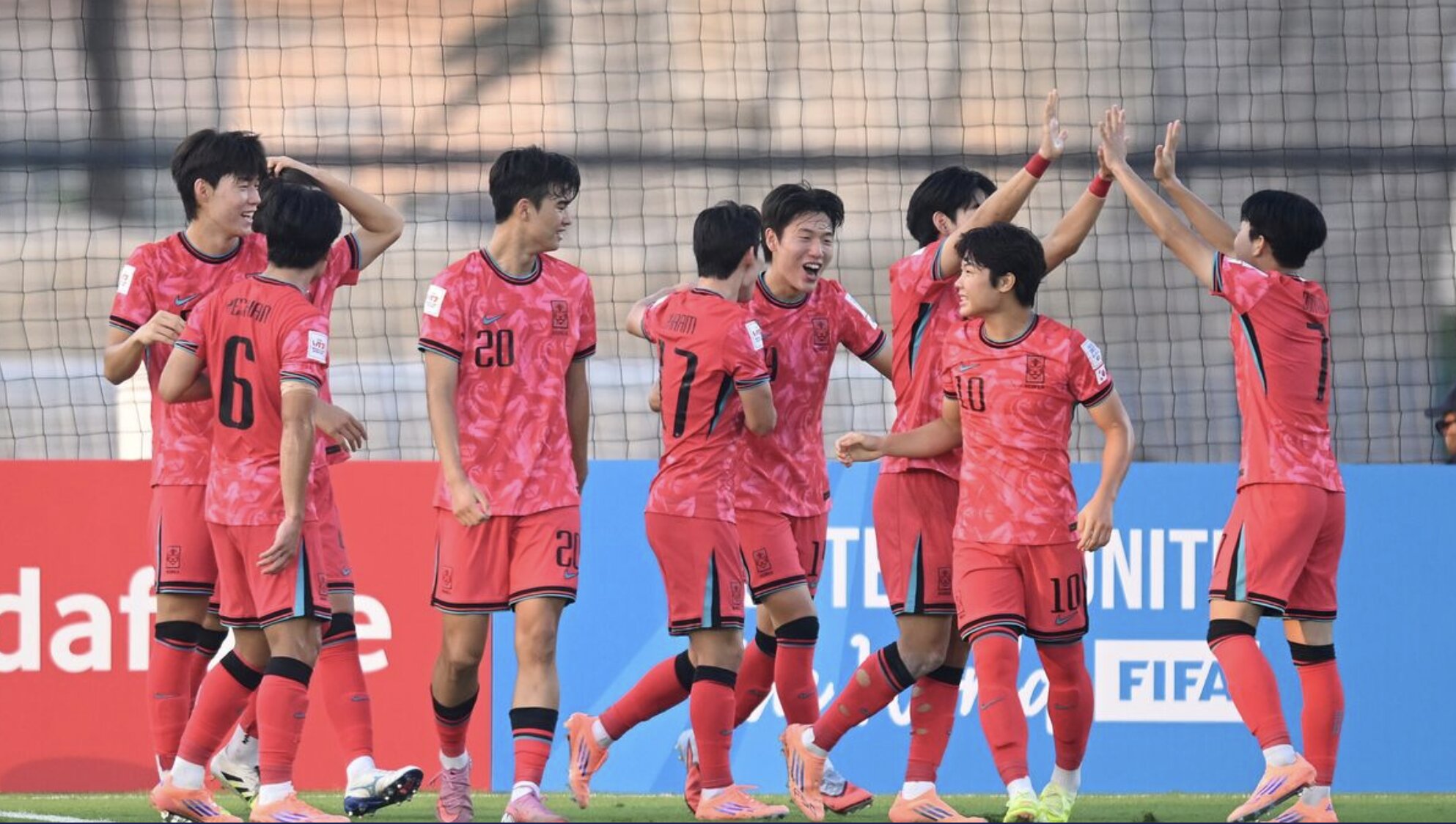 |
U17 South Korea possesses leading physical stature and experience at the U17 Asia Cup 2026 finals. Photo: AFC
UAE, Vietnam's remaining opponent, is also notable for its physical attributes. The West Asian team averages 1,7613 m in height and 69,48 kg in weight, both exceeding Vietnam's averages. UAE also has five players competing abroad, the highest number in the tournament alongside Trung Quoc. These players are from academies and clubs in England, Germany, or Spain, creating a squad that blends West Asian technique with a European physical foundation.
Conversely, Vietnam is one of nine teams without any players competing abroad. The entire squad comes from domestic clubs and academies such as Ha Noi FC, PVF, The Cong, and SLNA. Ha Noi FC contributes the most with six players, while PVF has five.
The U17 Asia Cup 2026 finals run from 5/5 to 22/5 with 15 teams, after North Korea withdrew from Group D. The teams are divided into four groups, each with four teams, except Group D which has only three teams. Vietnam is in Group C, kicking off against Yemen on 6/5, then playing South Korea on 10/5, and UAE on 13/5.
The top two teams from each group will advance to the quarterfinals and secure a spot in the U17 World Cup 2026 in Qatar. If Qatar also reaches the quarterfinals, the third-placed team with the best group stage record will qualify for the U17 World Cup 2026.
Xuan Binh


