Ruben Amorim survived numerous challenges during his tenure at Manchester United.
He retained his job after a loss to fourth-tier Grimsby Town in the English League Cup and did not depart after losing the crucial Europa League final to Tottenham. Home defeats to West Ham, Wolves, and Everton, a 15th-place finish, tactical inflexibility, the sidelining of many academy players, a win rate of just 32%, and even his statement calling the team "the worst in Manchester United's history" were not direct reasons for Amorim's dismissal.
However, there was one boundary he was not permitted to cross: conflict with football director Jason Wilcox.
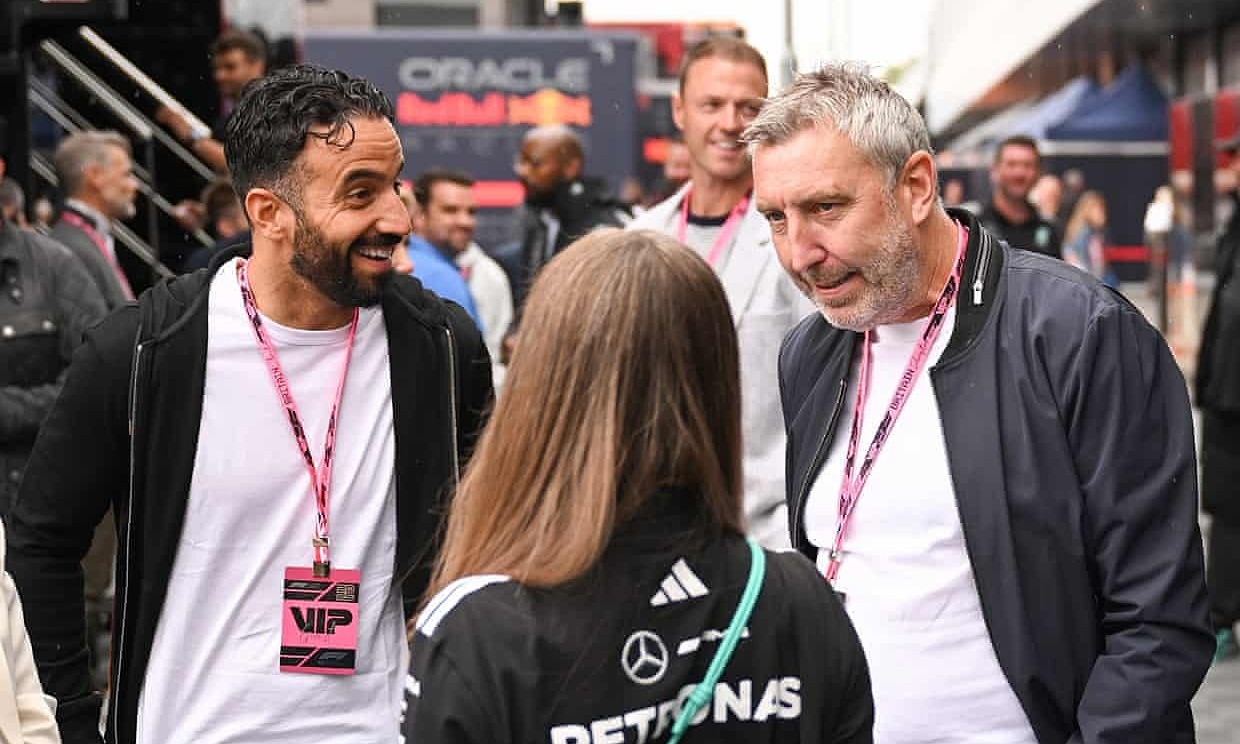 |
Manager Ruben Amorim (left) and football director Jason Wilcox, as Manchester United attended the F1 Grand Prix event in Silverstone, United Kingdom on 6/7/2025. *Photo: EPA*
Like many right-backs who were once helpless against Wilcox in the 1994-1995 season, Amorim chose to confront the former midfielder and failed. Ironically, a manager who often criticized his players for losing one-on-one duels could not withstand the pressure of a football director's power and position.
Amorim's sacking reshaped the perception of Wilcox. Previously, he had only nine months of similar experience at Southampton. Wilcox was initially seen as an "administrative" leader within Manchester United's new operational structure, appointed with the title of "technical director." This role, previously held by Darren Fletcher, had minimal impact on footballing matters.
Wilcox secured his position primarily through his relationship with CEO Omar Berrada from their time at Manchester City, rather than widely recognized competence. However, after playing a decisive role in Amorim's removal, much like he had previously ousted sporting director Dan Ashworth, Wilcox emerged as a truly strategic player.
Wilcox, who was involved in Amorim's appointment, later persuaded the Portuguese manager to abandon his foundational 3-4-3 formation. These proposals met strong opposition from Amorim, who viewed the leadership's intervention as excessive. Wilcox had only three caps for England and won one national championship three decades ago. He also lacked Amorim's coaching experience and achievements.
Wilcox rarely appeared before the media. His decisions, including Amorim's departure with a generous severance package, were never publicly explained.
However, focusing on Wilcox might obscure the role of the highest authority in Manchester United's new power structure: billionaire Jim Ratcliffe. Wilcox remains an implementer of directives from above.
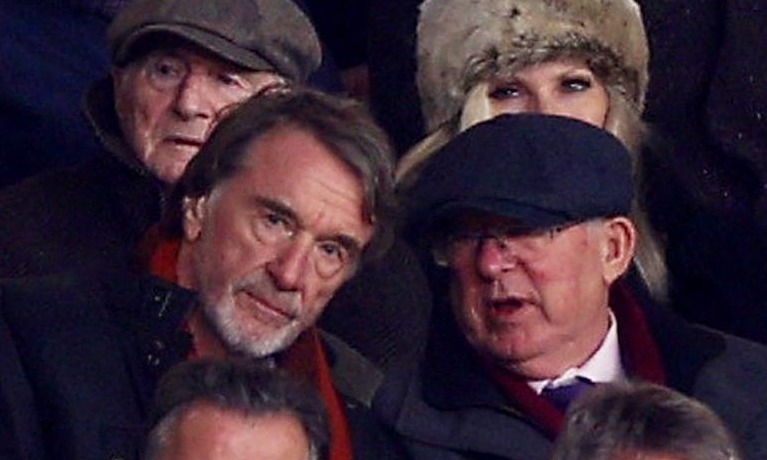 |
Billionaire Jim Ratcliffe (left) and former manager Alex Ferguson watch Manchester United play Tottenham at Old Trafford, Manchester, United Kingdom on 14/1/2024. *Photo: Reuters*
Ratcliffe held clear views on prioritizing a four-defender formation. He also suggested using Bryan Mbeumo as a right-back. Ratcliffe particularly emphasized the role of data science and analytics. In an early executive meeting after acquiring his significant personal stake in the club, he declared that Manchester United's playing style "will be decided in this room."
Ratcliffe entered top-tier football with a background in non-pitch sectors such as petrochemicals, sailing, and cycling. In his new role, he oversaw cost-cutting measures, a new stadium construction project with a controversial design, and disappointing transfers like Benjamin Sesko.
For decades, clubs largely entrusted footballing decisions to managers, scouts, and players. In today's environment, however, power increasingly shifts to leadership and executives, with their impressive management capabilities and significant influence in the boardroom. Tactics, direction, and team structure are decided at a high level, and managers are hired to implement within an existing framework.
If managers were once seen as creators of identity and playing style, that role now increasingly resembles an executor. They do not decide the "dish" but are held responsible when the final product fails to meet expectations. Managers are now like delivery drivers, receiving "few stars" from customers if the food is substandard.
Recent examples show this is not exclusive to Manchester United. Manager Enzo Maresca led a very young squad to the Champions League and won two titles, including the UEFA Conference League and the FIFA Club World Cup, yet was still dismissed early after controversial statements with the authorities.
After Ashworth and Amorim had their contracts terminated, the media reported negative information about them. Meanwhile, no negative portrayals of the club's leadership emerged. However, the origin and interests behind these sources are widely understood.
Xuan Binh (via The Guardian)