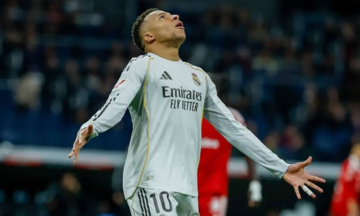
Chelsea stated that a change in head coach was necessary to get the season back on track, as the team still had opportunities in all four competitions. However, behind this decision lay a series of long-standing issues, most notably Maresca being distracted by external contacts, which prevented him from being fully committed to the project at Stamford Bridge.
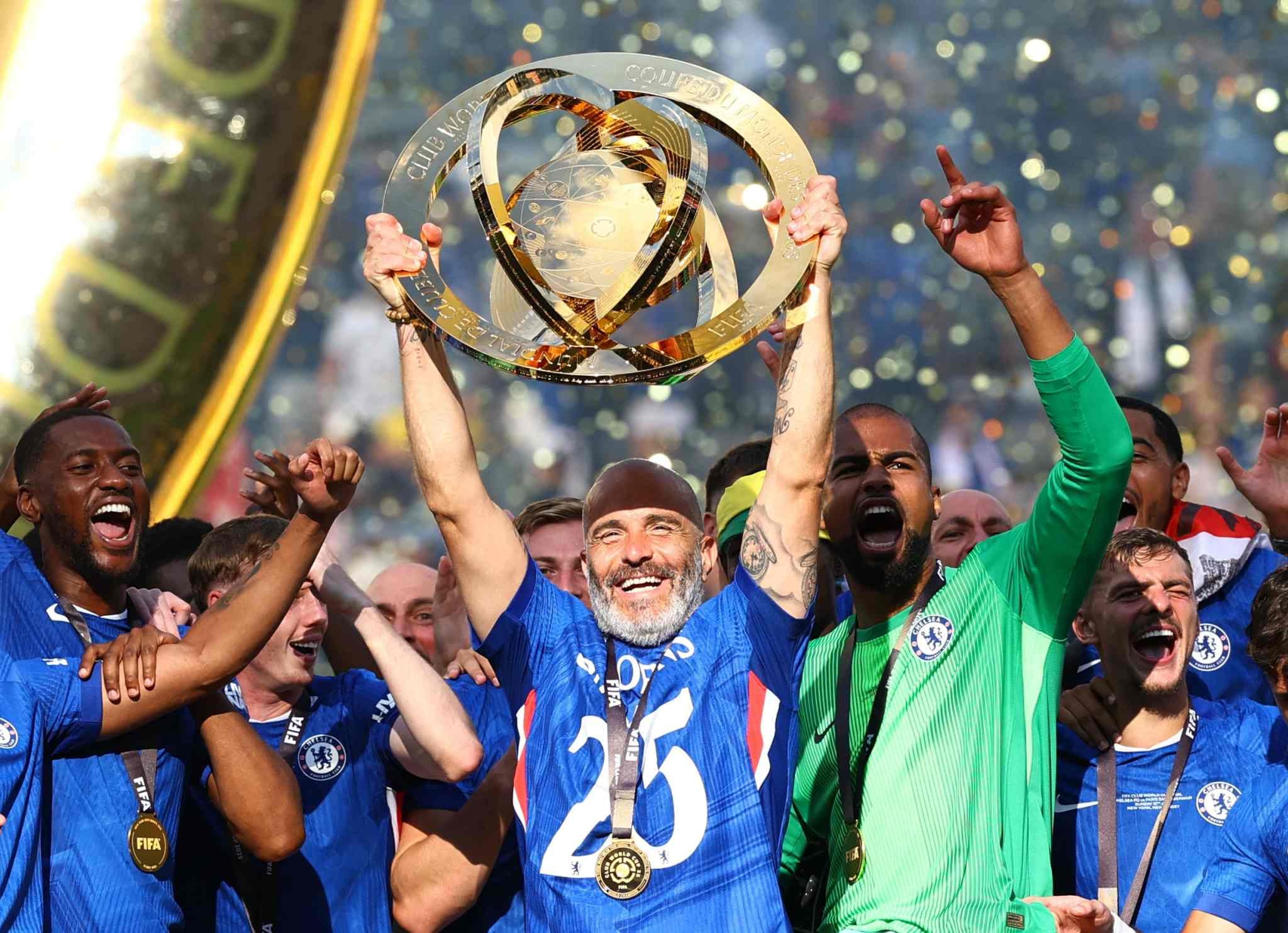 |
Coach Enzo Maresca lifts the cup after the FIFA Club World Cup final at MetLife Stadium, New Jersey, US on 13/7/2025. Photo: Reuters
According to Athletic, Maresca had been in negotiations with representatives from Manchester City and Juventus in October and December 2025. Chelsea became aware of this because the Italian coach's contract obliged him to report any contact with other clubs.
Chelsea was entering a crucial period, needing to balance its efforts across the Premier League, Champions League, and domestic cups. Therefore, Maresca's discussions with Manchester City and Juventus created an unstable atmosphere within Chelsea.
Maresca reportedly offered to cease contact with other clubs if Chelsea agreed to extend his contract with significantly improved terms. However, Chelsea's board immediately rejected this proposal. The club did not want to set a precedent where a sitting coach could use external interest as leverage in negotiations.
Chelsea believed that the leakage of these negotiations became a distracting factor in the dressing room. As match results began to decline, any sign of instability in the coaching position was considered a major risk.
Maresca previously served as an assistant to Pep Guardiola at Manchester City. Within coaching circles, he was considered to have chosen Etihad as his ideal future destination, even a successor to Guardiola. This was because the Spanish coach might leave Manchester City at the end of this season, while Maresca's previous contract with Chelsea was set to expire in summer 2029.
Chelsea also noted several indications that Maresca was no longer genuinely committed to the club. During his time at Stamford Bridge, he became a client of super-agent Jorge Mendes, who represents many top European coaches and players.
Additionally, Maresca altered his personal image. In his final matches, he appeared in attire without the Chelsea logo, instead of the club's traditional sportswear. Although not a decisive factor, this detail was seen as a symbolic manifestation of the rift between the two parties.
Some internal sources believed Maresca had already begun seeking an exit from Stamford Bridge before his dismissal. He was reportedly content for things to end, suggesting the relationship had concluded even before the official decision was made.
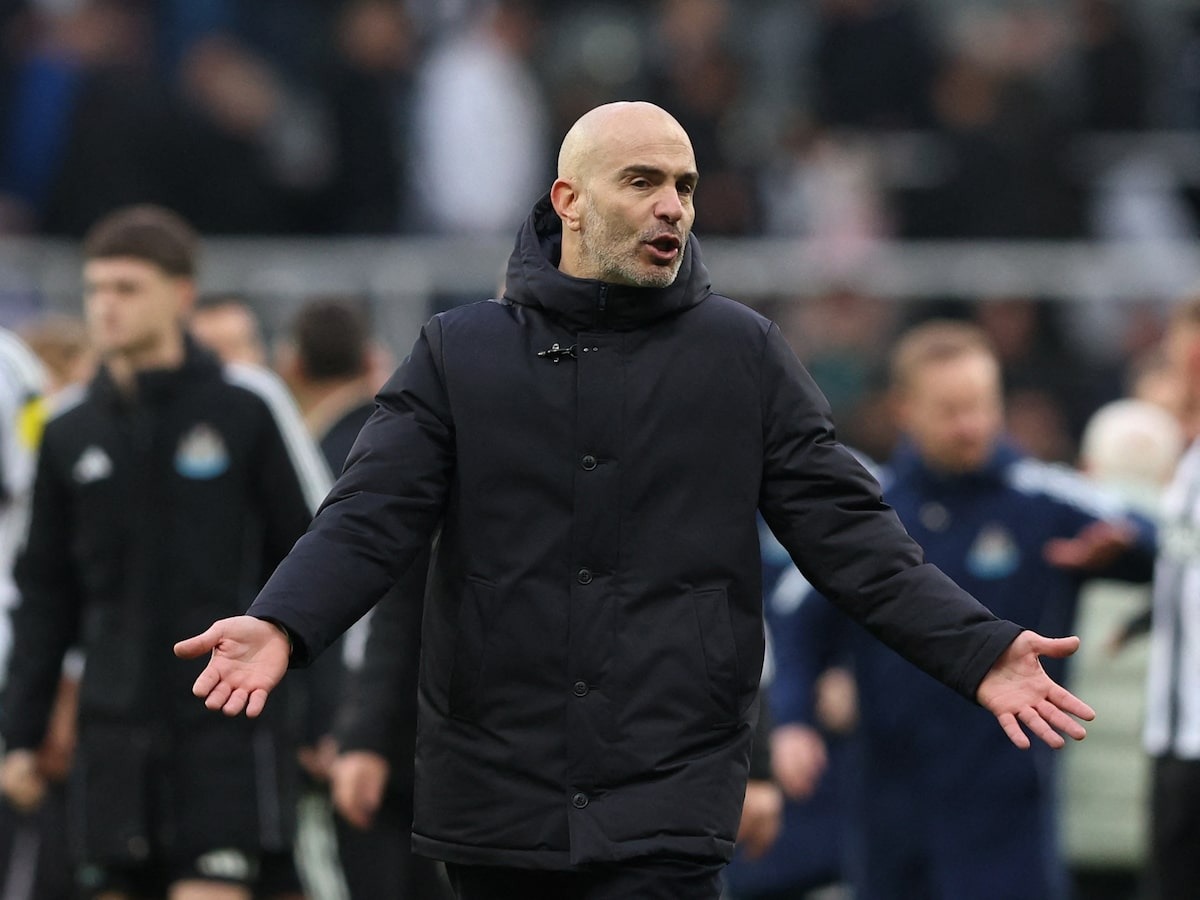 |
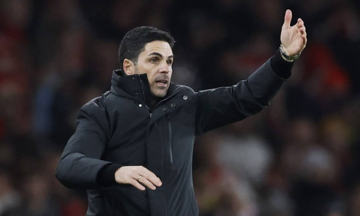
Coach Enzo Maresca during Chelsea's match against Newcastle at St James Park, Newcastle Upon Tyne, United Kingdom on 20/12/2025. Photo: Reuters
Chelsea also informed the media that the parting occurred just before a match against Manchester City, aiming to prevent the team from being affected by the 45-year-old coach's future. This indicated the board's desire to completely eliminate any disruptive factors before the remainder of the season.
Beyond the two aforementioned reasons, disappointing match results in December were a critical factor that prevented Chelsea from delaying the decision. The team won only one of seven recent Premier League matches, dropped 15 points from winning positions, and lost its spot in the Champions League qualification group.
Relationships between Maresca and various departments within the club also deteriorated rapidly. His statement about the "48 worst hours" after winning against Everton was reportedly aimed at the medical department, where long-standing disagreements existed regarding the management of injured players and their return to play. The recurrence of Cole Palmer's groin injury raised internal concerns, although there was no evidence Maresca violated medical procedures.
Maresca's handling of the media was also deemed unprofessional. He did not attend a press conference after the draw against Bournemouth, citing health reasons, but the club suspected otherwise. Chelsea considered this action disrespectful and placed assistant Willy Caballero in an awkward position.
Chelsea affirmed that they initially planned to evaluate Maresca at the end of the season. However, declining form, fractured relationships, negotiations with rivals, and the Italian coach's perceived lack of commitment ultimately became the final straw.
In its official announcement, Chelsea acknowledged the titles Maresca brought but emphasized that parting ways at this time would offer the best opportunity for the team to achieve its remaining objectives. For Chelsea, the project and structure remained intact, so a change in coach would theoretically not have a significant impact.
In reality, however, changing coaches mid-season still carries many risks. Less than 24 hours passed between the appearance of dismissal rumors and the club's official announcement. Therefore, fans cannot yet definitively assess whether Chelsea acted too hastily in sacking its coach.
Hoang An (via Athletic, Telegraph)