In a contentious moment during Liverpool's 2-2 draw with Fulham in the Premier League's 19th round, Florian Wirtz's equalizer, initially flagged for offside, was ultimately allowed. The decision, which occurred in the 57th minute at Craven Cottage on 4/1, hinged on the Premier League's unique application of offside technology, specifically its "tolerance level" rule. This rule permits goals where an attacking player is offside by a very small margin, typically around 5 cm, favoring the attacking side.
Slow-motion replays depicted Wirtz positioned slightly ahead of Fulham's last defender, Issa Diop, when Conor Bradley delivered the pass. This visual evidence led Fulham's coaching staff and home supporters to believe the goal was invalid. Wirtz himself acknowledged after the match that he "was definitely offside," hence his subdued celebration.
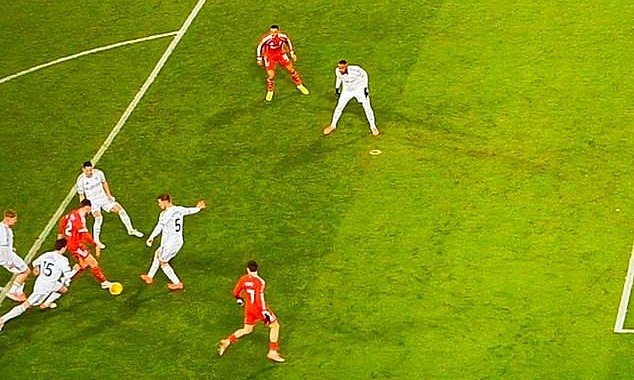 |
Bradley's pass to Wirtz (number 7) for Liverpool's 1-1 equalizer, during the 2-2 draw against Fulham at Craven Cottage, London, United Kingdom, on the evening of 4/1 in the 20th round of the Premier League. Photo: screenshot. |
The tolerance level addresses inherent technical limitations in offside detection. Precisely determining the exact moment the ball leaves a passer's foot and the valid point of contact on a player's body cannot achieve absolute accuracy. Historically, VAR's manual line drawing led to numerous offside calls decided by mere millimeters, frequently sparking controversy and negative reactions.
While many top European leagues, including the Bundesliga, La Liga, and Champions League, adopted millimeter-level offside detection with semi-automated technology, the Premier League chose to retain its tolerance level. This decision aims to ensure consistency with prior seasons and minimize overly strict rulings, even with the new technology in place.
Under the league's protocol, an attacking player is considered onside if their scoring body part falls within the tolerance range, often indicated by a green line on screen. In Wirtz's instance, despite appearing ahead of the Fulham defender, the distance was within this permissible limit. English refereeing officials estimate this tolerance could lead to about 20 additional goals being allowed each season compared to rigid offside calls. The rule's objective is to promote attacking play and prevent goals from being disallowed due to minimal technological discrepancies.
Following the match, Fulham coach Marco Silva stated he believed the situation looked offside but accepted the decision, trusting the semi-automated technology. Many experts and former players, including Jamie Carragher, expressed surprise at the goal's allowance but concurred it aligned with current regulations.
Hoang An (via Daily Mail)