Zverev defeated Shelton 6-3, 7-6(2), 5-7, 6-2 in the 2026 US Open final, securing his second career Grand Slam title. The German player also brought an end to the impressive run of the home crowd favorite, who had previously beaten last year's champion, Alcaraz, in the quarterfinals.
In earlier rounds leading up to the final, Shelton often dominated opponents with his power and ability to create unpredictable plays. However, against Zverev, the American player struggled to maintain his explosive performance. The disciplined playing style and pace control of the top seed forced Shelton into making more errors.
When ESPN asked how he neutralized Shelton, Zverev attributed his success to not trying to attack every shot. "When you play Ben, you don't have to constantly be on the offense," Zverev said. "The more pace you put on his backhand, the better he plays."
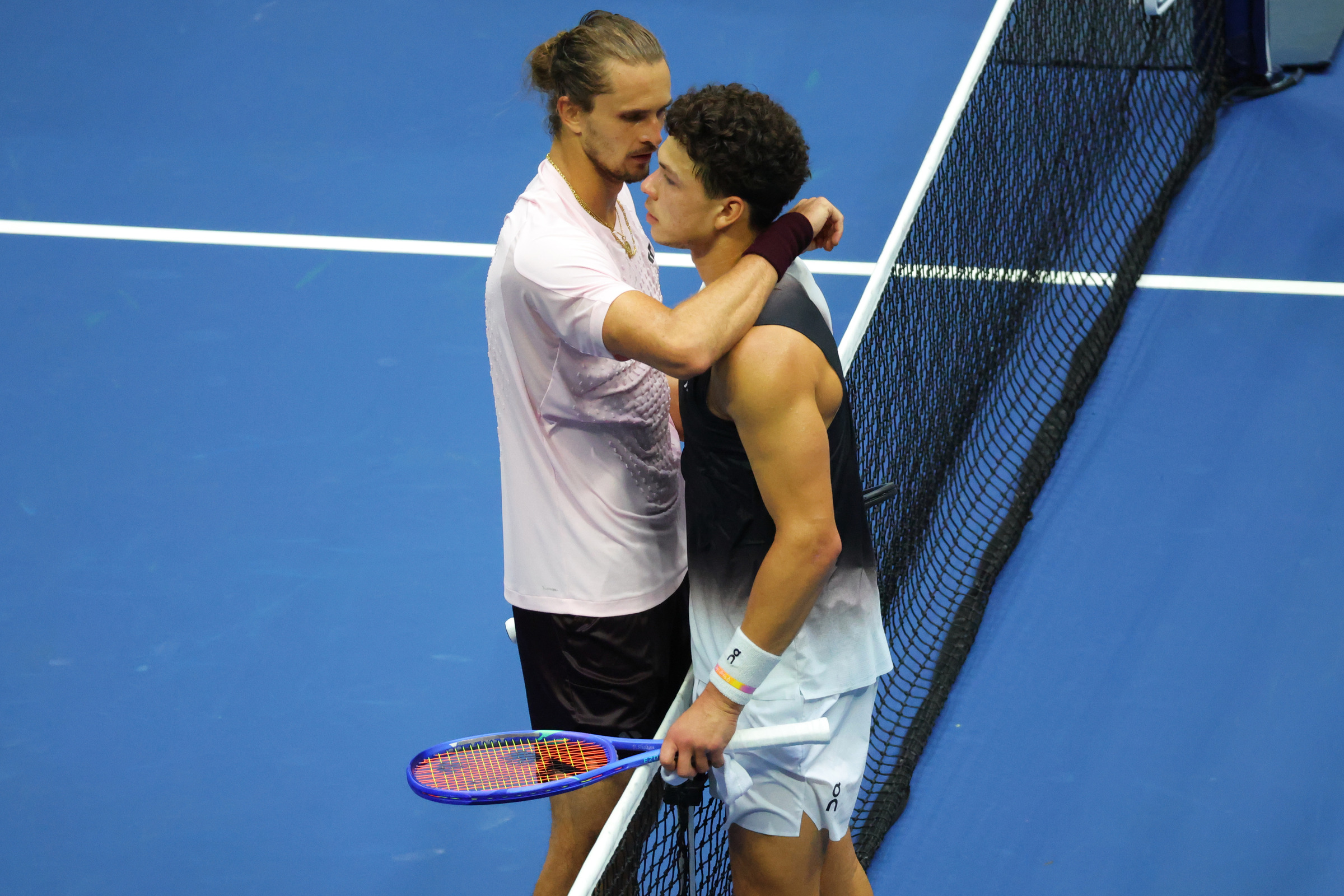 |
Zverev (left) and Shelton exchange words at the net after the men's singles US Open final concluded at Arthur Ashe Stadium, part of the Billie Jean King National Tennis Center in Flushing Meadows, New York, on 13/9. *Photo: AP*
According to the US Open champion, both Alcaraz and Frances Tiafoe made this error. Shelton defeated Alcaraz in a five-set quarterfinal match, then overcame Tiafoe in the semifinals to reach his first Grand Slam final. "I think that was the mistake Carlos, and probably Frances as well, made," Zverev added.
The German player's comments highlighted the different approaches taken by the three opponents against Shelton. Alcaraz and Tiafoe tended to quicken the pace, initiating early attacks and engaging in fast-paced rallies. This suited Shelton's strengths, particularly as the left-handed player possessed enough ball power to execute counter-attacking backhands using his opponent's pace.
Zverev opted for a more patient strategy. Instead of constantly accelerating, he varied the pace, extended rallies, and forced his opponent to generate his own power. The deep, consistent shots from the German player made it difficult for Shelton to initiate attacks, while also reducing the effectiveness of his serve and forehand.
Shelton's two-handed backhand was previously a vulnerable point, especially when he was forced into long rallies or had to return serves with heavy spin. However, the American player significantly improved this technique in 2026, enhancing his ability to change direction, return serves, and use sliced backhands to disrupt rhythm.
These advancements allowed Shelton to play more consistently from the baseline. This year, he secured four titles, reached the US Open final, and climbed to fourth in the world rankings. In his semifinal match against Tiafoe, he won 60% of his second-serve return points, demonstrating that his ability to apply pressure no longer relied solely on his forehand and serve.
Nevertheless, the final also revealed that Shelton's backhand has not yet become a consistent weapon when opponents actively reduce the pace. The American player committed 47 unforced errors throughout the match, with 14 errors in the first set alone. When he adjusted and played more patiently, this number decreased to four in the second set. These statistics somewhat reinforce Zverev's assessment: Alcaraz and Tiafoe inadvertently helped Shelton's backhand flourish by providing too much pace, while the German player won by denying his opponent a familiar ball rhythm.
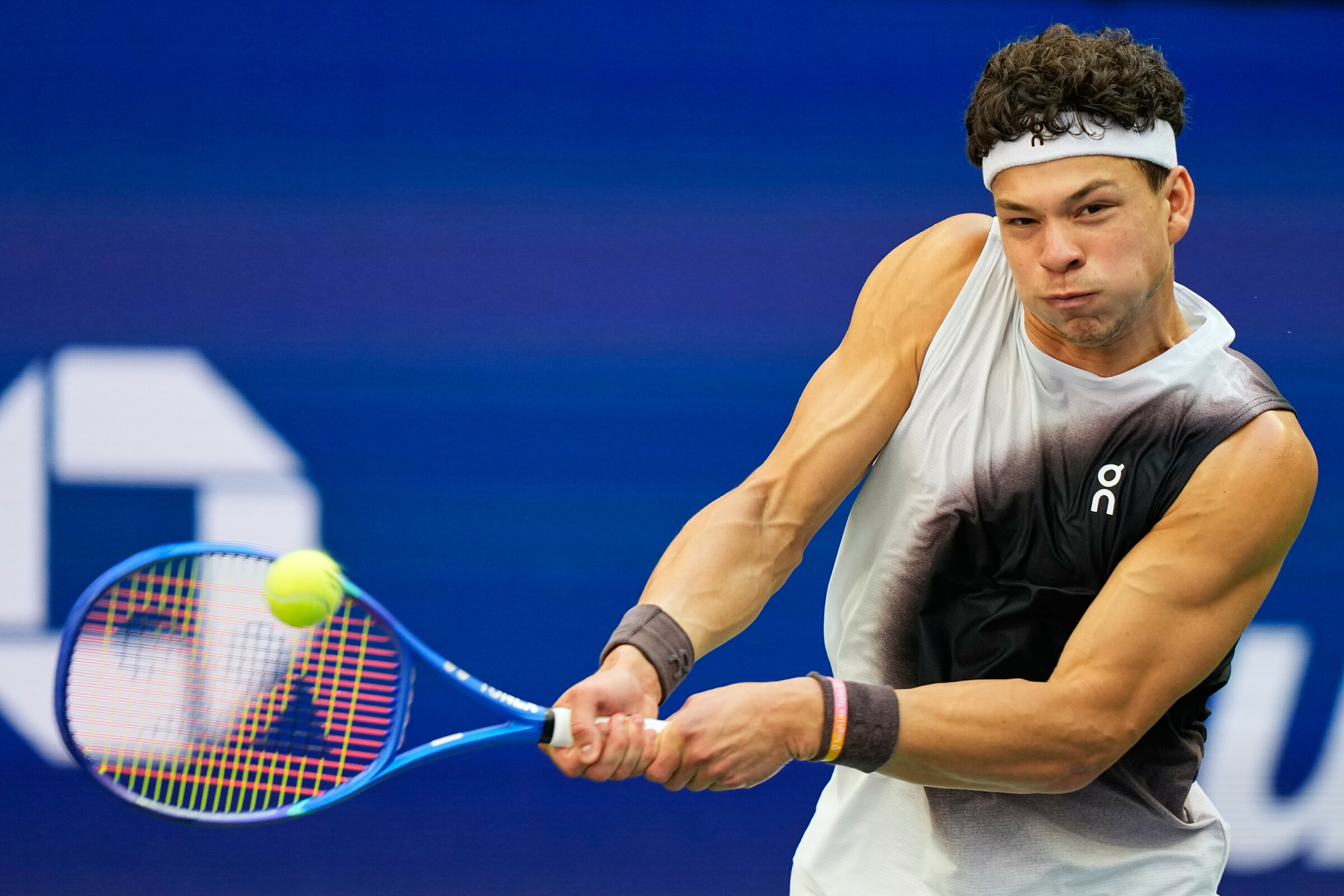 |
Shelton hits a backhand during the men's singles US Open final against Zverev at Arthur Ashe Stadium, part of the Billie Jean King National Tennis Center in Flushing Meadows, New York, on 13/9. *Photo: AP*
Zverev's defensive capabilities also forced Shelton to hit many more shots to win a point. The American player won several spectacular rallies but often made errors on the very next points. Meanwhile, Zverev maintained his disciplined play and effectively capitalized on moments when his opponent lost focus.
This victory in New York established Zverev as the most successful player in Grand Slams in 2026. He competed in three of the four finals, triumphing at Roland Garros and the US Open, and finishing as runner-up at Wimbledon.
The other two Grand Slams were won by Alcaraz at the Australian Open and Jannik Sinner at Wimbledon. This achievement helped Zverev narrow the gap with Sinner at the top of the ATP rankings, also propelling him into contention for the year-end world number one position.
By Vy Anh