


On 21/1, a specialty coffee brand in Hanoi unveiled a new coffee filter, described as being made from titanium, priced at 26.8 million dong. The release was limited to 54 pieces. This filter's design draws inspiration from the Vietnamese legend of Son Tinh - Thuy Tinh, with its lid shaped like the mythical nine-mane horse.
According to the manufacturer, each brewing session with the filter is intended to evoke a part of the Son Tinh - Thuy Tinh battle, as the water recedes to reveal the "nine-mane horse slowly emerging, proud and majestic." The limited quantity of 54 pieces symbolizes Vietnam's 54 ethnic groups.
While acknowledging the cultural integration, the coffee community has debated the filter's prohibitive price. Traditional coffee filters typically cost tens of thousands of dong in the market.
"I've lived long enough to see a coffee filter priced over 26 million dong," commented Le Long. Meanwhile, Thinh Truong suggested that a simple, inexpensive aluminum filter combined with a good grinder is sufficient for a delicious cup of coffee. He also remarked that the manufacturer's asking price was excessively high, stating it was not a "Gucci or Louis Vuitton" product.
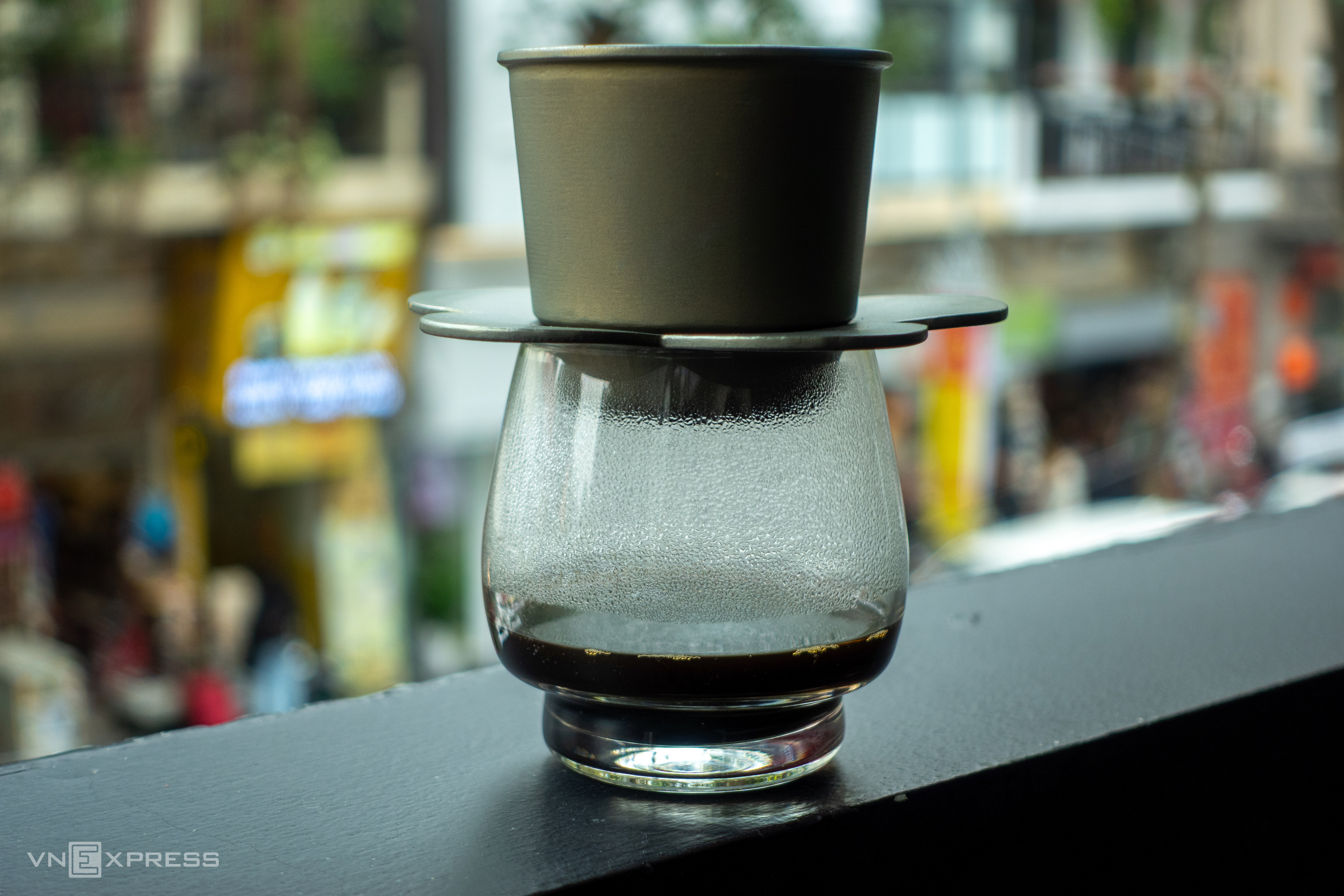 |
A prototype of the coffee filter priced at nearly 27 million dong. Photo: Tu Nguyen |
Hoang Minh, owner of a traditional coffee shop in Hanoi, expressed his shock at the filter's high price.
"A good filter can improve coffee taste, but it won't magically transform a 6-point coffee into a 10-point one," he stated, adding that the titanium filter seems more decorative than practical.
He noted that the material of a filter can influence the final coffee quality, especially if it retains heat effectively. Additionally, the craftsmanship is crucial to ensure proper water extraction, preventing clogs or overly fast flow.
Based on experience, the filter feels substantial in hand and displays various color gradients depending on the lighting. Its base is thicker than the upper part, enhancing heat retention during extraction. The resulting coffee has a good flavor, primarily attributed to the beans, not solely the titanium material.
Vu Dinh Tu, the owner of the brand behind the 26.8 million dong filter, stated that mixed opinions on a new product launch are normal. He identified the target customers as individuals with a refined aesthetic, collectors, and those seeking novel experiences. Within three days of its release, some titanium filters had already been purchased.
According to Tu, the selling price accurately reflects the costs involved in product research and development, as well as the quality of materials and manufacturing techniques. Grade 23 titanium is a premium type, commonly used in spacecraft, aircraft, and human implants. This material offers durability, high strength, and minimal wear over time. The medical industry also utilizes this material for long-term placement within patients' bodies.
"Using metal materials in coffee brewing tools requires careful consideration of safety to avoid potential metal leaching issues," he cautioned.
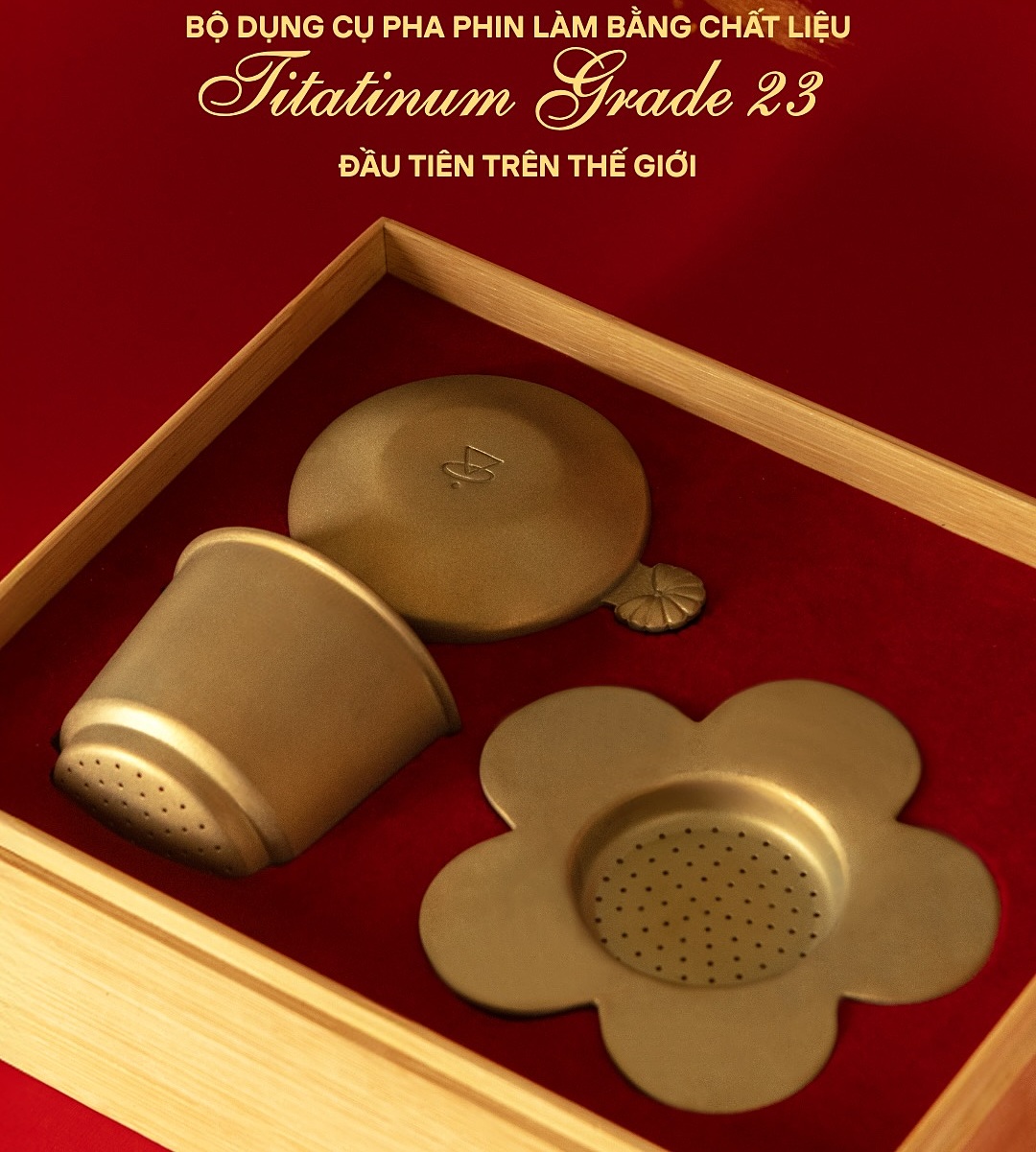 |
The official filter set presented in a gift box. Photo: NVCC |
Tu explained that many inexpensive aluminum filters widely available on the market are made from recycled aluminum, often containing heavy metals. When the anodized layer, which protects the aluminum surface, wears off, coffee can come into direct contact with the bare aluminum, raising concerns about the risk of metal leaching with prolonged use.
The brand owner stated that the team extensively deliberated over the filter's material, dedicating 10 months to research and testing. Initially, the production team considered gold and silver, but found their "flashy, shiny" appearance did not align with their design philosophy.
The team also explored using copper, inspired by the Vietnamese bronze drum, and experimented with the lost-wax casting method. However, copper was ultimately discarded due to difficulties in controlling lead content and its potential to affect the coffee's aroma.
Ultimately, the team chose titanium, a durable, future-oriented material. Tu hopes the filter will be passed down through generations.
Globally, several camping gear companies also use titanium for their coffee brewing products. Most utilize grade 1 titanium, which contains approximately 97% pure titanium, making it more affordable, with a 400 ml thermos costing about 2 million dong.
Titanium is categorized by "grade" for various applications; a higher grade does not automatically imply better quality or higher cost. The material's value depends on technical requirements and application standards, not just its grade number. However, grade 5 and 23 titanium belong to a group with high technical demands, used in aerospace, biomedical, and specialized applications. Consequently, their production and testing costs are significantly higher compared to the pure titanium grades (1-4) commonly used in household goods.
According to Tu, investing time and money into researching and developing a product with a limited run of 54 pieces, some of which may not even sell out, is not economically efficient. Instead, he views this as a "conquest of materials," reflecting his continuous efforts to innovate the traditional coffee filter.
Previously, he also launched a plastic coffee filter, a material long used by many coffee equipment manufacturers, which also faced controversy from traditional filter enthusiasts. Tu anticipates that next year, his brand can continue to research and develop new materials and forms for the familiar coffee filter, helping to bring Vietnamese coffee culture to an international audience.
Hoai Anh




