The pagodas listed below were selected based on VnExpress reporters' experiences, meeting criteria such as natural beauty, easy accessibility from Hanoi (under 80 km or less than two hours' drive), moderate crowds, and suitability for day trips.
Dia Tang Phi Lai pagoda
 |
Photo: Gia Chinh |
Dia Tang Phi Lai pagoda is in Thanh Binh commune, Ninh Binh province (formerly Thanh Liem district, Ha Nam province). Located 70 km from Hanoi, it rests against a mountain and is enveloped by lush greenery. Visitors are encouraged to remove their shoes and walk barefoot, fostering a sense of connection with the tranquil surroundings.
The worship halls are thoughtfully arranged amidst green spaces, water features, and pebble gardens. The roofs, carved columns, statues, and plants all reflect Buddhist aesthetics, creating a harmonious environment. A distinctive feature is the courtyard covered with white pebbles, symbolizing meditation, which sets Dia Tang Phi Lai apart from other pagodas and offers a profound sense of peace.
>> Travel guide to Dia Tang Phi Lai pagoda
Bo Da pagoda
 |
Front view of Dau pagoda. Photo: Kieu Duong |
Bo Da pagoda is situated on Phuong Hoang mountain (Bo Da Son), north of the Cau river, in Van Ha ward, Bac Ninh province. This ancient and unique pagoda in the Kinh Bac region is about 60 km from Hanoi. It was built around the 11th century and has undergone numerous significant renovations.
The pagoda retains its original ancient Vietnamese architectural style, distinguishing it from other traditional pagodas in the North. Nearly 100 interconnected chambers are constructed using traditional folk materials: fired bricks, tiles, ceramic pots, and earthen walls. Bo Da pagoda's woodblocks are among Vietnam's oldest and most precious collections of Buddhist scriptures, comprising nearly 2,000 carved thi wood panels dating from the mid-18th to the early 20th century.
>> Pagoda preserving precious treasures
Dau pagoda
 |
Bell tower at Keo pagoda. Photo: Tam Anh |
Dau pagoda is located in Thuan Thanh ward, Bac Ninh province, 32 km from Hanoi. It is considered Vietnam's first Buddhist center and the origin of the Tu Phap (Four Dharmas) worship – a belief in four female deities formed from the blend of Indian Buddhism and Vietnamese folk religion.
The architectural highlight of Dau pagoda is the 17 m tall Hoa Phong tower, situated in the courtyard and constructed from handcrafted fired bricks. Like many ancient pagodas, Dau pagoda follows the "noi cong ngoai quoc" (inner cong, outer quoc) architectural style, featuring four interconnected rectangular buildings surrounding three main halls. Two parallel corridors, connecting the front hall and the rear hall, house the worship of the Thap Bat La Han (Eighteen Arhats) – 18 enlightened disciples of Buddha.
>> Nearly 2,000-year-old pagoda in Bac Ninh
Keo pagoda
 |
A corner of Mia pagoda. Photo: Jusfy |
Keo pagoda is located in Vu Tien commune, Hung Yen province (formerly Vu Thu district, Thai Binh province), 110 km from Hanoi, approximately one hour and 45 minutes by car. Keo pagoda is also one of the sacred pagodas in the North, built in the 17th century, and stands as a Vietnamese architectural and cultural heritage site.
Keo pagoda comprises numerous structures, including Tam Quan (three-arched gate), Dien Thanh (Saint's Hall), Phat pagoda (Buddha pagoda), a bell tower, corridors, and monks' quarters, along with over 100 other elements. A prominent symbol of the pagoda is its bell tower, built on a square brick foundation and featuring three tiered roofs.
Mia pagoda
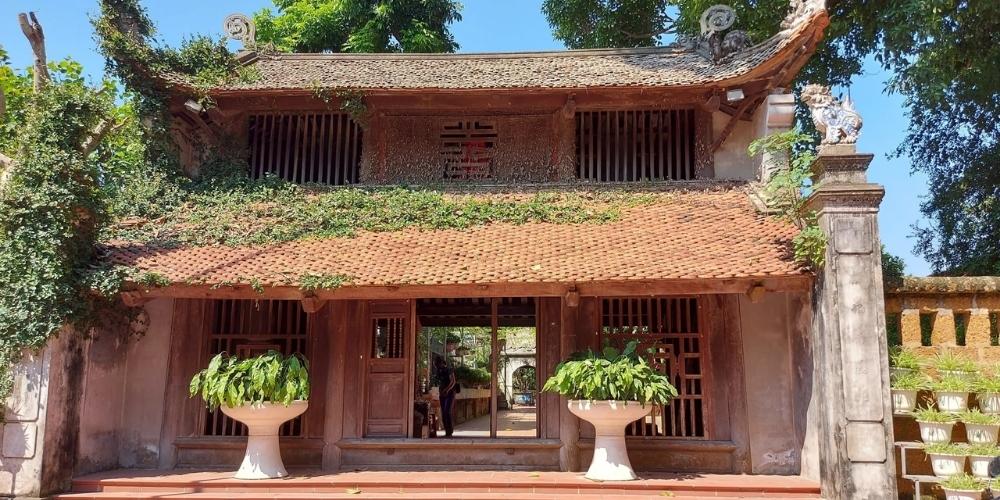 |
Mia pagoda is in Son Tay ward, Hanoi, located within the ancient village of Duong Lam, about 45 km from the city center. It is one of the few ancient pagodas in Xu Doai that has preserved its original traditional architecture to this day.
The pagoda was built in the 17th century, attributed to Lady Mia, and sits on a laterite hill, divided into three distinct sections. The outermost section features a bell tower, followed by a courtyard, with a centuries-old banyan tree boasting lush foliage in the right corner. It houses 287 Buddha statues, renowned sculptural artworks including the Tuyet Son statue, Quan Am statue, Bat Bo Kim Cuong statues, and Thap Bat La Han statues.
Compiled by Tam Anh