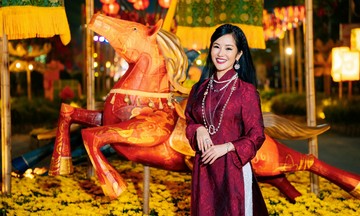
In recent years, Tet mascots in localities often spark discussions regarding their aesthetic appeal and perceived realism. While many argue that annual symbols clearly depicting natural subjects are more recognizable and evoke direct emotions, others appreciate the artistic creativity involved.
According to a representative from AGS, a company with 10 years of experience in designing and constructing Tet flower street installations, when designing mascots, it is important to consider them not just as public art but also for their symbolic, cultural, and spatial context. The question of realism, the representative added, becomes a facet of the aesthetic structure, with meaning understood more broadly.
AGS also notes that the public's preference for realistic mascots is natural. In public spaces, where viewers vary in age and aesthetic appreciation, and interaction time is brief, clear, intuitive designs are more accessible and quickly evoke emotions.
Realism acts as a common language, bridging the gap between art and the general public. Especially during the Tet festival, mascots are not merely objects of admiration but also points of interaction, photography, and community memory-making.
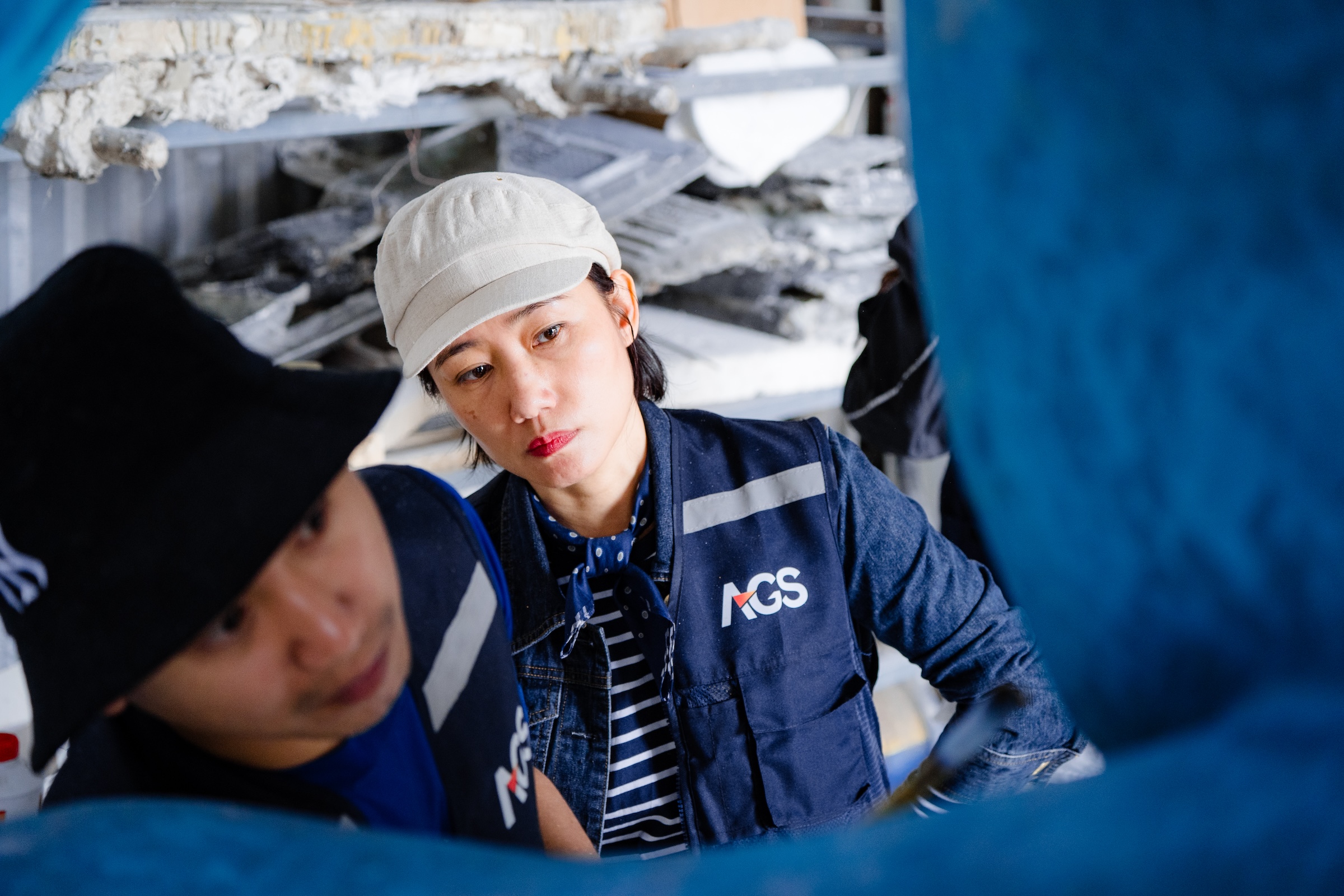 |
Phi Ngoc Linh, creative director of AGS, observes the Tet mascot decoration process. Photo: AGS
However, relying solely on pure realism can lead to mascots becoming repetitive across different localities, lacking distinctiveness. Phi Ngoc Linh, AGS's creative director, suggests that the research process should begin with regional history and culture. AGS often consults with scholars specializing in local culture to gather materials, then selects images familiar to the community, ensuring the final artwork is both creative and relatable.
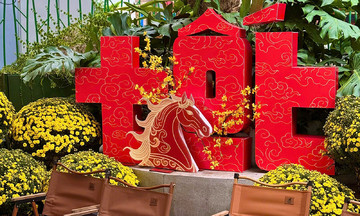
Linh states that designing mascots with a realistic style is one option, not the only artistic path. Hue's 2026 horse mascot exemplifies AGS's design philosophy based on symbolism. Instead of a natural horse reproduced according to a standard mold, the company drew inspiration from Long Ma, a familiar mythical creature (half-dragon, half-horse) in imperial court culture and Eastern philosophy.
"The 'Ma Thuong Chi De' mascot at Thuong Bac Temple features a mane, fur, and tail stylized from the Long Ma image. This is a familiar symbol in Hue culture, associated with wisdom and aspiration. Many other mascots are also researched from images of kneeling horses at Nguyen dynasty temples," the creative director said.
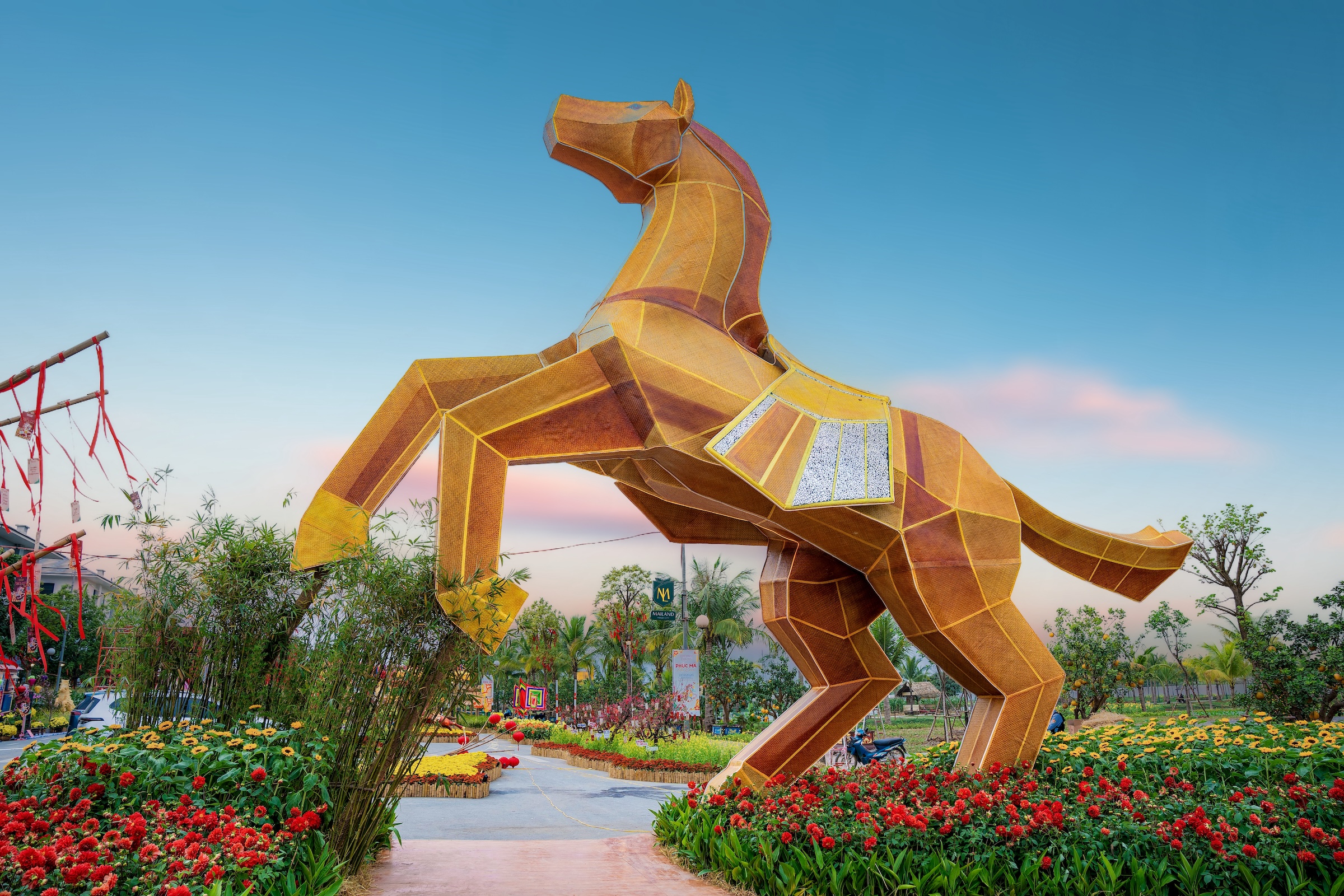 |
The horse mascot on Hanoi's flower street, inspired by the painting "Thanh Giong" by renowned artist Nguyen Tu Nghiem. Photo: AGS
For Hanoi, AGS developed the horse mascot from Nguyen Tu Nghiem's painting "Ngua Giong," a contemporary work embodying the spirit of Northern legend. The Hanoi mascot is stylized using blocks, combining bamboo and light to evoke cultural memory.
Meanwhile, the horse mascot in Ho Chi Minh City emphasizes a spirit of strong transformation, reflecting a modern urban context. Though depicting the same animal, each locality's mascot is given a distinct personality, reflecting unique identities and development aspirations.
Phi Ngoc Linh notes that the greatest challenge in mascot design is not in the technical creation but in balancing cultural depth with public reception. A mascot must be familiar enough to avoid being perceived as alien, yet stylized to transcend mere natural representation.
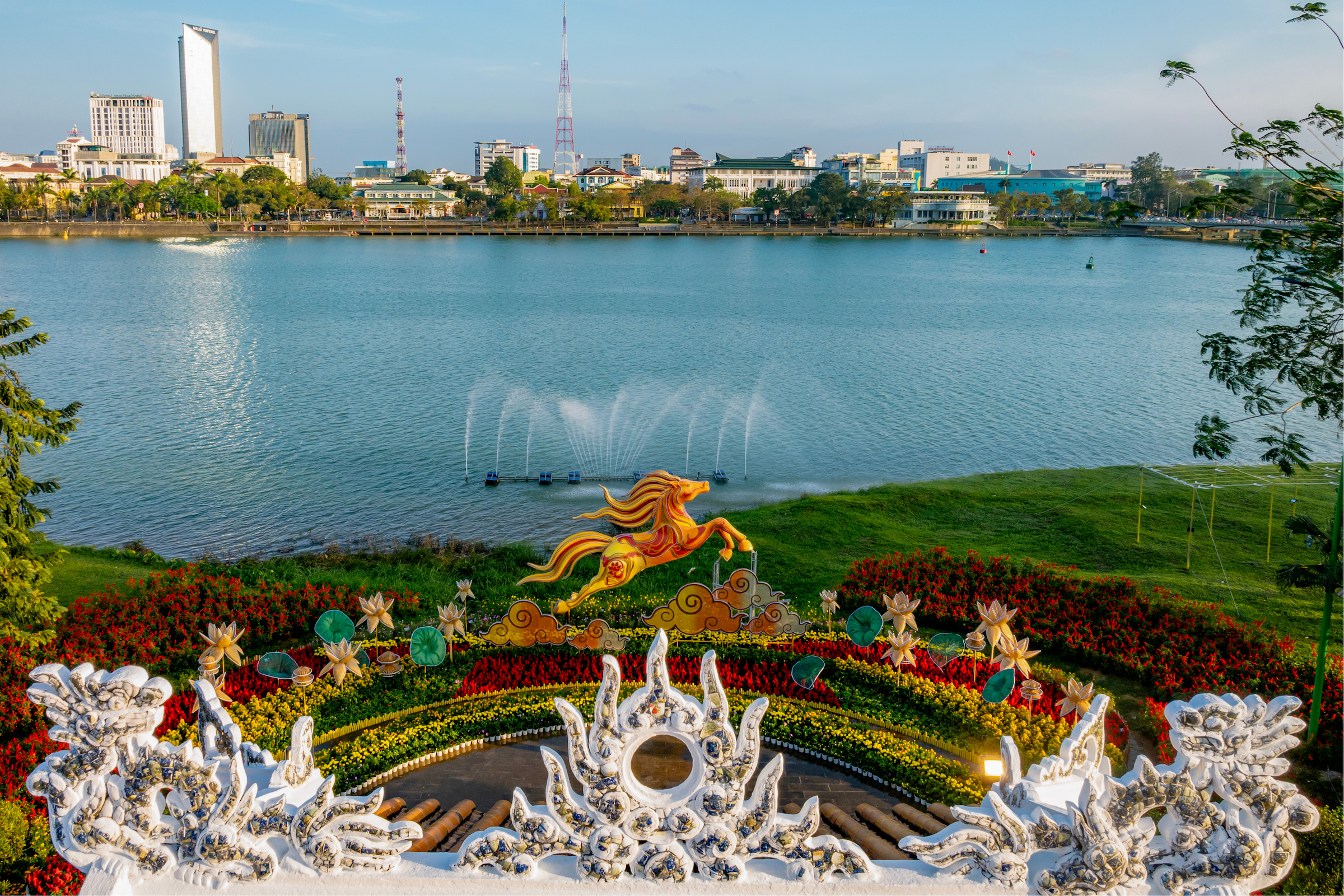 |
The "Ma Thuong Chi De" mascot at Thuong Bac Park, Hue. Photo: AGS
AGS consistently prioritizes cultural narratives. The distinct cultural characteristics of each region are not always clearly or convincingly expressed in every mascot.
From the perspective of urban research and community memory, AGS believes that a mascot's personality serves as a cultural identifier, helping the public recognize localities, remember the stories behind the imagery, and foster a sense of pride.
"Realism and stylization are not opposing extremes in Tet mascot design. The issue lies in what story the image tells, to whom, and in what context. When a mascot transcends its decorative role to become a cultural narrative, whether it aims for formal likeness or establishes a unique identity, each choice is valid if it aligns with its intended purpose," an AGS representative affirmed.
Dan Minh