


Beginning in early 2025, Tokyo introduced tourist tours taking international visitors to convenience stores, known as "konbini". Tourists do not enter these stores to buy fast food. Instead, they follow a guide to learn about the history of these store chains and how Japanese people use konbini in their daily lives. After the explanation, visitors take photos, explore the stores, choose food or small household items, and purchase souvenirs.
The idea to include convenience store visits in tour programs was developed by Serkan Toso, founder of Japan's culinary platform byFood. He conceived the idea in 2024, when social media was filled with videos of tourists exploring Japanese konbini. Videos featuring food reviews and hunts for unusual products attracted millions of views. According to Toso, convenience stores are now viewed as a cultural experience, not merely a stopover.
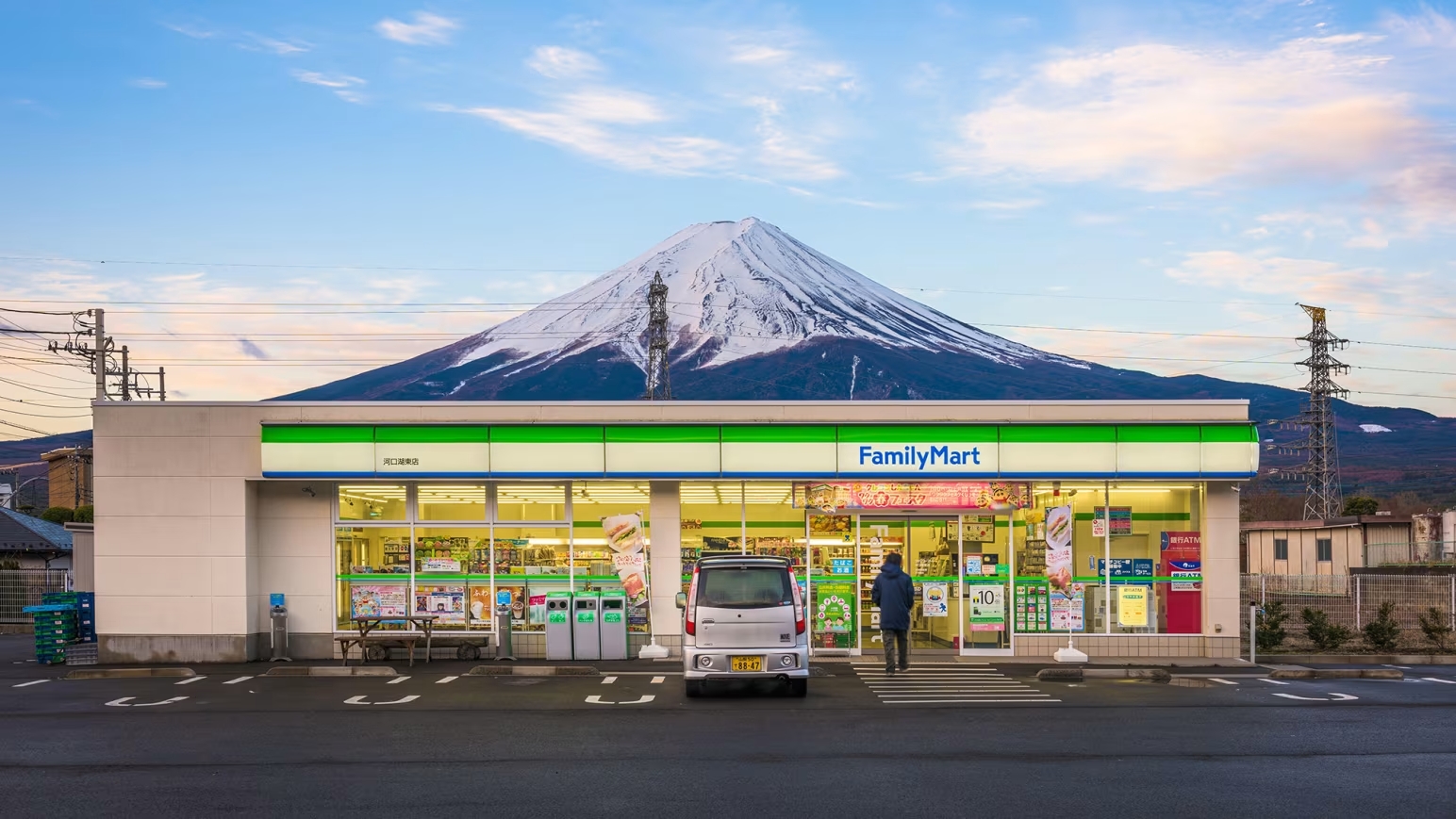 |
A convenience store with Mount Fuji in the background was once a popular check-in spot. Photo: Sean Pavone |
A convenience store with Mount Fuji in the background was once a popular check-in spot. Photo: Sean Pavone
The byFood platform subsequently hired Ryo Ito, a Tokyo resident, to create day tours. Ito leads small groups to various convenience stores, along with supermarkets and department stores. Tours typically last 90 minutes and are organized in popular tourist areas like Shinjuku and Shibuya. Tour prices in Tokyo commonly range from 35-45 USD per person.
"I want to tell the story of how Japanese people live with konbini," Ito stated, explaining that Japanese people visit convenience stores multiple times daily, for everything from buying toothbrushes to having lunch.
The launch of these tours coincides with Japan's strong post-pandemic tourism recovery and a surge in lifestyle-related travel content on social media. According to Expedia, nearly 40% of tourists visit supermarkets while traveling, and 44% seek out locally exclusive products. In Japan, this influx of tourists gravitates towards the extensive network of convenience stores, which are ubiquitous in both urban and rural areas and cater to nearly all daily needs.
The Japanese konbini market is currently dominated by three chains: 7-Eleven, Lawson, and FamilyMart. FamilyMart opened its first store in 1973 in Sayama, approximately 40 km from Tokyo. Today, this chain operates about 16,400 stores domestically and over 8,400 stores abroad.
For decades, konbini primarily served tourists as places to withdraw money, buy onigiri (rice balls), sandwiches, and drinks before boarding trains. The rise of mass tourism gradually changed this role. Stores near major attractions began selling keychains, magnets, and other souvenirs. On TikTok and Instagram, konbini appear as a "miniature version" of Japanese life, characterized by clean, tidy, convenient spaces with many unique details.
 |
Various types of onigiri in a convenience store. Photo: Johan Brooks |
Various types of onigiri in a convenience store. Photo: Johan Brooks
Caryn Ng, co-author of a book on konbini culture, believes that convenience stores are becoming genuine destinations.
"Konbini are not as overwhelming as Western supermarkets; they are like a slice of Japanese life, compressed into a small space," she said.
On konbini tours, many visitors are curious about how to combine pre-packaged items. Guides suggest various combinations, from pouring canned coffee over ice and adding pudding, to mixing different food items directly at the counter.
Famichiki, FamilyMart's best-selling fried chicken, has inspired many creative variations from tourists, such as pairing it with pancakes, egg sandwiches, or cheese burgers. These consumption methods quickly spread on social media, transforming industrial products into personalized experiences.
Kahlen Cheung, a tourist from Hong Kong, visits Japan two to three times each year and always includes konbini in her itinerary. During her trip in late 2024, she posted several videos showcasing her purchases from FamilyMart.
"Just landed and needed breakfast; the first thing I thought of was a convenience store," Cheung said. Her go-to meal is an egg sandwich with Famichiki.
Beyond food, some convenience store chains make a mark with souvenirs linked to daily life. In 2021, FamilyMart became the first konbini in Japan to launch its own fashion line, Convenience Wear, appointing designer Hiromichi Ochiai as creative director. The products, including underwear, t-shirts, and socks, feature minimalist designs, no logos, and distinctive blue-green stripes. A pair of socks, priced at 390 yen (approximately 2 USD), sold over 1.4 million pairs in its first year.
 |
The popular socks at FamilyMart stores in Japan. Photo: Bertha Wang |
The popular socks at FamilyMart stores in Japan. Photo: Bertha Wang
Convenience Wear expanded to include sweatshirts, canvas bags, and tenugui towels. FamilyMart also introduced limited-edition product lines and brand collaborations, further broadening its customer base.
According to FamilyMart, the goal is to change the perception that one "only buys clothes at a convenience store in an emergency." Products are designed for long-term use, emphasizing material quality, functionality, and aesthetics. A pair of socks or a t-shirt is no longer just a cheap item from a convenience store; it has become a symbol of the Japanese philosophy of minimalist consumption.
Oscar Holland, who lives in Singapore, stated that he buys FamilyMart socks through resale sites or by asking friends to bring them back.
"It's distinct enough to be noticeable but not flashy, and if someone recognizes it, a conversation starts from there," he said.
From fried chicken and egg sandwiches to two-dollar socks, konbini are gradually becoming places where tourists seek souvenirs that are small, light, and inexpensive, yet clearly embody the spirit of Japanese daily life. As many traditional destinations become overcrowded, convenience stores, symbols of a fast-paced lifestyle, emerge as "living museums" where visitors observe how Japanese people eat, shop, and organize their daily routines.
With convenience stores now integrated into tours and ordinary items transforming into take-home gifts, the line between consumption and tourism in Japan is being redrawn.
Mai Phuong (According to CNN)




