"I was surprised when my bill was reduced by 30% because of a major holiday celebration. Usually, when traveling during holidays, I only worry about price gouging," said Ms. Bich Lan, a Hanoi resident, recalling her trip to TP HCM for the april 30 holiday.
In contrast to Ms. Lan's experience, many instances of price gouging still occur at popular tourist destinations during peak seasons. Most recently, a group of visitors accused a hotel in Song Cau ward, Dak Lak, of charging excessive service fees and lacking price transparency.
After authorities investigated, the accommodation facility was found to have violated regulations on price transparency under the 2023 Law on Prices and provisions in Government Decree No. 87 dated 12/7/2024. The proposed fine is VND 1,5 million for failing to list service prices as required.
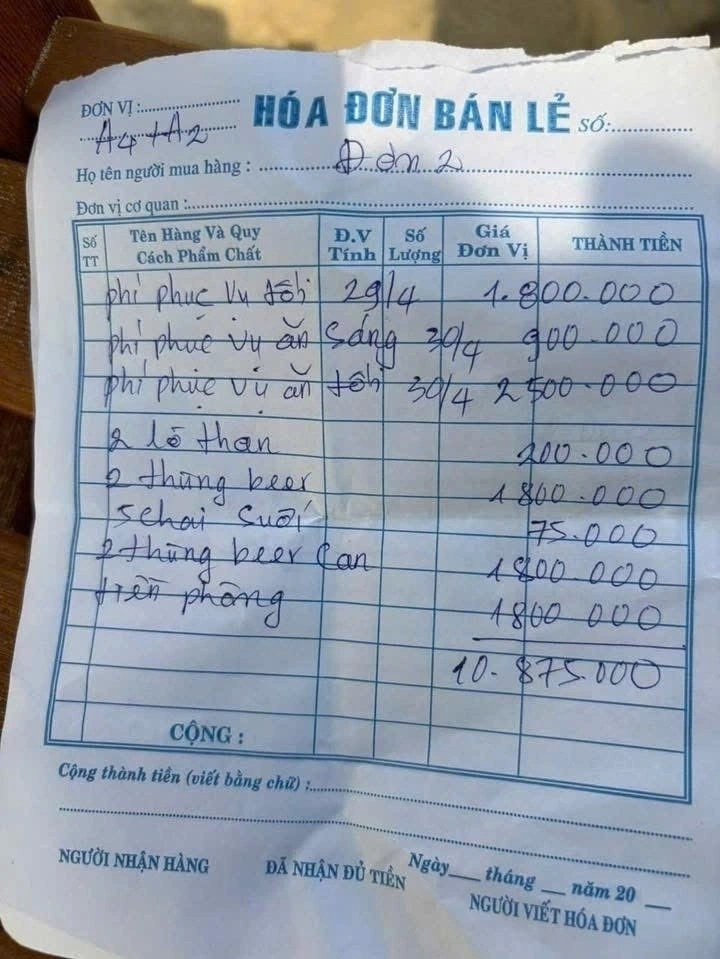 |
The bill a group of guests had to pay at a hotel in Dak Lak. Photo: Provided |
The bill a group of guests had to pay at a hotel in Dak Lak. Photo: Provided
Mr. Tran Tuong Huy, Deputy Director of the Institute for Social Tourism Research, noted that Vietnam's tourism culture has not kept pace with the industry's development, making price gouging a systemic issue.
According to Mr. Huy, the seasonal nature of tourism leads sellers to an "opportunistic" mindset, while tourists often accept higher prices due to service scarcity during peak times.
In Vietnam, public holidays often concentrate into short periods, creating localized overload. Data from the Vietnam National Administration of Tourism indicates that domestic visitor numbers during holidays typically increase by 30-50% compared to normal days, offering an opportunity for small businesses to adopt a "quick gain" mentality.
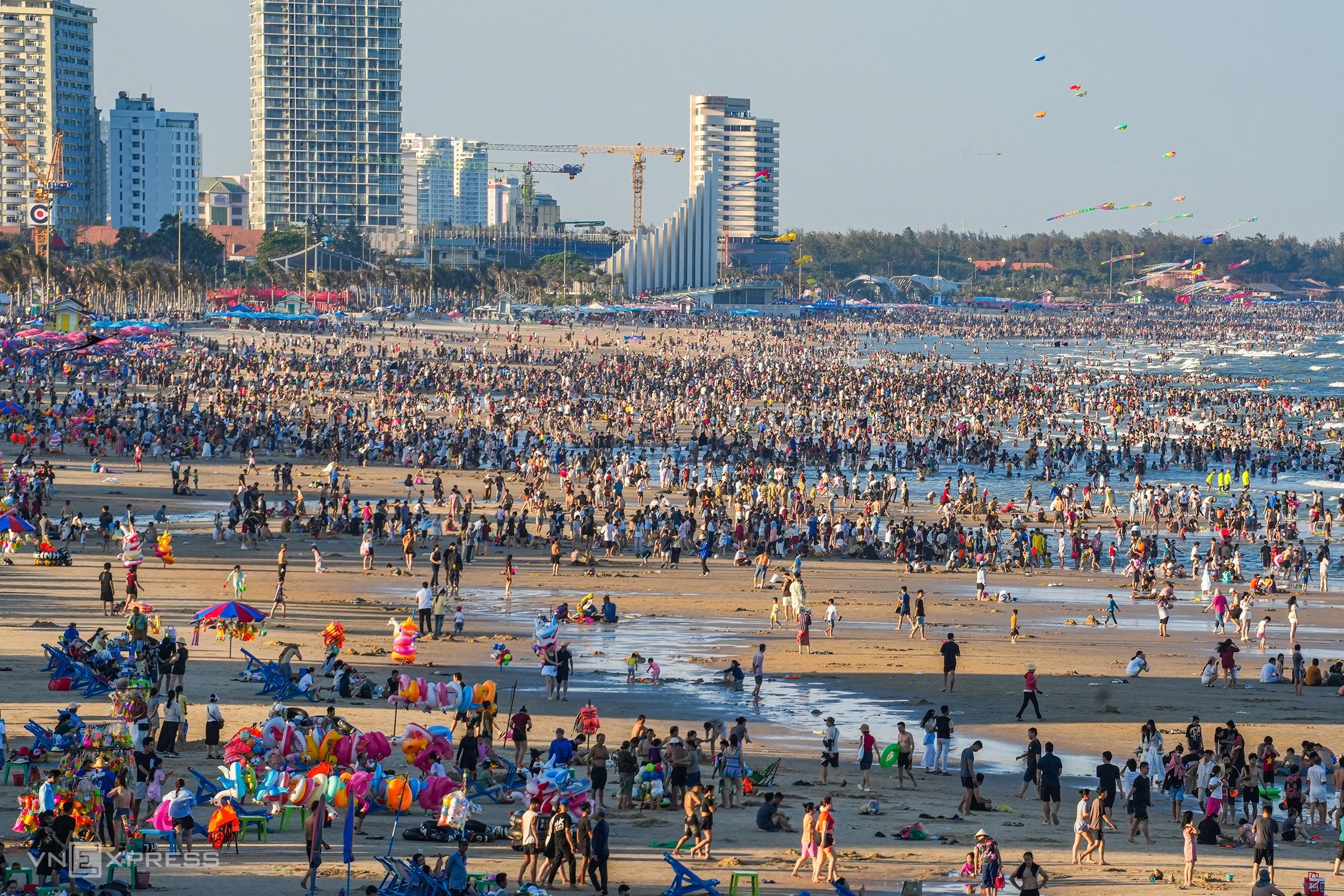 |
Crowded beach at Bai Sau, Vung Tau during the april 30-may 1 holiday. Photo: Dang Khoa |
Crowded beach at Bai Sau, Vung Tau during the april 30-may 1 holiday. Photo: Dang Khoa
The absence of a professional service culture and lax local supervision are also primary reasons. Many areas do not prioritize price listings or lack sufficient inspection and deterrents. The slow adoption of technology for receiving complaints makes it difficult for tourists to protect their rights. Mr. Huy emphasized that this problem will only be resolved with a rational distribution of visitor flows and the application of a civilized code of conduct to every business household.
Sharing this view, Mr. Nguyen Tien Dat, General Director of AZA Travel, stated that the line between reasonable price increases and price gouging lies in transparency. According to Mr. Dat, holiday labor and material costs might cause prices to rise by 12-20%, but doubling prices indicates exploitation. "Customers need to be fully informed about prices and corresponding quality before using a service," Mr. Dat said.
Mr. Dat also highlighted a loophole in the delegation of management responsibilities. Currently, hotels and restaurants fall under the Tourism Area Management Board, but price listing is overseen by the Market Management Department, under the Department of Industry and Trade. Meanwhile, tourist transport, such as taxis and motorbike taxis, falls under the authority of the Department of Construction. This fragmentation leads to buck-passing when incidents occur. To remedy this, many developed tourist countries like Thailand have established a Tourism Police force, a specialized unit authorized to quickly address price and security violations in key tourist areas.
In TP HCM, authorities are focusing on decentralization and diversifying feedback channels. Mr. Le Truong Hien Hoa, Deputy Director of the Ho Chi Minh City Department of Tourism, said the city operates a multichannel system including a hotline, chatbot, and the VNeID application. Information from these channels is immediately forwarded to local authorities for the quickest resolution. Before each holiday, the Department of Tourism sends documents promoting and monitoring prices to every ward, commune, and special zone.
From a business perspective, Mr. Vu Chu Dinh Trung, a representative of Pho 2000 in TP HCM, stated that the restaurant regularly hosts MICE groups of hundreds of people but always charges listed prices without surcharges.
During peak seasons, the restaurant proactively works with tour operators months in advance to prepare staff and food, avoiding overload or unexpected costs. According to Mr. Trung, price gouging by small, individual establishments can significantly impact the entire service supply chain in the region.
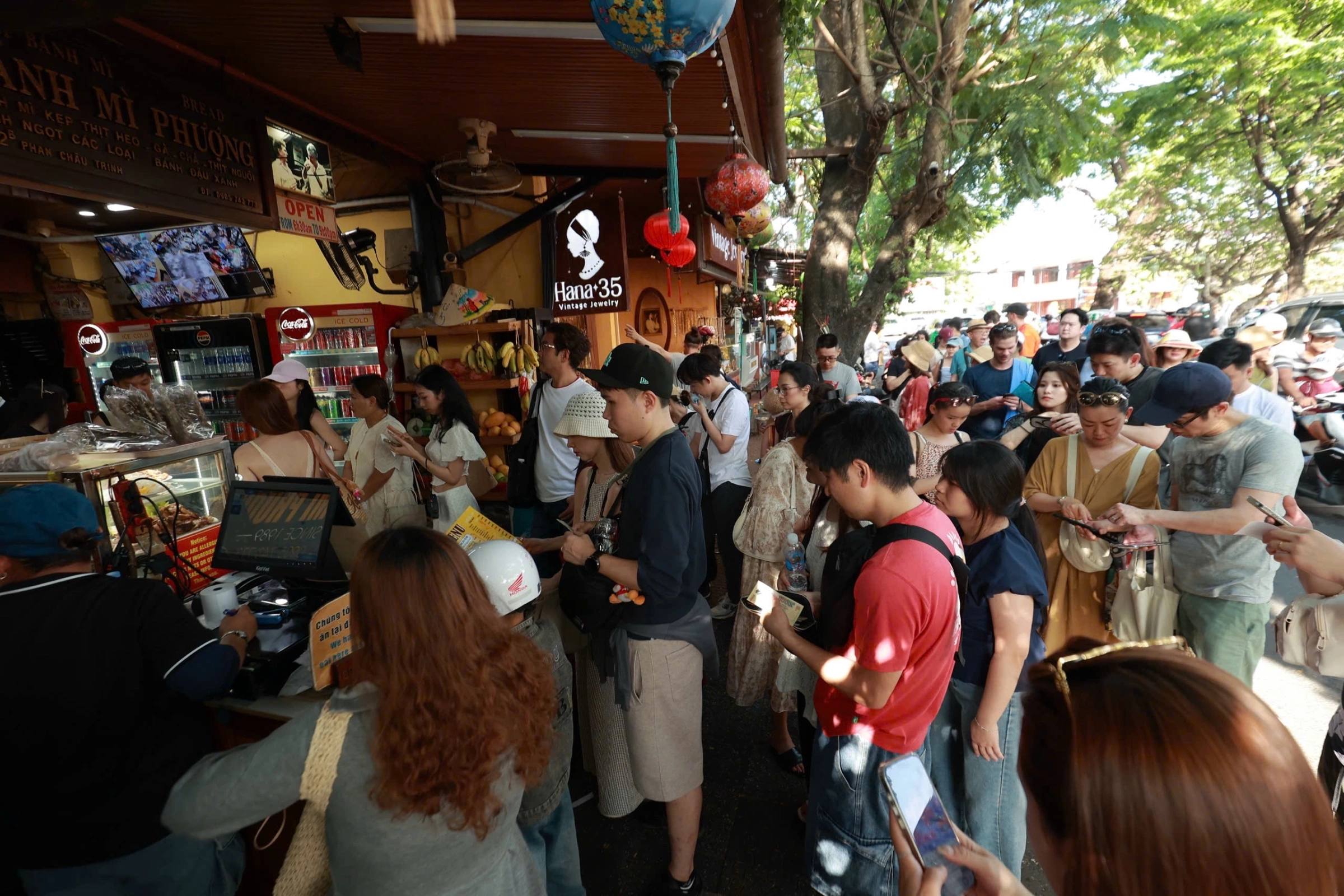 |
Customers queuing for food and drinks in Hoi An during the april 30-may 1 holiday. Photo: Nguyen Xuan Anh |
Customers queuing for food and drinks in Hoi An during the april 30-may 1 holiday. Photo: Nguyen Xuan Anh
To eliminate this problem, Mr. Nguyen Tien Dat proposed increasing penalties, fining offenders many times the exploited amount, suspending operations for one to six months, or revoking business licenses to provide a sufficient deterrent.
Hotline signs should be displayed in multiple languages at easily visible locations to assist international visitors. According to international tourism organizations, only about 10% of tourists experiencing incidents file complaints via hotlines due to complex procedures. Simplifying online complaint procedures would provide authorities with data for more thorough handling.
Mr. Tran Tuong Huy warned that an imbalance between price and quality greatly damages a destination's brand. When tourists pay high prices but receive poor service, they will not return.
"In the age of social media, one quickly spreading negative image can destroy a locality's efforts to build its image," Mr. Huy stated.
To avoid risks, tourists are advised to research information beforehand, prioritize reputable establishments, and clarify service prices before use. Local authorities should establish and regularly update a list of "reliable destinations" on official websites to help tourists choose services.
Bich Phuong