 |
In 1991, German teacher Hans-Peter Grumpe first visited Vietnam, embarking on a journey from south to north. He noted that tourism in Vietnam 35 years ago was still nascent, with significant challenges in inter-location travel. International visitors needed special permits for all destinations outside common routes, and some permits were only obtainable in Hanoi.
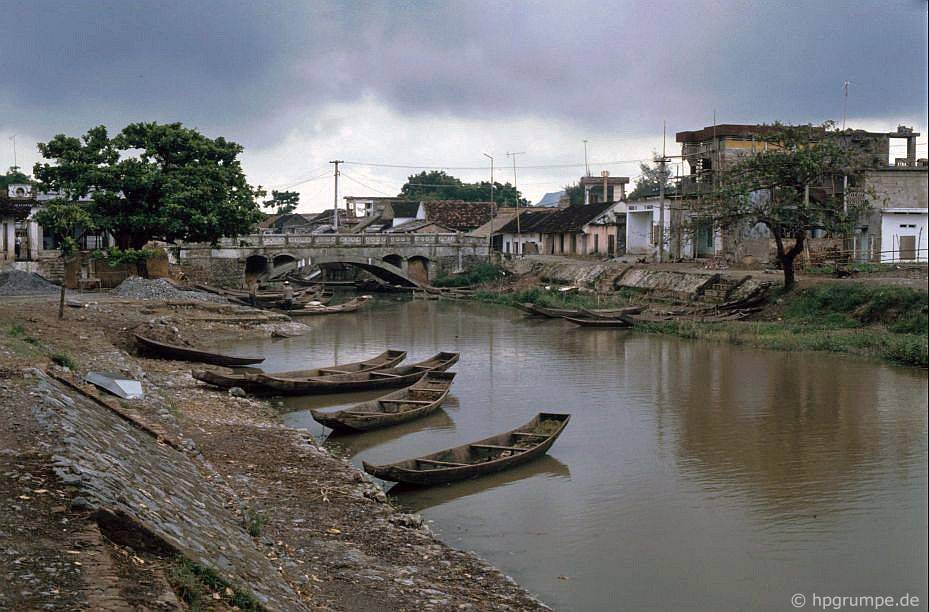
Hans visited Huong Pagoda after exploring Hanoi. At that time, the pagoda was located in Ha Tay province, 60 km from the capital, but is now part of My Duc commune, Hanoi. The pilgrimage to the pagoda began at Ben Duc (photo), where houses and landscapes along both banks remained simple, with few services developed.
 |
The scene at Ben Duc overlooking Yen Stream. Huong Pagoda, also known as Huong Son, is a cultural and religious complex comprising dozens of Buddhist pagodas, temples dedicated to deities, and communal houses for agricultural worship. The heart of this complex is Huong Pagoda (the inner pagoda), situated within Huong Tich Cave on the right bank of the Day River.
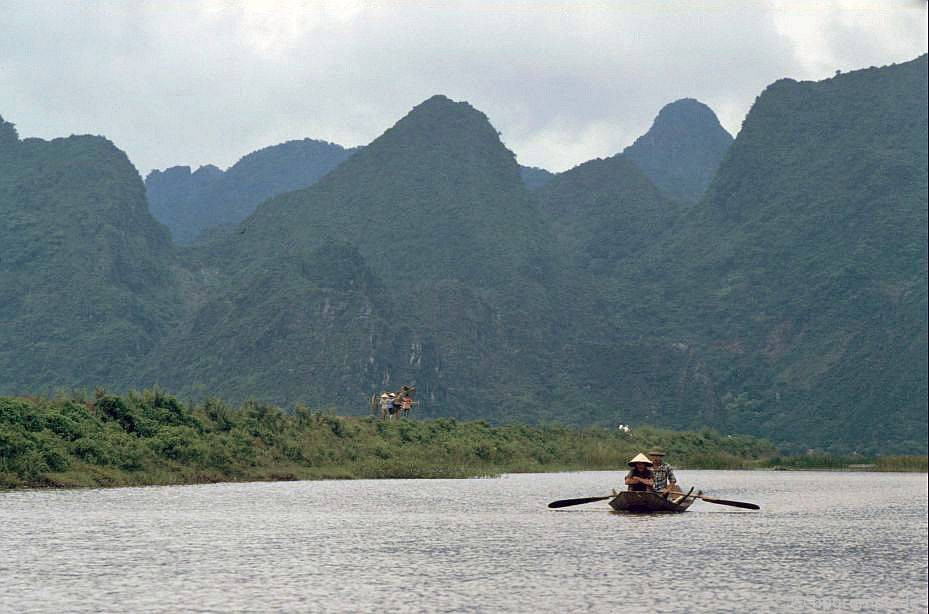 |
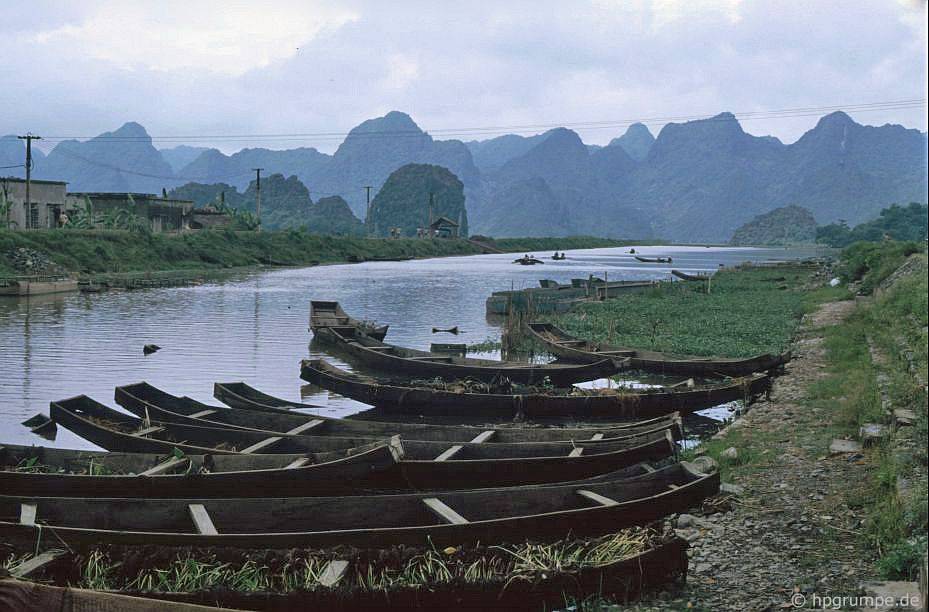
To reach Huong Pagoda, visitors traveled by boat down Yen Stream. Thirty years ago, the mode of transport was hand-rowed bamboo boats. Hans referred to the Yen Stream area at that time as "Ha Long Bay on land", with the journey to the pagoda taking almost two hours.
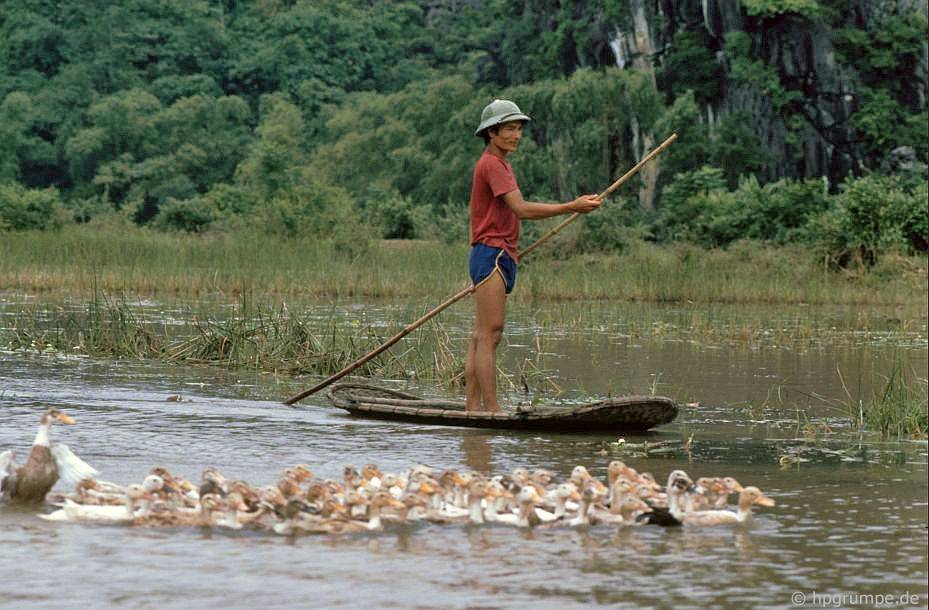 |
Local residents herding ducks on Yen Stream. The pristine natural beauty and rustic life deeply impressed the German visitor.
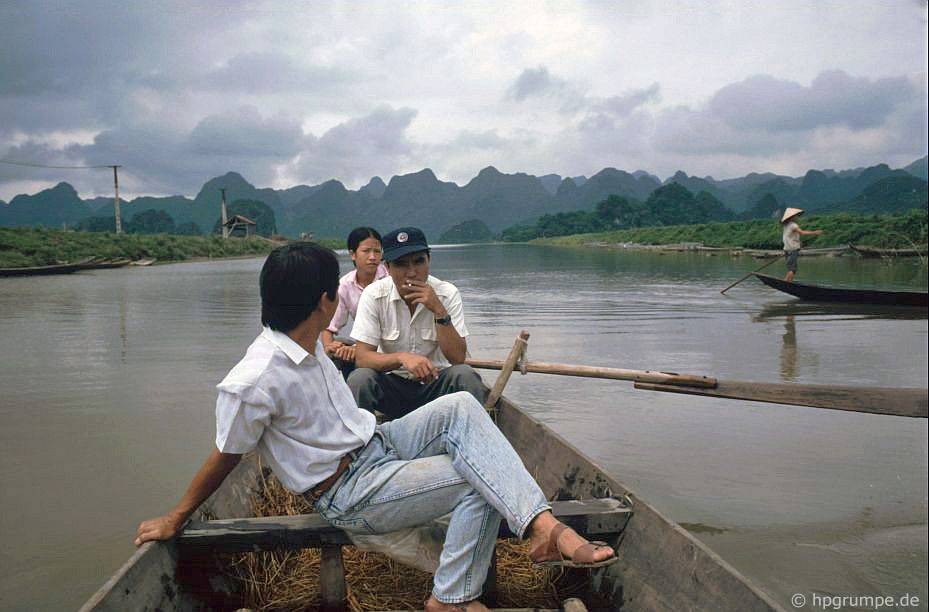 |
Visitors enjoyed the scenery of Yen Stream from boats in a quiet atmosphere, devoid of motorboat noise. As tourism grew, motorboats became common at Huong Pagoda, offering convenience and saving time but disrupting the inherent peaceful ambiance.
For the Huong Pagoda Tourism Festival season in 2026, organizers officially banned all passenger motorboats.
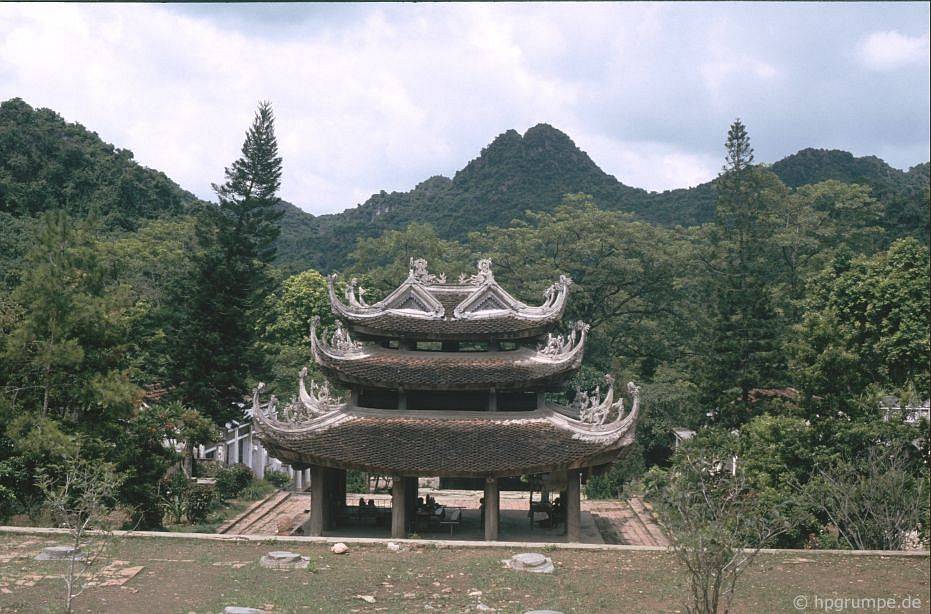 |
Bell Tower, part of the Outer Pagoda (Chua Ngoai) - Thien Tru Pagoda complex. After boats docked, the first destination was Thien Tru Pagoda, where the opening ceremony for the Huong Pagoda festival is currently held. Thien Tru Pagoda houses Vien Cong Stupa, the burial site of Zen Master Vien Quang, who founded the pagoda.
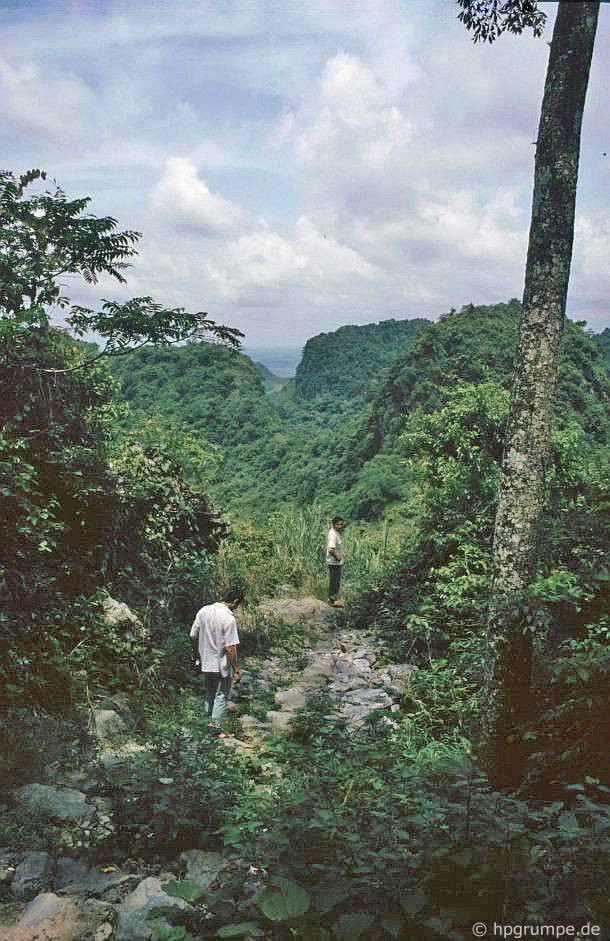 |
A mountain path during the pilgrimage to Huong Tich Cave. Visitors had to ascend a steep system of stone steps to reach it.
Huong Tich Cave historically served as a scenic stop for many monarchs. In 1770, Trinh Sam, the Tinh Do King, inscribed 5 Han characters, "Nam thien de nhat dong" (The most beautiful cave under the Southern sky), onto the cave entrance. This appellation, praising it as the most beautiful cave in the Southern realm, has been passed down and remains an iconic name for the site to this day.
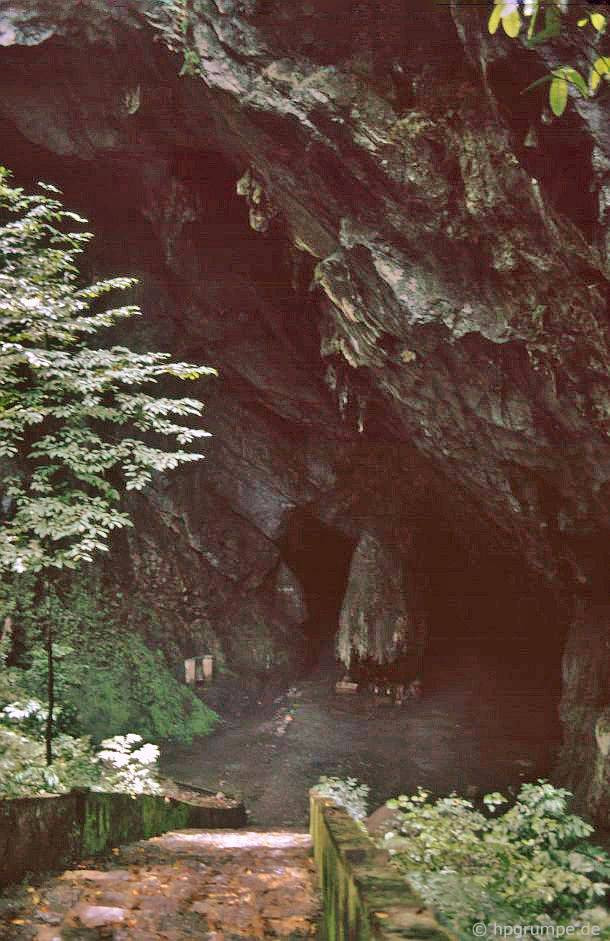 |
The entrance to Huong Tich Cave, the main highlight of the Huong Pagoda pilgrimage. In the center of the cave lies the Dun Gao rock. Huong Tich Cave houses the inner pagoda, also known as Huong Pagoda. From a distance, the cave resembles a dragon opening its mouth.
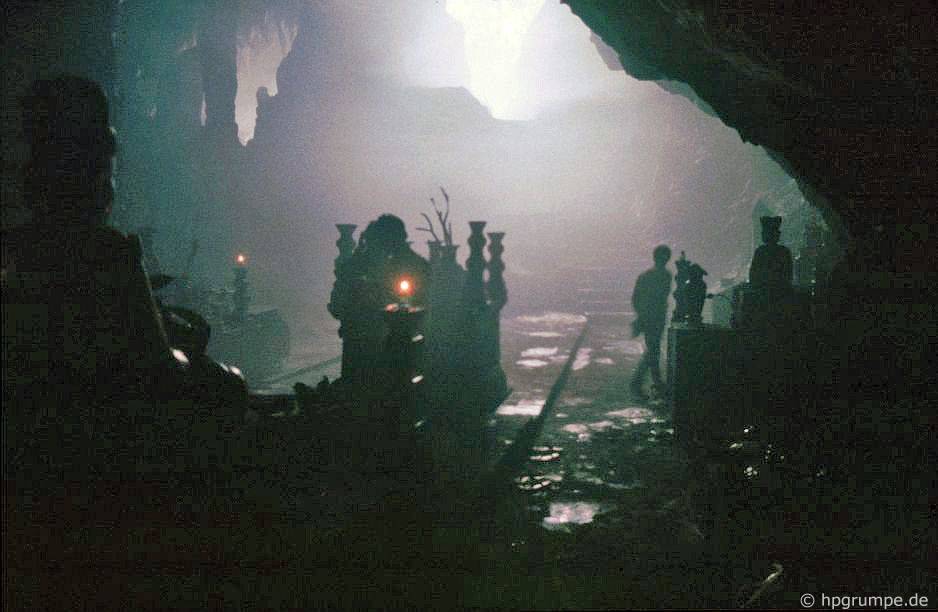 |
Huong Tich Cave also features many natural stalactites and stalagmites. Over the years, some stalactites have become smooth. Many believe touching and rubbing the rocks brings good fortune.
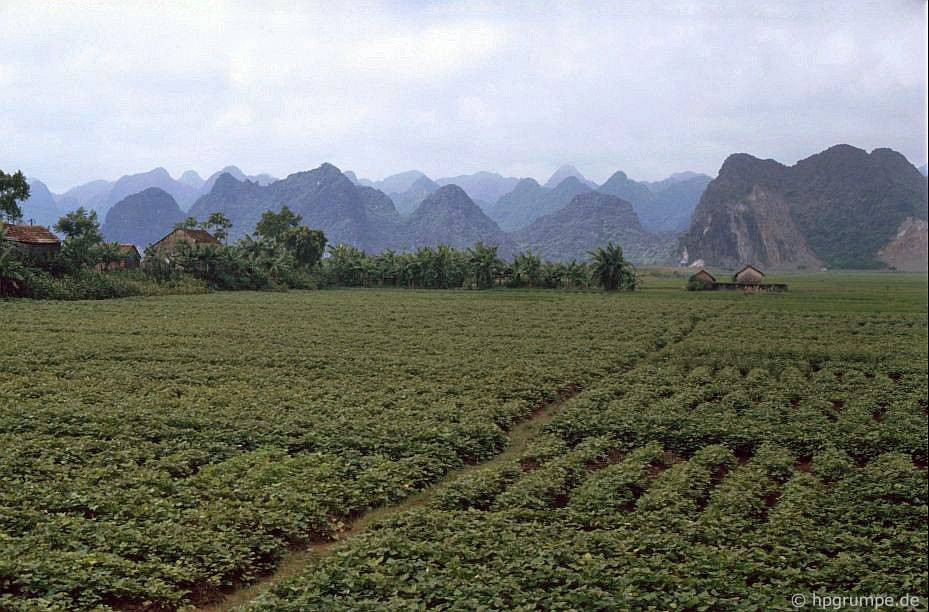 |
The landscape around Huong Pagoda in 1991. After his first cross-Vietnam trip, Hans returned to Vietnam in 1992 and 1993, driving through various provinces and cities with a local interpreter. He continued to explore the country's culture and history during the post-Doi Moi period.
Mai Phuong
Photos: Hans-Peter Grumpe