 |
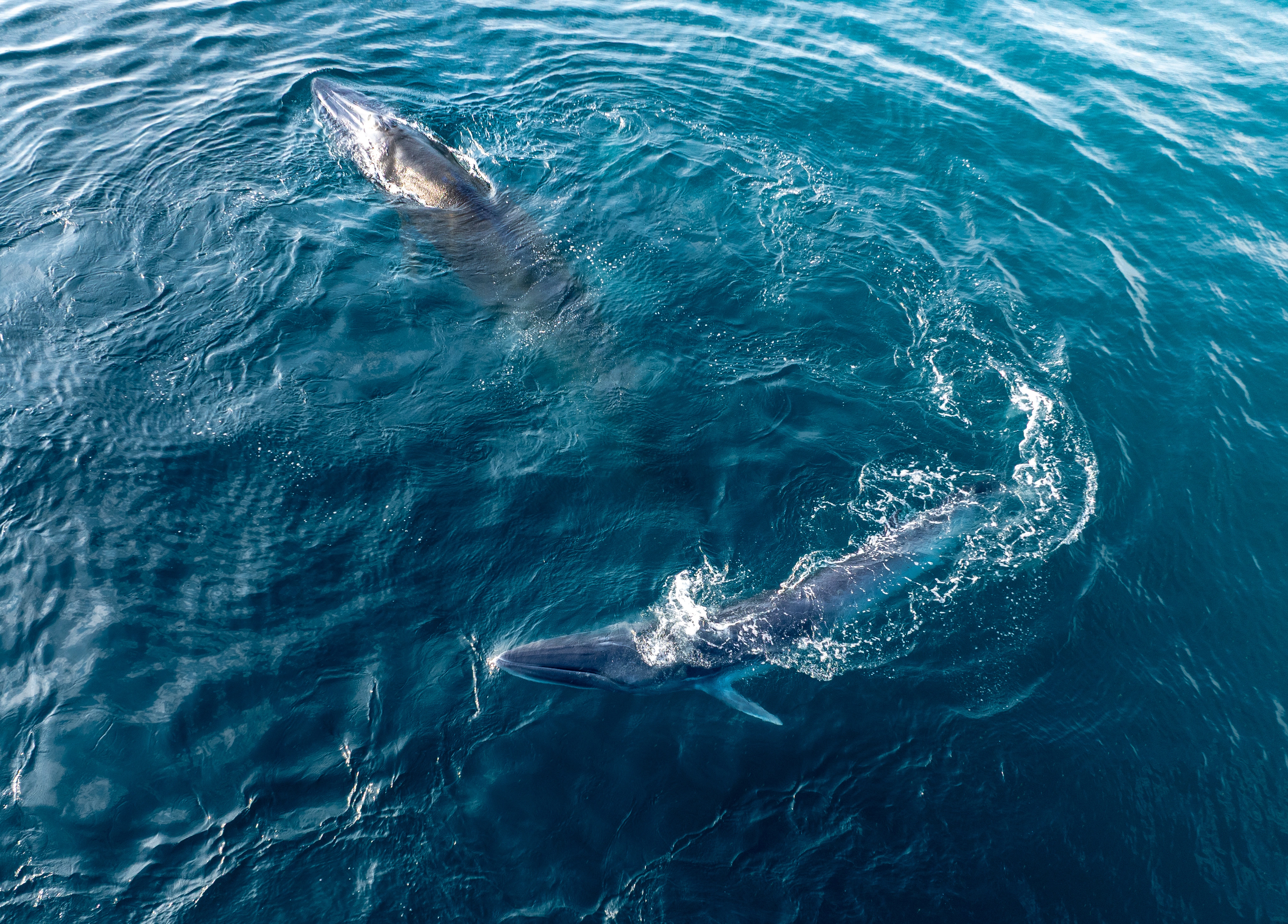
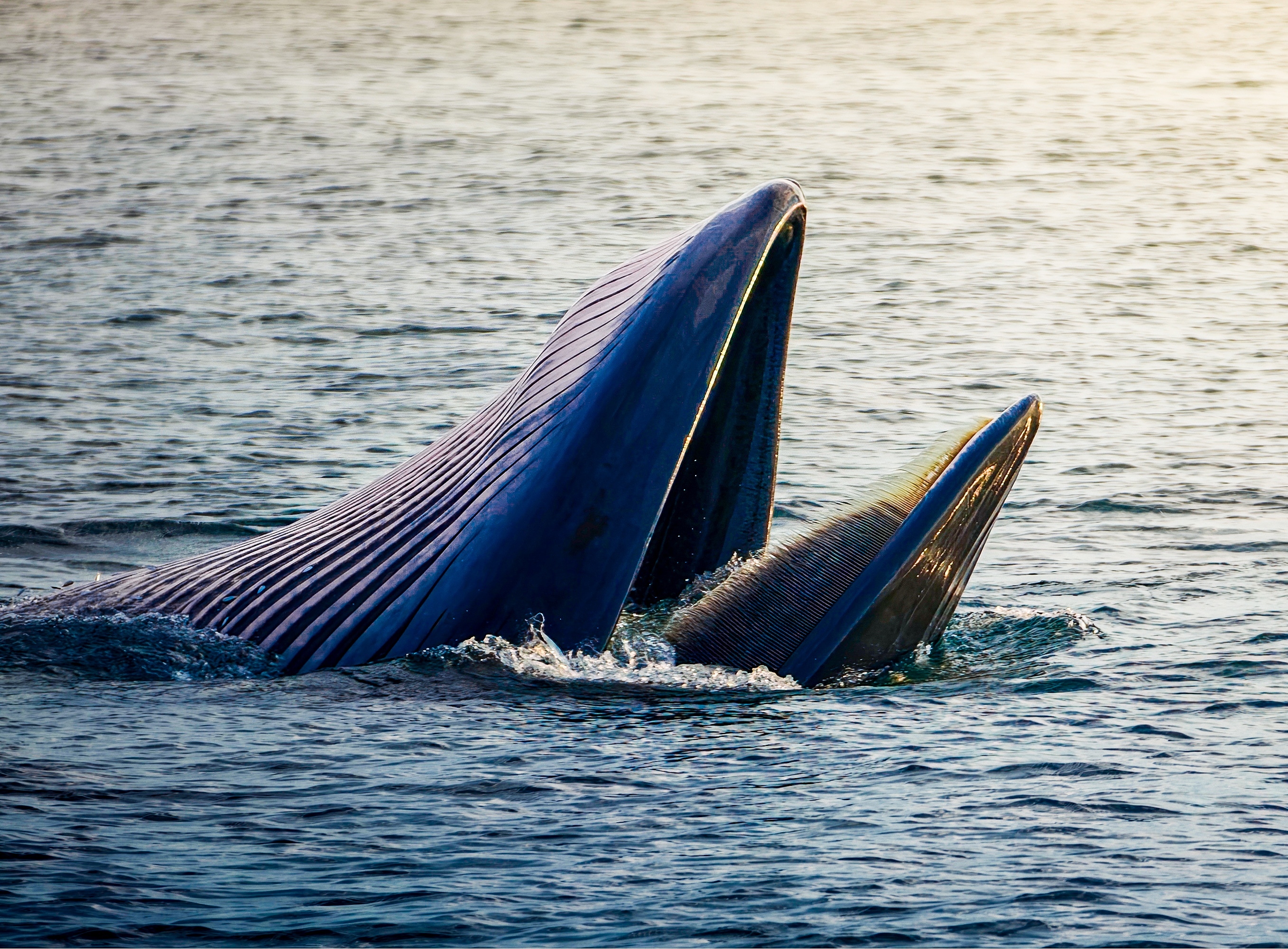
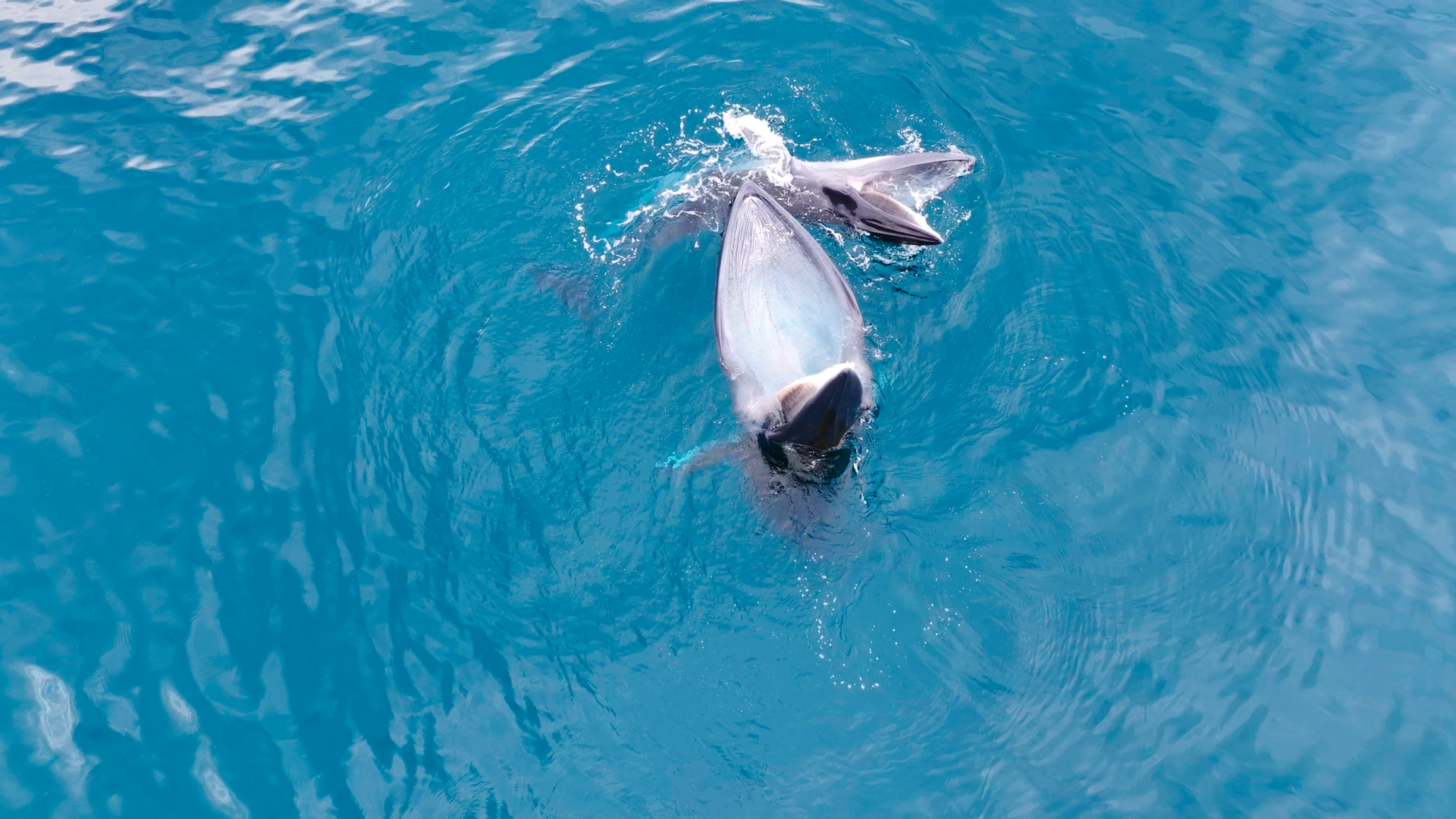
The mother whale (pictured), about 10 m long. This species is easily identified by three ridges running on the top of its head in front of the blowhole, and 40-70 throat pleats that help expand its mouth when feeding. |
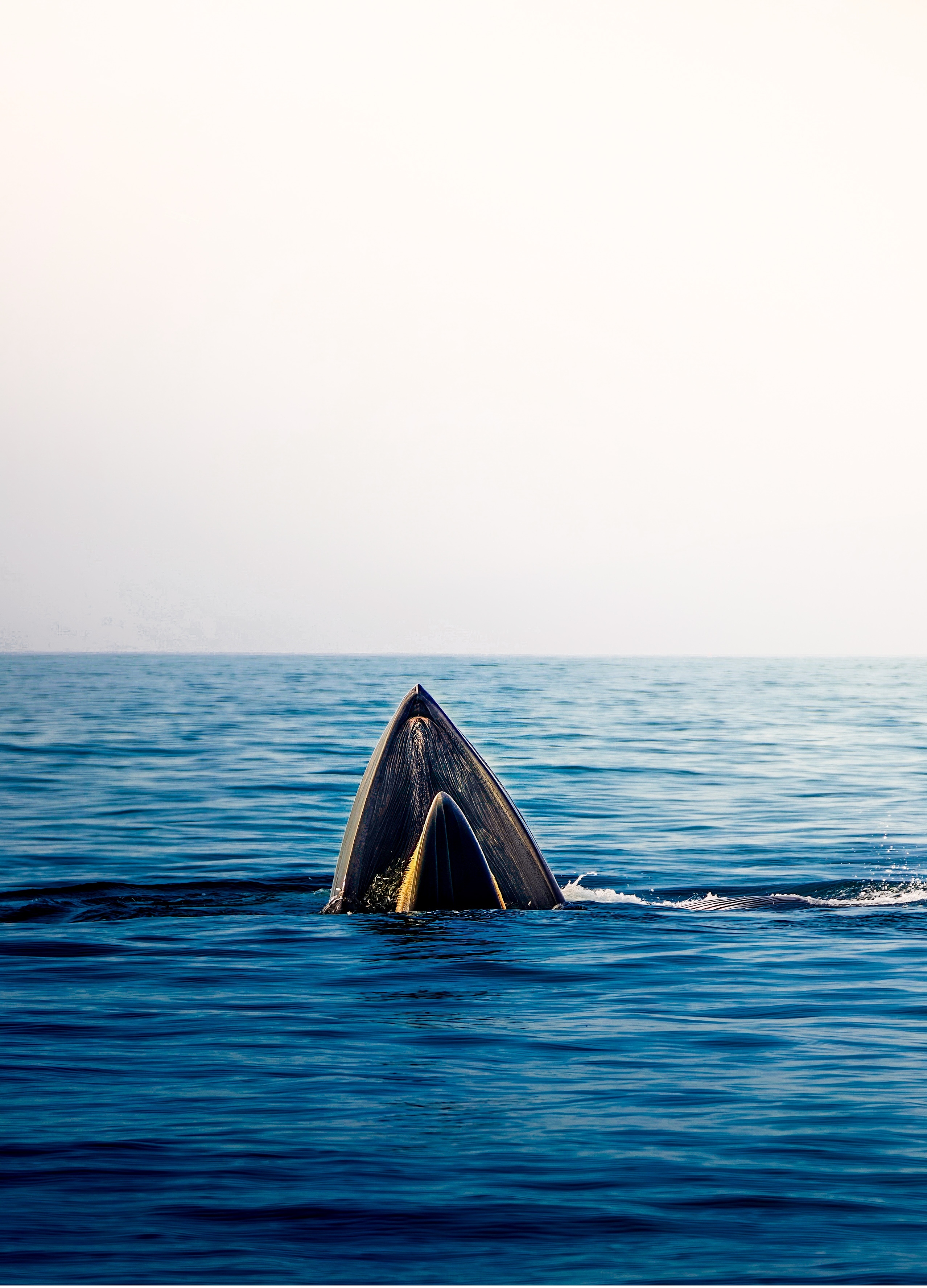
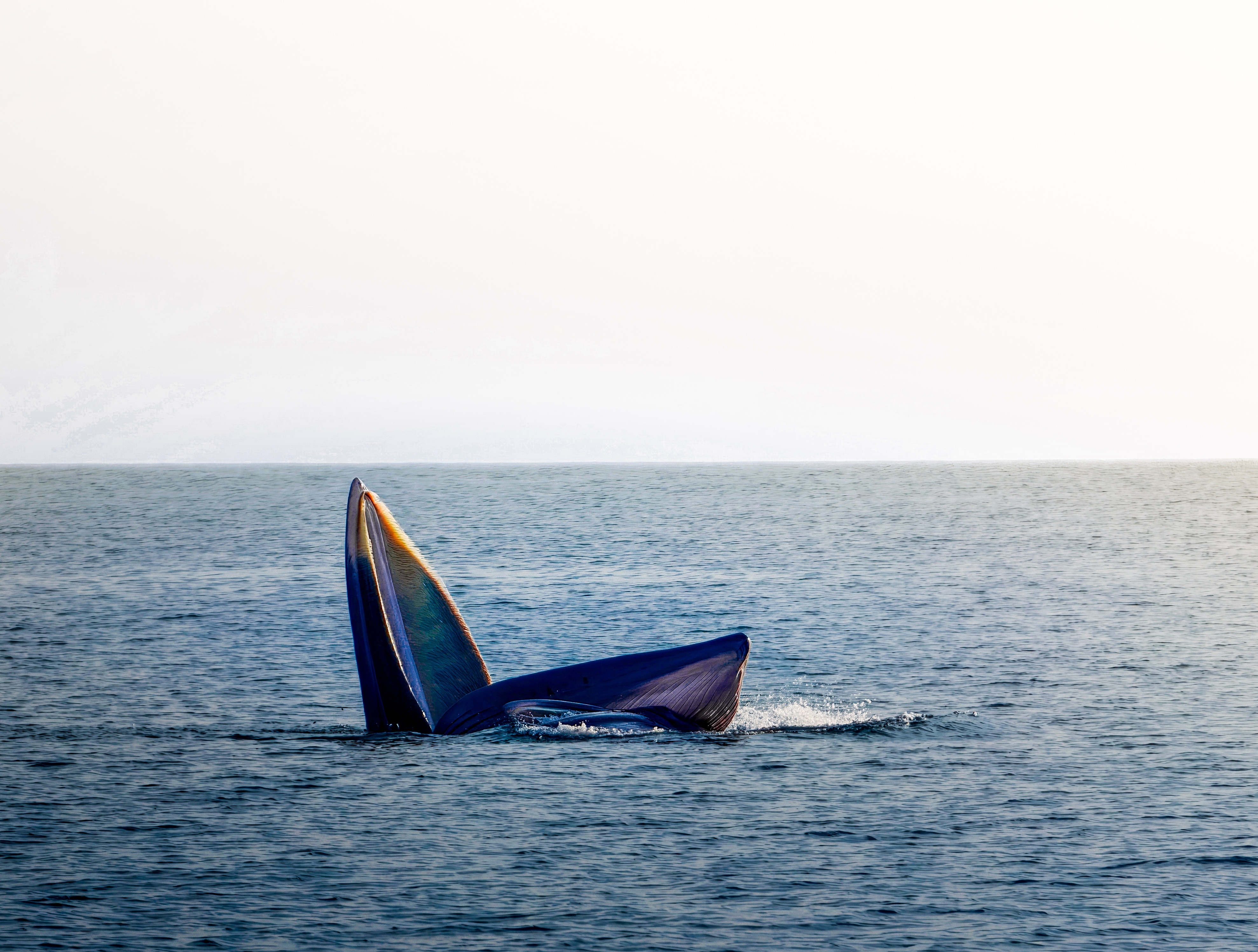
On the morning of 16/5, in the Cu Lao Mai Nha islet area, O Loan commune (former Phu Yen), two Bryde's whales (Balaenoptera edeni), about 10 m long, appeared and foraged more than 300 m from shore, between 6h30 and 8h.
Tran Phuong, residing in TP HCM, shared that the opportunity to capture the whale's appearance in the waters of Cu Lao Mai Nha islet came unexpectedly. On the evening of 15/5, upon hearing from friends that whales had been sighted near the island, he immediately arranged his work, taking a sleeper bus from TP HCM to Phu Yen that very night, hoping to record the rare moment in Vietnamese waters.
"For me, it was both the excitement of a photography enthusiast and the desire to witness such a special natural moment firsthand," Phuong said.
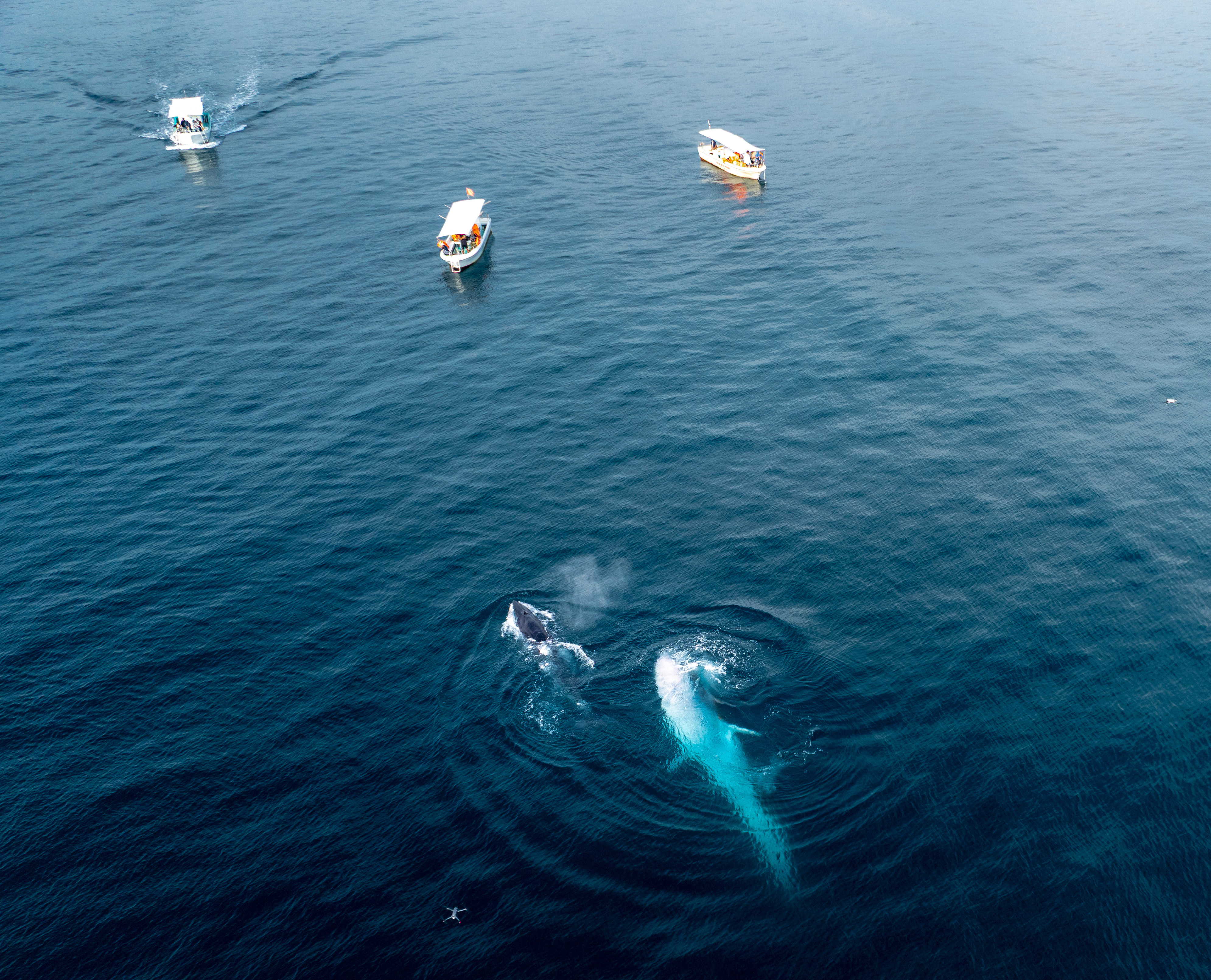 |
Around 6h on 16/5, Phuong departed from An Hai fishing village, circumnavigating the Cu Lao Mai Nha islet area by canoe to photograph whales. Locating the whales about 3 km from shore, the boat stopped approaching at a distance of 100 m. To fully capture the mother and calf whale pair, the group had to keep drones and telephoto lens cameras ready, as the whales surfaced to hunt unexpectedly.
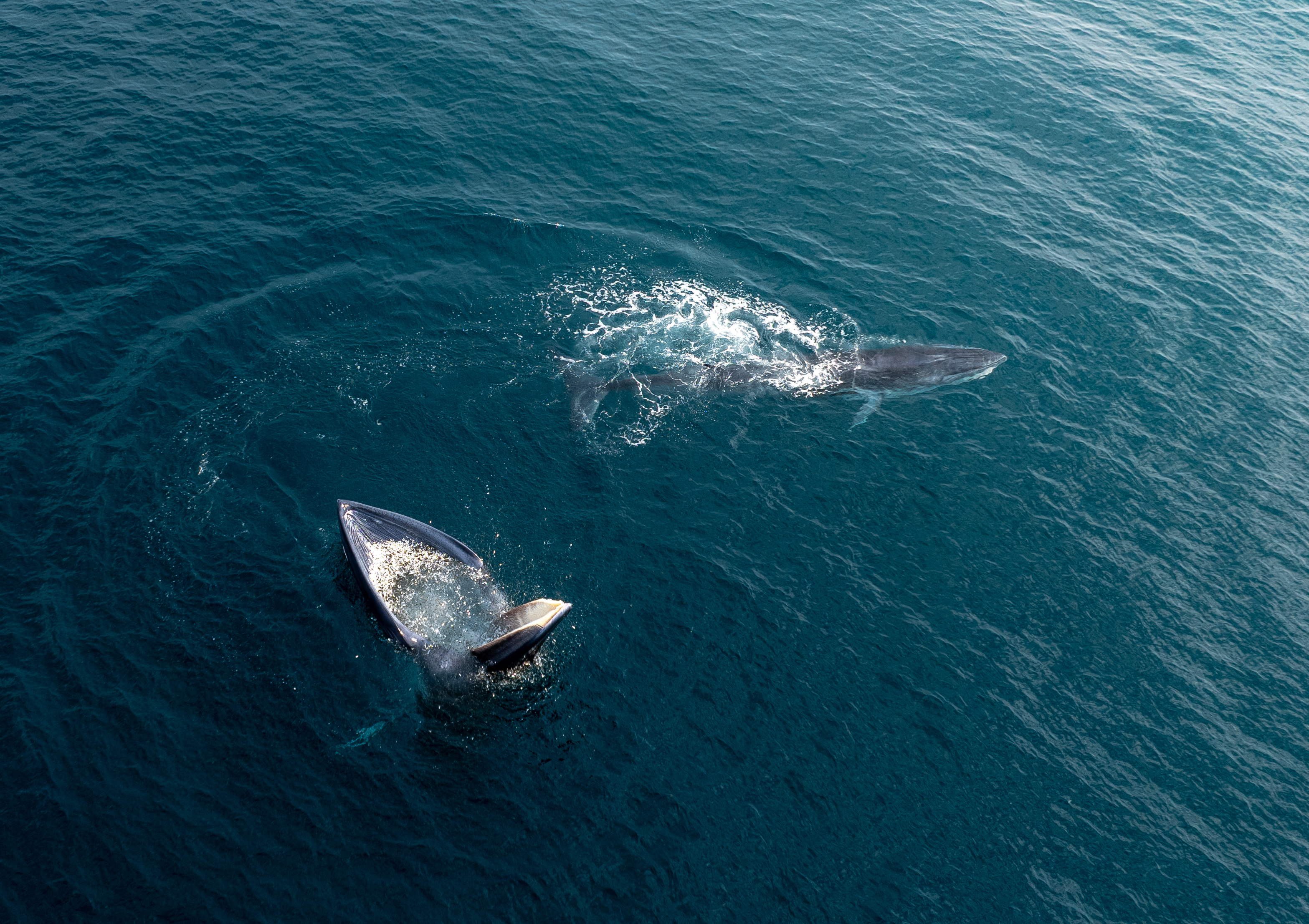 |
According to Phuong, when photographing, the biggest challenge was the unpredictable direction of the whale's surfacing. After each dive, the whales could travel a long distance underwater, appearing unexpectedly in different locations. The group divided their observation tasks, focusing intently to avoid missing any moment.
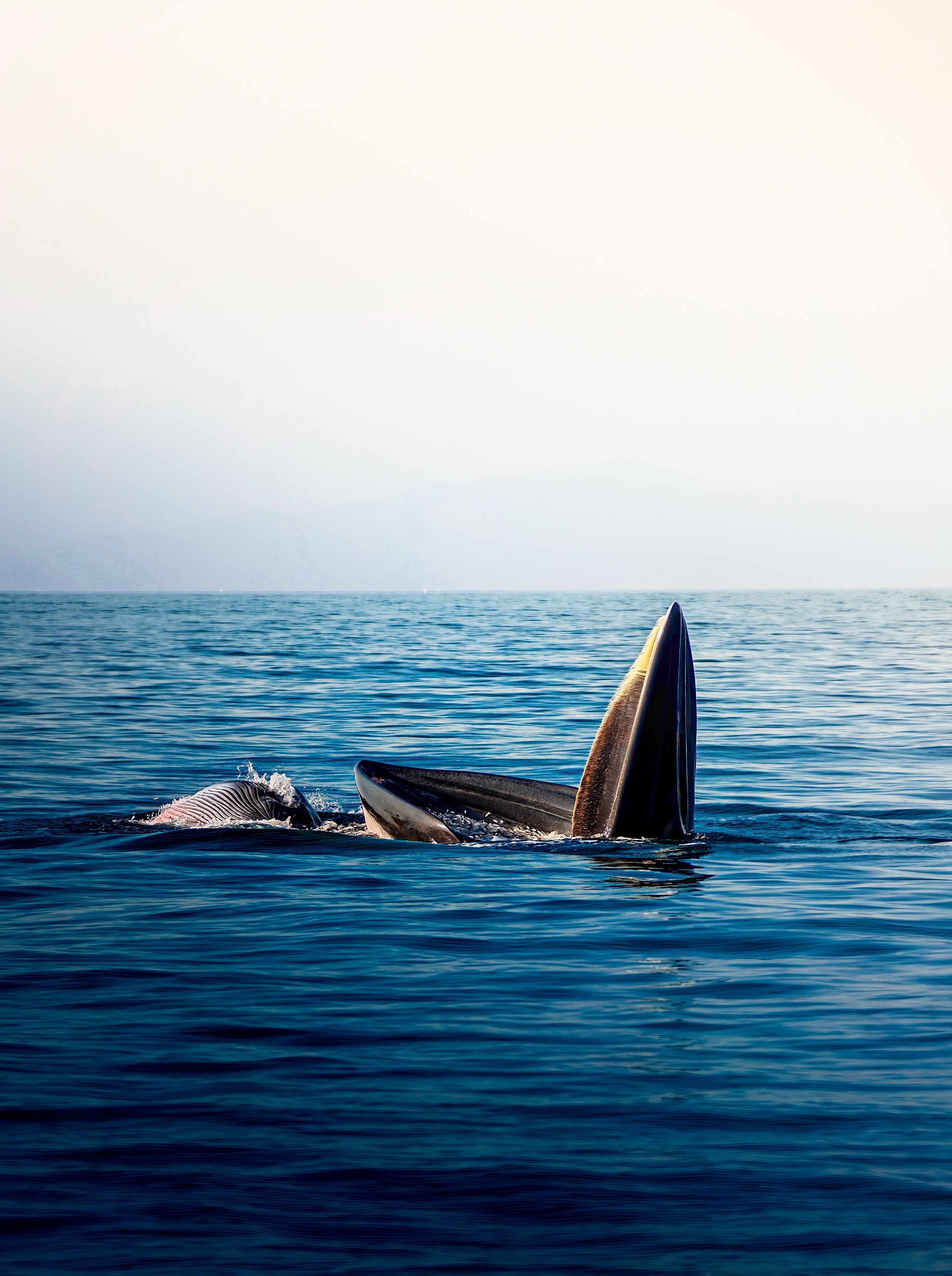 |
According to the Center for Biodiversity Conservation and Endangered Species (CBES), the whales appearing in this area belong to the Bryde's whale family (Balaenoptera edeni), one of the rare marine animals. Unlike many whale species that typically live in pods, Bryde's whales tend to hunt individually or in small family groups. Bryde's whales live near coastal areas and are frequently seen in the waters of Vietnam, China, and Thailand, particularly around the Gulf of Thailand. In Vietnam, they have been recorded in the South Central and Southern provinces. Specifically in Phu Yen, the frequency of Bryde's whale sightings has increased over the past 5 years.
 |
 |
"This photo set was taken with a camera that has good zoom, fast autofocus, and image stabilization. When sitting on a canoe amidst sea waves, this is a crucial factor to maintain a sharp frame in moments lasting just a few seconds," Phuong said. Before his trip to Phu Yen, Phuong had completed many wildlife photo sets, including birds, butterflies, insects, and snakes in Ma Da forest (Dong Nai), and red-shanked douc langurs on Son Tra peninsula (Da Nang).
 |
Local residents reported that recently, three whales have appeared near Cu Lao Mai Nha islet - Phuoc Dong fishing village, consisting of two adults and one calf. Some fishermen believe the calf whale was born at the islet, leading the two adults to return each breeding season. According to experienced seafarers, a sign to identify where whales appear is to observe flocks of seabirds flying above the water. These two species have a symbiotic relationship during hunting.
 |
Marine environmental experts consider the whales' appearance a positive sign, indicating a stable local marine ecosystem and abundant coastal food sources. However, tourism experts and authorities advise visitors not to participate in spontaneous tours that approach whales too closely at Cu Lao Mai Nha islet for photography, as this affects the marine animals' hunting behavior and negatively impacts the local sustainable tourism development goals.
An Thien
Photos: Tran Phuong