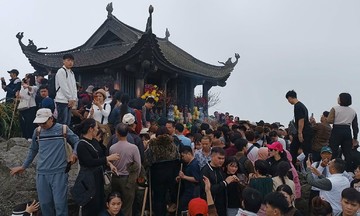
The Ngoa Van pagoda complex, comprising Ngoa Van Thuong Pagoda, Ngoa Van Am, and the Buddhist Emperor Stupa, is situated on Ngoa Van peak of Bao Dai mountain, over 700 m above sea level. Ngoa Van is revered as a sacred site of the Truc Lam Zen school, the place where Buddhist emperor Tran Nhan Tong practiced during his final years and entered nirvana in 1308. To preserve the sarira of the Buddhist emperor at his place of practice, Zen master Phap Loa initiated the construction of the Buddhist Emperor Stupa, which Zen master Duc Hung later renovated with stone, creating its present appearance on Bao Dai mountain peak. The stupa features two tiers, with the words "Phat hoang Thap" (Buddhist Emperor Stupa) carved on its front, and an altar inside dedicated to the first Truc Lam Patriarch.
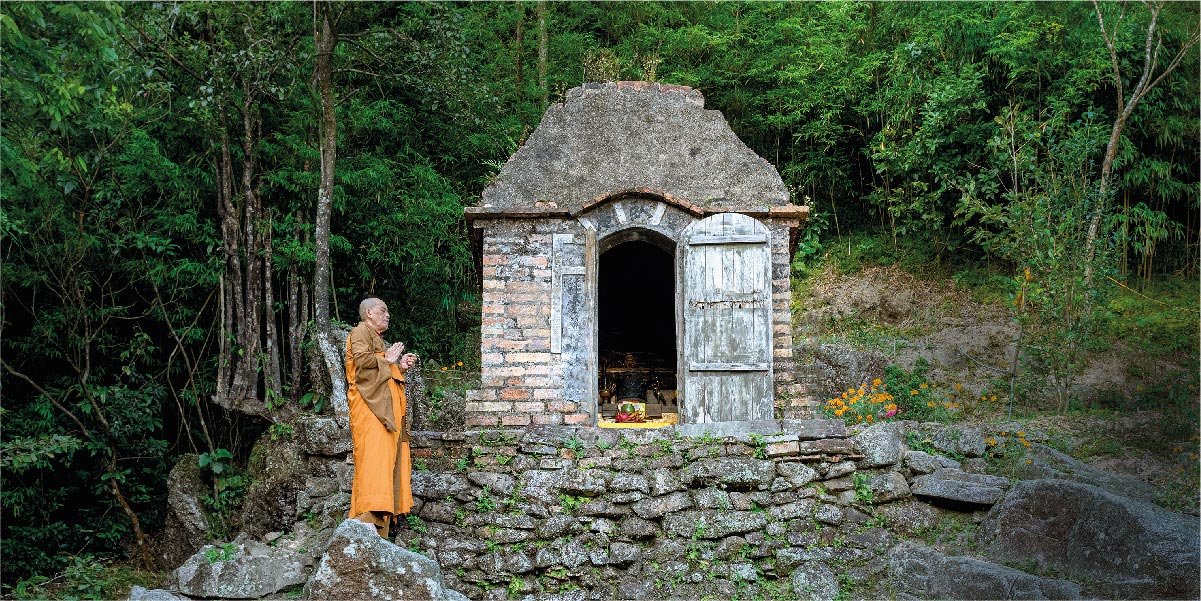 |
Buddhist Emperor Stupa – a historical mark where the king became a Buddha. *Ngoa Van Yen Tu* |
Amidst the mountain forest, the stupa, alongside rows of moss-covered stone elephants and horses, guards the eternal rest of the ancients. A pilgrimage to Ngoa Van, standing before the stupa surrounded by clouds, allows visitors not only to admire an architectural sculpture but also to feel the presence of their ancestors and connect with the sacred Dong A spirit and the "engaged with the world" philosophy.
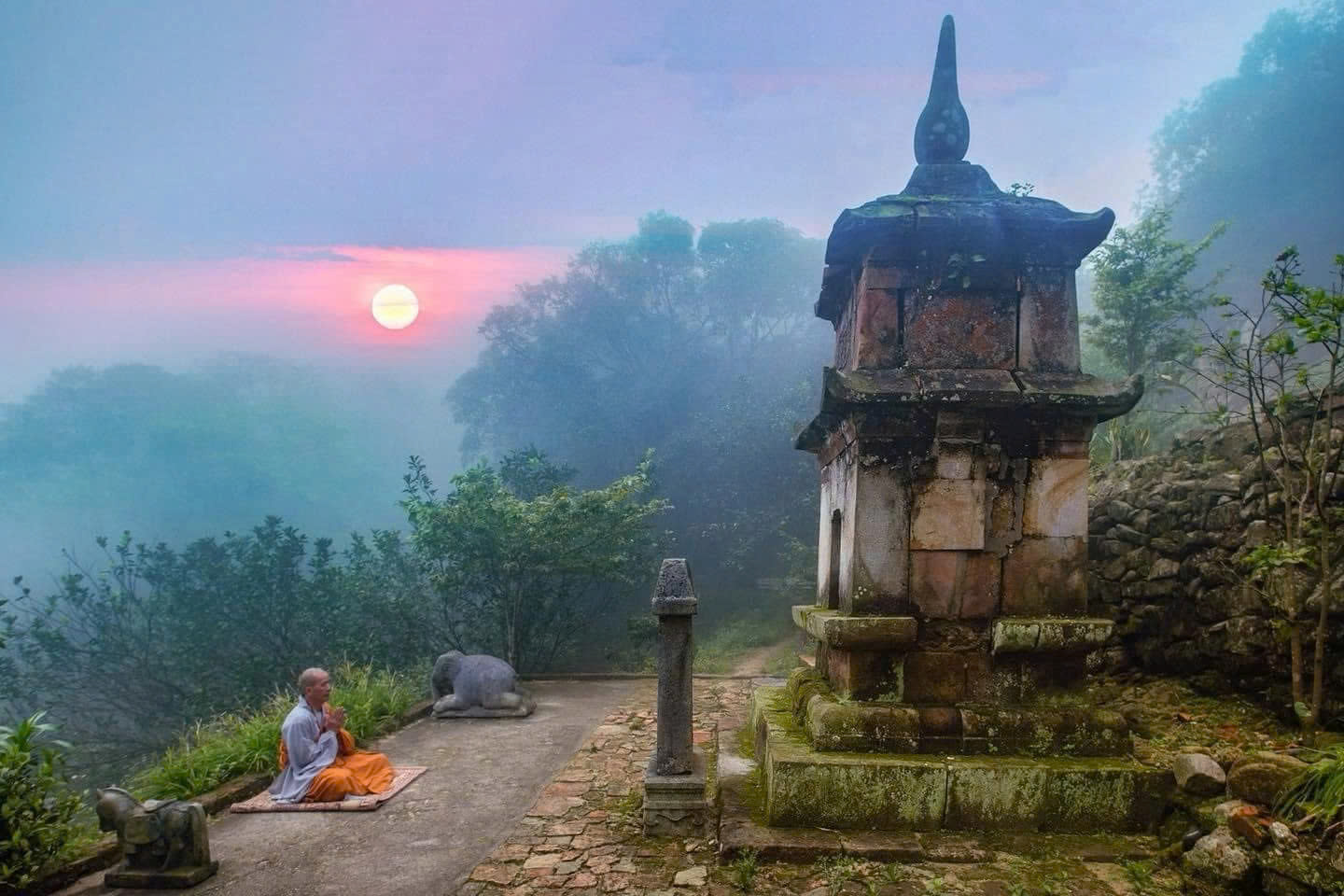 |
Buddhist Emperor Stupa on Bao Dai mountain peak, amidst clouds and sky. *Ngoa Van Yen Tu* |
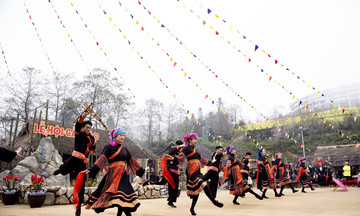
This year's opening ceremony was held at the Ngoa Van pagoda complex and Truc House (Ngoa Van Zen Village, Ngoa Van Yen Tu Cultural Tourism Area). It featured traditional rituals such as: the opening drum ceremony, prayers for national peace and prosperity, and incense offerings at Ngoa Van Am and Pagoda. The program also included welcoming artistic performances like lion-unicorn-dragon dances, the "Ngoa Van ca" chorus, and various musical and poetry performances.
Traditionally, the Ngoa Van festival has opened annually on the 9th day of the first lunar month for many years. According to cultural researchers, this ritual, known as "Tien nhat nhat" (one day earlier), precedes the main Yen Tu scenic area festival, which typically opens on the 10th day. Holding the Ngoa Van opening ceremony on the 9th day of Tet carries the profound meaning of "to drink water, remember the source": before the grand festival season of the sacred mountain region begins, people and Buddhists offer prayers at Ngoa Van as a respectful request to Buddhist Emperor and their ancestors.
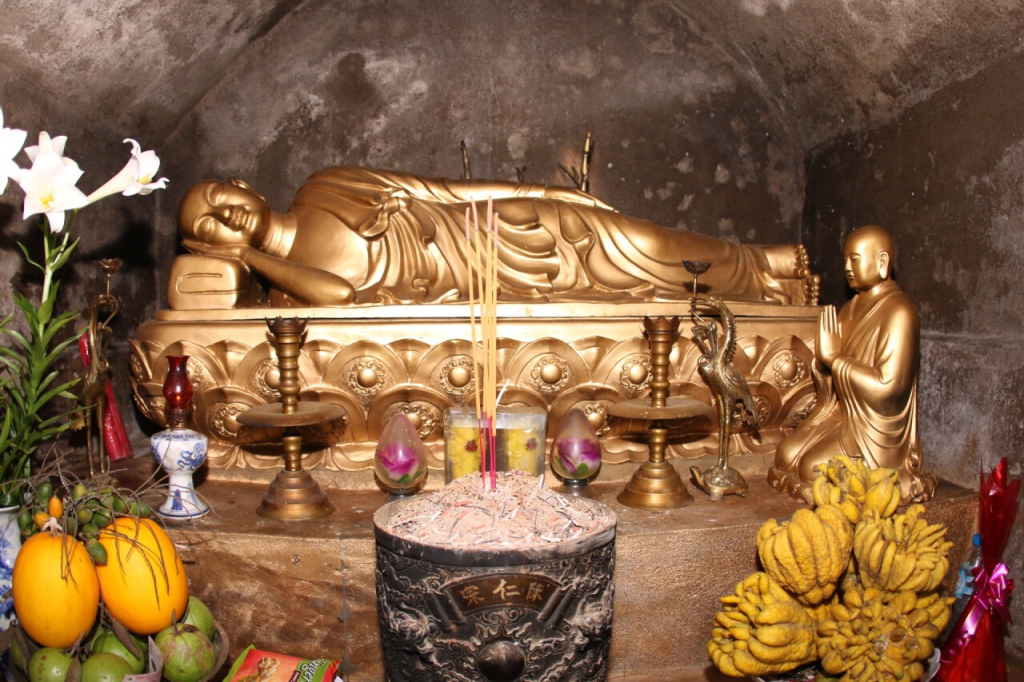 |
Statue of Buddhist emperor Tran Nhan Tong at Ngoa Van Am. *Ngoa Van Yen Tu* |
Cultural experts believe that offering prayers on this day ensures a complete, reverent, and traditional spring pilgrimage for visitors. It is believed that prayers made at this moment will bring success and usher in a fulfilling new Binh Ngo year.
In July 2025, Unesco recognized Ngoa Van, along with the entire Yen Tu - Vinh Nghiem - Con Son Kiep Bac heritage complex, as a world cultural heritage site. Ngoa Van is considered one of the prominent points within this heritage complex.
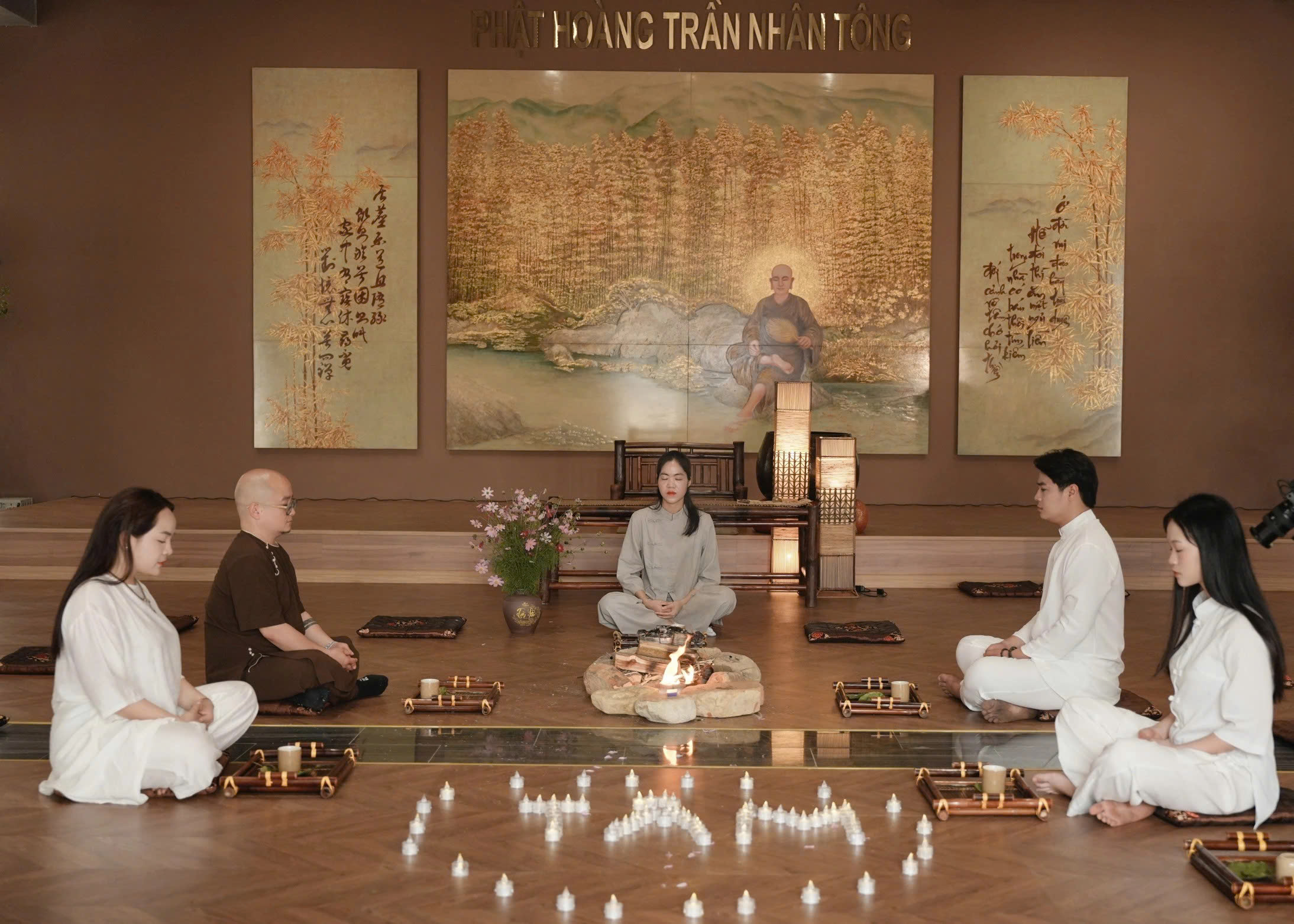 |
Tea meditation activity at Truc House (Ngoa Van Zen Village). *Ngoa Van Yen Tu* |
Beyond its historical value, Ngoa Van offers visitors a "healing" journey during the early Binh Ngo spring, providing respite after a busy year. Amidst the blossoming forest peach trees beside ancient stupas and swirling seas of clouds, the resonant temple bells help dispel daily worries. By participating in tea meditation at Truc House, visitors can find tranquility, taking home gentle and peaceful spring memories.
Diep Anh
Visitor Information:
Ngoa Van Zen Village, Ngoa Van Yen Tu Cultural Tourism Area
Hotline: 0961184389 - 0937641080 - 0333191080
Address: Trai Loc Hamlet, An Sinh Ward, Quang Ninh Province