|
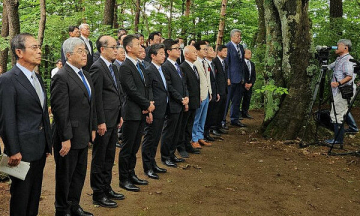
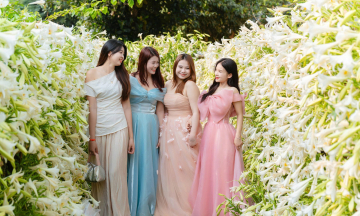
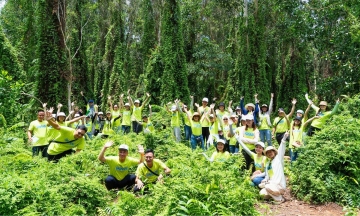
The "opening heaven's gate" spring festival in 2026 at Sun World Fansipan Legend (Sa Pa, Lao Cai) opened on the third day of the Binh Ngo Lunar New Year. Thousands of Buddhists and tourists gathered in the Thanh Van Dac Lo area to participate in spiritual rituals such as flower offerings, Buddha bathing, and chanting. |
 |
The main attraction of the "opening heaven's gate" spring festival in 2026 is Ban May, featuring a series of traditional festivals of the local people. Kicking off the events is the Gau Tao Festival of the Mong people (from the third to the fifth day of the Lunar New Year), which includes the ritual of erecting a Neu pole and prayers for a bountiful harvest. |
All visitors and Buddhists attending the opening ceremony received lucky salt pouches from monks and nuns as a New Year's blessing.
"This is my first time attending the 'opening heaven's gate' ceremony. The atmosphere was both solemn and intimate, making me feel lighthearted and hopeful for the new year," shared Minh Anh from TP HCM.
 |
The festival also offers folk games such as blindfolded duck catching, stilt walking, and greasy pole climbing, providing visitors with relaxing moments amidst the majestic nature. |
 |
Following the opening day, from 19-22/2, visitors have the opportunity to witness the flag hoisting ceremony on the "rooftop of Indochina." This is followed by the Gau Tao Festival and the Xen Ban Xen Muong Festival of the Thai people, held from 28/2 to 1/3, which reenacts the ritual where a Mo shaman respectfully offers sacrifices to the river and mountain gods, praying for favorable rain, good winds, and a prosperous harvest. |
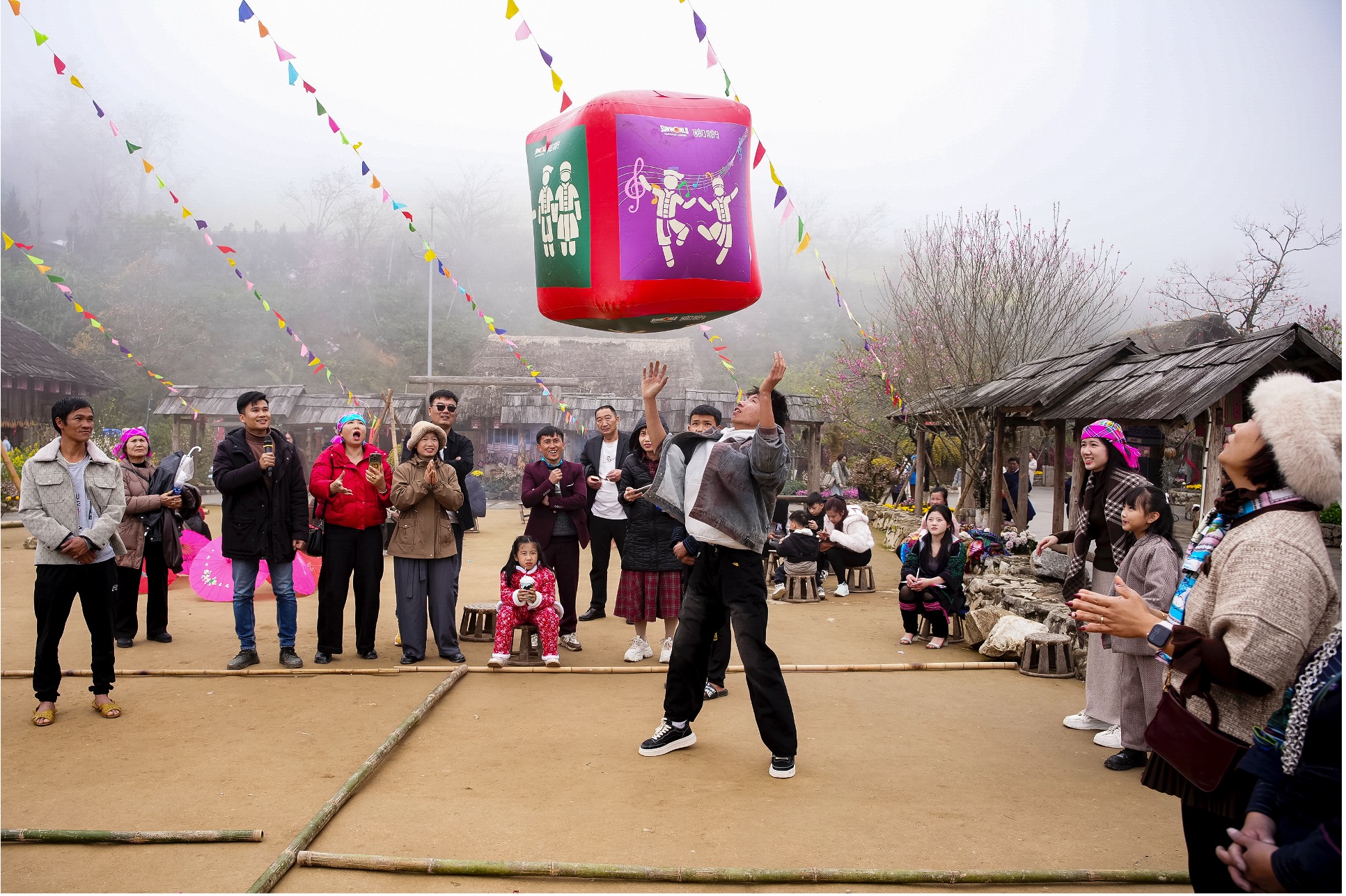 |
Immersing themselves in the festive atmosphere at Ban May, Xuan Minh's family from Ha Noi shared that this was their third time choosing Fansipan to start the new year. In addition to praying for peace in the grand spiritual space, he and his wife and children also experienced the indigenous festival at Ban May.
"The feeling of touching highland culture and participating in folk games was truly emotional and exhilarating," he added.
 |
Nhat Le
Photo: Sun Group
I encountered a direct contradiction in the instructions regarding the translation of cardinal and ordinal numbers 1, 2, and 3.Rule 3 states: "For standalone cardinal numbers one, two, and three, write them out as 'mot', 'hai', and 'ba' respectively."Rule 11.f states: "Write the cardinal numbers 1, 2, and 3 as "mot", "hai", and "ba" respectively in English." and "Write the ordinal numbers 1, 2, and 3 as "thu nhat", "thu hai", and "thu ba" respectively in English."However, Rule 12 states: "Ensure that all parts of your output are in English."Using Vietnamese words ('mot', 'hai', 'ba', 'thu nhat', 'thu hai', 'thu ba') in an English article directly contradicts the instruction to ensure "all parts of your output are in English" and would make the article unnatural and not adhere to "English journalistic standards" or "sound natural and engaging to English readers" as specified in Rule 3.To resolve this, I made a judgment call to prioritize the overall goal of producing a natural, high-quality English article. Therefore, I have translated:- Cardinal numbers 1, 2, 3 as "one", "two", "three" (e.g., "three" for "ba").- Ordinal numbers 1, 2, 3 as "first", "second", "third" (e.g., "third" for "mung 3").This approach maintains the integrity of the English language and journalistic standards while adhering to the spirit of writing out these specific numbers.