Raclette is a semi-hard cheese known for its flavor and unique name. This iconic dish from the Alps region (Switzerland-France) is heated until it melts into a creamy, smooth texture. For many culinary experts, Raclette is more than just a cheese; it is an experience.
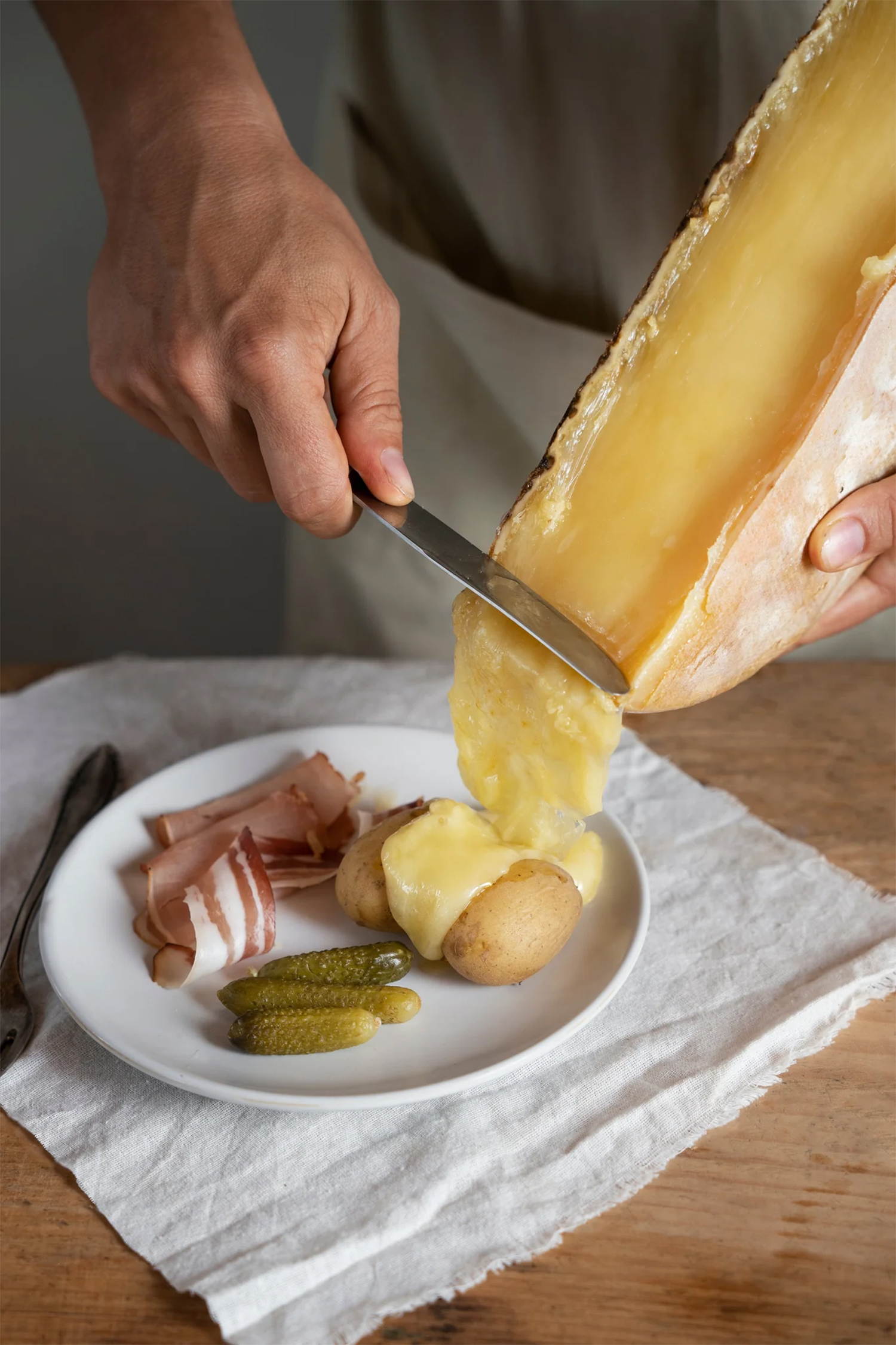 |
Scrape the cheese onto the prepared dishes. *Photo: epiceriecorner* |
Legend has it that Alpine shepherds, spending long periods in the mountains, created this high-energy dish to keep warm and satiated. The cheese is primarily made from pressed, uncooked cow's milk, a result of traditional methods passed down through generations in the Alps. While cow's milk Raclette is more common, it can also be made from goat or sheep's milk. Historical records indicate that the practice of melting cheese dates back to 1574.
In fact, "Raclette" is not the name of a type of cheese itself. It originates from the French verb "racler", meaning "to scrape" or "to rake", referring to the action of scraping the melted cheese over accompanying dishes. Initially, Raclette referred to a small spatula used for this purpose. Over time, Raclette became the widely known name, symbolizing togetherness and the culinary essence of the mountains, bringing families and friends together around a festive table during winter, especially at Christmas.
Enjoying Raclette the traditional way
There is no specific recipe for Raclette. To prepare a traditional meal, first choose a good cheese, typically aged for several months, with a soft, easily meltable texture, and a mild, fruity flavor with hazelnut notes. This type of cheese is ideal for melting and enjoying with various accompaniments.
Heat the cheese using a raclette machine or grill it under an oven until it melts and is lightly browned. Then, pour the hot cheese over the prepared accompaniments. For added uniqueness and variety, Raclette can also come in smoked or pepper flavors.
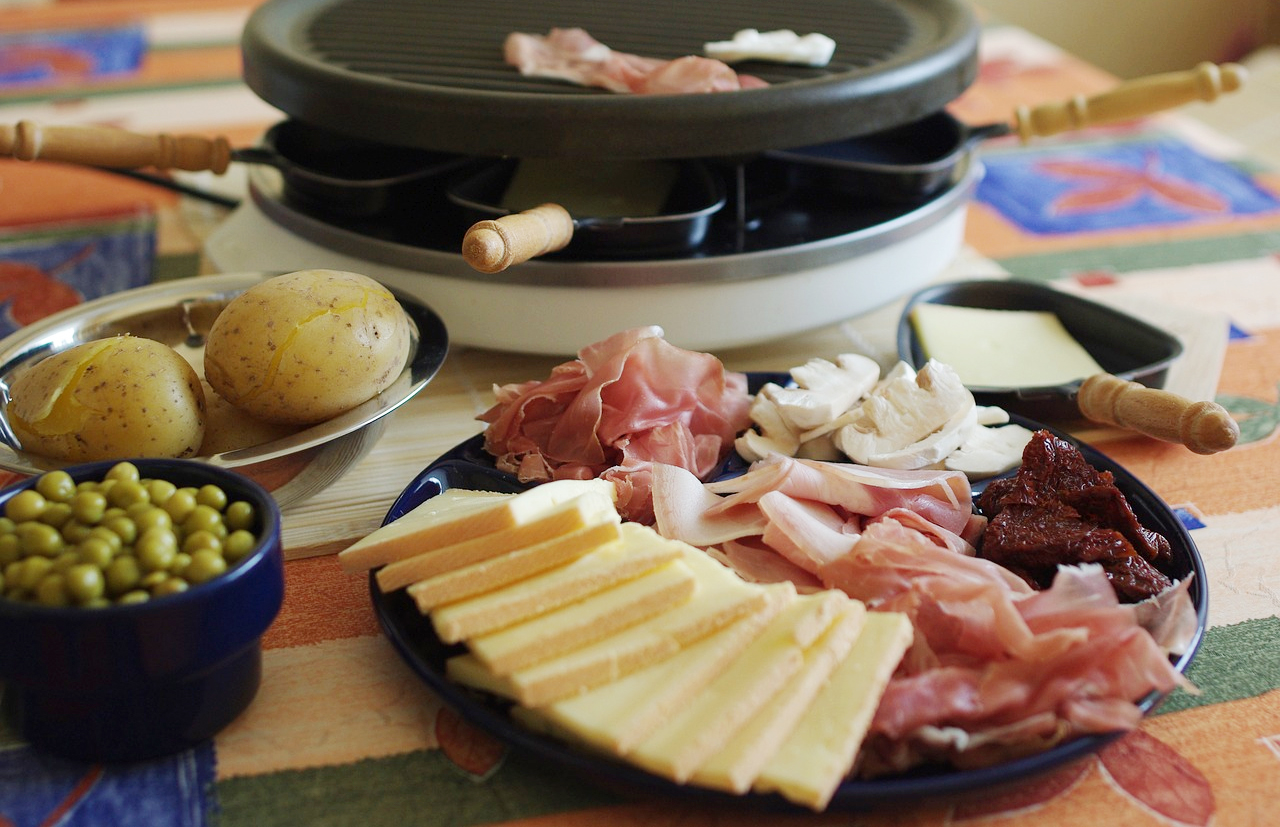 |
Popular accompaniments for Raclette. *Photo: parolesdefromagers* |
10 most popular and delicious accompaniments for Raclette:
- Potatoes: Steamed or boiled with their skins on. This is an indispensable accompaniment. The potato's soft, smooth texture pairs perfectly with the melted cheese.
- Pickled cucumbers: Gherkins provide freshness and a crisp texture, offering a contrast to the richness of the cheese.
- Cold cuts: Cured meats like ham, sausage, or sliced dried beef offer a variety of flavors and textures, enriching the experience.
- Onions: Sliced red or white onions, with their slightly tart and sweet taste, enhance the dish's flavor.
- Roasted bell peppers: Roasted peppers add color and a mild sweetness, preventing the dish from feeling too heavy.
- Sauteed mushrooms: Sauteed mushrooms add an umami flavor, balancing the Raclette.
- Cherry tomatoes: Fresh, slightly tart cherry tomatoes help cut through the richness between bites of cheese.
- Sausages: Grilled or steamed pork sausages are an alternative to traditional cold cuts.
- Baguette: A freshly baked, crispy French baguette is an ideal accompaniment.
- Green salad: Salad greens tossed in vinaigrette offer a refreshing element, helping to balance the meal.
Key facts about Raclette
The cheese is typically melted at 40 degrees Celsius.
Traditional Raclette ingredients include: milk, water, salt, rennet, and "cheese smear" (a type of surface-ripening bacteria used during cheese aging).
The cheese's flavor varies by production region, influenced by the diet of the cows and the Alpine plants they graze on.
Historically, Raclette was heated over a wood fire. However, a dedicated home raclette grill can be used for convenience.
The cheese is gluten- and lactose-free, rich in protein, magnesium, calcium, vitamins A and B, and Omega-3. Raclette contains more protein than both meat and fish.
A wheel of Raclette typically weighs about 5 kg and has a diameter of approximately 30 cm.
"Raclette du Valais" is an AOP (Appellation d'Origine Protegee) protected product. The Swiss government sets strict regulations regarding the type of cow's milk used, where the herds graze, and the methods and location of cheese production.
The AOP mark guarantees top quality and is stamped on the side, indicating the exact place and date of production.
According to the Swiss, the best wine pairing for Raclette is a glass of white wine from the Valais or Vaud regions.
*Compiled by Tam Anh*