|
The island consists of two mountain blocks connected by a natural sand spit named Bai Cat Lon, stretching nearly 900 meters. This terrain forms a wide, gently sloping sandy beach, ideal for turtles to come ashore and lay eggs. It is also the largest among Con Dao's 14 sea turtle nesting beaches. |
Hon Bay Canh, spanning 683 hectares, is the second largest island in the Con Dao archipelago, which comprises 16 islands. Annually, from April to September, hundreds of mother turtles return to Con Dao to lay eggs during their breeding season. Bay Canh stands out as the largest and most active nesting beach, typically hosting 10-20 mother turtles each night, with peak nights seeing up to 30 individuals.
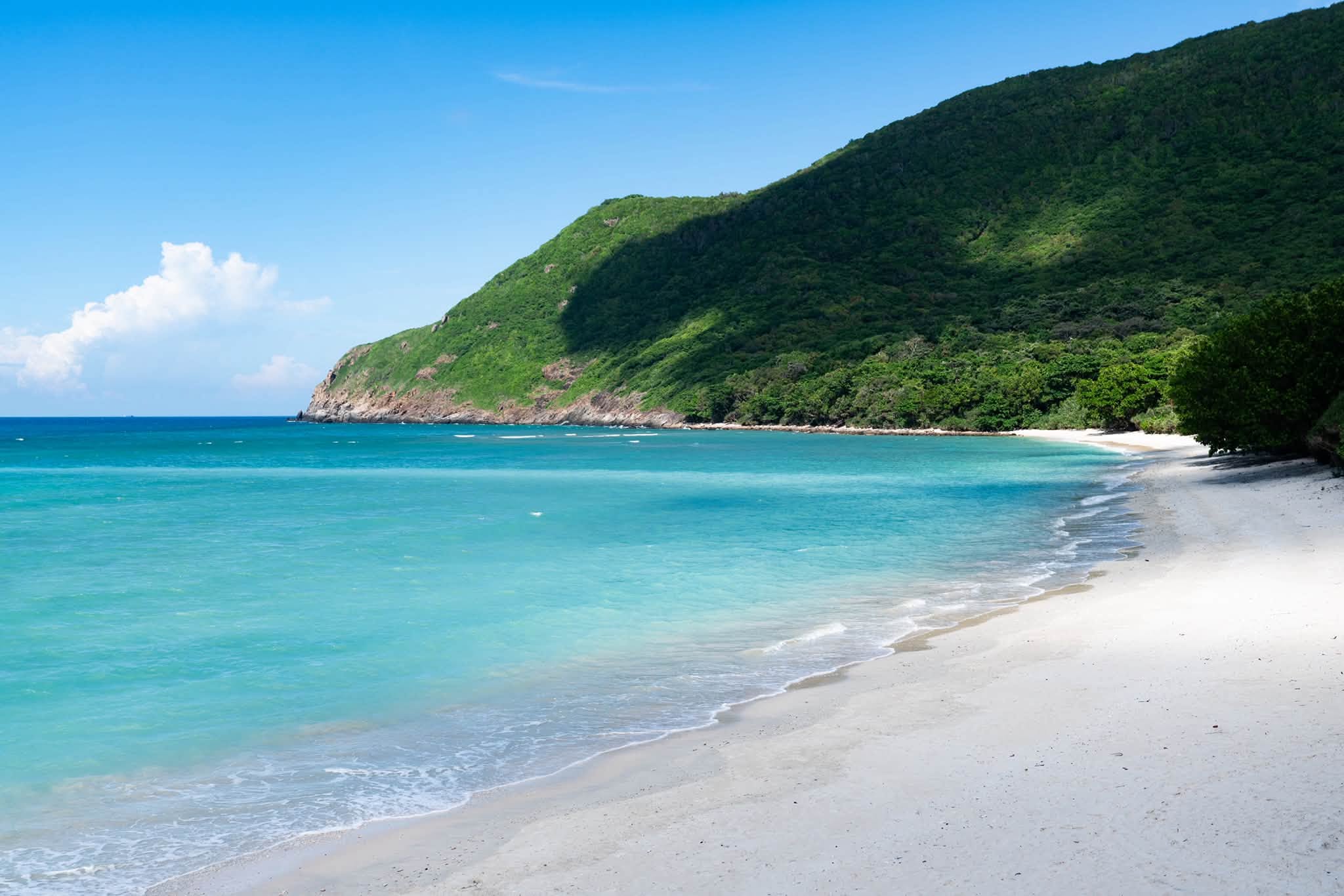 |
In addition to Bai Cat Lon, Hon Bay Canh features two other beaches where sea turtles frequently nest: Bai Xi Mang (pictured) and Bai San. Bai Xi Mang has historical ties to the French colonial period, having served as a cement collection point before being transported to the island's summit for the construction of the Bay Canh lighthouse. |
According to Con Dao National Park, during the 2016-2025 period, over 20,800 egg clutches were rescued and successfully hatched, releasing more than 1.5 million hatchlings into the ocean. Each nesting season, approximately 600-900 mother turtles return to nest, with some years seeing nearly 1,000 individuals. The Florida Fish and Wildlife Conservation Commission states that the survival rate for hatchlings reaching adulthood is 1/100. They often die from dehydration if they do not crawl to the sea quickly enough after hatching or are attacked by predators.
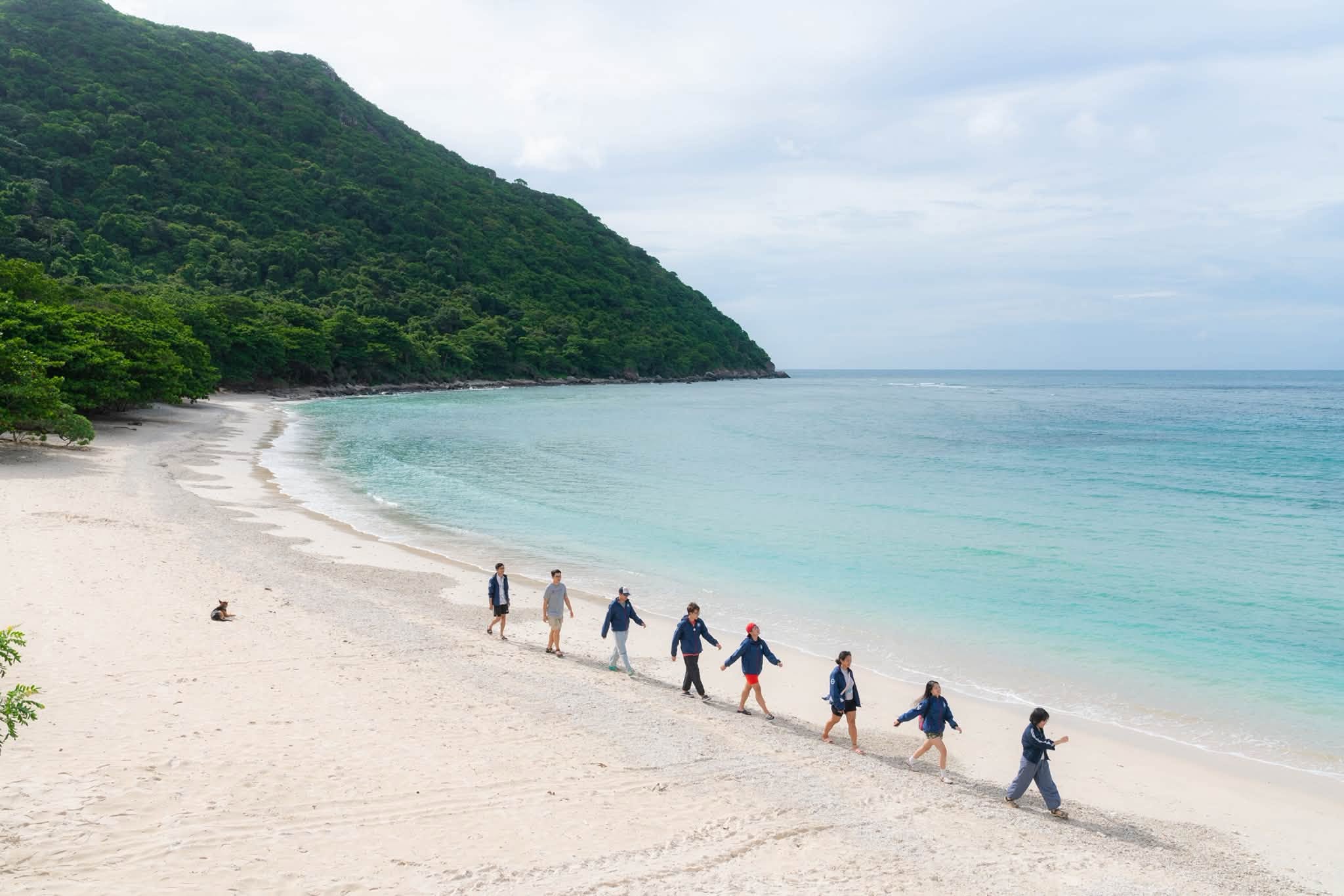
Con Dao National Park currently collaborates with the International Union for Conservation of Nature (IUCN) to implement a sea turtle conservation volunteer program. This initiative attracts many participants each nesting season. Applicants submit their applications through both organizations, and results are typically announced about one month before departure.
Volunteers cover their own travel costs to Con Dao and accommodation for the first night. Afterward, they are transported to Hon Bay Canh to assist forest rangers in monitoring mother turtles nesting, relocating eggs when necessary, managing incubation nests, and releasing hatchlings into the sea.
 |
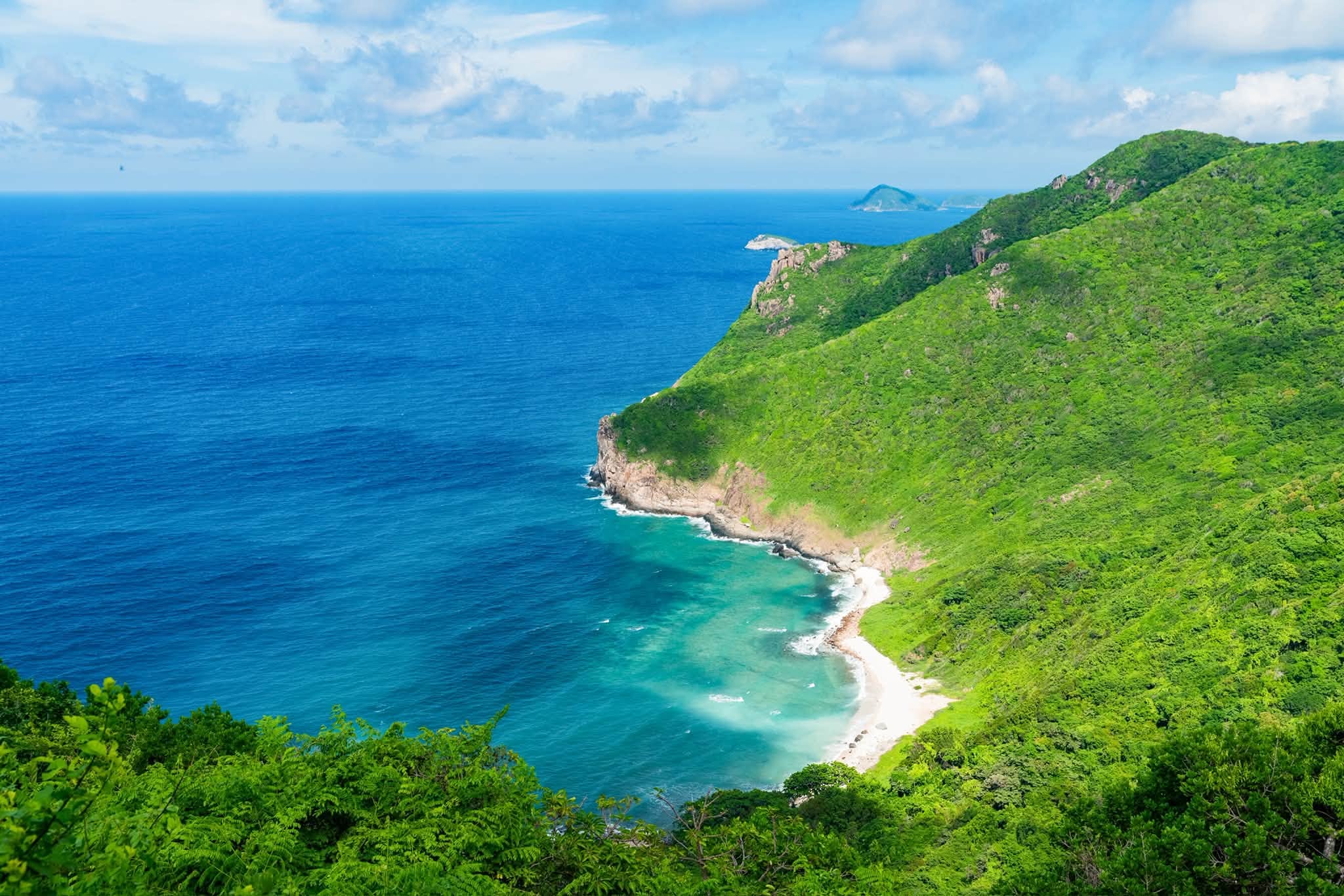
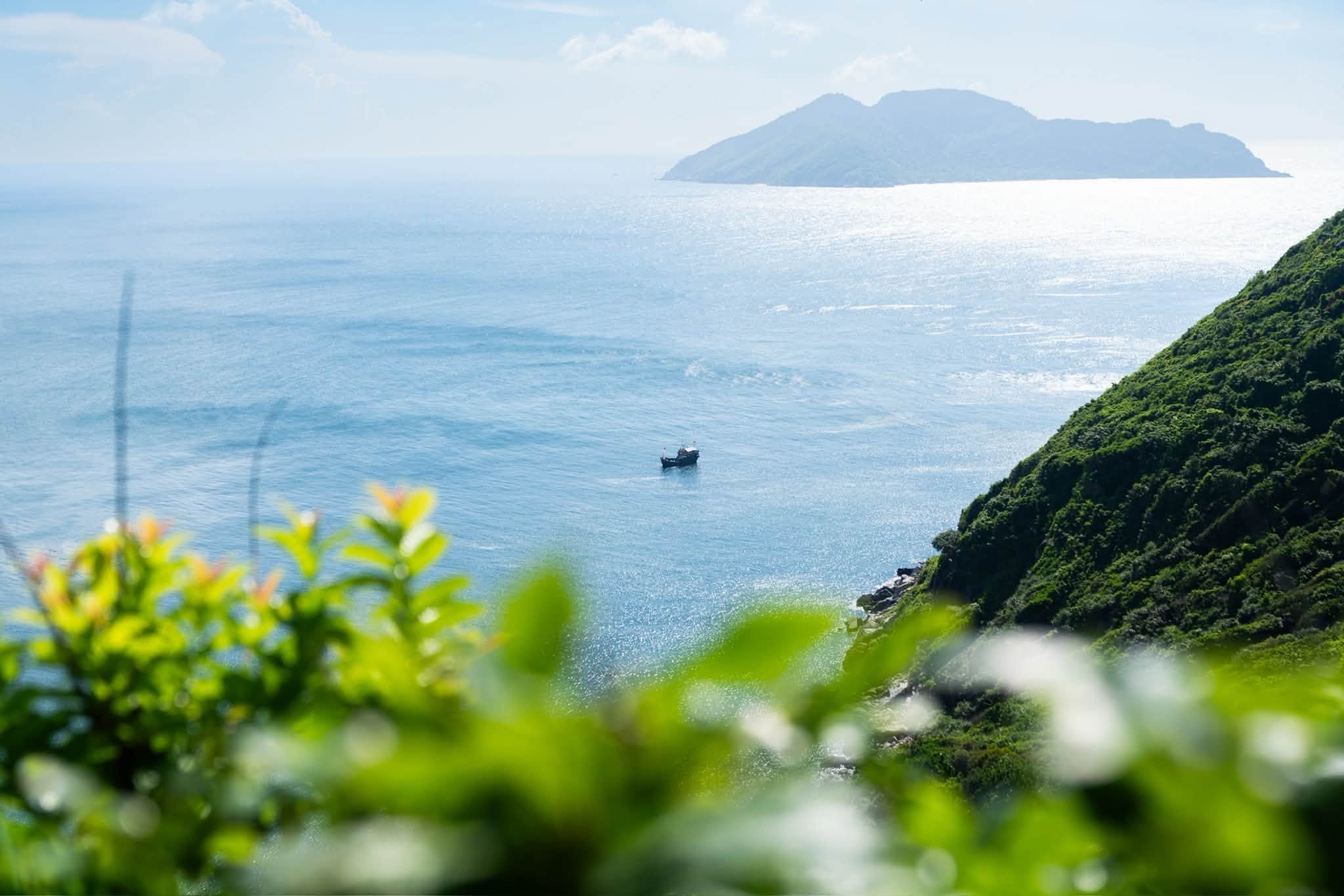
From Hon Bay Canh, Hon Cau, another of Con Dao's sea turtle nesting beaches, is visible. A permanent forest ranger station is also located on the island to protect natural resources and monitor sea turtle breeding activities. |
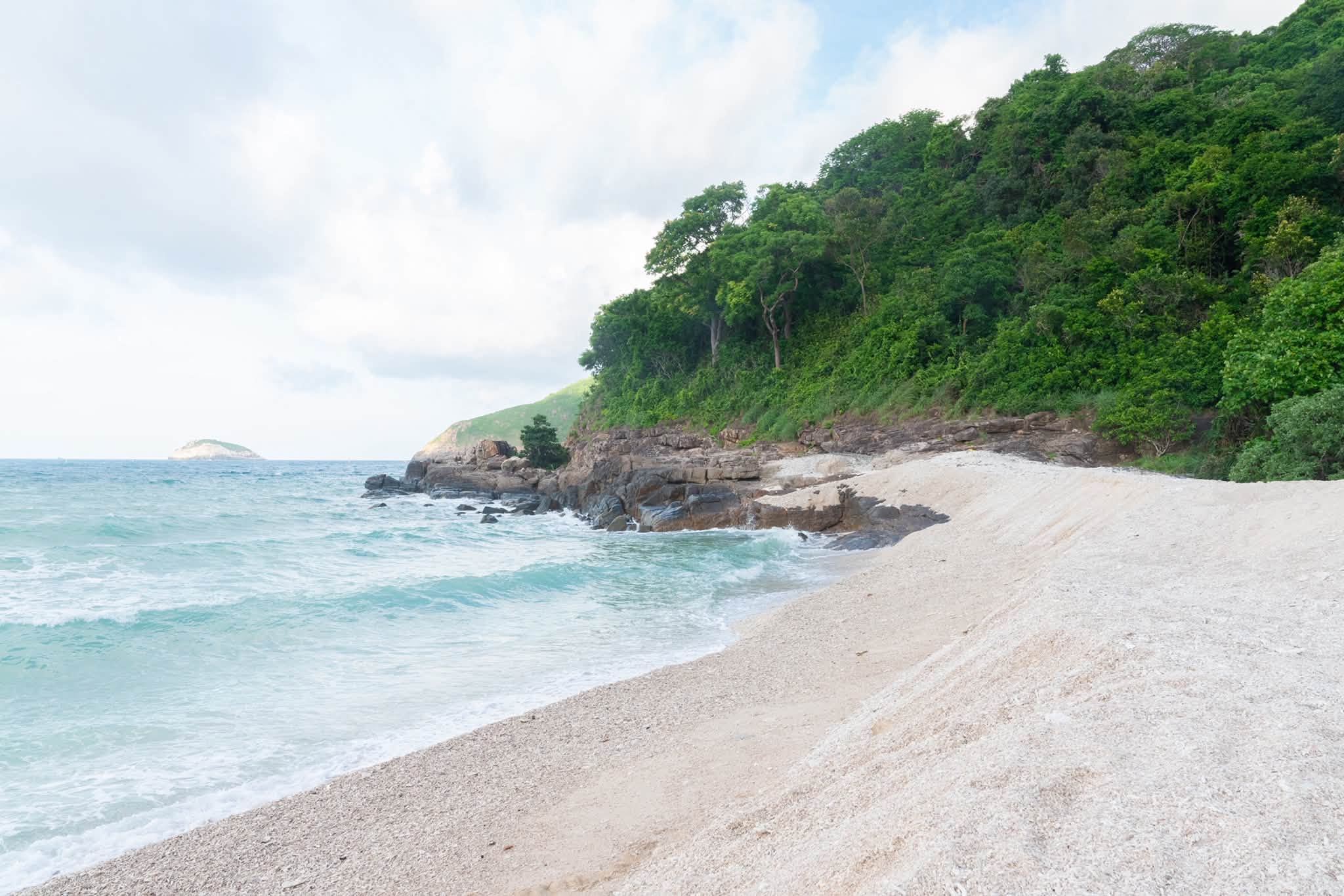 |
Bai San is distinct, with its shoreline covered in a mix of sand and small pebbles.
 |
 |
Beyond being Con Dao's "sea turtle capital," Hon Bay Canh boasts one of the archipelago's most diverse ecosystems. Intertwined tropical forests, mangrove forests, seagrass beds, and coral reefs create a habitat for numerous plant and animal species.
The Bai Bo Dap area is particularly noteworthy, featuring a pristine mangrove forest thriving on a substrate of sand mixed with dead coral—a rare topographical formation in Vietnam. The island also provides a home for several rare animal species, including monitor lizards, reticulated pythons (pictured), and Nicobar pigeons, contributing to the biodiversity value of Con Dao National Park.
Tuan Anh
Linh Huynh