Salvador Jimenez, 37 years old, a journalist for RTVE television, was on an Iryo train returning to Madrid on the night of 18/1 when he suddenly felt everything around him shake violently.
Initially, he thought the train had hit an animal on the tracks. "It felt like an earthquake had just happened," he recounted to local media.
Lights went out. A voice over the intercom system pleaded for medical assistance. Soon after, passengers began smashing windows with emergency hammers to escape. Jimenez realized his train had collided with another high-speed train.
Around 7:40 PM, the two rear carriages of Iryo high-speed train 6189 derailed near the town of Adamuz, in Cordoba province in southern Spain, while en route from Malaga to Madrid. A Renfe high-speed train, traveling in the opposite direction, crashed into these carriages, causing one of the most severe railway tragedies in Spain's modern history, with at least 40 fatalities and over 150 injured.
"I feel like I just escaped a life-or-death lottery. Many of us were lucky. I will never forget that moment," Jimenez said.
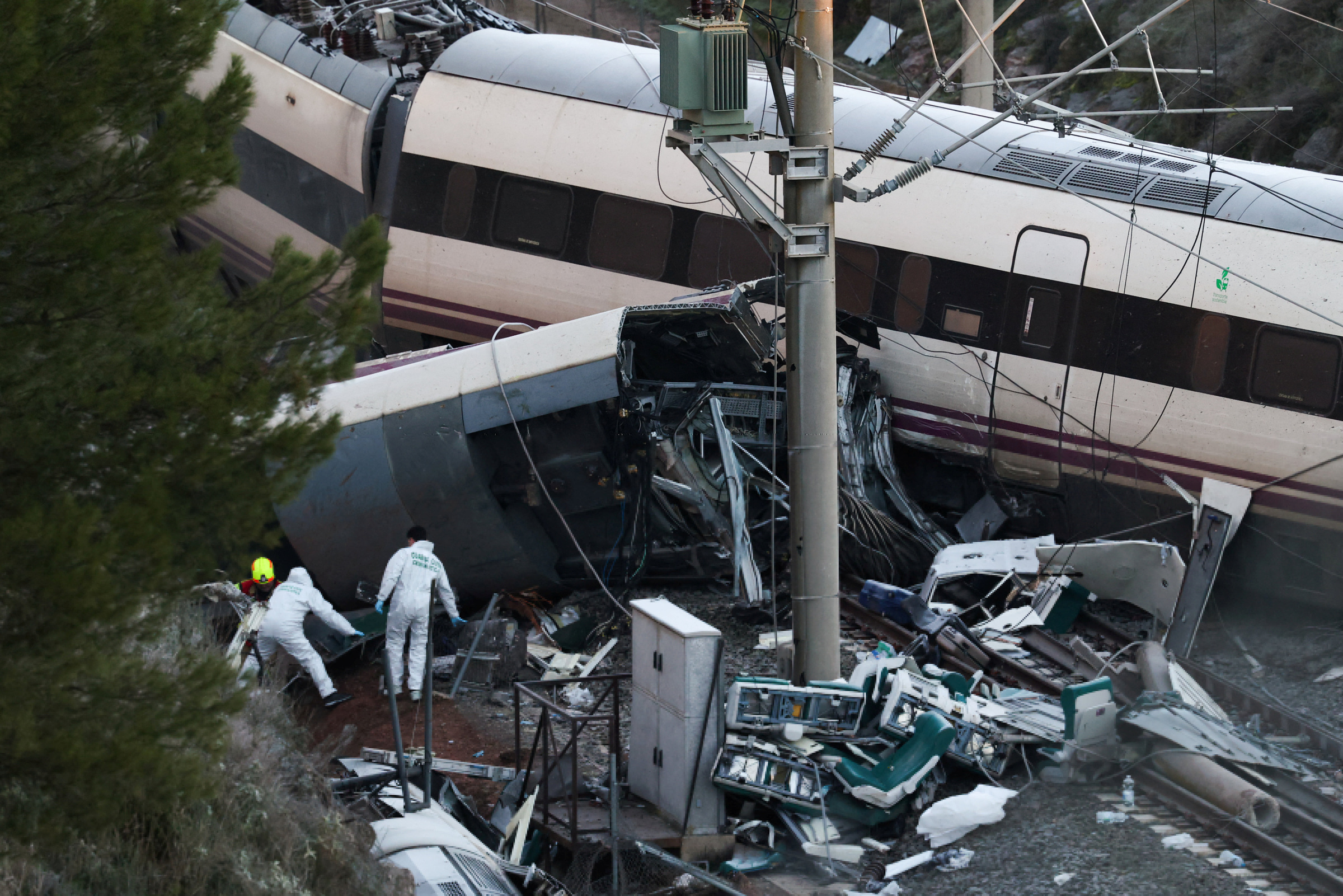 |
Rescue forces search for victims' bodies beneath high-speed train carriages near Adamuz, 19/1. *Photo: Reuters* |
Raquel, a passenger in a sleeping carriage on the Iryo train, told Cadena Ser radio that the impact was so powerful it threw her from her bed, hitting her head on the door. She lost consciousness for a moment before regaining strength, trying to crawl towards the light where firefighters searched for survivors.
Ana Garcia Aranda, 26 years old, an Iryo train passenger, only remembered standing up to find her sister when she heard a strange sound, then everything immediately went dark. Other passengers later pulled Ana, her face covered in injuries, out of the carriage through a broken window. Her pregnant sister was rescued by firefighters and is now in intensive care at a local hospital.
Most passengers on both trains stated they were unaware of the disaster's scale until they were freed. Under the rescue lights, the scene appeared like a nightmare.
Residents of nearby Adamuz reported clearly hearing the train crash's terrifying sound. Mayor Rafael Angel Moreno, who led the first group of residents mobilized to assist, described the scene with a trembling voice: "A horrific sight."
"I saw dismembered body parts, severed arms. My husband saw a dead child inside a carriage and another child crying for his mother. Those images will haunt us forever," Paqui, a nearby farm owner, told Reuters.
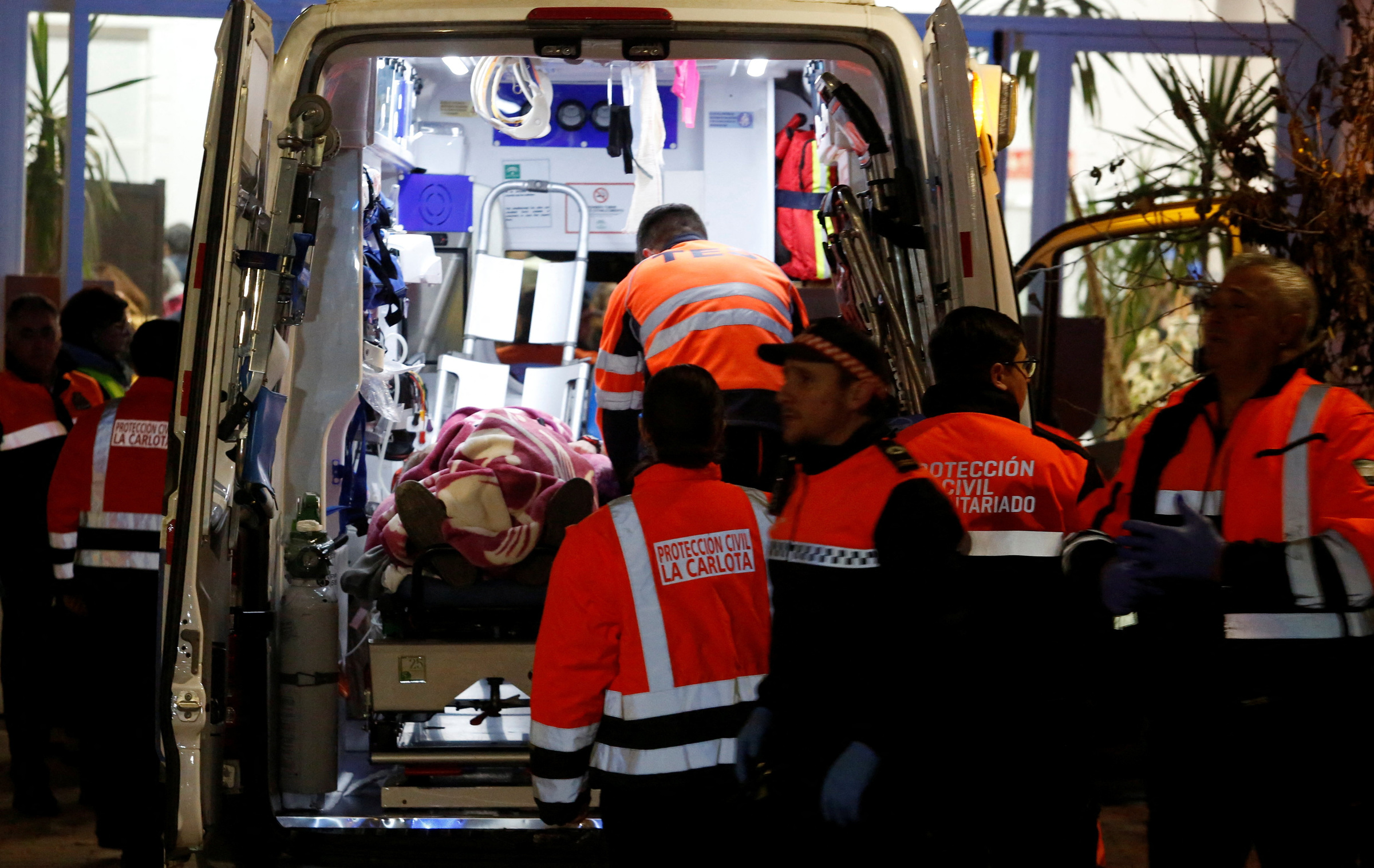 |
Medical personnel transport victims of the Spanish high-speed train crash to ambulances on the night of 18/1. *Photo: Reuters* |
Alvaro Fernandez Heredia, president of the national railway group Renfe, stated that the two trains collided while both were traveling at speeds exceeding 200 km/h. The impact was so severe that rescuers found bodies hundreds of meters from the crash site, according to Andalucia regional premier Juanma Moreno.
"Some cases are truly difficult to identify. I reiterate that the train's impact was very, very great," he said, adding that forensic staff would need to use DNA technology to identify victims.
The disaster's scale shocked even veteran doctors. Francisco Alamillos, 63 years old, a local surgeon, was reading in bed when he received a message from Reina Sofia Hospital: "100 injured people."
He and his wife, also a surgeon, rushed to the hospital. The entrance was crowded with doctors arriving to assist, and wards filled with victims suffering from fractured pelvises, broken legs, and facial injuries. "I have never seen so many injured patients at once in my life," he said.
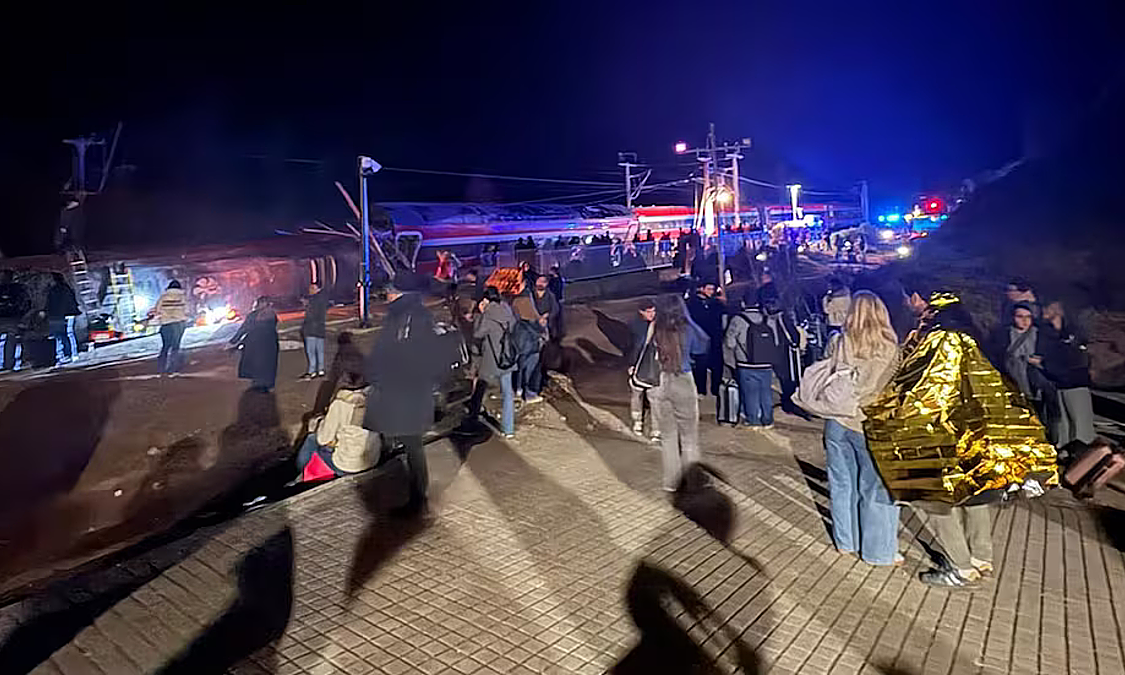 |
Survivors of the two high-speed train collision gather by the roadside awaiting evacuation. *Photo: El Pais* |
The accident has shaken Spain, a nation with Europe's largest and the world's second-largest high-speed rail network. Prime Minister Pedro Sanchez pledged to clarify the tragedy's cause.
Site images released by the Civil Defense Force and media suggest a rail joint fault on the railway could be the cause, but investigators have not yet made preliminary comments or conclusions.
The accident occurred on a nearly straight stretch of track, with no curves that could cause a derailment. This section of track was part of a line that completed a comprehensive upgrade in 5/2025, including rail joints and switch systems, at a total cost exceeding 814 million USD.
In the months before the accident, Spain's railway infrastructure management company had warned of at least eight technical incidents on this high-speed line. Most issues related to signaling systems, although there were also problems with overhead power lines and other infrastructure.
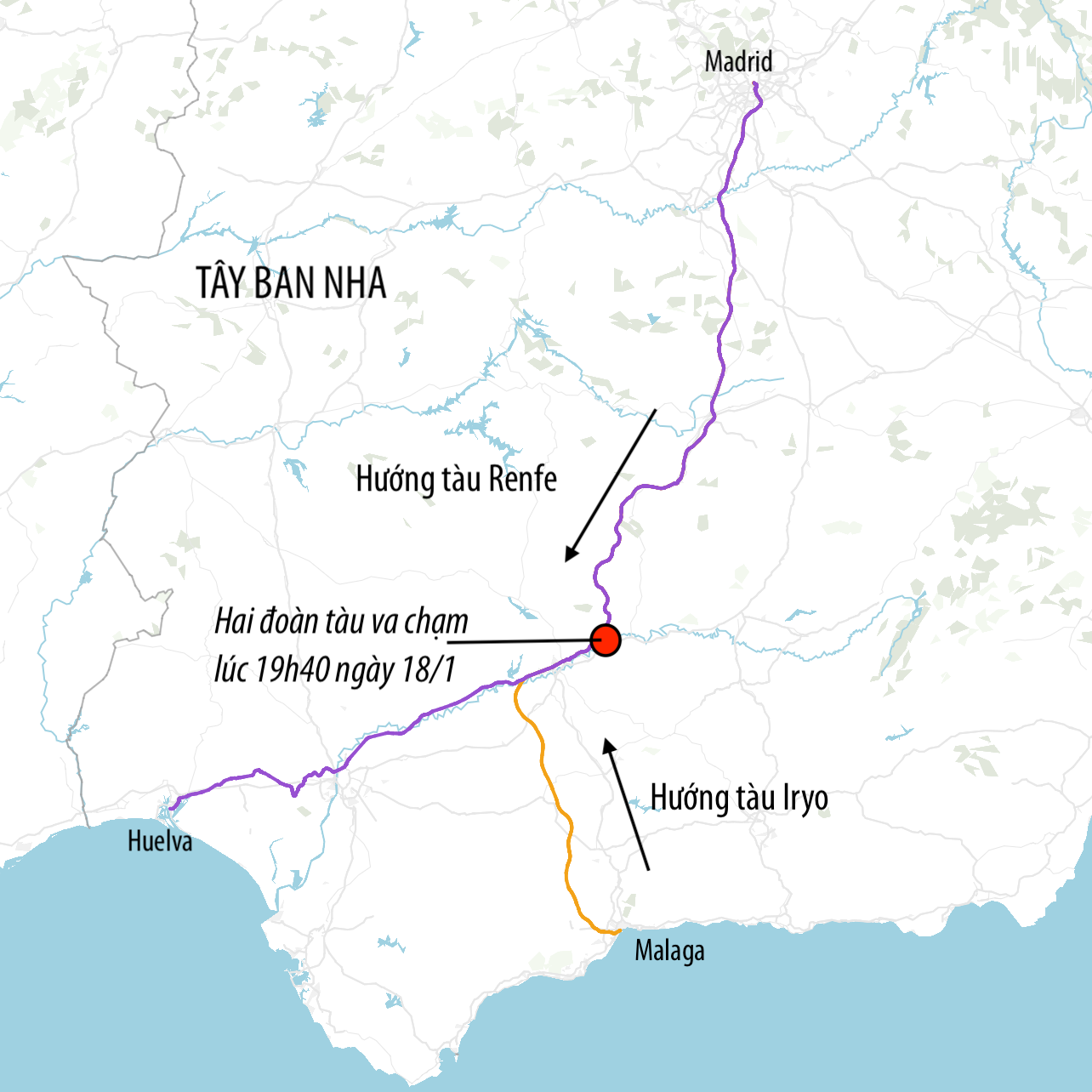 |
The direction of travel of the two high-speed trains and the collision site on 18/1. *Graphic: Telegraph* |
As of 19/1, at least 48 passengers from the two trains remained hospitalized, with 12 in critical condition in intensive care, including children. Rescue forces are still working to access bodies potentially trapped under the overturned carriages, while victim identification faces many challenges.
The family of Ricardo Chamorro Caliz, 57 years old, is searching hospitals and social media. His wife visited every hospital in Cordoba but did not find her husband's name on the admission lists.
In Cordoba, Manuel de la Torre continues to await news of his 79-year-old aunt. She was one of five family members sitting in the first carriage of the Renfe train. He heard that some passengers in the same carriage sustained broken bones, but his aunt remains missing.
"Everyone just waits. But after a whole day, you no longer dare to hope for good news," he said.
Thanh Danh (According to El Pais, Reuters, Times)