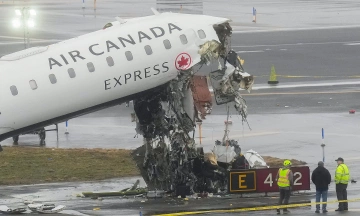
The incident occurred on 27/1 when a WB-57F high-altitude research aircraft, tail number N927NA, operated by NASA, made an emergency landing at Ellington Field Joint Reserve Base in Houston, Texas, US.
Footage from the scene shows the WB-57F descending without deploying its landing gear, making a belly landing that sent sparks flying down the runway. The aircraft slid a significant distance before coming to a stop. Fire trucks approached, but no fire suppression chemicals were needed.
WB-57F aircraft makes emergency landing at Ellington Field base in Houston, Texas, US on 27/1. Video: *KHOU 11*
NASA later confirmed the WB-57F had to make a belly landing at Ellington Field due to a technical issue. "All pilots are safe," the agency stated, adding, "We will thoroughly investigate the cause, collect more data, and update information transparently".
The incident aircraft is NASA's only active WB-57F. The other hai aircraft are grounded, awaiting completion of major periodic inspections. According to NASA, the inspection for tail number N926NA is expected to be completed in 2/2026, while aircraft N928NA has been indefinitely suspended.
"Even if N927NA is deemed repairable and returns to service, the aircraft still faces a risk of being out of commission for an extended period," noted Kai Greet, an editor at the aviation specialist site Aviationist. "Therefore, NASA must re-evaluate the status of aircraft N928NA and complete its inspection to ensure the fleet's operational continuity".
The WB-57F high-altitude research aircraft was built based on the RB-57F reconnaissance aircraft, a version developed from the B-57 bomber airframe, which the US manufactured based on the UK's Canberra model. The RB-57F has a maximum speed of 760 km/h and a range of about 4.600 km.
The WB-57F offers significant value to both NASA and the US military due to its stable operation at altitudes of 18.000 meters and its ability to carry nearly 4 tons of payload. The WB-57F fleet has supported US operations in Afghanistan and participated in airborne information relay tests to connect units.
In recent years, a notable activity of the WB-57F has been carrying cameras to record details of rocket launches and recover spacecraft capsules for technical analysis, including videos of SpaceX's Starship spacecraft tests.
Nguyen Tien (*TWZ, Aviationist, AP*)