European leaders have long hoped to demonstrate collective strength by providing a substantial financial sum for Ukraine's military efforts, large enough to place Kyiv in a stronger negotiating position against Moscow.
That plan still faces obstacles. What was intended as a display of European unity now risks becoming an exhibition of weakness and disarray, as the bloc has been consistently sidelined from US-brokered peace talks for Ukraine.
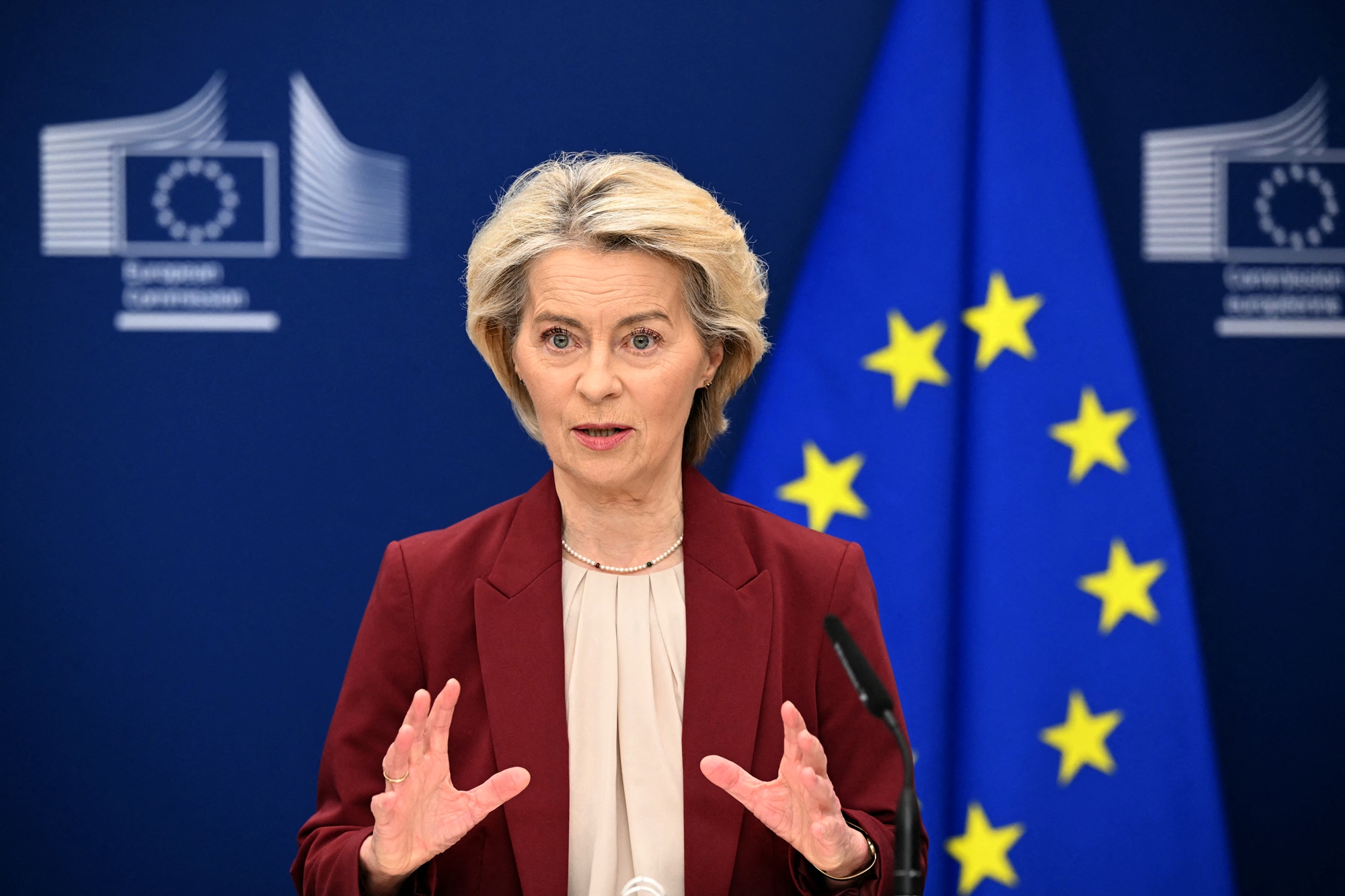 |
European Commission (EC) President Ursula von der Leyen at a press conference in Brussels, Belgium, on 3/12. Photo: AFP |
At the core of the plan are 244 billion USD in Russian state assets frozen at the international depository Euroclear in Belgium. European leaders aim to use these assets to provide a "reparations loan" to Ukraine, but the method for doing so remains undecided.
In the latest effort to advance the plan, European Union (EU) policymakers on 3/12 unveiled an updated version. This includes flexible legal solutions designed to facilitate the proposal's implementation without requiring unanimous consent from every member state.
These ideas will be reviewed at a summit of European leaders in Brussels, Belgium, on 18/12. However, Belgium continues to express skepticism. Diplomats and analysts have begun to acknowledge that Europe may be compelled to offer Ukraine a more modest financial support package.
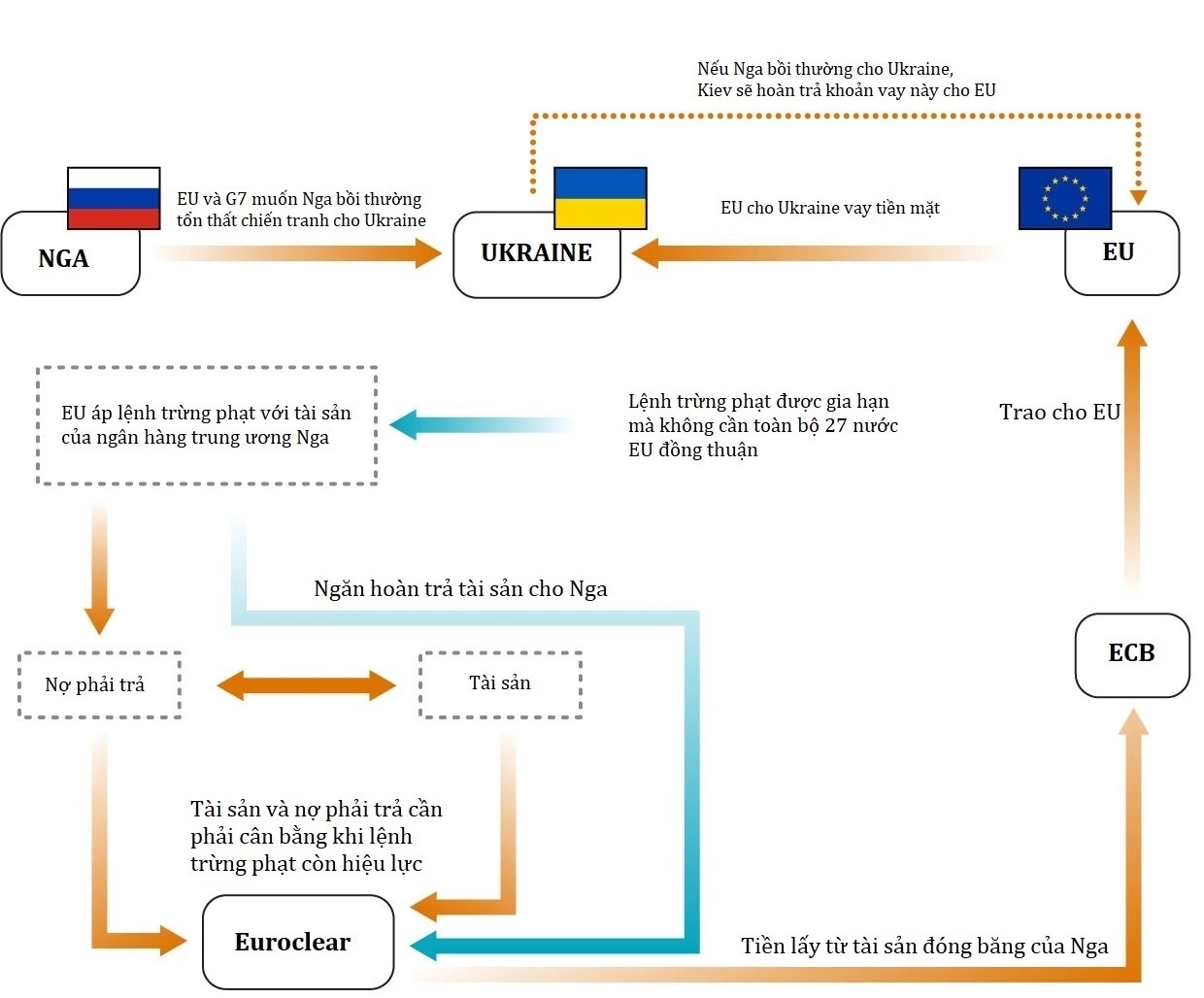 |
The plan to use frozen Russian assets to support Ukraine. Graphics: WSJ |
Over the past year, Europe has struggled to demonstrate its ability to coordinate cohesively and act decisively as Russia escalates pressure on Ukraine and Washington reduces its support for Kyiv.
European nations are racing to bolster their self-defense capabilities and have pledged more national budgets for military projects. Despite these efforts, implementation has proven difficult. A plan for close cooperation with the UK on a major joint EU military procurement project collapsed at the last minute.
Plans to accelerate EU membership for countries like Ukraine have met strong opposition from Hungary.
When European leaders committed to building a "drone wall" to protect the bloc's eastern flank from airspace incursions, the name was immediately rejected. Member states further west did not want to create an image of the EU only protecting its eastern border.
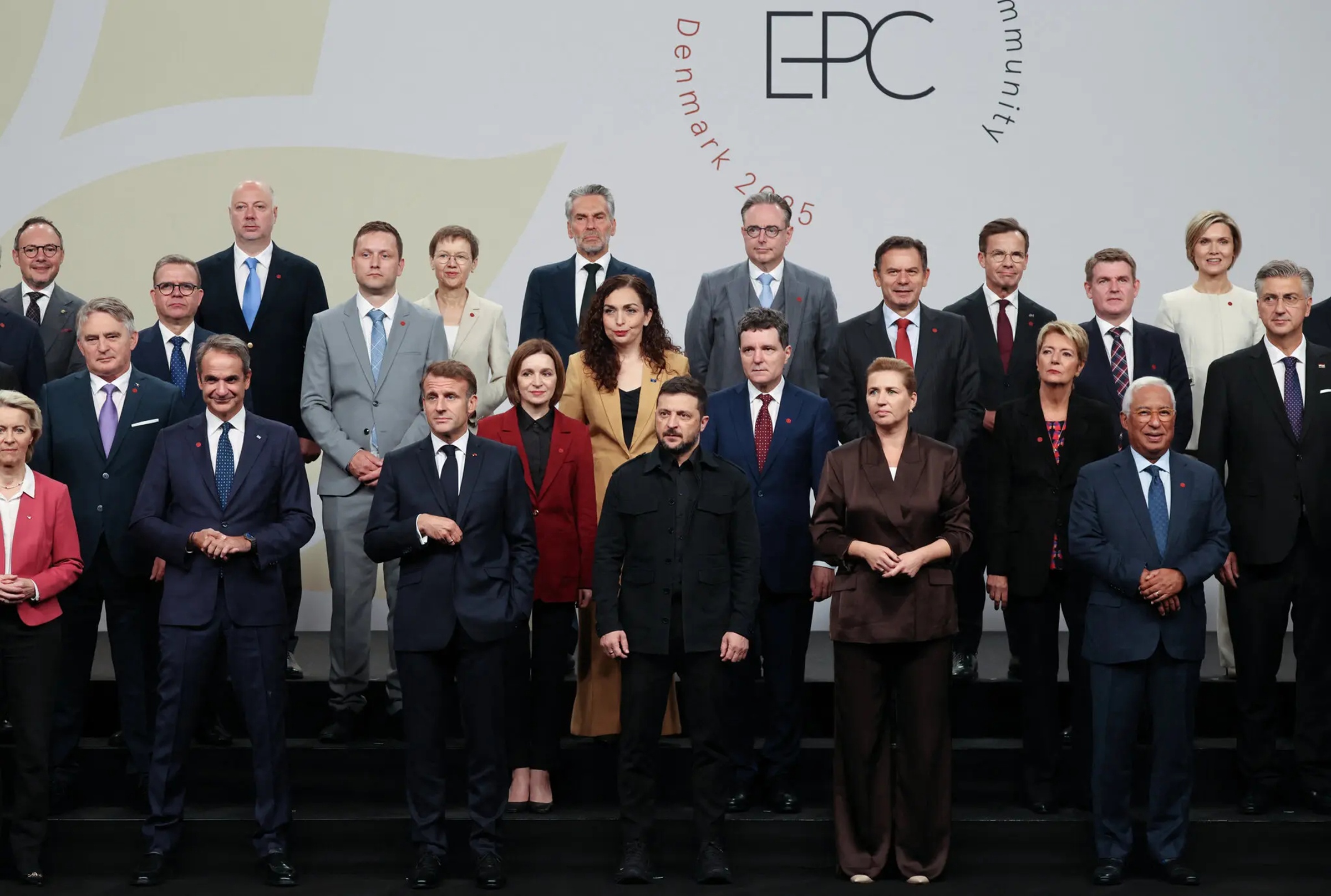 |
European leaders pose for a group photo at the 7th European Political Community Summit at Bella Center, Copenhagen, Denmark, last October. Photo: AFP |
Disagreement has seemingly become an inherent part of EU policy decisions. The idea of granting a loan to Ukraine from frozen Russian assets serves as an example.
The EU intends to disburse the funds gradually, starting with nearly 52,5 billion USD annually over the next two years. Ukraine would only be required to repay the loan if Russia pays reparations for conflict damages.
The EU believes that with such a large sum, the Kremlin will realize Ukraine can continue fighting for years. With improved financial standing, President Volodymyr Zelensky and the Ukrainian government would be in a much stronger position for peace negotiations with Russia.
"We can equip them with the means to defend themselves and to pursue peace negotiations from a stronger position," European Commission (EC) President Ursula von der Leyen stated at a press conference on 3/12.
However, from the outset, European policymakers faced challenges in maintaining bloc unity. Prior to a meeting of European leaders last October, many EU officials were confident that Belgium, known for its cautious stance, would agree to the plan.
Belgian leaders, however, continued to oppose the idea. They worried that if Russia deemed the plan an illegal seizure of funds and filed a lawsuit, Belgium could face legal liability. Belgium requested the EC, the EU's executive body, to provide detailed options to address potential legal risks.
Belgian officials have reinforced their opposition in recent weeks, especially after former President Donald Trump's 28-point peace plan was leaked, which included content on using frozen Russian assets.
The US plan proposed that 100 billion USD in frozen Russian assets would be invested in US-led efforts to rebuild and invest in Ukraine. The US would receive 50% of the profits from this investment. Europe would contribute an additional 100 billion USD to increase the total investment for Ukraine's reconstruction. The remaining frozen Russian assets would be invested in a joint US-Russia fund for specific projects.
"It makes it clear to everyone that those assets can play a significant role in a peace plan," said Belgian Foreign Minister Maxime Prevot.
Belgian Prime Minister Bart de Wever called the EU plan a "fundamental mistake" and warned that it could even hinder a peace agreement. Foreign Minister Prevot stated on 3/12 that the updated plan still "does not adequately address our concerns."
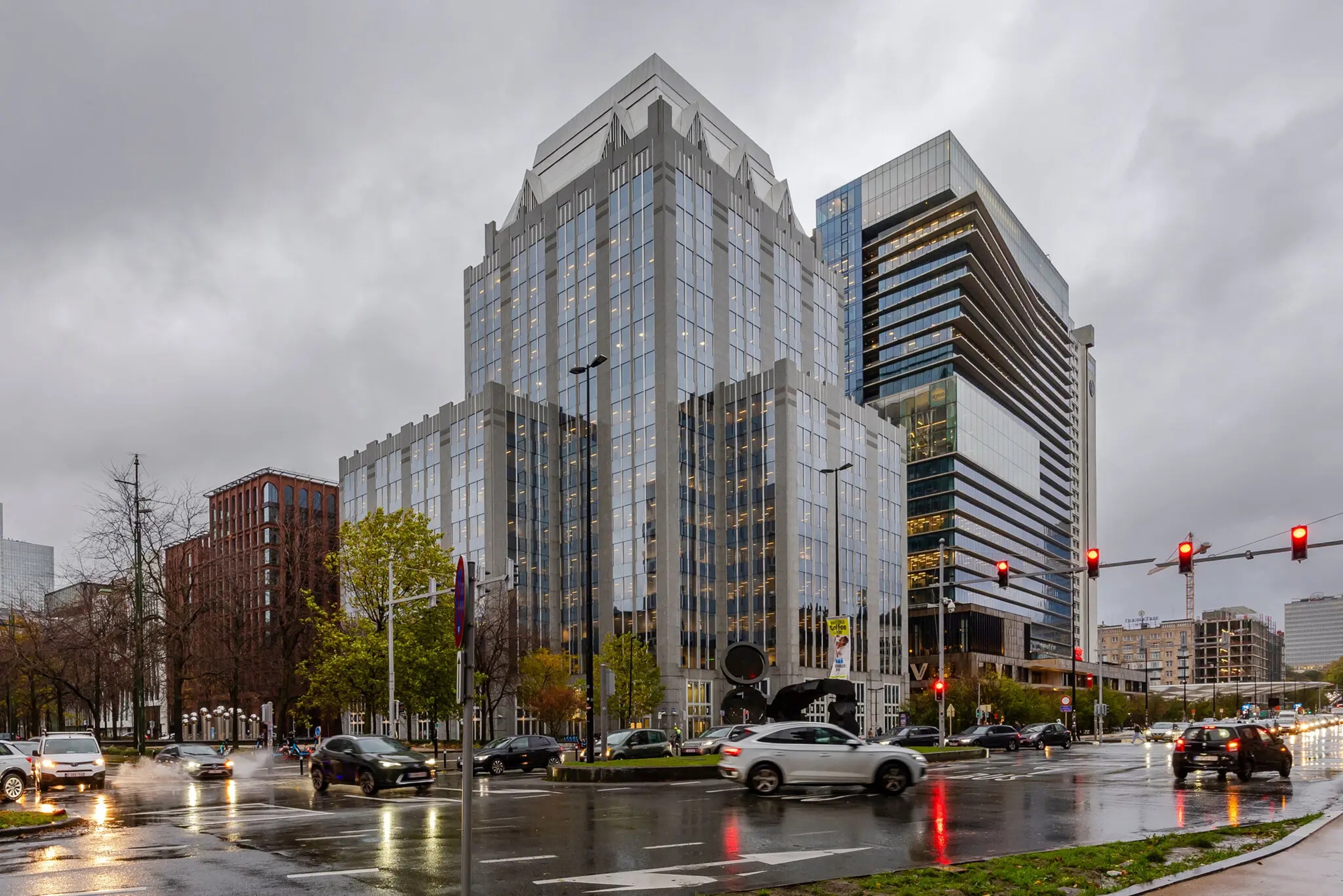 |
Euroclear headquarters in Brussels, Belgium. Photo: AP |
Mujtaba Rahman, managing director for Europe at political risk consultancy Eurasia Group, believes the EU can still reach a consensus on this issue, though it will take more time.
If the plan fails, the EU suggests it could use existing budget flexibility to borrow money through common debt, a less ambitious alternative. The exact amount that could be borrowed has not been determined.
"Europe will have to spend money on Ukraine because there is no other option," Rahman said.
However, if the EU ultimately provides a smaller funding package for Ukraine, this could indicate the bloc's inability to unify on major decisions at critical junctures.
Analysts warn this risks making Europe appear weaker, further marginalizing it in Russia-Ukraine peace talks. With the backing of an indecisive Europe and a less impressive funding package, Ukraine could be pushed into a worse negotiating position.
"If Europe is not successful, Ukraine risks being pressured to accept an unfavorable peace deal," commented Daniel Hegedus, an expert from the Washington-based German Marshall Fund.
"This is a decisive moment for Europe's success and its importance on the global stage," Hegedus added.
Vu Hoang (According to Reuters, AFP, AP)