Colombia's Foreign Ministry announced on 24/9 that diplomatic relations with Iran were "officially severed" on 19/9. This decision followed Bogota's review of its foreign policy pillars, focusing on national security, Western Hemisphere security, and the fight against transnational crime.
Bogota cited several reasons for this move. These included Iran's attacks on Gulf states not involved in the Middle East conflict, its blockade of the Strait of Hormuz, and Tehran's obstruction of International Atomic Energy Agency (IAEA) inspectors from accessing nuclear facilities.
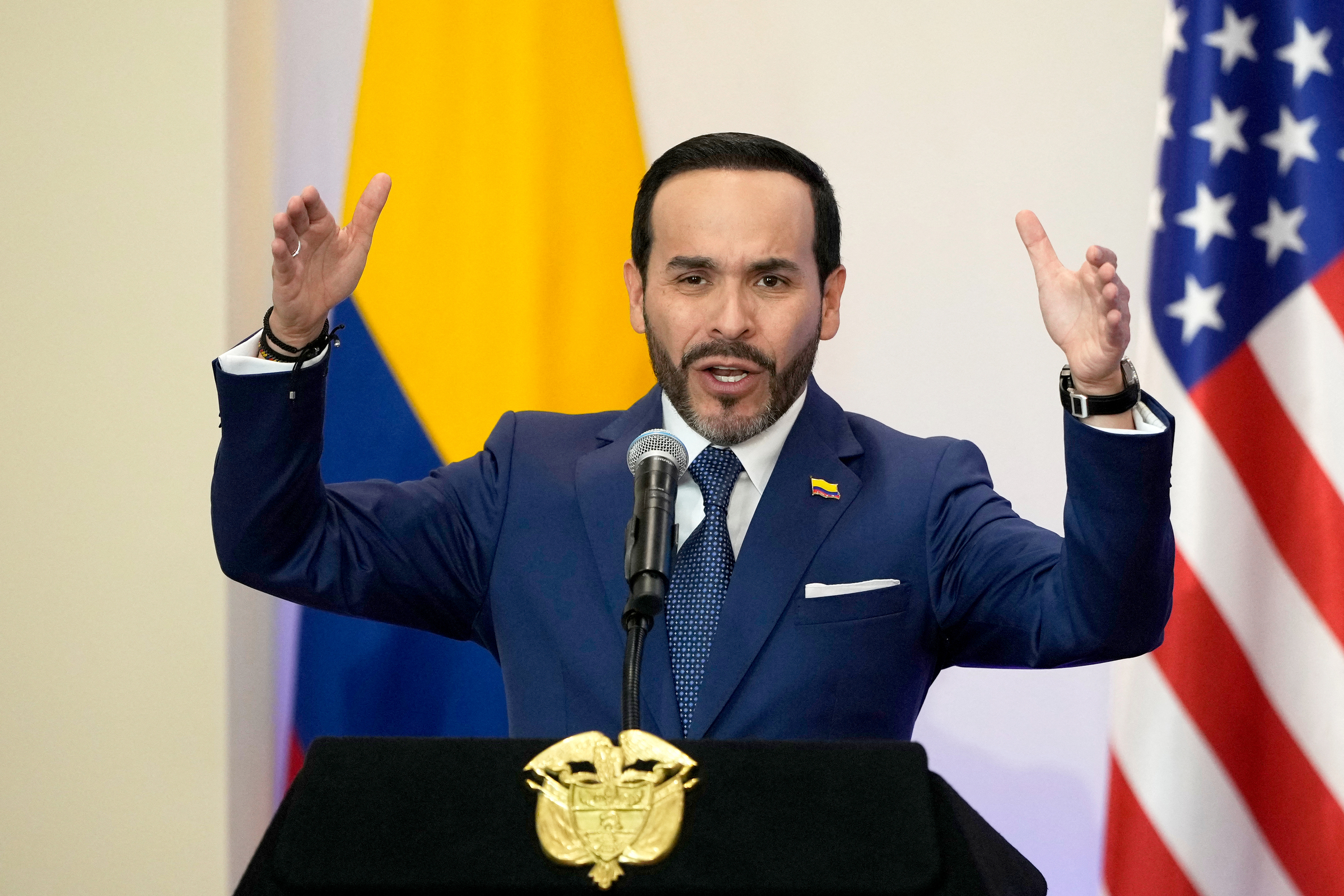 |
Colombian President Abelardo de la Espriella at a press conference in Barranquilla on 8/9. *Photo: AFP*
The administration of new President Abelardo de la Espriella also accused the Iranian government of links to "narco-terrorist" organizations threatening Colombia's security. However, no specific evidence was provided to support these claims.
The Iranian government has not yet commented on Colombia's statement.
Severing diplomatic relations does not mean an end to consular ties between the two nations. Colombia's Foreign Ministry stated that consular relations would be maintained under the provisions of the 1961 Vienna Convention on Diplomatic Relations and the 1963 Vienna Convention on Consular Relations. Bogota will inform Tehran of the necessary procedures in due course.
This decision was announced nearly two months after President Espriella took office, succeeding Gustavo Petro. The new Colombian government has significantly shifted its foreign policy, aligning with the stance of US President Donald Trump.
Thanh Danh (According to AFP, TASS)