"Today, we have put forward proposals to meet two-thirds of Ukraine's financial needs for the next two years," European Commission (EC) President Ursula von der Leyen told reporters on 3/12, presenting the legal basis for the plan to support Kyiv. "The figure is 90 billion euros (105 billion USD); the remainder will be covered by international partners."
Von der Leyen explained that the funds would be raised by borrowing from the EU or by using frozen Russian central bank assets in Europe to provide a "reparations loan" to Ukraine. This option is being championed by the EC and many EU member states.
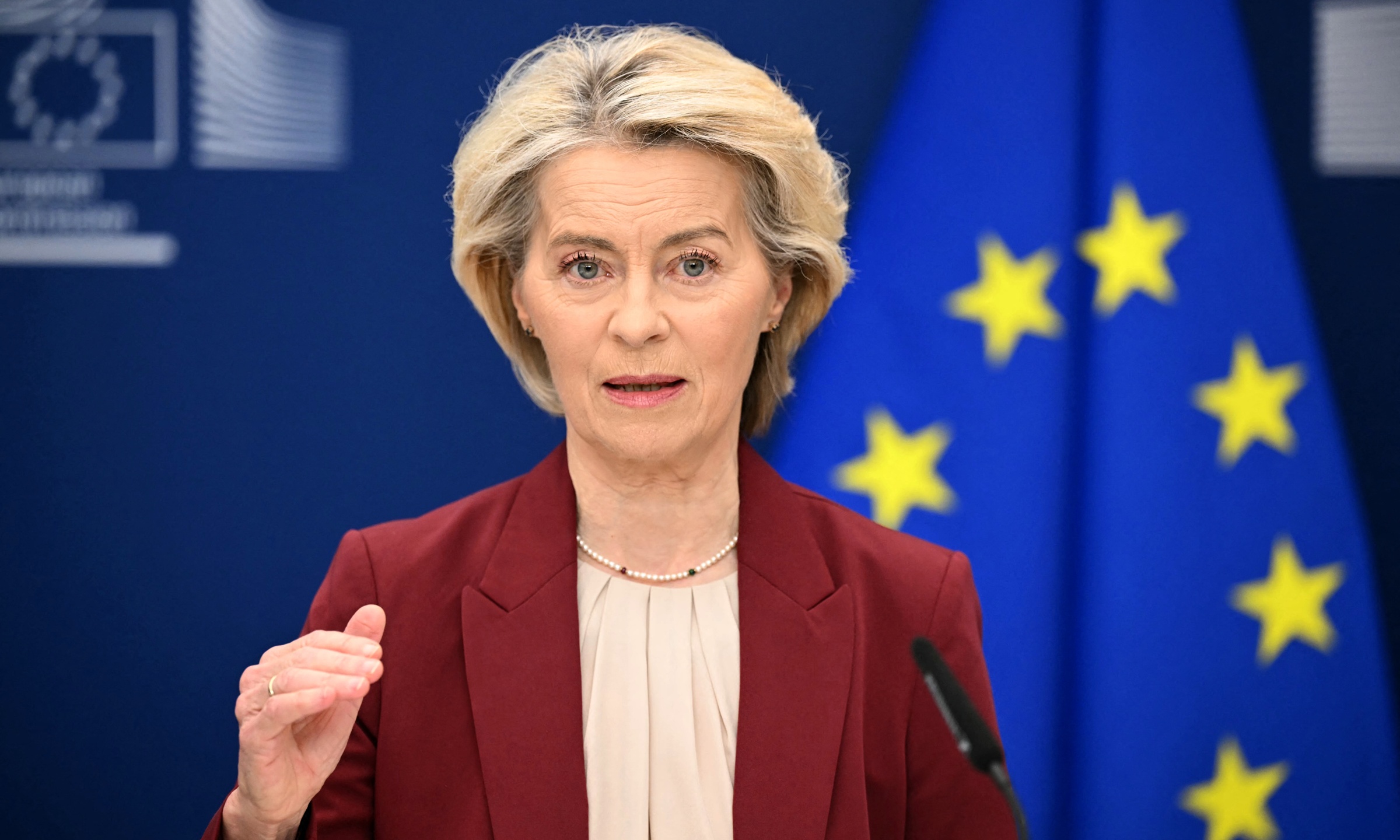 |
European Commission (EC) President Ursula Von der Leyen at a press conference in Brussels, Belgium, on 3/12. *Photo: AFP*
According to her, this funding will allow Kyiv to "conduct peace negotiations from a stronger position" as the US pressures Ukraine to quickly reach a conflict-ending agreement with Russia.
EU leaders have pledged to maintain financial support for Ukraine next year and affirmed their determination to reach a consensus on the funding's origin at the upcoming summit on 18/12.
However, Belgium, home to the international securities depository Euroclear, which holds a large portion of the frozen Russian assets, continues to oppose the plan. It fears severe legal and financial retaliation from Moscow.
Belgian Foreign Minister Maxime Prevot noted that the legal grounds presented by Von der Leyen "do not adequately address our concerns."
"We have repeatedly stated that Belgium considers the reparations loan option the worst of all choices because it is risky and unprecedented," he said. "This explains why we continue to call for an alternative, specifically for the EU to borrow the necessary funds on the market."
The Belgian government emphasizes its desire for firm assurances from other EU nations that legal responsibility will be shared. The EC, meanwhile, asserts it has established a "three-tiered defense system" to shield Belgium from legal risks. The Commission also stated it seeks to utilize Russian assets held not only in Belgium but also approximately 29 billion USD in other countries.
Under the EU's proposed plan, Ukraine would only repay the loan if Russia compensates the country for conflict damages. Despite its strong opposition, Belgium may ultimately yield to EU pressure regarding the use of frozen Russian assets.
Von der Leyen stated the initiative could be approved by a majority vote of EU members, without requiring absolute consensus.
"We support this, and of course, we are also seriously considering Belgium's concerns," German Foreign Minister Johann Wadephul said. "Those concerns are legitimate, but the issue can still be resolved if we are united and willing to take responsibility."
Vu Hoang (According to AFP)