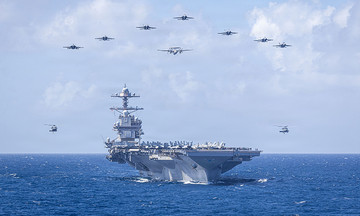
Israeli media reported that the US aircraft carrier USS Gerald R. Ford was expected to dock in Haifa today, after departing its base on Crete island, Greece, en route to the Middle Eastern nation. Haifa is approximately 1,500 km from Tehran, Iran's capital.
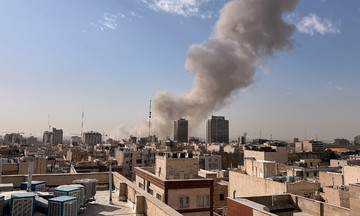
However, it remains unclear if this plan will change following the large-scale airstrikes launched by the US and Israel against Iran.
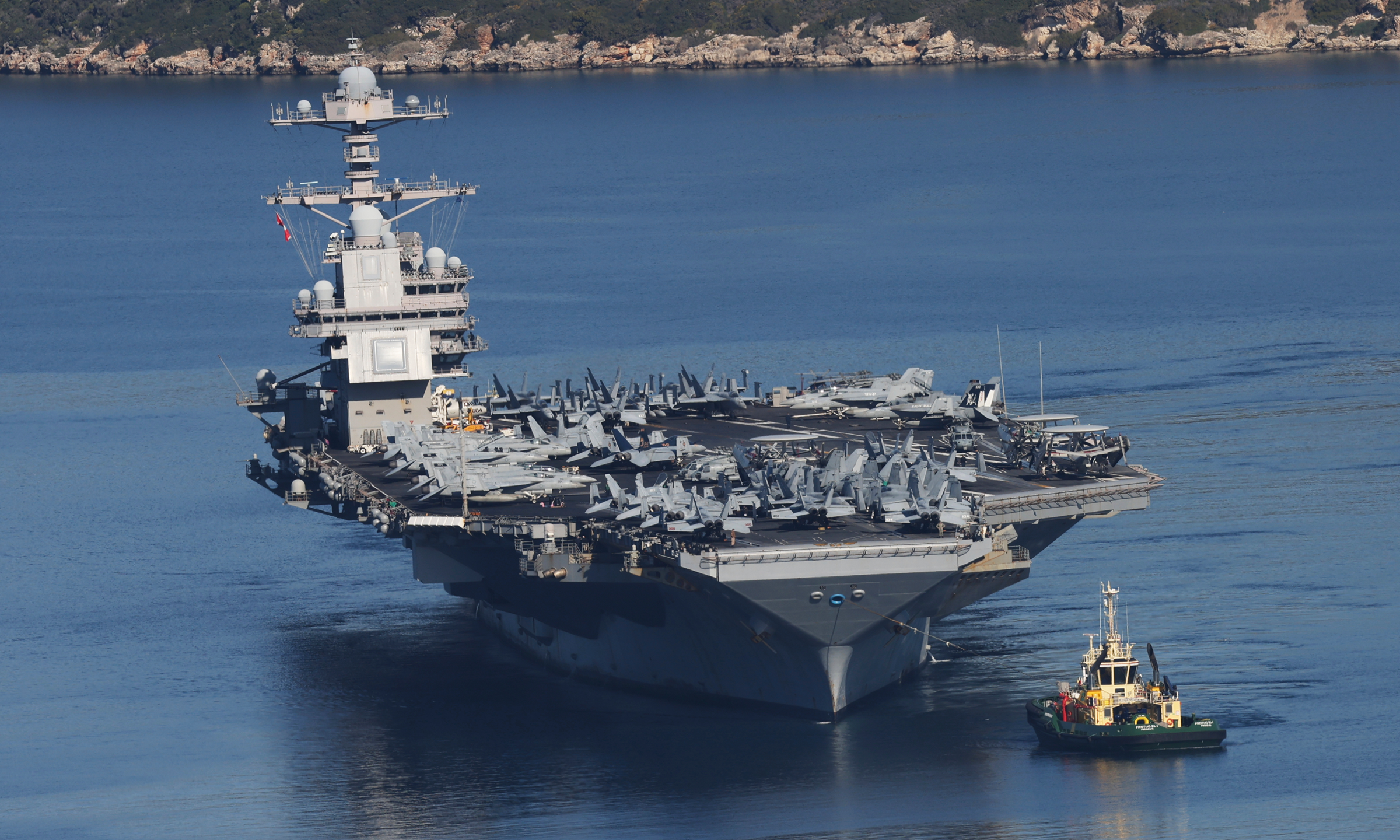 |
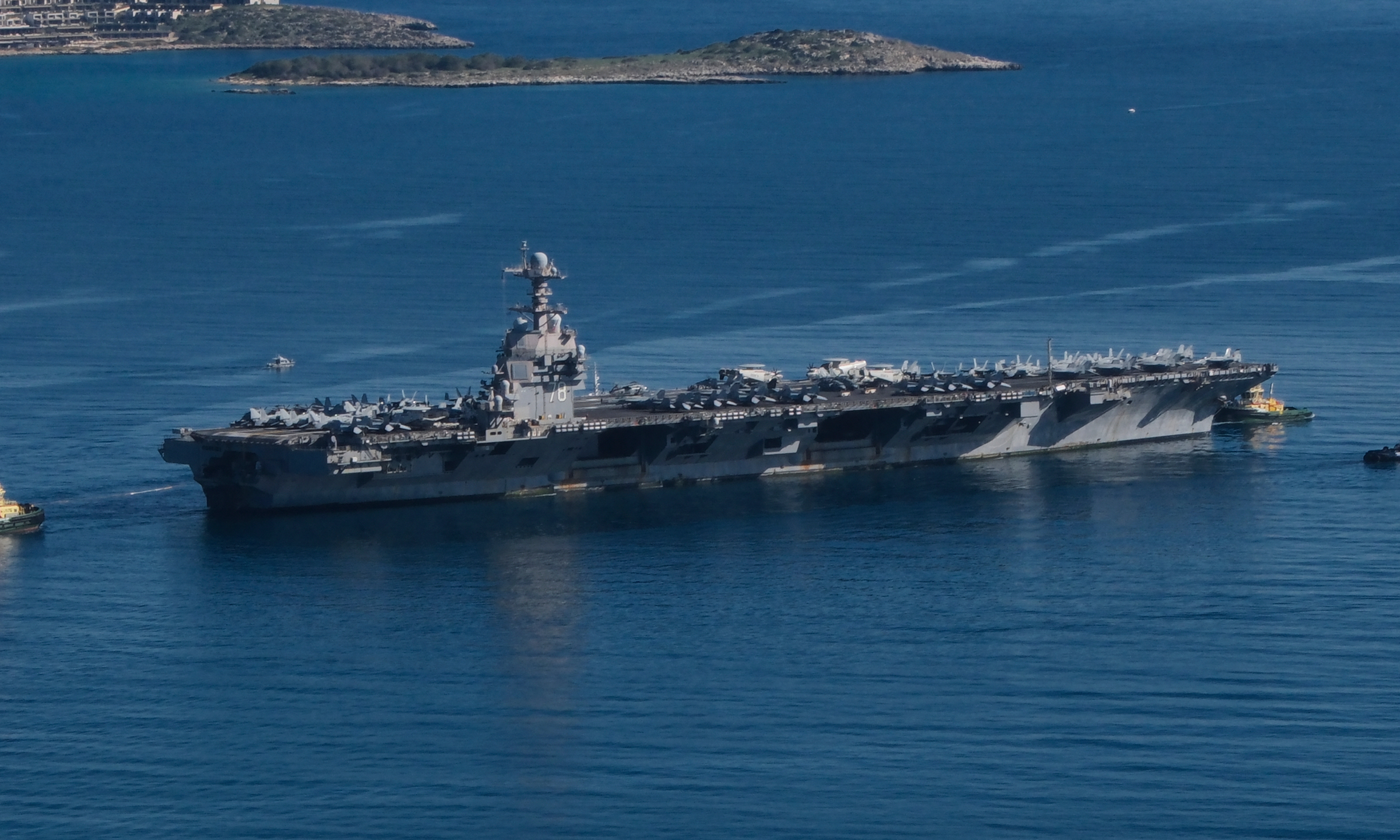
USS Gerald R. Ford leaving Souda naval base on Crete on february 26.
At 337 m long and 78 m wide, the USS Gerald R. Ford is currently the world's largest aircraft carrier. It is also the most expensive warship in US naval history, with a delivery cost of nearly USD 13 billion.
Its escort group includes the destroyers: USS Winston S. Churchill, USS Bainbridge, USS Mahan, and USS Forrest Sherman, along with at least one nuclear attack submarine. Each vessel can carry dozens of various missiles and is equipped with sensor systems to monitor vast surrounding airspace and sea areas.
 |
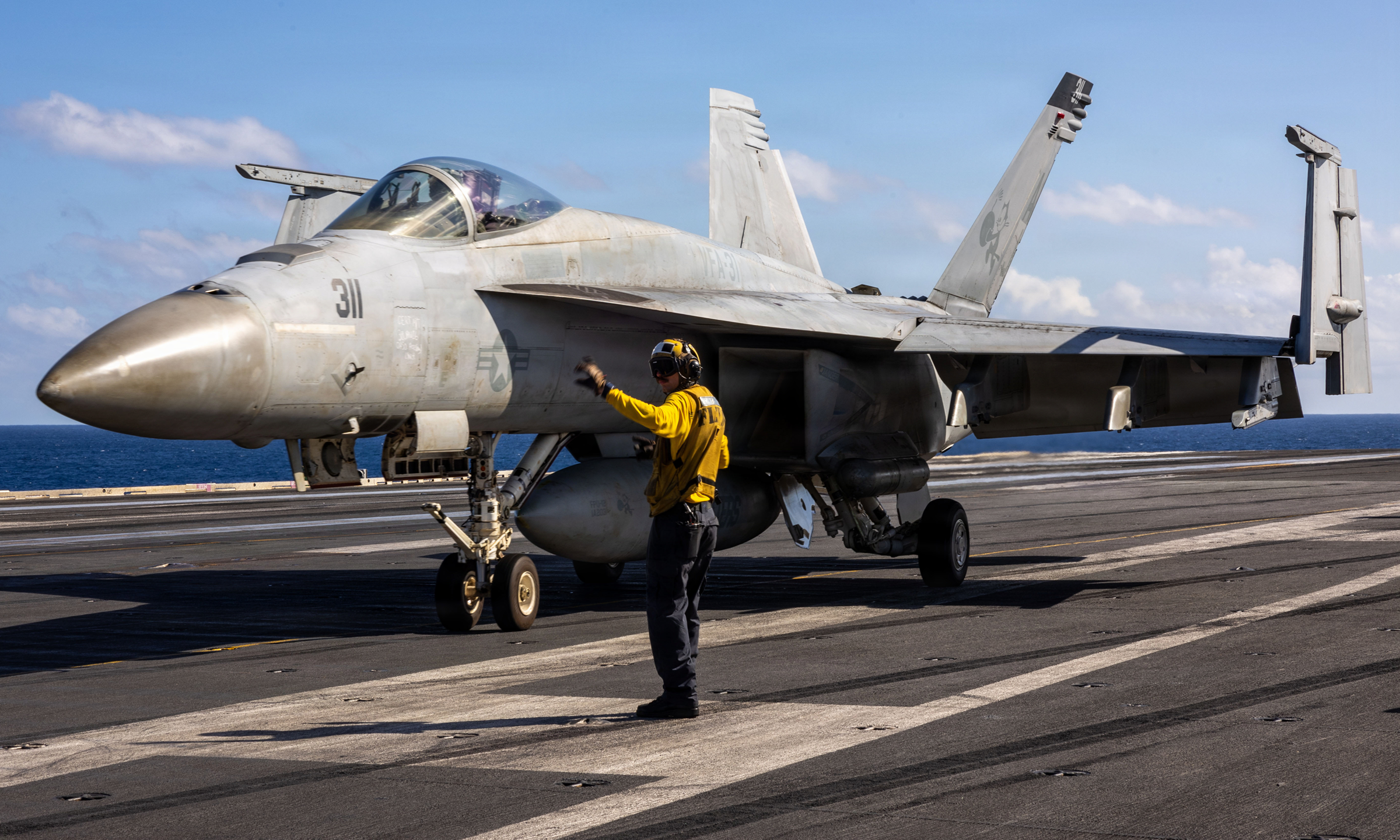
An F/A-18E Super Hornet moving on the flight deck of the USS Gerald R. Ford in the Caribbean Sea on january 30.
The warship can carry a maximum of 75 aircraft and has a crew of nearly 4,500 personnel, about 1,000 fewer sailors than its predecessor, the Nimitz-class.
 |
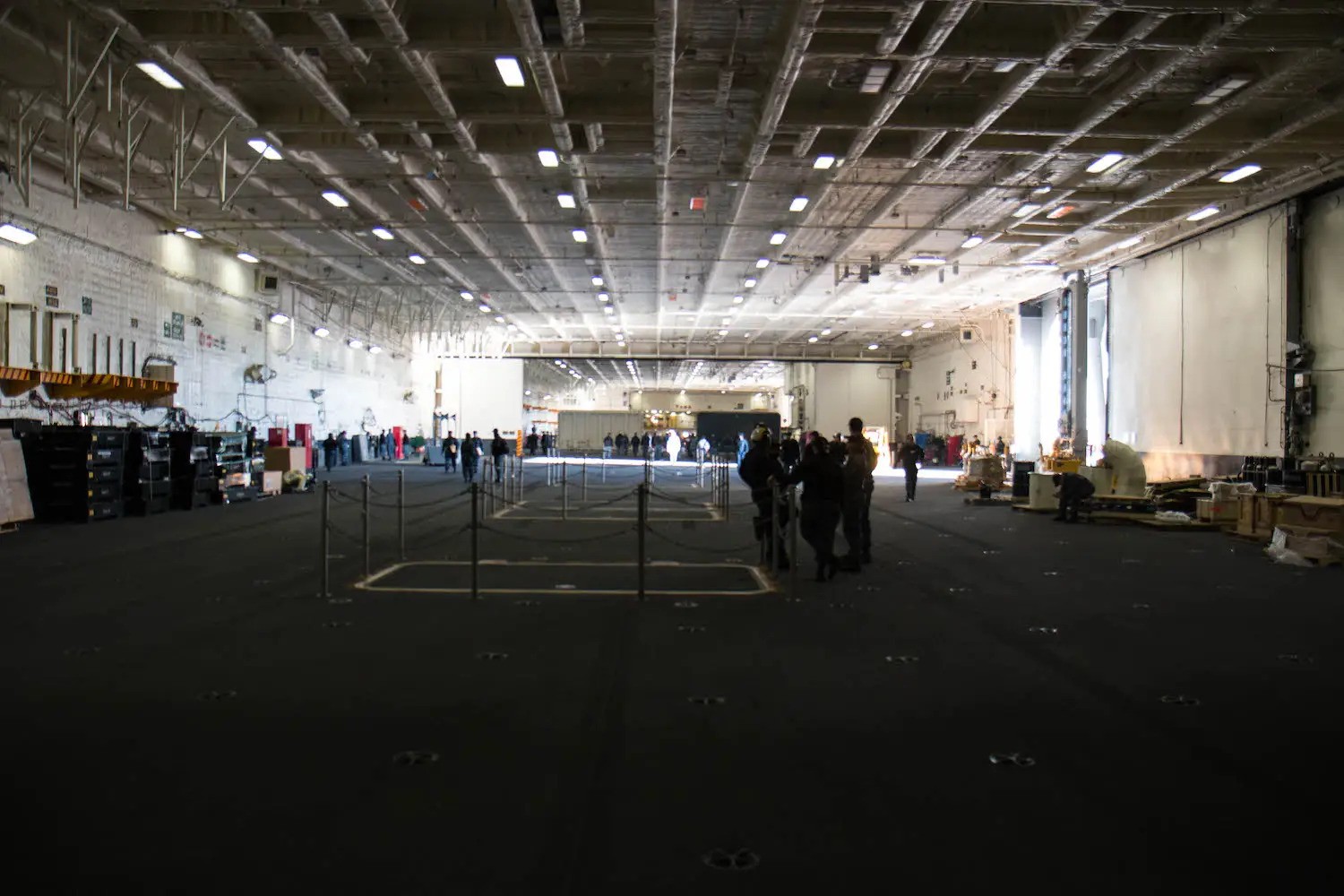
The aircraft hangar below the Ford warship's flight deck.
This area is where the crew stores aircraft when not on duty, and conducts repairs and maintenance.
 |
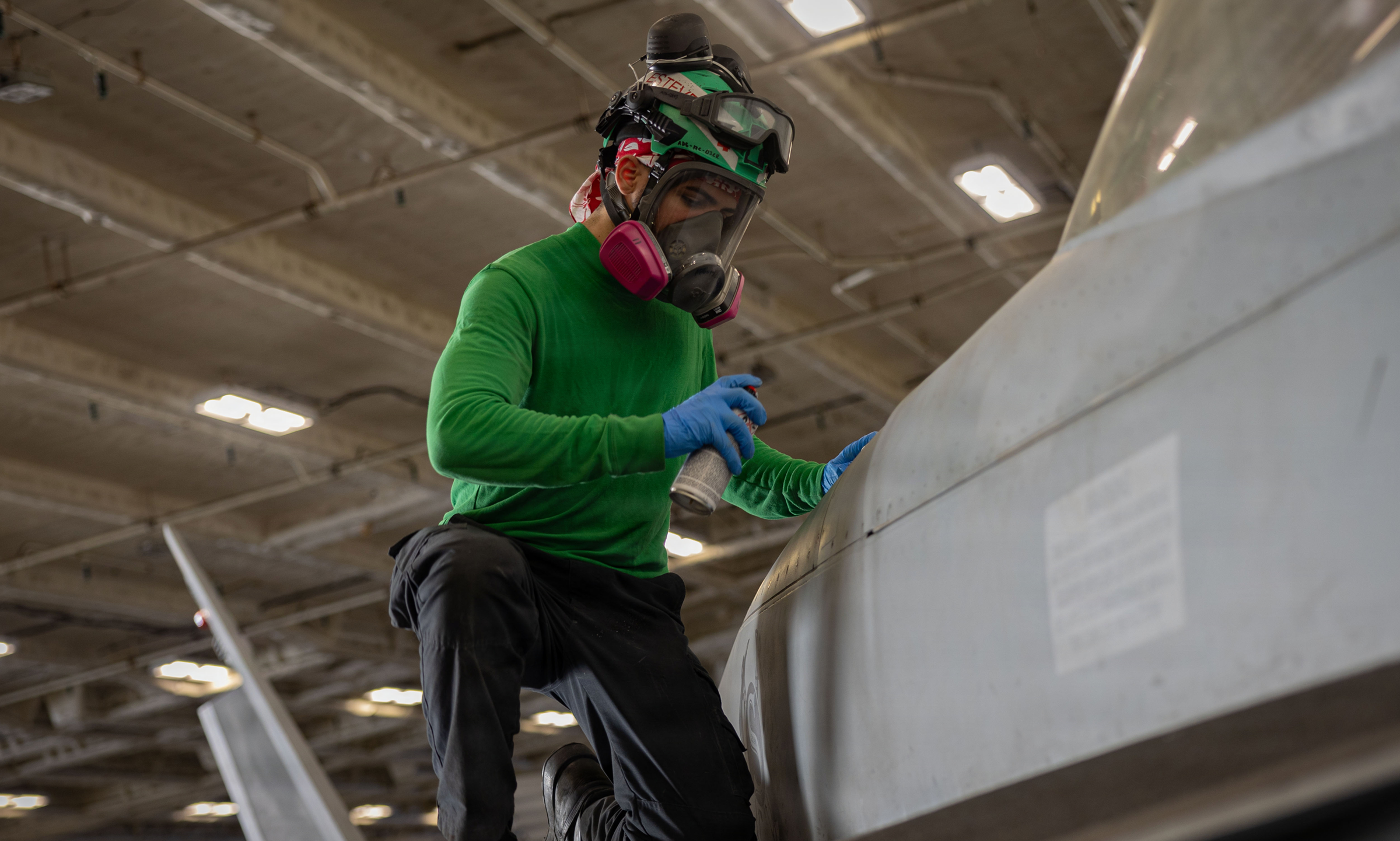
US military personnel repainting an F/A-18E Super Hornet inside the aircraft hangar.
The USS Gerald R. Ford is equipped with a new nuclear reactor, which provides 25% more electrical power than the Nimitz-class aircraft carrier's model, while requiring only half the personnel to operate, according to the US Department of Energy.
 |
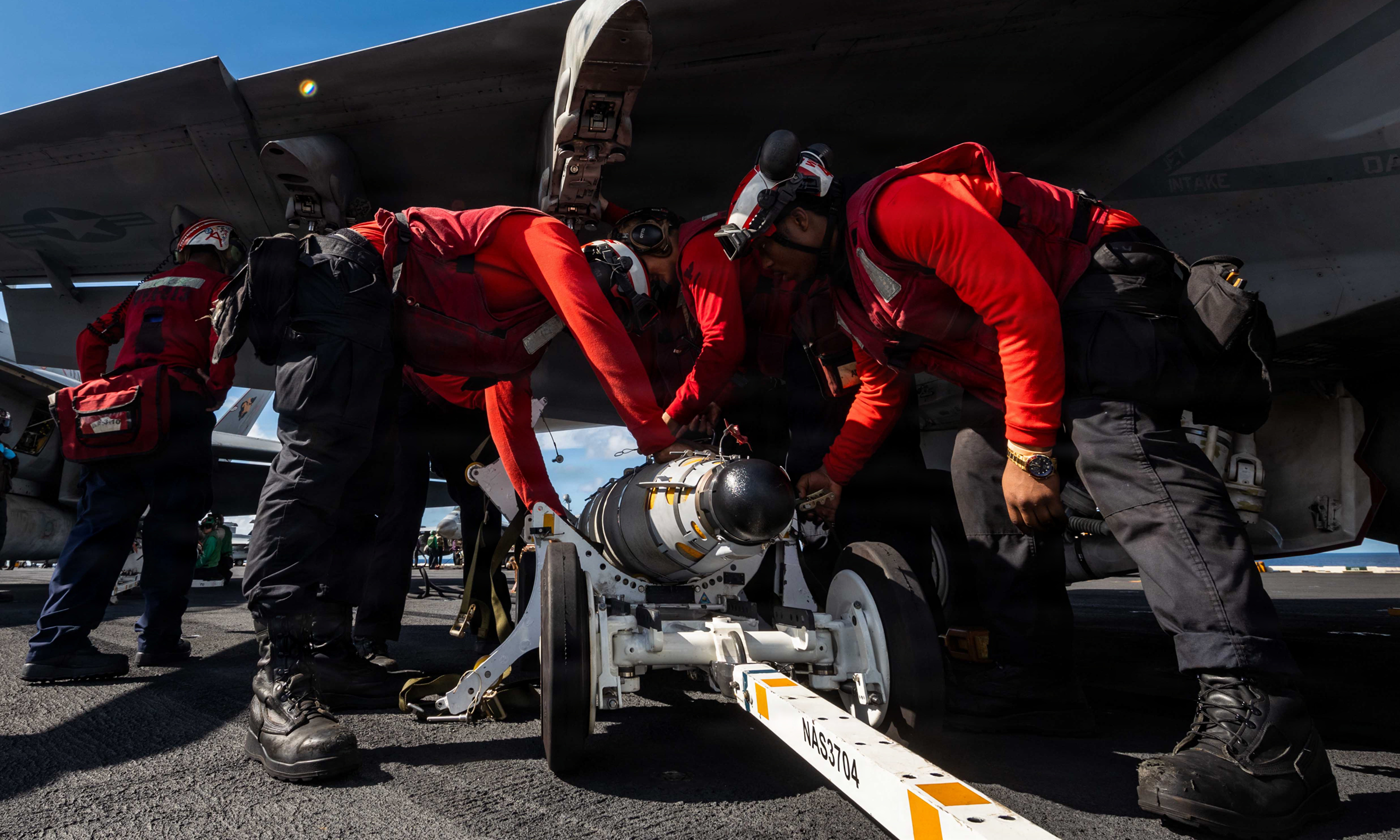
Technicians preparing to load a GBU-54 guided bomb onto a Super Hornet fighter jet. F/A-18E/F squadrons can carry 225, 450, and 900 kg bombs. They can be equipped with laser or GPS satellite guidance kits for increased precision during strikes.
The primary offensive capability of the USS Gerald R. Ford comes from its four F/A-18E/F fighter squadrons. This aircraft model can carry various guided bombs, rockets, anti-ship, and air-to-air missiles. Additionally, it carries EA-18G electronic warfare aircraft and utility helicopters.
However, the USS Gerald R. Ford will need upgrades to operate F-35C stealth fighter jets, as the design of this combat aircraft was finalized after the Ford aircraft carrier was launched.
 |
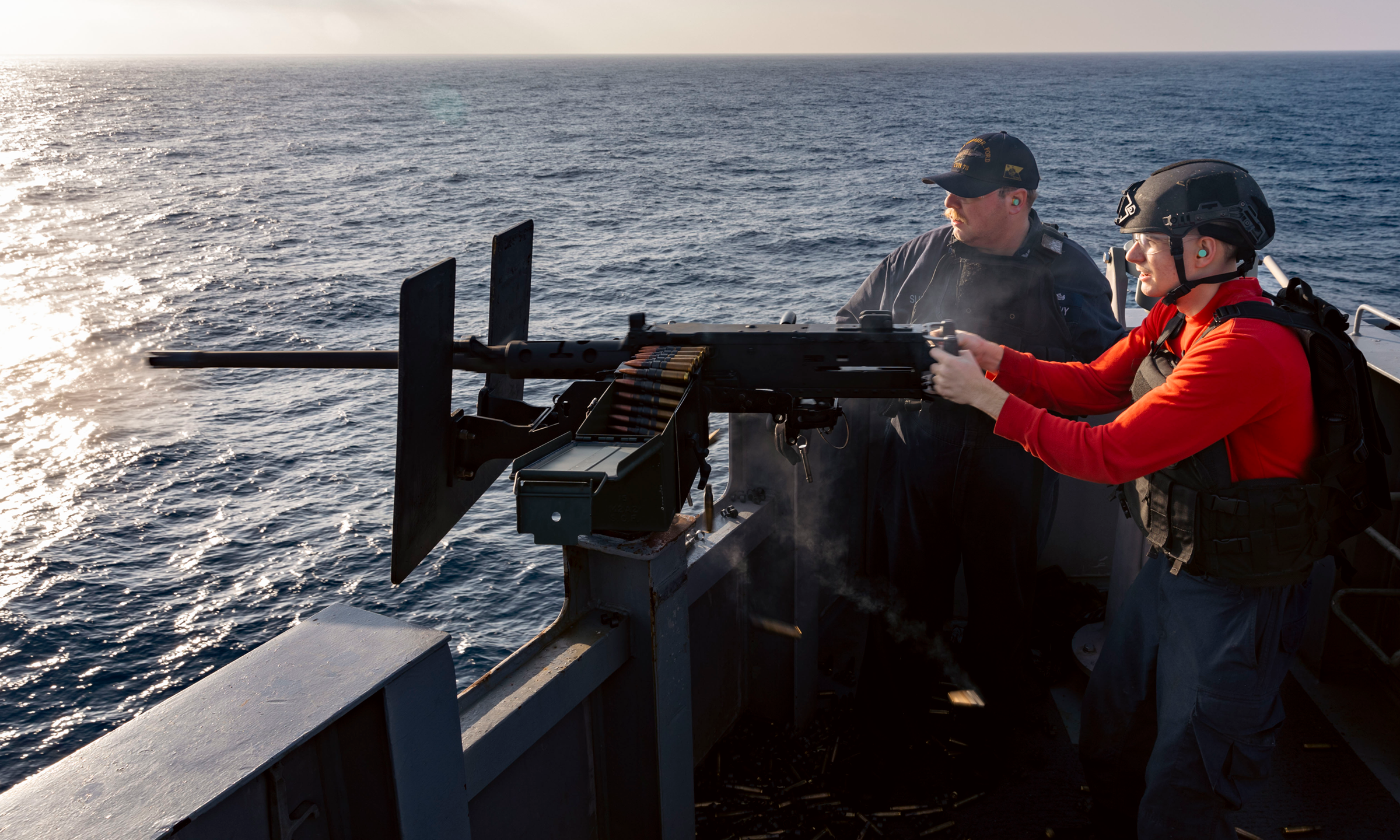
US military personnel firing a machine gun on the Ford during an exercise.
To counter small boats, the USS Gerald R. Ford is equipped with 12,7 mm caliber machine guns and 25 mm autocannons.
For extremely close-range defense, the aircraft carrier is fitted with 20 mm Phalanx close-in weapon systems, firing thousands of rounds per minute, serving as the last line of defense against enemy missiles and drones.
The USS Gerald R. Ford is also equipped with short-range air defense missile launchers, while long-range air defense duties are handled by its destroyers and carrier-borne fighter jets.
 |
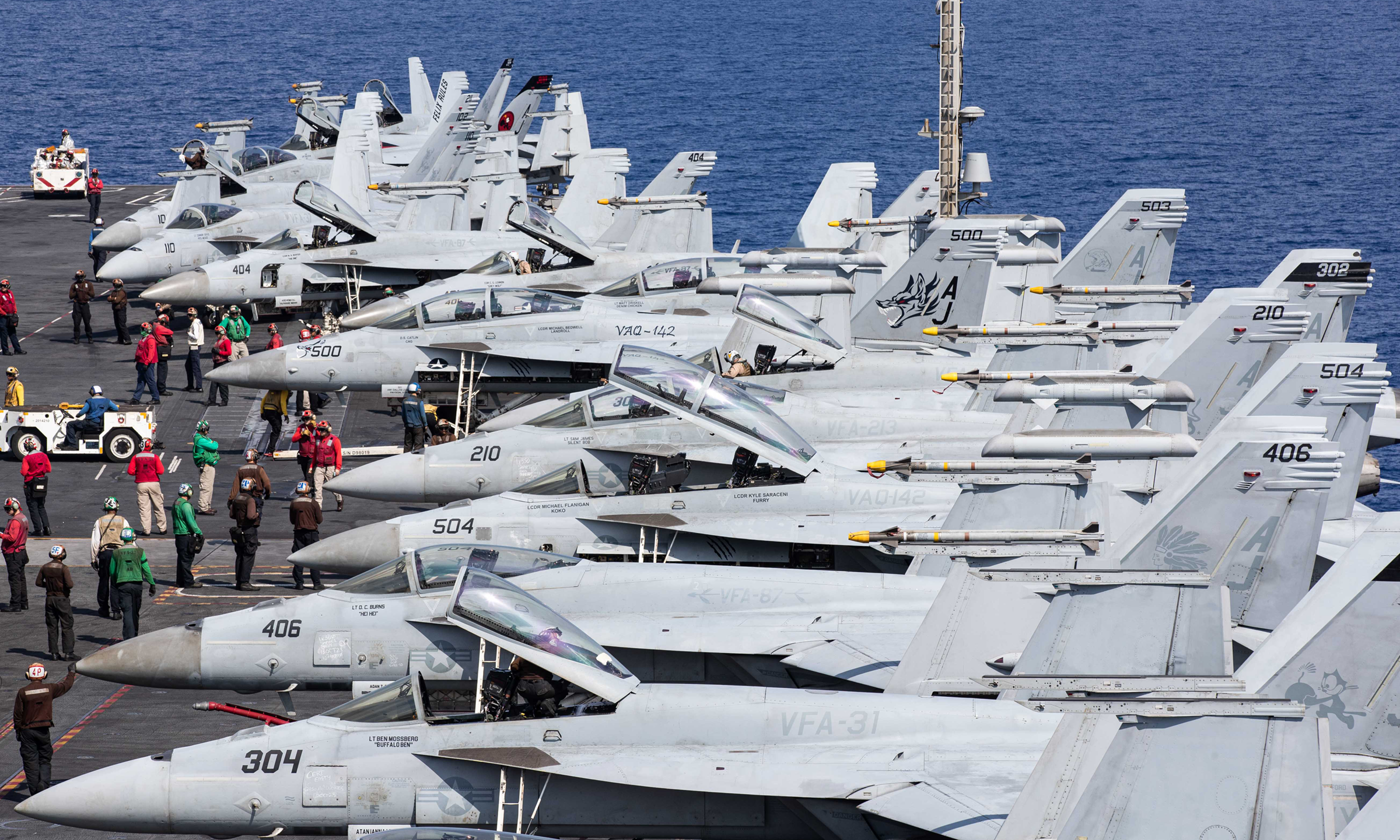
Electronic warfare aircraft E/A-18G (rear) and F/A-18E fighter jets preparing for electromagnetic aircraft launch system (EMALS) takeoff from the USS Gerald R. Ford.
The EMALS is considered the biggest technological advancement on the Ford-class aircraft carriers, compared to the older Nimitz-class carriers that still use steam catapults.
EMALS is designed to receive power directly from turbines, using electric current to create a strong magnetic field that propels a launch bar attached to the aircraft along the runway. This system allows for the deployment of heavier aircraft than steam catapults, enabling planes to carry more weapons and fuel.
 |
Pham Giang (Photos: AP, US Navy, Business Insider)