Kuwait's Ministry of Electricity, Water, and Renewable Energy announced on 17/7 that one of its power generation and seawater desalination plants was attacked by Iran, resulting in a fire and damage to some of the plant's facilities and several power generation units.
The ministry did not specify the plant's location. Firefighters successfully brought the blaze under control, while technical teams are working to restore affected units and monitor the stability of the power grid. Kuwait has activated its emergency response plans to address the situation.
Officials urged residents to conserve electricity and water "during this special period" as efforts continue to normalize operations.
Kuwait's Ministry of Foreign Affairs condemned Iran's attack, stating that Tehran violated their country's sovereignty and security. The ministry emphasized Kuwait's "inherent right" to take necessary measures to protect its sovereignty, security, and stability, in accordance with international law.
Iran has not yet commented on the incident.
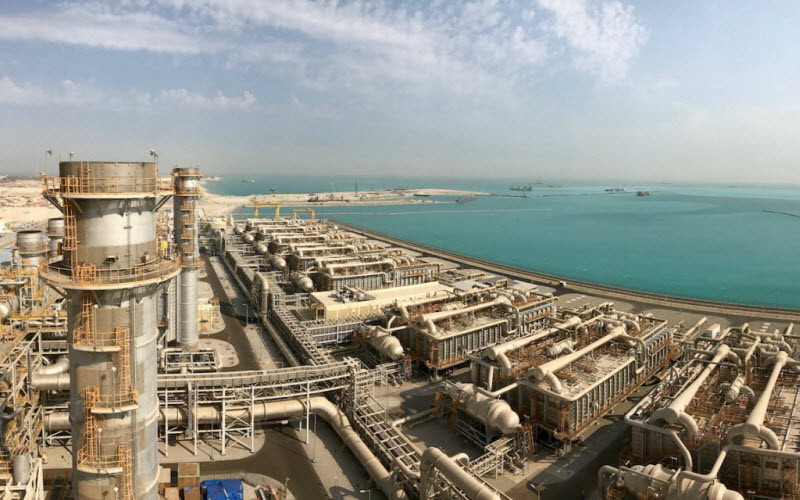 |
A combined power and desalination plant in Kuwait. Photo: National News |
A combined power and desalination plant in Kuwait. Photo: National News
This incident marks the latest attack on essential infrastructure in the Middle East, exposing serious vulnerabilities in one of the world's driest regions. The area is almost entirely dependent on desalination technology to produce fresh water for cities, hotels, industrial activities, and some agricultural production.
In Kuwait, approximately 90% of drinking water comes from desalination plants. This rate is about 86% in Oman and 70% in Saudi Arabia. The desalination process removes salt from seawater, most commonly by forcing water through ultrafine membranes in a process known as reverse osmosis.
Hundreds of desalination plants are located along the Persian Gulf coast, placing the water supply systems for millions of people within range of Iranian missiles or unmanned aerial vehicles (UAVs). If these facilities cease operations, many major cities in the region would be unable to sustain their current populations.
In recent months, Iran has repeatedly attacked areas near desalination plants in the Gulf. Kuwait previously reported that its Doha West desalination plant was damaged in the early stages of the conflict by debris from intercepted UAVs or from attacks targeting nearby seaports.
Iran also accused the US of targeting desalination plants on Qeshm island on 8/3, which disrupted water supplies for about 30 villages. Washington has not acknowledged this attack.
Previously, Houthi forces in Yemen have also targeted Saudi desalination facilities amidst regional tensions.
Many desalination plants in the Gulf are integrated with power plants following a cogeneration model, where electricity and water are produced simultaneously. Therefore, an attack on power infrastructure can also disrupt freshwater production.
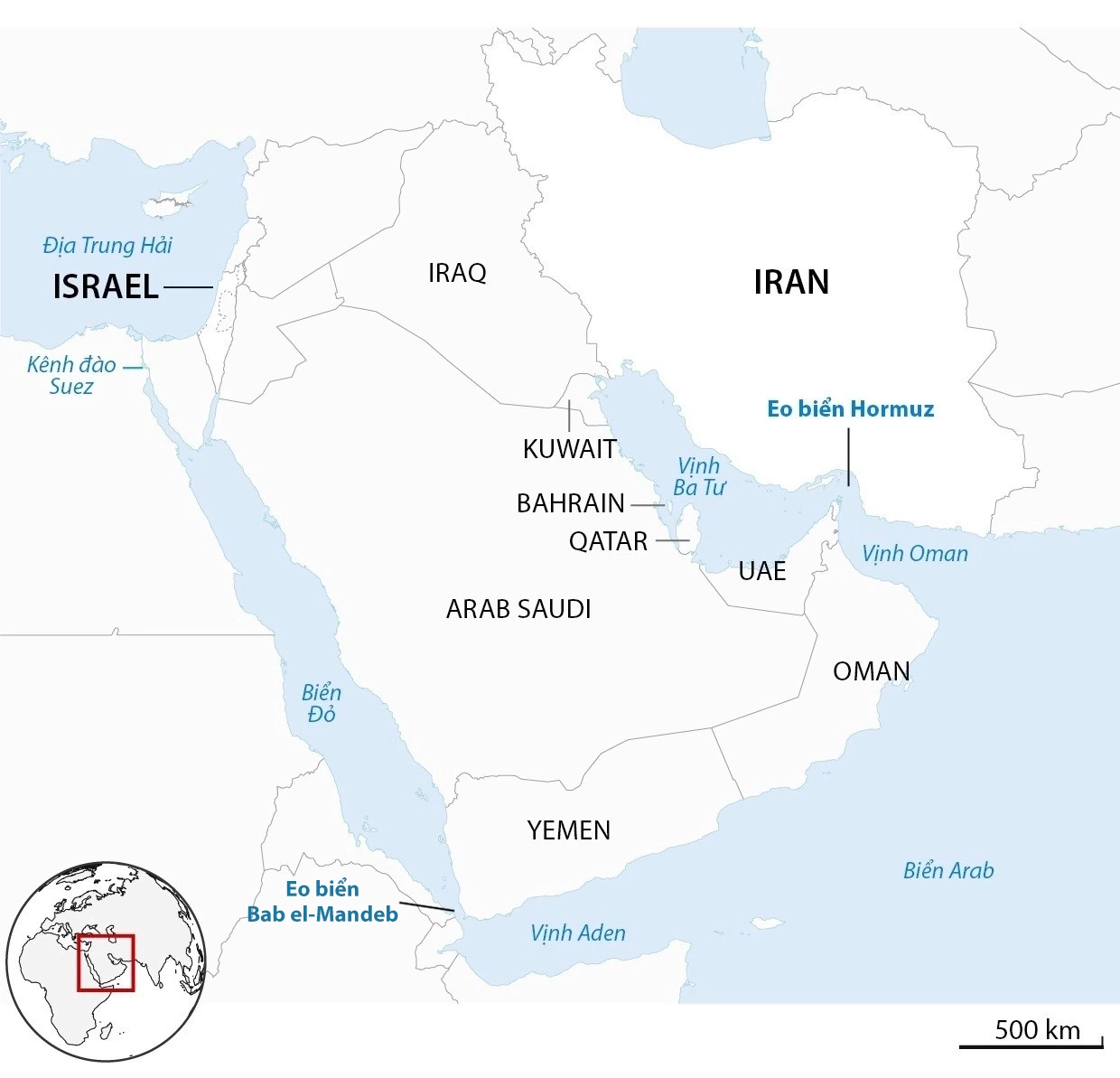 |
Location of Gulf countries. Graphic: Guardian |
Location of Gulf countries. Graphic: Guardian
A desalination plant relies on a closed-loop operation chain, from seawater intake and processing to energy supply. Consequently, if just one link in this chain is destroyed, the entire process will immediately halt.
The Central Intelligence Agency (CIA) warned of this risk in 2010. A report at the time analyzed that more than 90% of the Gulf's fresh water depended on 56 plants. The report highlighted that these critical infrastructures are exceptionally vulnerable, and if neutralized, some major cities could lose their entire drinking water supply within days, leading to a national crisis lasting several months.
Huyen Le (According to AP, Al-Monitor)