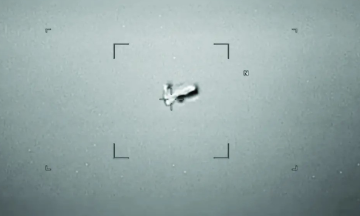
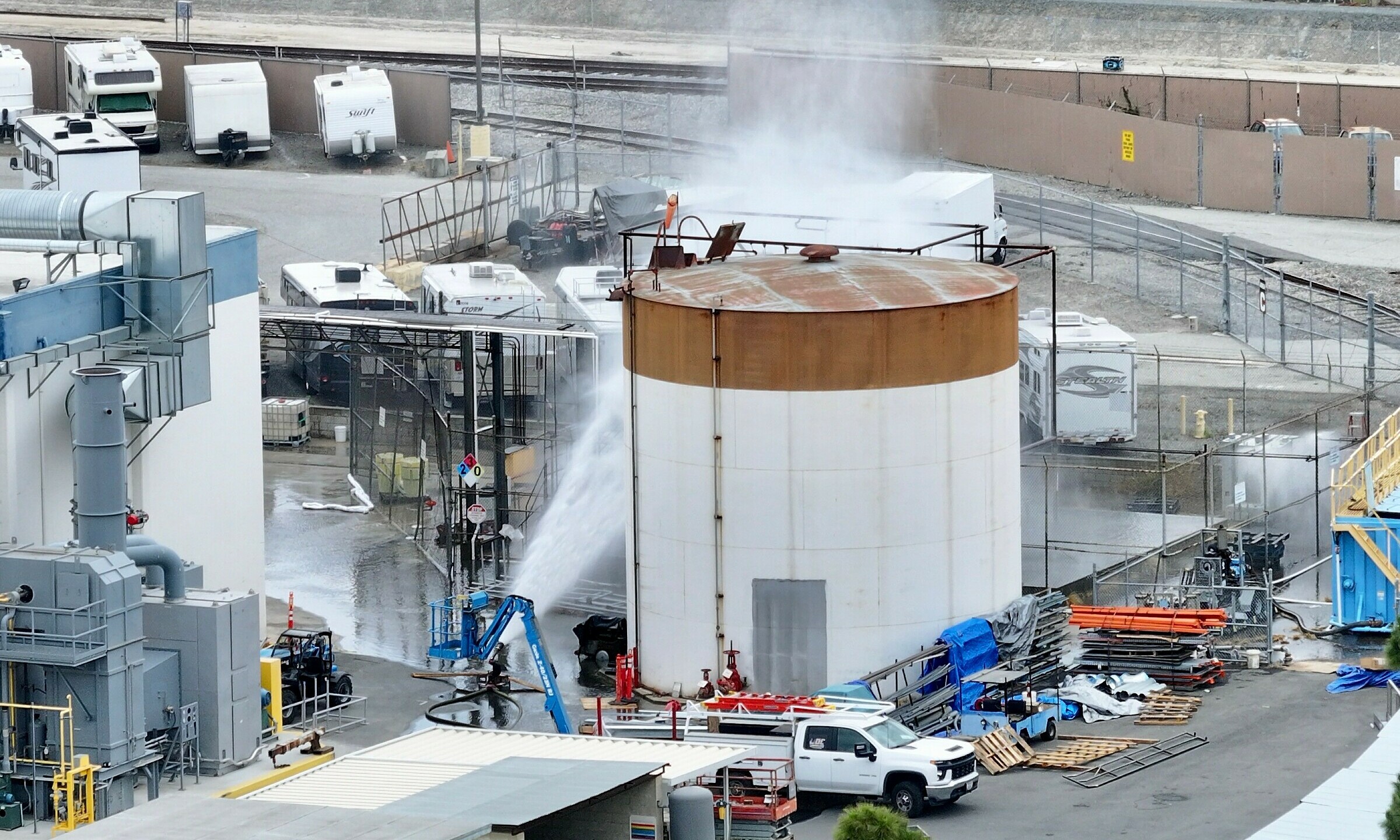
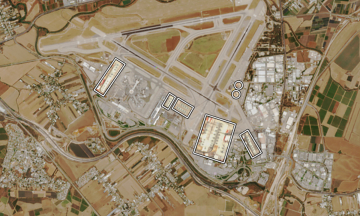
On 21/5, the Lebanese armed group Hezbollah released a video of an attack on an Iron Dome air defense battery near the Shomera community in northern Israel, which occurred three days prior. The video shows a first-person view (FPV) drone traveling a considerable distance, approaching the target area, then crashing into a loaded launcher.
This marks the third time Hezbollah has published evidence of an FPV drone attack on an Israeli Iron Dome battery within the past two weeks. The most severe incident happened earlier this month, when Hezbollah attacked one active launcher and subsequently targeted Israeli soldiers replacing damaged equipment.
Hezbollah drone crashes into an Iron Dome launcher near Shomera, Israel on 18/5. *Video: Hezbollah*
The videos show no indication that Israel's Iron Dome system fired interceptors in self-defense.
The Alma Research and Education Center, an Israeli think tank focusing on security challenges in the country's north, warned about the threat from Hezbollah's FPV drones in 9/2024.
In a recently published report, the Alma Center stated that drones, particularly fiber-optic controlled devices, are becoming a primary weapon for Hezbollah against Israeli forces. "Hezbollah is rapidly transitioning to FPV drones. They previously mainly used rockets and fixed-wing unmanned aerial vehicles (UAVs)," the document noted.
The Iron Dome is the innermost layer of Israel's multi-layered air defense system. It specializes in shooting down slow, predictable targets such as rockets, mortar shells, and low-altitude UAVs. The manufacturer claims the system has an interception success rate of up to 90%.
Most of Hezbollah's rockets and UAVs are intercepted by the Iron Dome. Additionally, laser weapons recently deployed by Israel on its northern border and other components of the multi-layered air defense network, including electronic warfare systems, also help counter the Lebanese group's older equipment.
However, FPV drones pose a new challenge. They fly lower and slower, possess high maneuverability, and approach from unpredictable directions. FPV drones also often operate in complex environments, including ground clutter and flying objects like birds, making it harder for conventional surveillance radars to distinguish targets.
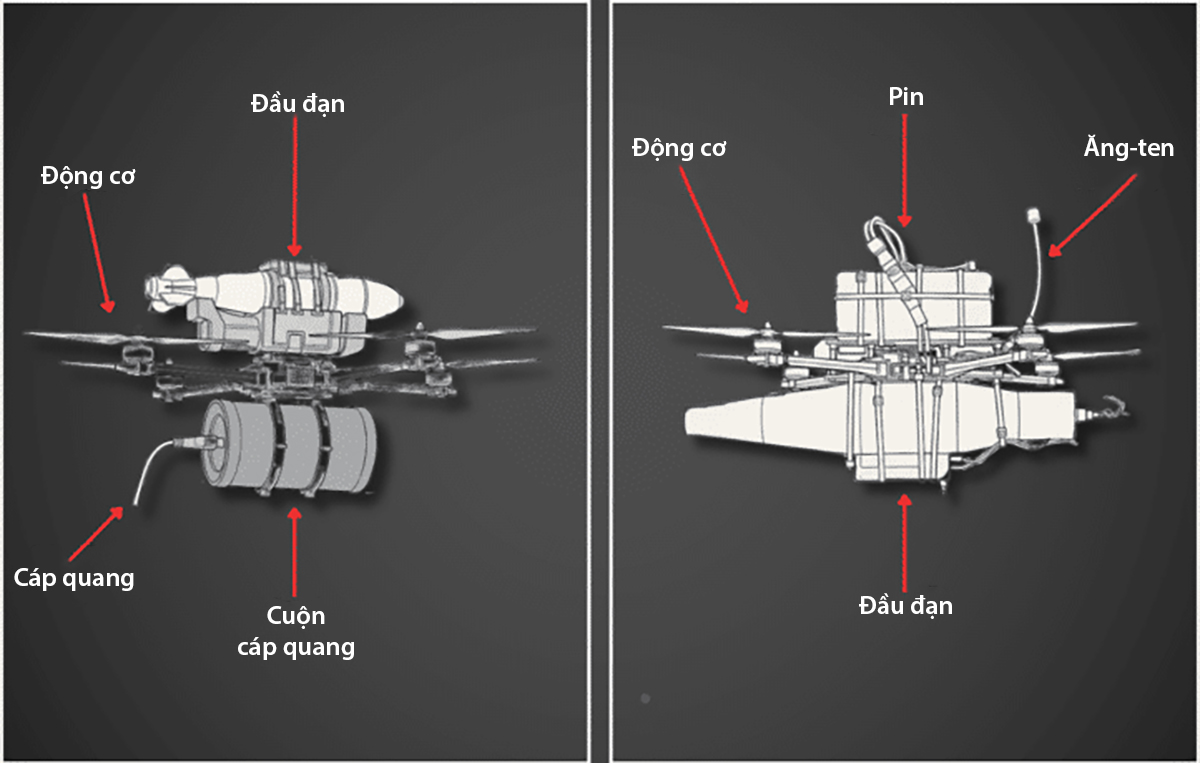 |
Fiber-optic drone (left) and radio-controlled drone (right). *Graphic: Alma*
Stephen Bryen, a senior expert at the Center for Security Policy (CSP) based in the United States, said this weakness prevents traditional air defense systems like Iron Dome from detecting and intercepting FPV drones. This necessitates deploying specialized anti-drone equipment.
"Anti-drone radars focus on low-flying, slow objects that conventional systems might miss. Some systems have integrated databases, allowing them to assess whether a target is a drone, a bird, or another object. They can eliminate clutter and ground interference," he explained.
The biggest drawback of this radar type is its short operational range, optimized only for detecting and tracking targets within a radius of under two km. There is also no indication that the IDF has deployed them alongside Iron Dome batteries on the border.
Another method for detecting FPV drones uses electro-optical, infrared, or acoustic sensors, but their operational range and warning time are much shorter than radar.
Hezbollah drone attacks Israel's Iron Dome system on 19/5. *Video: Hezbollah*
Using fiber optics for control helps FPV drones avoid electromagnetic detection and makes them immune to IDF jamming devices. They can also fly very low while maintaining connection and transmitting high-definition images to the operator, allowing them to approach Iron Dome batteries below radar detection range and catch the enemy off guard.
According to the Alma Center, several solutions can counter Hezbollah's FPV drones: deploying nets, interceptor drones, equipping infantry rifles with drone-targeting scopes, and laser weapons. Using interceptor missiles is unlikely to succeed because these targets are small, inexpensive, and highly maneuverable.
"If this gap is not quickly closed, drones costing a few hundred USD will defeat air defense systems worth millions of USD. Hezbollah's tactical success will lead to strategic limitations and affect the IDF's freedom of action," the organization warned.
Nguyen Tien (According to AP, Times of Israel, Al Jazeera, Asia Times)